
Keep Your Family Warm and Safe—No Matter What
Westmont sits in Haddon Township on tight rowhome and bungalow lots where Public Service Electric & Gas already runs the block. With winter lows averaging 25°F and a comparatively mild, short heating season, most homes don't need wood as primary heat—but for the right property, a wood stove still makes sense. I'll help you find out if yours is one of them.
Every Project Starts From One of These Five Situations
Small lots and mature gas lines leave little room for wood.
Westmont is a dense, walkable neighborhood of Haddon Township, built out mostly with Craftsman bungalows and twins on narrow lots with shared or close side yards. That housing stock, combined with Climate Zone 4A's relatively mild profile—a 25°F average winter low and a comparatively short, mild heating season, closer to the mid-Atlantic norm than the deep-cold territory of a Duluth or a Fargo—means most homeowners here never seriously consider wood as a primary heat source. There's also no adjacent national forest or public timber tract the way there is in parts of the Pinelands further south, so there's no local cutting-permit culture at all.
Where wood stoves do show up in Westmont, it's usually one of two situations: a 1920s-1950s bungalow with an original masonry fireplace the owner wants to bring back into use, or a homeowner who wants backup heat for the PSE&G outages that occasionally follow a Nor'easter or summer storm. Oak, hickory, and maple are the species most local firewood dealers stock, since there's no public land to cut from—you're buying seasoned or green cordwood by the load rather than pulling a Forest Service permit. It's a legitimate setup for the right house, just not the default one.
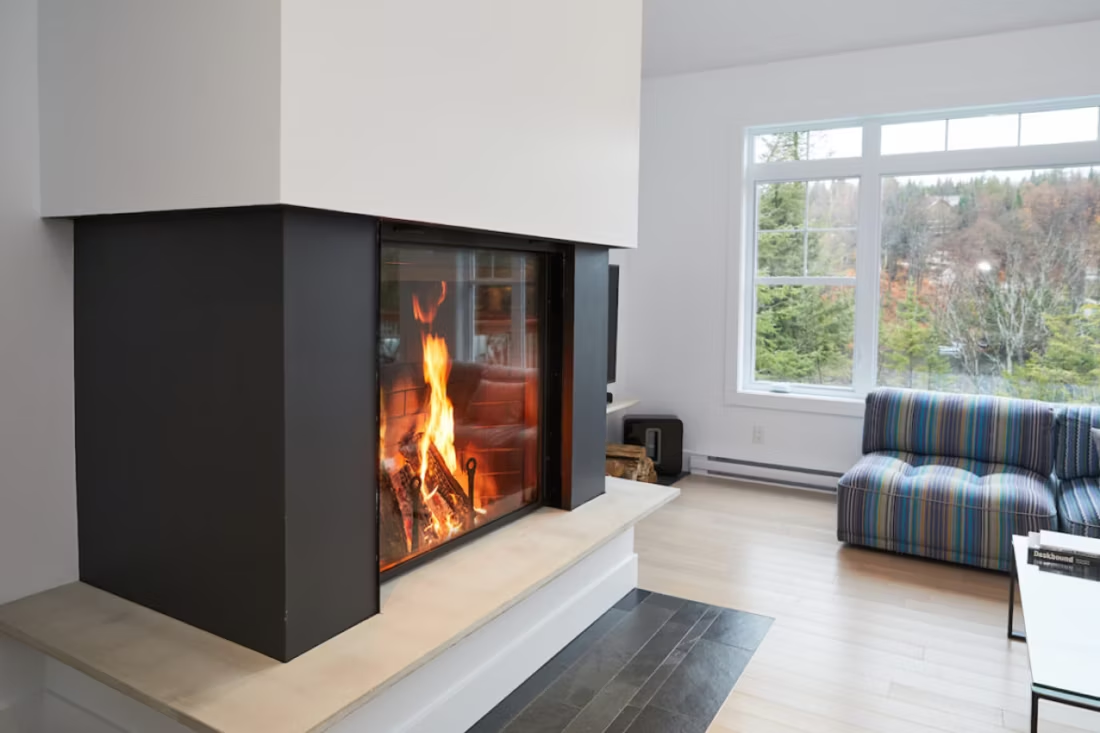
Three steps. No salesperson until you're ready.
Tell us about your project
Your zip code, your situation, and the fuel you're leaning toward—or let the answers point you to one.
See what's actually available
The brands dealers within 100 miles genuinely carry—real options, never a catalog mirage.
Get your dealer & Project Guide
A trusted local dealer, plus the free Project Guide & Parts List that names every component of the job.
Frequently Asked Questions
Is a wood stove or fireplace actually a good fit for a Westmont home?
For most Westmont properties, no—not as a primary heat source. Between Haddon Township's tight lot lines, PSE&G's widespread gas infrastructure, and a climate with a comparatively mild, short heating season, gas and electric options handle daily heating more simply and with less maintenance. Where a wood stove does make sense is a home with an existing masonry chimney from the bungalow era, enough side-yard clearance for proper venting, and an owner who wants either fireplace ambiance or genuine outage-resilient backup heat. A local dealer can tell you honestly within a few minutes of walking your property whether it's workable.
What does it typically cost to add a wood stove insert to an older Westmont bungalow?
If your home already has a masonry firebox—common in the 1920s-1950s bungalows scattered through Haddon Township—an insert with a new stainless liner is usually the lower-cost route since you're reusing the existing chimney structure rather than building new venting. A freestanding stove with no chimney to tie into costs more, since it needs a full Class A pipe run through the roof or an exterior wall. Exact numbers depend on your chimney's condition and clearances, and that's exactly the kind of site-specific detail a trusted local installer will quote after seeing the house rather than guessing over the phone.
Do I need a permit to install a wood stove in Westmont?
Yes. Westmont falls under Haddon Township, so building permit applications go through the Haddon Township Construction/Building Department, and any new stove needs to meet current EPA emissions standards. Given how close together homes sit in this neighborhood, inspectors also pay close attention to clearance-to-combustibles and roof penetration details—two things a licensed local installer will already have dialed in from prior jobs in the same block of houses.
Where do I buy firewood near Westmont if there's no national forest nearby?
There's no public land cutting-permit system to use here the way there is in more rural parts of the state, so firewood in Westmont comes from regional dealers selling seasoned or green cordwood by the load—typically oak, hickory, and maple, the same species that dominate South Jersey's hardwood stands. Oak in particular needs a full 12 months or more of seasoning before it burns clean, so if you're planning a stove for this winter, buying kiln-dried or well-seasoned wood now matters more than it would in a region where you're cutting your own.
What size wood stove makes sense for a small Westmont rowhome or bungalow?
Given the area's relatively mild winters—25°F average lows, not the single-digit stretches you'd plan around in Bismarck or Burlington—most Westmont installs are sized as supplemental or backup heat rather than whole-house primary heat. That usually means a small to mid-size stove rated for under 1,500 square feet is plenty, especially in a bungalow footprint where the main living space is the only area you're trying to warm. Oversizing in a small, well-insulated home just means smoldering, low-efficiency fires.
Can I bring an old fireplace in my house back into use instead of buying a new stove?
Often, yes, and it's a common request for the older bungalows around Westmont. A chimney inspection comes first—many original masonry fireboxes in homes this age have deteriorated liners or unsafe clearances after decades of disuse. Assuming the structure checks out, a certified insert dropping into the existing firebox is usually the simplest path, giving you EPA-compliant operation without tearing into walls to build new venting from scratch.
Will my homeowners insurance have a problem with a wood stove in this neighborhood?
Most insurers won't refuse coverage, but expect them to ask for proof of a permitted, code-compliant installation, and possibly a WETT-style inspection report from your installer. In a neighborhood of closely spaced homes like Westmont, some carriers are more particular about documentation than they'd be for a stove on a rural five-acre lot, simply because the fire-spread risk to neighboring property is a bigger underwriting concern. Keep the permit, the installer's certification paperwork, and any inspection report on file.
How does wood heat actually compare to gas or electric for a Westmont home?
PSE&G's gas network covers this part of Haddon Township thoroughly, which is why gas fireplaces and inserts are the standard choice for homeowners wanting instant, thermostat-controlled heat with no fuel storage. Electric options are also viable, though PSE&G's residential rate runs close to 20 cents per kWh, on the higher side nationally, which matters if you're running electric heat for long stretches. Wood doesn't compete with either on daily convenience—its real advantage is that a stove keeps producing heat during a PSE&G outage, when both gas ignition systems and electric units can go dark.
What wood species should I plan to burn if I do install a stove?
Oak, hickory, and maple are what regional firewood dealers stock for this part of South Jersey, and all three are solid choices for a stove. Hickory and oak burn hot and dense, good for long evening fires; maple splits and seasons a bit faster if you're buying green wood and need it usable sooner. Oak specifically wants 12+ months of drying time before it burns efficiently, so plan your purchase timing around that if you're buying ahead for backup-heat readiness rather than daily use.
Why won't my new wood stove get going like my old one?
New wood stoves are 70%+ efficient, so far less heat goes up the flue—which also means less draft to get a fire established. The rule: build a genuinely hot fire for about 45 minutes before you choke it down. Skip that and you get smoke in the room, creosote in the chimney, and a fire that never takes off. Most performance complaints trace straight back to this.
What's the difference between an insert and a zero-clearance fireplace?
An insert is a fireplace that slides into a pre-existing wood-burning fireplace—if you don't have one, there's nothing to insert it into. A zero-clearance fireplace is built into a framed wall, which makes it the answer for remodels and new construction. Simple test: existing masonry fireplace means insert; blank or framed wall means zero-clearance.
What is an in-home preview and do I need one?
It's a visit where a hearth professional measures your space, confirms the model you picked actually works in your home, and walks the specs—framing, gas line, venting, finish work—before anything is ordered. Some details you just can't know until you see the house. Never make a down payment without one; it's the single most-skipped step that burns buyers.
Can a fireplace actually lower my heating bill?
Yes—by creating a comfort zone. A furnace heats every square foot of the house just to warm the one room you're in; a gas fireplace on low burns roughly a sixth of the gas a typical furnace does. Set the furnace around 55–60 degrees as a baseline, then heat the rooms your family actually uses. Families who heat this way commonly save $20–$60 a month.
Nearby Dealers
Hearth shops serving Westmont and the surrounding area. Every listing shows whether it is a WhyFire partner, a dealer we have verified as authorized for the brands we recommend, or a local business carrying hearth products. No manufacturer pays for placement. How we verify dealers →
Rettinger Fireplace Systems Inc
South Jersey Hearthside LLC Dba Modern Gas Products
Plumbarama Co. Inc.
McCloskey's Garden & Hearth
Rattan Patio & Fireplace Shoppe
Kester Fireplace
Maple Glen Mechanical
Estates Chimney & Fireplace
Ambler Fireplace And Patio
E & E Stoves & Fireplaces
Norristown Chimney
Get your free Project Guide & Parts List for a Westmont wood stove project.
Tell me about your home—whether it's a bungalow with an existing chimney or a rowhome starting from scratch—and I'll match you with a trusted local Haddon Township-area installer and send a free Project Guide & Parts List with the exact vent kit and parts your project needs.
Find Your Fireplace →