
Find the right hearth solution for your Camden County home.
Fireplace resources for every city and township in Camden County—from Camden City and Cherry Hill to Voorhees and Winslow Township. Find a trusted local dealer for your home.
Every Project Starts From One of These Five Situations
Dense suburbs, mild winters: heating in Camden County, New Jersey.
Camden County sits directly across the Delaware River from Philadelphia, covering 37 municipalities from Camden City and Cherry Hill to Voorhees, Gloucester Township, Haddonfield, Collingswood, and Winslow Township. Climate zone 4A gives the area a comparatively mild heating season, with winter lows averaging 28°F, next to a colder benchmark like Burlington, VT, which sees a much longer, harsher winter. That mild profile, combined with dense row-home and close-set suburban housing stock, means natural gas piped in by PSE&G and South Jersey Gas is the default heating fuel almost everywhere in the county. Wood species like oak, hickory, and maple do grow in the county's wooded southeastern edge near the Pinelands fringe, but wood-burning is largely a non-factor here—small lots, tight setbacks, and municipal ordinances in towns like Haddonfield and Collingswood leave little room for a woodpile or new masonry chimney construction. Pellet stoves are similarly rare; local brands like Energex, Hamer Pellet Fuel, and Greene Team Pellet Fuel stay stocked at area hearth retailers mainly for the small existing base of pellet-stove owners rather than new installs.
What you'll find on this hub: gas and electric fuel pages with local dealer listings, installed cost ranges, and recommended units, plus retailers, service technicians, and fuel suppliers covering the whole county. Whether you're in a Cherry Hill colonial or a Camden City row home, pick your fuel below to get to the specifics that actually apply to your address.
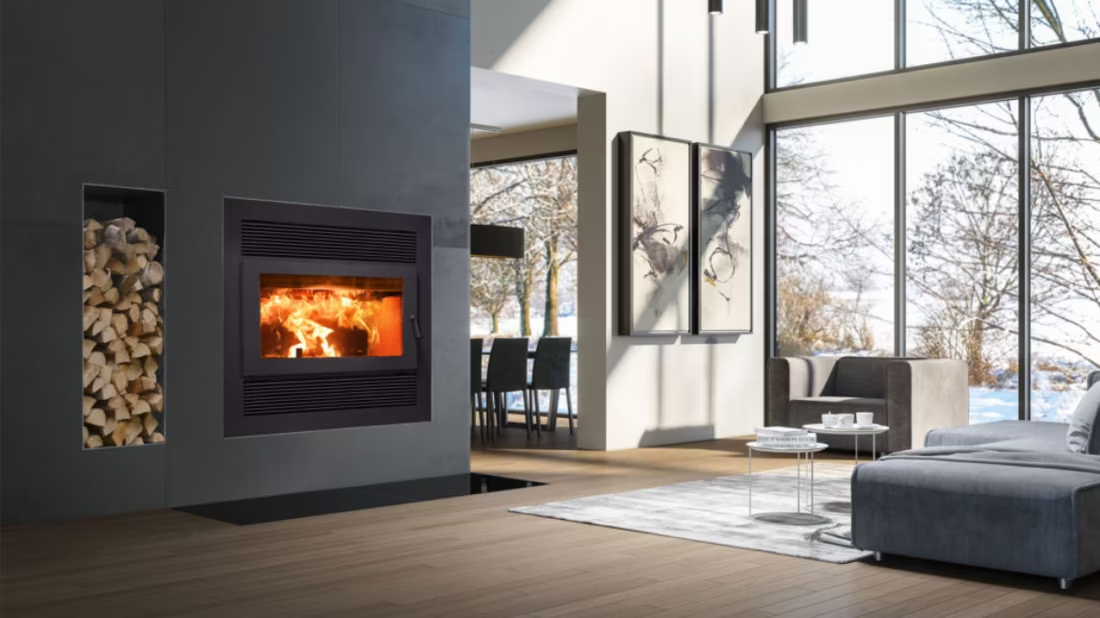
Four fuels. One honest answer for Camden County.
Three steps. No salesperson until you're ready.
Tell us about your project
Your zip code, your situation, and the fuel you're leaning toward—or let the answers point you to one.
See what's actually available
The brands dealers within 100 miles genuinely carry—real options, never a catalog mirage.
Get your dealer & Project Guide
A trusted local dealer, plus the free Project Guide & Parts List that names every component of the job.
Frequently Asked Questions
Which fuel works best in Camden County, NJ?
For nearly every homeowner in this densely built suburban county across the Delaware from Philadelphia, gas is the default. Natural gas mains from PSE&G and South Jersey Gas reach most streets in towns like Cherry Hill, Voorhees, and Collingswood, and a gas fireplace or insert delivers instant heat with no wood storage and no chimney sweeping. Electric is the strong secondary choice—supplemental heat and ambiance in bedrooms, basements, and the many condos and townhomes throughout the county, with zero venting required. Wood-burning is uncommon: small lot sizes and close-set housing in most Camden County municipalities make cutting, stacking, and burning cordwood impractical, though a handful of older homes in towns like Haddonfield with existing masonry fireplaces still burn local oak or hickory occasionally for ambiance. Pellet stoves are rarer still—the fuel is stocked locally, but few households run pellet as a primary heat source given the housing stock and climate here.
Do I need a permit to install a fireplace in Camden County?
In almost every case, yes. New Jersey's Uniform Construction Code requires a permit for gas fireplace, insert, or stove installations, plus a separate gas-fitting permit and licensed gas fitter for the fuel line connection—issued through your specific municipality's building department, since Camden County's 37 towns (Cherry Hill, Voorhees, Gloucester Township, and the rest) each administer their own permitting rather than routing through one county office. Electric fireplace installs usually skip the permit process unless you're hardwiring a built-in unit into a new circuit, which typically triggers an electrical permit. Most local gas and electric contractors handle this paperwork as part of the installation—check with your town's building office if you want to confirm requirements yourself.
Is wood burning practical in Camden County?
Not really, for most households here. Winters in this county are comparatively mild compared to a place like Burlington, VT, which has a much longer, harsher winter, so wood isn't needed to get through winter the way it is farther north. More to the point, Camden County's dense municipal grid of row homes and close-set colonials in towns like Collingswood and Haddonfield leaves little room for a woodpile or the clearances a masonry chimney needs, and several municipal ordinances discourage new wood-burning installs. Local species like oak, hickory, and maple do grow in the county's wooded southeastern edge near the Pinelands fringe, and a small number of older homes with existing masonry fireplaces still burn them occasionally, but wood is not a mainstream heating option in this county.
Are pellet stoves available in Camden County?
They exist, but they're uncommon. Regional pellet brands—Energex, Hamer Pellet Fuel, and Greene Team Pellet Fuel—are stocked at area hearth and hardware retailers, mostly serving a small base of existing pellet-stove owners rather than driving new installs. Given the county's mild winters (average lows around 28°F) and dense housing stock, homeowners looking for a solid-fuel-style flame more often choose a gas insert that mimics the look without the hopper, venting, and periodic ash cleanup a pellet stove requires.
Can one local hearth retailer handle both gas and electric installs?
Yes—most hearth retailers serving Cherry Hill, Voorhees, and the surrounding Camden County towns carry both gas fireplaces and inserts alongside electric units, since those are the two fuels that actually fit this county's housing stock and climate. A single appointment usually covers both: you can compare a vented gas insert against a plug-in or built-in electric unit side by side and get a direct answer on what fits your room, budget, and venting situation.
What's the typical cost range for fireplace installation in Camden County?
Ranges vary by fuel. Gas fireplace, insert, or stove: roughly $4,000–$10,000, depending on whether an existing gas line is nearby or new gas-fitting work and venting are required. Electric fireplace: $200–$3,000 for the unit itself, plus $400–$1,200 in labor for anything beyond a plug-and-play install—which covers most wall-mount and insert electric units. Wood and pellet installs are rare enough in this county that most retailers don't run a standard package for either—expect a custom quote if you're one of the few homeowners pursuing them. See the county + fuel pages above for cost detail tied to actual local retailer pricing.
Can I install a fireplace myself?
If you're putting a fire in your house on purpose, it's best to work with an expert. Unless you're genuinely experienced in framing, gas line, vent pipe, and the national code on clearances to combustibles, have a professional do it—and ideally the same company that sells you the fireplace, so warranty, service, and liability all live under one roof.
Wood, gas, pellet, or electric—how do I choose?
Match the fuel to your life, not the other way around. Wood: lowest fuel cost and total power-outage independence, but you're hauling and stacking. Gas: press a button, set a thermostat, no maintenance to speak of. Pellet: wood economics with automatic feeding, in exchange for weekly cleaning and a need for electricity. Electric: plugs in anywhere with honest supplemental heat. Nobody regrets the fuel that fits how they actually live.
How much should I budget for a fireplace?
For an average home—covering the fireplace, the vent pipe, and basic installation—a budget between $3,900 and $5,500 gives you a lot of options across wood, gas, and pellet. By the time you add finish work, gas line, and electrical, the average complete installation lands between $5,000 and $12,000 all-in. In a remodel or new build, a good rule is to put about 2.5% of the total project cost toward the fireplace.
What is an in-home preview and do I need one?
It's a visit where a hearth professional measures your space, confirms the model you picked actually works in your home, and walks the specs—framing, gas line, venting, finish work—before anything is ordered. Some details you just can't know until you see the house. Never make a down payment without one; it's the single most-skipped step that burns buyers.
Stove and Fireplace Dealers in Camden County
Listings include WhyFire partner dealers, dealers we have verified as authorized for the brands we recommend, and established local businesses that carry hearth products. Every listing shows which one it is. The ones marked Preferred run on WhyFire's software, so they can show you real pricing and book your appointment right here. No manufacturer pays for placement. How we verify dealers →
Rettinger Fireplace Systems Inc
South Jersey Hearthside LLC Dba Modern Gas Products
McCloskey's Garden & Hearth
Rattan Patio & Fireplace Shoppe
Plumbarama Co. Inc.
Kester Fireplace
Estates Chimney & Fireplace
Maple Glen Mechanical
Ambler Fireplace And Patio
E & E Stoves & Fireplaces
Find your fireplace in Camden County.
Pick gas or electric below and I'll match you with a trusted local Camden County dealer and send a free Project Guide & Parts List—the exact parts, including the vent kit, for your project.
Find Your Fireplace →