
A Niche Heat Source in Natural-Gas Country.
Westfield runs on PSE&G natural gas, and most homes are heated accordingly. Pellet stoves still make sense for a specific set of homeowners here—we'll help you find out if you're one of them.
Every Project Starts From One of These Five Situations
Pellet stoves are the exception here, not the default.
Westfield sits in climate zone 4A with a moderate winter heating season and an average winter low around 25°F—noticeably milder than the upper Midwest or northern New England towns where pellet heat is a mainstream primary-heat choice. Nearly every home in this Union County town has access to natural gas through Public Service Electric & Gas, and most were built or retrofitted with gas furnaces and boilers as the default. That infrastructure is exactly why pellet stoves haven't caught on the way they have in colder, off-grid-adjacent parts of the country.
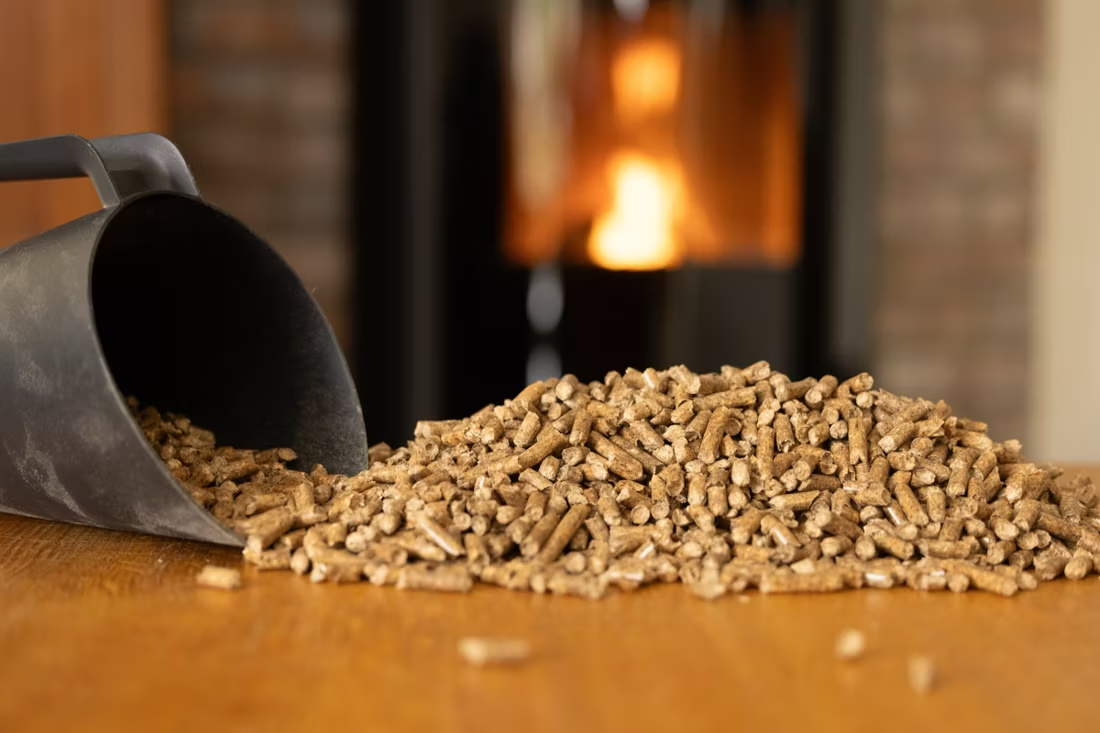
That doesn't mean pellet heat has no place in Westfield. Homeowners with detached garages, finished basements without existing ductwork, three-season rooms, or older homes on the edges of town without easy gas access sometimes choose a pellet stove for supplemental warmth or ambiance. Regional pellet brands like Energex, Hamer Pellet Fuel, and Greene Team Pellet Fuel are sold at hardware and feed stores throughout central New Jersey, so fuel supply isn't the obstacle—it's finding an installer who does this work regularly in a town where it's genuinely uncommon.
Three steps. No salesperson until you're ready.
Tell us about your project
Your zip code, your situation, and the fuel you're leaning toward—or let the answers point you to one.
See what's actually available
The brands dealers within 100 miles genuinely carry—real options, never a catalog mirage.
Get your dealer & Project Guide
A trusted local dealer, plus the free Project Guide & Parts List that names every component of the job.
Frequently Asked Questions
Are pellet stoves actually installed in Westfield, or is this rare?
They're genuinely uncommon. With PSE&G natural gas service reaching most of the town and moderate winters (average lows around 25°F rather than the sub-zero stretches that make pellet's long, unattended burn times a big draw elsewhere), the vast majority of Westfield homeowners heat with gas furnaces, boilers, or gas fireplaces. Pellet stoves show up occasionally—usually in a basement, garage, or an older home without convenient gas access—but they're a niche choice here rather than a default one, and that affects how many local dealers stock and install them.
What does a pellet stove installation cost in Westfield?
Because pellet installs are infrequent locally, pricing isn't as standardized as it is for gas fireplace work in this area. Nationally, a freestanding pellet stove with proper venting typically runs $3,500 to $6,500 installed, and a pellet insert into an existing masonry fireplace often lands in a similar range depending on chimney liner work. In Westfield specifically, expect estimates to vary more between dealers than they would for a gas project, simply because fewer installers here do this work every week. Get quotes from more than one trusted dealer before committing.
Where can I buy pellets near Westfield?
Regional brands including Energex, Hamer Pellet Fuel, and Greene Team Pellet Fuel are distributed through hardware stores and farm-and-feed retailers across central New Jersey, and most will special-order by the pallet if a store doesn't keep pellets in regular stock. Because pellet stoves are uncommon in Westfield itself, don't assume your nearest big-box hardware store carries them year-round—call ahead in early fall, when regional supply tends to tighten as heating season approaches.
Why would someone choose pellet heat over gas in a town like Westfield?
Gas is the practical default here—PSE&G service is widespread, installation is well understood by local contractors, and running costs are predictable. Pellet stoves make sense in the specific situations where gas isn't the easy answer: a detached garage or workshop without a gas line, a finished basement far from existing gas piping, or a homeowner who specifically wants the visual and tactile experience of a real flame with automated, thermostat-controlled operation. If your home already has gas service to the room in question, a gas insert is usually the simpler and more common local choice.
Will a pellet stove work during a power outage?
No—this is worth knowing before you buy. Pellet stoves rely on an electric auger to feed fuel and a blower to circulate heat, so they shut down when the power does, same as your furnace. PSE&G outages in Union County are typically resolved within hours, but if you're considering a pellet stove specifically as backup heat for winter storms, a battery backup or small generator is worth budgeting for alongside the stove itself—or consider whether a gas fireplace with a standing pilot might better suit that goal.
Do I need a permit to install a pellet stove in Westfield?
Yes—a building permit is required for a new pellet stove installation, handled through Westfield's Building Division, and the vent-through-wall pipe run needs to meet clearance and termination requirements even though pellet venting is smaller and simpler than a full masonry chimney. Because this type of install crosses their desk far less often than gas or furnace permits, it can help to work with an installer who's pulled a pellet permit in Union County before and knows what inspectors will look for.
What kind of Westfield home is actually a good fit for a pellet stove?
The best candidates are usually homes with a specific gap: a detached garage or workshop that's never been plumbed for gas, an older home on the edge of town where extending a gas line to a particular room is expensive, or a finished basement being used as a den or guest space that's far from existing HVAC runs. If you're heating a main living area in a home that already has gas service, a gas insert or fireplace is almost always the more practical and more commonly installed option in Westfield.
Pellet stove vs. gas insert—which makes more sense for my Westfield home?
Gas wins on convenience and is by far the more common local choice: instant on-off operation, no fuel storage, and straightforward service through the same PSE&G infrastructure already running your furnace. Pellet offers a more visible, crackling flame and automated hopper-fed operation, but requires you to store bags of pellets, empty an ash pan periodically, and accept that it won't run during a power outage. For most Westfield homes with existing gas service, gas is the simpler answer. Pellet earns its place mainly in spaces gas doesn't reach.
How do I find someone who actually installs pellet stoves near Westfield?
Because pellet installs are uncommon in this specific town, your best bet is a dealer who covers Union County broadly rather than one focused only on Westfield addresses—someone who installs pellet stoves regularly elsewhere in the region and won't be improvising on venting sizing or clearances. That's exactly the matching problem Find My Fireplace exists to solve: rather than guessing which local retailer actually stocks and installs pellet units, we connect you with a trusted dealer who genuinely does this work.
What does it take to replace an existing fireplace?
Fireplaces are like icebergs—bigger behind the wall than in front of it. Replacement means removing the surrounding tile or stone (the finish material laps onto the fireplace face), pulling the old unit, setting the new one in the same enclosure, and re-finishing the wall. A hearth professional can determine what's behind your wall without demolition during an in-home preview.
Are pellet stoves loud?
They make some noise—there are two fans running plus an auger motor that turns as it feeds pellets. But there's a real range: premium models are engineered quiet, and the best offer a whisper-quiet mode you can comfortably watch TV next to. If noise matters in your room, ask to hear a stove running before you buy—it's a five-minute test that saves years of annoyance.
Can a fireplace actually lower my heating bill?
Yes—by creating a comfort zone. A furnace heats every square foot of the house just to warm the one room you're in; a gas fireplace on low burns roughly a sixth of the gas a typical furnace does. Set the furnace around 55–60 degrees as a baseline, then heat the rooms your family actually uses. Families who heat this way commonly save $20–$60 a month.
What is an in-home preview and do I need one?
It's a visit where a hearth professional measures your space, confirms the model you picked actually works in your home, and walks the specs—framing, gas line, venting, finish work—before anything is ordered. Some details you just can't know until you see the house. Never make a down payment without one; it's the single most-skipped step that burns buyers.
Pellet Brands Stocked Around Westfield
Manufacturers will point you to the nearest stocking dealer.
Find your pellet stove in Westfield.
Tell us about your home and where you're hoping to add heat, and we'll match you with a trusted local dealer plus a free Project Guide & Parts List—the exact parts, vent kit included, for a pellet project that actually works in Westfield.
Find Your Fireplace →