
Gas heat that fits Prospect Park's tight lots and older homes.
Reliable, instant heat for a compact Passaic County borough where PSE&G gas service already runs to nearly every block. Get matched with a trusted local dealer who knows the housing stock here.
Every Project Starts From One of These Five Situations
Convenient heat for a compact riverside borough.
At just over half a square mile along the Passaic River, Prospect Park packs its roughly 6,300 residents into tight rows of early-1900s two- and three-family homes on small lots. Winters here aren't extreme by Northeast standards—average lows sit around 22°F and the borough logs a heating season on par with much of northern New Jersey—but the season is long enough, and the housing stock old enough, that a lot of homeowners want a real backup or supplemental heat source that doesn't demand a woodpile in a backyard the size of a driveway.
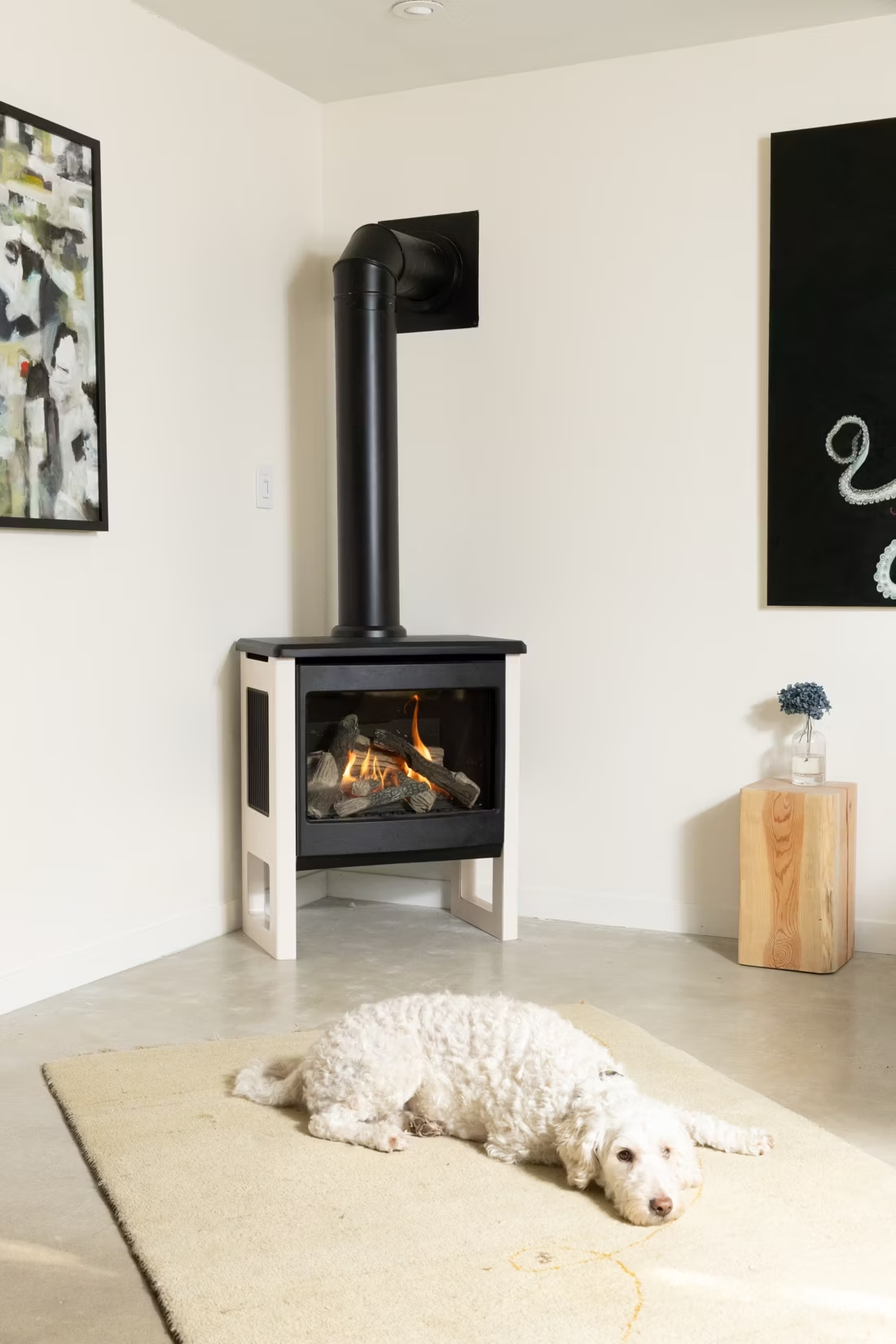
That's where gas wins in a borough like this. PSE&G already serves natural gas throughout most of Prospect Park, and plenty of these older homes still have their original brick fireplace openings sitting unused or barely functional. A direct-vent gas insert turns that opening into real, on-demand heat without adding a woodshed or dealing with ash in a rowhouse-style layout. For newer construction or additions, a built-in gas fireplace or freestanding gas stove works just as well and installs cleanly against a shared or party wall.
Three steps. No salesperson until you're ready.
Tell us about your project
Your zip code, your situation, and the fuel you're leaning toward—or let the answers point you to one.
See what's actually available
The brands dealers within 100 miles genuinely carry—real options, never a catalog mirage.
Get your dealer & Project Guide
A trusted local dealer, plus the free Project Guide & Parts List that names every component of the job.
Frequently Asked Questions
How much does a gas fireplace installation cost in Prospect Park?
Most gas fireplace and insert installations in Prospect Park run $4,000 to $9,500, with the spread coming down to whether you're converting an existing masonry fireplace (lower end, since the chimney chase already exists) or adding a new direct-vent unit to a room that's never had one, which requires framing and a fresh gas line run. Homes already on PSE&G natural gas service with a line nearby cost less than homes needing a longer run from the meter. A local dealer will give you a firm number after seeing the space in person.
Can I convert my old fireplace to gas?
Yes, and it's one of the most common projects in a borough like Prospect Park, where a large share of the housing stock dates to the early 1900s and still has an original brick firebox. A gas insert with a stainless liner run up your existing chimney is the standard approach, typically $4,000 to $8,000 depending on the insert and whether the flue needs relining. It preserves the mantel and opening you already have while turning a decorative or drafty fireplace into a real heat source.
Do I need natural gas, or is propane an option here?
Natural gas from PSE&G reaches the great majority of homes in Prospect Park, so most installations simply tap into an existing gas line already feeding the furnace, water heater, or stove. Propane is uncommon in a borough this dense and built-out, but it remains an option for a rare property that isn't on the main line—in that case a small exterior tank is set up by a regional propane supplier and the fireplace is configured for propane instead of natural gas.
Will my gas fireplace still work if the power goes out?
Most gas fireplaces sold today use IPI (intermittent pilot ignition) with a battery backup that takes over automatically when the power drops, so the unit still lights on demand during a storm-related outage—a real consideration given how often Passaic County sees ice and wind events knock out power for a few hours at a time. Valor units go a step further: the pilot's thermocouple generates its own electricity, so there's no battery to remember at all. Ask your dealer which ignition system a given model uses before you buy.
Fireplace, insert, or stove—which fits my house?
A gas insert drops into an existing masonry opening and is the natural fit for Prospect Park's older two- and three-family homes that already have a fireplace they'd like to reactivate. A built-in gas fireplace is framed into a wall and makes more sense for a home addition or a full renovation where there's no existing chimney. A freestanding gas stove sits on the floor against a rear or side wall and works well in a smaller rowhouse living room where floor space near an exterior wall is easier to find than room for a full mantel surround.
Do I need a permit to install a gas fireplace in Prospect Park?
Yes. Prospect Park enforces the New Jersey Uniform Construction Code, which requires both a construction permit and a separate gas piping permit for any new gas appliance, filed through the borough's Construction Code Office. The gas line work has to be done by a licensed New Jersey plumber or gas fitter. Most hearth dealers coordinate this directly—pulling the permit, scheduling the gas sub-code inspection, and closing it out—so you're not stuck managing three different trades on a rowhome renovation.
Vented vs. vent-free gas fireplaces—what's allowed in New Jersey?
Vented (direct-vent) units draw combustion air from outside and exhaust it back outside through a sealed pipe—they're the standard recommendation almost everywhere, including Prospect Park. Vent-free units burn without any outside venting and are permitted under the New Jersey UCC, but only within strict room-size and ventilation rules, and they're a harder sell in the smaller rooms common to this borough's older homes. For most Prospect Park installations, direct-vent is the simpler, safer, and more universally approved choice—worth confirming with your dealer if you're weighing a vent-free unit for a small space.
How often does a gas fireplace need to be serviced?
Plan on an annual inspection, ideally before the heating season starts. A technician checks the burner, pilot assembly, gas connections, and glass seal, and cleans the interior—a much shorter visit than a wood chimney sweep, but just as important for safety. Local gas appliance technicians typically charge $125 to $200 for this service, and it's worth keeping records if your unit is still under manufacturer warranty.
What about a wood stove instead of gas?
Wood-burning is genuinely uncommon in Prospect Park, and it's worth being upfront about that. The borough's tight lot lines, shared walls, and lack of any nearby public land for cutting permits make wood a poor fit for most properties here, and there's no local firewood-permitting infrastructure the way there is in more rural parts of New Jersey. A handful of homeowners with detached houses and enough yard clearance still install a wood stove for backup heat or ambiance, but for the vast majority of Prospect Park addresses, gas—with PSE&G service already at the curb—is the far more practical and far more common choice.
What's the difference between an insert and a zero-clearance fireplace?
An insert is a fireplace that slides into a pre-existing wood-burning fireplace—if you don't have one, there's nothing to insert it into. A zero-clearance fireplace is built into a framed wall, which makes it the answer for remodels and new construction. Simple test: existing masonry fireplace means insert; blank or framed wall means zero-clearance.
Is my gas fireplace wasting gas?
If it was installed more than 15 years ago, probably. Older gas fireplaces keep a standing pilot light burning all the time, and that little flame can cost a couple hundred dollars a year. Newer models use pilot-on-demand ignition—the pilot lights only when you use the fireplace and goes out when you turn it off.
Can a fireplace actually lower my heating bill?
Yes—by creating a comfort zone. A furnace heats every square foot of the house just to warm the one room you're in; a gas fireplace on low burns roughly a sixth of the gas a typical furnace does. Set the furnace around 55–60 degrees as a baseline, then heat the rooms your family actually uses. Families who heat this way commonly save $20–$60 a month.
Can I install a fireplace myself?
If you're putting a fire in your house on purpose, it's best to work with an expert. Unless you're genuinely experienced in framing, gas line, vent pipe, and the national code on clearances to combustibles, have a professional do it—and ideally the same company that sells you the fireplace, so warranty, service, and liability all live under one roof.
Nearby Dealers
Hearth shops serving Prospect Park and the surrounding area. Every listing shows whether it is a WhyFire partner, a dealer we have verified as authorized for the brands we recommend, or a local business carrying hearth products. No manufacturer pays for placement. How we verify dealers →
Kjb Fireplaces
Mcnamara Fireplace And Stove
Flue Tech
Fireplaces By Design
Light N Grid
County Woodstoves Inc
Chimney Sweep Energy Barn
Fire Design
N & N Services
Big Apple Fireplaces
Westchester Fireplace
Harris Hearth And Home
Hot Concepts Fireplaces
Fireplaces R Us
Timberline Speciality Products
Timberline Stoves
Find your gas fireplace in Prospect Park.
Tell us about your home and we'll put together a free Project Guide & Parts List for your gas fireplace or insert project—matched with a trusted local Passaic County dealer who can pull the permits and size the venting correctly.
Find Your Fireplace →