
Real Heat, No Chimney Required in Prospect Park.
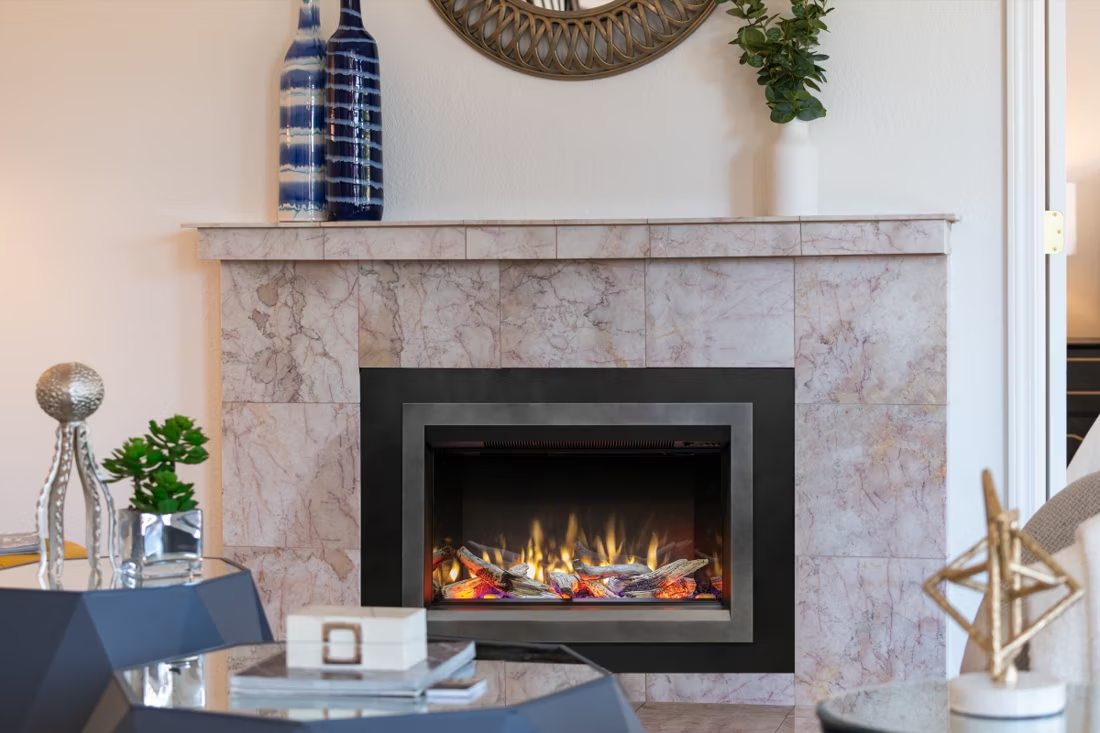
Prospect Park's tight rowhouse lots and two-family homes weren't built with chimneys in mind. An electric fireplace plugs into the wall you already have—no venting, no gas line, no permit headaches.
Every Project Starts From One of These Five Situations
Small lots. No chimneys. Instant heat that just works.
At just over half a square mile, Prospect Park is one of the more densely built boroughs in Passaic County—a mix of early-1900s two-family homes, rowhouses, and small-lot single families packed close together, many sharing walls with the neighbor next door. Winters bring an average low around 22°F and a solid six-month heating season—meaningfully cold, though nowhere near the extremes of a place like Burlington, Vermont. Plenty of these older homes have a decorative mantel or bricked-up firebox with no working flue behind it, and structurally there's often no good path to add one without a major renovation.
That's exactly the gap electric fireplaces fill. Public Service Electric & Gas serves the borough at a residential rate of about 19.81 cents per kWh—higher than the regional average, which makes zone heating with an electric insert a genuinely useful strategy: heat the room you're sitting in on a cold night and leave the thermostat for the rest of the house alone. There's no chimney to inspect, no cutting permit, and in most cases no building permit at all for a plug-in unit. Homeowners doing a built-in, recessed linear fireplace typically just need an electrician to run a dedicated circuit—a fraction of the coordination a vented gas or wood project requires in a rowhouse this tight.
Three steps. No salesperson until you're ready.
Tell us about your project
Your zip code, your situation, and the fuel you're leaning toward—or let the answers point you to one.
See what's actually available
The brands dealers within 100 miles genuinely carry—real options, never a catalog mirage.
Get your dealer & Project Guide
A trusted local dealer, plus the free Project Guide & Parts List that names every component of the job.
Frequently Asked Questions
How much does an electric fireplace installation cost in Prospect Park?
A freestanding or insert-style electric fireplace that plugs into an existing outlet typically runs $300 to $1,200 installed, including the unit and any minor trim work—no electrician needed in most cases. A built-in, wall-mounted linear electric fireplace with recessed framing and a dedicated 20-amp circuit runs closer to $1,500 to $4,000, mostly driven by carpentry and electrical labor rather than the unit itself. Given how many Prospect Park homes are two-family rowhouses with shared walls, local installers are used to working around tight framing and existing outlet layouts.
Do I need a permit to install an electric fireplace in Prospect Park?
Usually not. Because there's no venting, gas line, or combustion involved, a plug-in electric fireplace or insert doesn't trigger a building permit through the Prospect Park Borough Construction Department. If you're having a built-in unit installed that requires a new dedicated circuit, an electrical permit is typically pulled by the licensed electrician doing that work—which is standard practice and not something you need to arrange yourself.
How much does it cost to run an electric fireplace with PSE&G rates?
At the current PSE&G residential rate of roughly 19.81 cents per kWh, a typical 1,500-watt electric fireplace running on high heat costs about 30 cents an hour to operate. Run it three or four hours on a cold evening and you're looking at roughly $1 a night—far cheaper than raising the whole-house thermostat, which is why so many Prospect Park homeowners use one for zone heating in the room they're actually using rather than heating the entire two-family structure.
Electric vs. gas—which makes more sense for my Prospect Park home?
Gas fireplaces, also standard here and typically run through PSE&G's gas service, put out more heat per hour and can serve as genuine supplemental heat on the coldest days. But a gas install means a gas line, venting, and coordination with a licensed gas-fitter—a bigger lift in a rowhouse or two-family with shared walls. Electric skips all of that: no venting, no gas line, and it works in rental units or condo-association homes where a gas or wood appliance isn't an option. For ambiance plus modest zone heat without construction, electric is usually the simpler answer in this borough.
What types of electric fireplaces work best in older Prospect Park homes?
Many of the borough's early-1900s two-family homes still have a decorative mantel and firebox opening with no working flue behind it—a perfect spot for an electric insert sized to fit that existing opening. For homes without any fireplace at all, a wall-mounted linear unit or a media-console style fireplace (which houses the TV above it) fits well in the compact living rooms typical of local rowhouses. Freestanding stove-style units are a good option for renters, since they need no permanent installation and move with you.
What size or wattage electric fireplace do I need for Prospect Park's climate?
With average winter lows around 22°F, most homes here don't need whole-room primary heat from an electric fireplace—a standard 1,500-watt unit with a built-in thermostat is enough to noticeably warm a living room or bedroom as supplemental heat. Look for models from Dimplex or Napoleon with adjustable thermostats so you're not running full output all evening; that's the difference between a unit that quietly does its job and one that runs your electric bill up for no reason.
Can I install an electric fireplace on a shared wall in a two-family home?
Yes—electric units generate no combustion byproducts and most require only a few inches of clearance to combustible materials, which makes them well suited to Prospect Park's shared-wall rowhouses and duplexes in a way a wood or gas appliance often isn't. The main thing to check is whether the wall has adequate framing depth for a recessed linear unit, or whether a surface-mount or freestanding model makes more sense given the wall construction.
Is an electric fireplace a good option if I rent in Prospect Park?
It's often the only realistic option. Prospect Park has a significant share of rental units and two-family homes where a tenant can't run a gas line or cut into a chimney. A freestanding or plug-in electric fireplace requires no permanent modification to the unit and can go with you if you move—which is a big part of why they're popular here relative to more permanent hearth appliances.
What about wood or pellet stoves in Prospect Park?
They're rare here, and for good reason. At roughly two-thirds of a square mile with narrow lots and a lot of shared-wall housing, there's little room for firewood storage, ash disposal, or the clearances a wood stove needs from combustible walls. Pellet stoves face similar space constraints and aren't a common sight in the borough either. A handful of homes on larger lots near the Passaic River edge of town or toward Haledon still burn oak or hickory for supplemental heat, but for most Prospect Park households, gas and electric are the practical choices.
Does an electric fireplace need a vent or chimney?
No—that's its superpower. An electric fireplace needs a wall and an outlet, period. No vent pipe, no gas line, no clearances to design around, which is why it works in bedrooms, offices, apartments, and walls where venting a gas or wood unit would be impractical or impossible. Installation is typically the simplest and least expensive of any fireplace type.
Can I put a TV above my fireplace?
Yes—with an asterisk. Fireplaces are hot and TVs don't like heat. Either put a mantel between them to deflect rising warmth, or choose a fireplace with heat-management technology that creates a cool zone on the wall above—the wall stays around 125 degrees, barely warm, while the room still gets full heat. If you like clean lines and don't want a mantel, heat management is the answer.
Does a fireplace add value to my home?
On average, a fireplace adds back to the home about the same amount you spent installing it. Add the monthly savings from heating the rooms you actually use instead of the whole house—often hundreds of dollars a year—and the value case is strong before you even count what a fire does for how your family uses the room.
What is an in-home preview and do I need one?
It's a visit where a hearth professional measures your space, confirms the model you picked actually works in your home, and walks the specs—framing, gas line, venting, finish work—before anything is ordered. Some details you just can't know until you see the house. Never make a down payment without one; it's the single most-skipped step that burns buyers.
Nearby Dealers
Hearth shops serving Prospect Park and the surrounding area. Every listing shows whether it is a WhyFire partner, a dealer we have verified as authorized for the brands we recommend, or a local business carrying hearth products. No manufacturer pays for placement. How we verify dealers →
Kjb Fireplaces
Mcnamara Fireplace And Stove
Flue Tech
Fireplaces By Design
Light N Grid
County Woodstoves Inc
Chimney Sweep Energy Barn
Fire Design
N & N Services
Big Apple Fireplaces
Westchester Fireplace
Harris Hearth And Home
Hot Concepts Fireplaces
Fireplaces R Us
Timberline Speciality Products
Timberline Stoves
Electric Service in Prospect Park
An electric fireplace's heater draws about 1,500 watts—pennies per hour at local rates.
Public Service Elec & Gas Co
Find your electric fireplace in Prospect Park.
Tell us about your home and we'll match you with a trusted local dealer and put together a free Project Guide & Parts List—the right unit, the wiring you'll need, and no big-box guesswork.
Find Your Fireplace →