
Find the right fireplace for your Passaic County home.
From the rowhomes of Paterson to the wooded ridgelines of West Milford and Ringwood, most Passaic County homes heat their hearths with natural gas or electric inserts—wood and pellet stoves are uncommon here. Connect with a trusted local dealer who knows what actually fits your home and your town's permit process.
Every Project Starts From One of These Five Situations
Gas lines, dense neighborhoods, and steady electric heat across Passaic County, New Jersey.
Passaic County is home to 462,000 residents packed into a county that runs from the dense urban blocks of Paterson, Clifton, and Passaic city near the New York line up into the wooded Highlands of West Milford and Ringwood along the New York border. Winters are moderate-cold by Northeast standards—Climate Zone 5A, average winter lows near 22°F, and a heating load well short of harder-heating cities like Buffalo, NY, but still enough to run a heating season from October through April. Natural gas service from PSE&G reaches the vast majority of the county's housing stock, and that infrastructure—combined with small urban lot sizes, common attached and multi-family housing, and municipal fire codes in cities like Paterson and Clifton—has made gas and electric the default hearth fuels here.
Wood and pellet stoves are genuinely rare in Passaic County's hearth retail landscape—not because the wood isn't here (oak, hickory, and maple stands are common across the Ramapo Mountains and Highlands terrain around Ringwood State Forest and Wanaque), but because dense zoning, condo and rowhome construction, and near-universal gas access mean most local dealers don't stock wood or pellet units, and permitting new wood-burning installations in the county's denser municipalities is uncommon. What you'll find on this hub: gas and electric hearth retailers, the service technicians who maintain them, fuel suppliers and utility info, and a directory of every city and township in the county—from Paterson to West Milford.
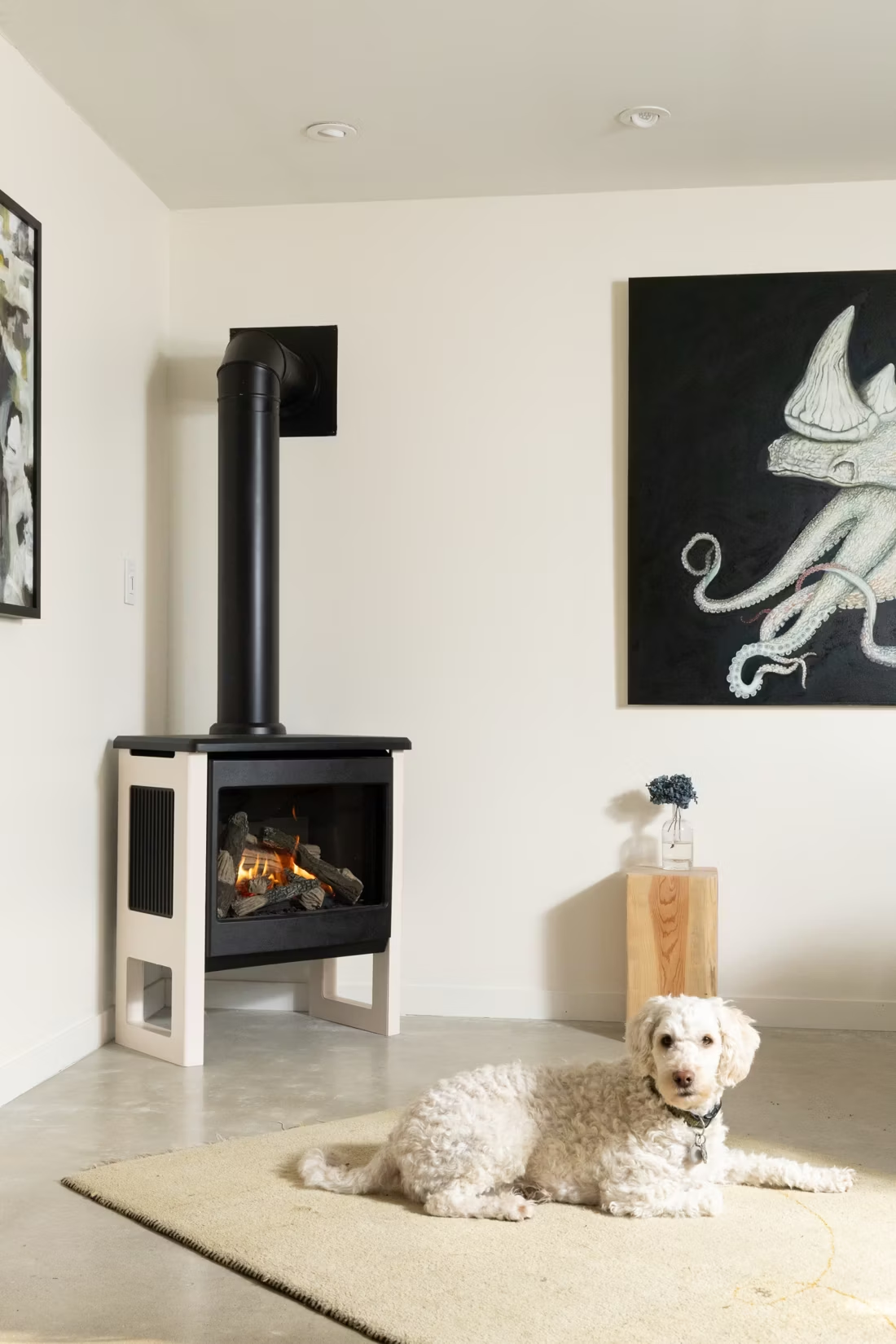
Four fuels. One honest answer for Passaic County.
Three steps. No salesperson until you're ready.
Tell us about your project
Your zip code, your situation, and the fuel you're leaning toward—or let the answers point you to one.
See what's actually available
The brands dealers within 100 miles genuinely carry—real options, never a catalog mirage.
Get your dealer & Project Guide
A trusted local dealer, plus the free Project Guide & Parts List that names every component of the job.
Frequently Asked Questions
Which fuel works best in Passaic County—gas or electric?
For most Passaic County homes, gas is the primary choice. PSE&G's natural gas network covers the vast majority of the county, so a direct-vent gas fireplace or insert gives you real, thermostat-controlled heat with none of the storage or venting hassle a wood or pellet setup would require. Electric fireplaces are the practical second option—especially in Paterson's and Passaic city's apartment buildings and rowhomes, where landlords and condo boards often won't allow anything with a flue or exterior vent. Electric also works well as supplemental heat in bedrooms and finished basements across Wayne and Clifton. Wood and pellet stoves are uncommon here; if you're set on one, expect a smaller pool of dealers and, in denser towns, a harder path through local zoning and fire code.
Do I need a permit to install a gas or electric fireplace in Passaic County?
Almost always, yes, for gas. New Jersey's Uniform Construction Code requires a construction permit for gas fireplace, insert, and gas stove installations, plus a separate plumbing subcode permit for the gas line itself—that work has to be done by a licensed NJ gas fitter or master plumber. Permits are issued locally: Paterson's Bureau of Construction Code Enforcement, Wayne Township's Building Department, and similar offices in Clifton and Passaic city all handle their own jurisdictions. Electric fireplace installs typically skip the permit process if they're plug-in units, but a built-in electric fireplace that requires a new dedicated circuit usually needs an electrical subcode permit. Most local retailers coordinate the permitting as part of the installation quote.
Are wood-burning fireplaces restricted in Passaic County?
There's no county-wide air quality restriction on wood burning—Passaic County doesn't sit in a non-attainment zone the way some western basins do. The bigger barrier is local: dense municipalities like Paterson, Clifton, and Passaic city have building and fire codes, plus condo and rowhome construction, that make new wood-burning installations impractical or outright disallowed. In the more wooded, larger-lot townships—West Milford and Ringwood up in the Highlands—a wood stove is more feasible, and you'll still find oak, hickory, and maple as the common regional firewood species. Countywide, though, wood is a niche category compared to gas and electric.
Can one local retailer handle both gas and electric fireplaces?
Yes—most Passaic County hearth retailers stock both gas and electric units, since those are the two fuels that actually move here. A handful specialize almost entirely in electric (useful if you're in a Paterson high-rise or a Passaic city condo with no venting options), while others lean toward gas fireplaces and inserts for single-family homes in Wayne, Totowa, and Hawthorne. If you're not sure which fuel fits your building type, a retailer that carries both can walk you through the venting and permitting differences on the spot.
How does installation differ between older Paterson rowhomes and newer Wayne construction?
In Paterson's older rowhomes and multi-family buildings, gas fireplace installs are usually direct-vent retrofits run through an exterior wall, since many of these buildings don't have a usable chimney flue, and electric inserts are a common no-venting alternative for units where running new gas line isn't practical. In Wayne and other newer-construction townships, homes are more likely to already have a gas line and a built chimney chase, so installation is often a straightforward insert swap or a new direct-vent unit tied into existing gas service. Either way, a local retailer who's worked both housing types will know which approach avoids the most rework.
What's the typical cost range for gas and electric fireplace installation in Passaic County?
Gas fireplace, insert, or stove: roughly $4,500–$10,000 depending on whether new gas line work is needed and how much venting has to be run through masonry or exterior walls—conversions using existing gas service land on the lower end. Electric fireplace: $200–$3,000 for the unit itself, plus $400–$1,200 in labor for anything beyond a plug-in wall-mount—built-ins that need a new circuit run higher. For Passaic County specifics tied to local retailer pricing, see the county + fuel pages above.
Wood, gas, pellet, or electric—how do I choose?
Match the fuel to your life, not the other way around. Wood: lowest fuel cost and total power-outage independence, but you're hauling and stacking. Gas: press a button, set a thermostat, no maintenance to speak of. Pellet: wood economics with automatic feeding, in exchange for weekly cleaning and a need for electricity. Electric: plugs in anywhere with honest supplemental heat. Nobody regrets the fuel that fits how they actually live.
What is an in-home preview and do I need one?
It's a visit where a hearth professional measures your space, confirms the model you picked actually works in your home, and walks the specs—framing, gas line, venting, finish work—before anything is ordered. Some details you just can't know until you see the house. Never make a down payment without one; it's the single most-skipped step that burns buyers.
Can I install a fireplace myself?
If you're putting a fire in your house on purpose, it's best to work with an expert. Unless you're genuinely experienced in framing, gas line, vent pipe, and the national code on clearances to combustibles, have a professional do it—and ideally the same company that sells you the fireplace, so warranty, service, and liability all live under one roof.
Can a fireplace actually lower my heating bill?
Yes—by creating a comfort zone. A furnace heats every square foot of the house just to warm the one room you're in; a gas fireplace on low burns roughly a sixth of the gas a typical furnace does. Set the furnace around 55–60 degrees as a baseline, then heat the rooms your family actually uses. Families who heat this way commonly save $20–$60 a month.
Stove and Fireplace Dealers in Passaic County
Listings include WhyFire partner dealers, dealers we have verified as authorized for the brands we recommend, and established local businesses that carry hearth products. Every listing shows which one it is. The ones marked Preferred run on WhyFire's software, so they can show you real pricing and book your appointment right here. No manufacturer pays for placement. How we verify dealers →
Kjb Fireplaces
Fireplaces By Design
Chimney Sweep Energy Barn
Mcnamara Fireplace And Stove
Light N Grid
Fire Design
Flue Tech
N & N Services
County Woodstoves Inc
Timberline Speciality Products
Timberline Stoves
Valley Mason Supply
Paradise Pool & Spa Inc.
Westchester Fireplace
Harris Hearth And Home
Fireplaces R Us
Costello's Hearth & Spa - Bernardsville
Big Apple Fireplaces
Find your fireplace in Passaic County.
Tell us about your home and we'll match you with a trusted local Passaic County dealer and send a free Project Guide & Parts List—the exact parts, including the vent kit, and the dealer we recommend for your project.
Find Your Fireplace →