
A Niche Heat Source for Pine Hill's Mild Winters.
Pine Hill sits in a natural-gas-served corner of Camden County with moderate winters—which means pellet stoves here serve a specific purpose, not the whole house. Let's figure out if one fits your home.
Every Project Starts From One of These Five Situations
Natural gas covers most of Pine Hill's heating needs—pellet stoves fill a small, specific niche.
Pine Hill sits on the flat coastal plain of Camden County at just 174 feet of elevation, with a climate that's genuinely mild by Mid-Atlantic standards: a moderate heating season and winter lows averaging around 25°F. Compare that to a place like Burlington, VT or Duluth, MN, where homeowners lean on a wood or pellet stove to survive weeks of sub-zero cold, and it's easy to see why pellet heat never became mainstream here. Most Pine Hill homes already have natural gas service, and a furnace or gas fireplace handles the winter without much drama.
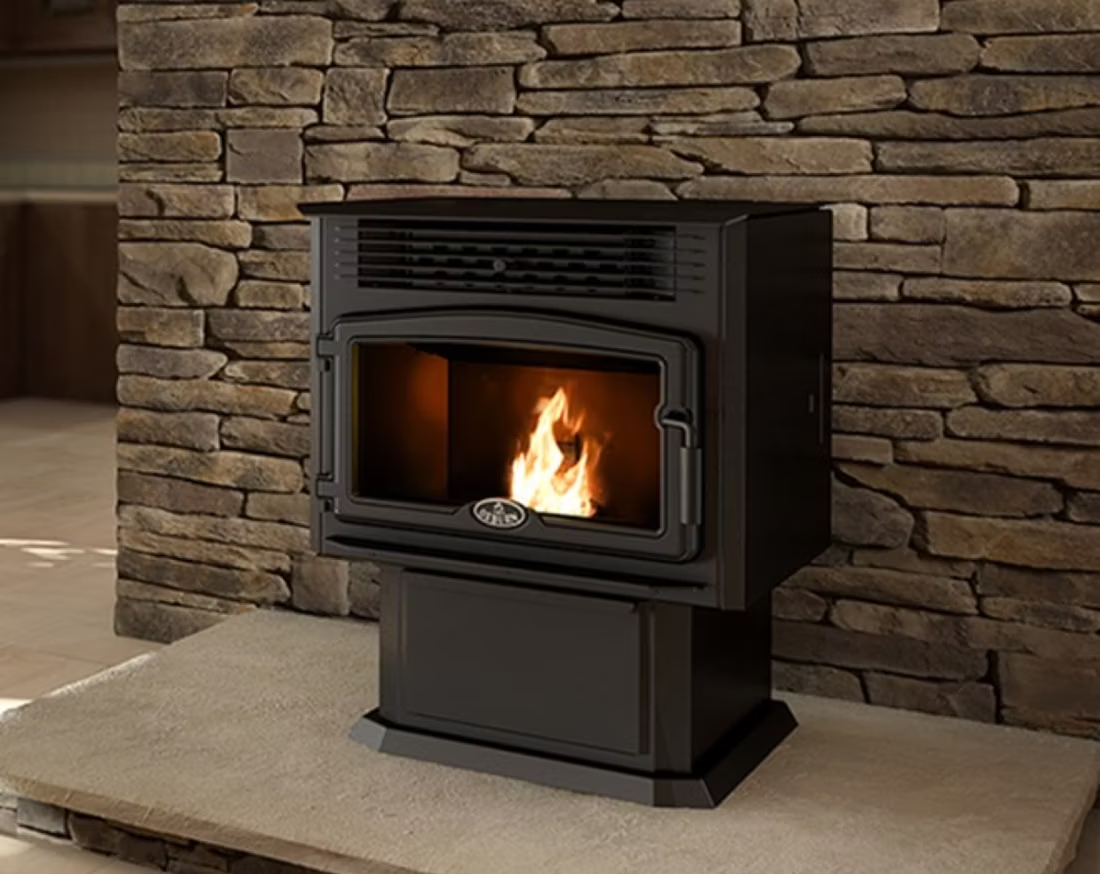
That said, pellet stoves aren't absent from the area—regional brands like Energex, Hamer Pellet Fuel, and Greene Team Pellet Fuel are sold through South Jersey farm and hardware suppliers, and a handful of Pine Hill homeowners install a pellet stove for supplemental heat in a converted garage or sunroom, for backup warmth during an outage, or simply for the look of a real flame without a masonry chimney. It's worth knowing going in, though, that a pellet stove needs electricity to run its auger and blower—and Atlantic City Electric's residential rate here runs around 22.6 cents per kWh, on the higher end for New Jersey, which is one more reason most homeowners treat pellet as a secondary option rather than a primary heat source.
Three steps. No salesperson until you're ready.
Tell us about your project
Your zip code, your situation, and the fuel you're leaning toward—or let the answers point you to one.
See what's actually available
The brands dealers within 100 miles genuinely carry—real options, never a catalog mirage.
Get your dealer & Project Guide
A trusted local dealer, plus the free Project Guide & Parts List that names every component of the job.
Frequently Asked Questions
How much does a pellet stove installation cost in Pine Hill?
There isn't a large enough local install market in Pine Hill to point to a town-specific average, but South Jersey installers typically price a freestanding, direct-vent pellet stove between $3,000 and $6,500 installed, depending on the unit and whether the vent run goes straight out a rear wall or requires a longer horizontal or roof penetration. Because most Pine Hill homes already have gas service, installers here often price a comparable gas insert alongside the pellet quote so you can compare upfront cost against ongoing fuel cost before deciding.
Does a pellet stove even make sense for a Pine Hill home?
For most Pine Hill homes, no—not as a primary heat source. With a moderate heating season and winter lows that average around 25°F, the heating load here is moderate, and a gas furnace or gas fireplace already covers it efficiently. A pellet stove tends to make more sense in a specific situation: a detached garage or workshop without gas service, a three-season room you want to use into November and March, or a household that wants a dedicated backup heat source that doesn't depend on the main furnace. If none of those describe your project, a gas insert is very likely the better fit for this climate and this town.
Where can I buy pellets locally near Pine Hill?
Pellet fuel isn't stocked on every corner in Camden County the way it is in New England, but regional brands including Energex, Hamer Pellet Fuel, and Greene Team Pellet Fuel are distributed through South Jersey farm supply and hardware retailers, and most hearth dealers that sell pellet stoves also stock bagged pellets or can point you to a nearby supplier. Because demand is lower here than in colder states, it's worth confirming with your dealer that a given brand is reliably restocked through the winter rather than assuming shelf stock will be there in January.
Pellet stove vs. gas fireplace—which fits Pine Hill better?
For the vast majority of Pine Hill homes, gas wins. Natural gas service is standard and widely available in this part of Camden County, gas fireplaces and inserts require no fuel storage or hopper refilling, and they're rated for the moderate heating load typical around here. Pellet stoves make sense in the narrower case of a room or building without gas access, or for a homeowner who specifically wants a secondary, semi-independent heat source. If you're simply upgrading your main living space, start the conversation with a local dealer around gas—it's the more common, more supported option here.
Will a pellet stove keep working during a power outage in Pine Hill?
Not without extra equipment. Pellet stoves rely on an electric auger to feed fuel and a blower to distribute heat, so a standard unit shuts down the moment power drops—which matters in a town served by Atlantic City Electric, where storm-related outages do happen along the coastal plain. Some homeowners pair a pellet stove with a small battery backup or portable generator specifically to keep it running through an outage. If uninterrupted backup heat is the actual goal, a gas fireplace with a standing pilot, or a wood-burning unit, will keep working without any power at all—worth discussing with a local dealer before you commit to pellet.
Do I need a permit to install a pellet stove in Pine Hill?
Yes. Any new solid-fuel appliance installation, including a pellet stove, requires a construction permit through the Pine Hill Borough Construction Department, and the unit needs to meet current EPA emissions certification. Most hearth dealers who install pellet stoves in Camden County handle the permit application and schedule the inspection as part of the job, so you're not filing paperwork yourself. Because pellet installs are less common here than gas, it's worth confirming upfront that your installer is familiar with the borough's specific inspection process.
What size pellet stove do I need for a Pine Hill home?
Given the moderate climate here—a moderate heating season and winter lows around 25°F—most pellet stove use in Pine Hill is supplemental rather than whole-house, so sizing usually comes down to the specific room or space you're heating rather than the whole home. A small unit rated for 500–1,000 square feet typically covers a converted garage, sunroom, or finished basement. Whole-home sizing is rarely the right calculation here since the primary furnace already carries that load—a local dealer can confirm the right BTU output for your specific space.
How much maintenance does a pellet stove require?
Pellet stoves need more routine attention than a gas fireplace but less than a wood stove: the burn pot and ash pan should be emptied every few days of regular use, the glass wiped down weekly, and the hopper, auger, and exhaust vent professionally cleaned and inspected once a year, ideally before the heating season starts. Because pellet units see lighter, more occasional use in a mild climate like Pine Hill's, annual service is usually sufficient rather than the mid-season cleanings that heavy users in colder states sometimes need.
How does venting a pellet stove compare to venting a gas fireplace?
Pellet stoves vent through a small-diameter PL pipe (typically 3 or 4 inches) that can run horizontally through an exterior wall, which makes them relatively easy to retrofit into a room without an existing chimney—a garage or sunroom, for example. Gas fireplaces and inserts use similar direct-vent technology but in a wider range of configurations, including vertical runs through existing masonry chimneys, which is common in Pine Hill's older housing stock. For most Pine Hill homes with an existing fireplace, a gas insert reusing that chimney is the simpler venting path; a pellet stove is the better fit specifically when you're heating a space that has no chimney or gas line at all.
What's the difference between an insert and a zero-clearance fireplace?
An insert is a fireplace that slides into a pre-existing wood-burning fireplace—if you don't have one, there's nothing to insert it into. A zero-clearance fireplace is built into a framed wall, which makes it the answer for remodels and new construction. Simple test: existing masonry fireplace means insert; blank or framed wall means zero-clearance.
How often does a pellet stove need cleaning?
A clean pellet stove is a happy pellet stove. Plan on cleaning the burn pot about once a week when you're burning regularly—ash and clinkers gum up the air holes just like a pellet barbecue. Most pellet stove problems trace back to skipped cleaning that nobody explained up front. Some designs make it easy with a trapdoor burn pot: pull a lever and the gunk drops into the ash pan.
Can a fireplace actually lower my heating bill?
Yes—by creating a comfort zone. A furnace heats every square foot of the house just to warm the one room you're in; a gas fireplace on low burns roughly a sixth of the gas a typical furnace does. Set the furnace around 55–60 degrees as a baseline, then heat the rooms your family actually uses. Families who heat this way commonly save $20–$60 a month.
Can I install a fireplace myself?
If you're putting a fire in your house on purpose, it's best to work with an expert. Unless you're genuinely experienced in framing, gas line, vent pipe, and the national code on clearances to combustibles, have a professional do it—and ideally the same company that sells you the fireplace, so warranty, service, and liability all live under one roof.
Nearby Dealers
Hearth shops serving Pine Hill and the surrounding area. Every listing shows whether it is a WhyFire partner, a dealer we have verified as authorized for the brands we recommend, or a local business carrying hearth products. No manufacturer pays for placement. How we verify dealers →
Rettinger Fireplace Systems Inc
South Jersey Hearthside LLC Dba Modern Gas Products
McCloskey's Garden & Hearth
Rattan Patio & Fireplace Shoppe
Plumbarama Co. Inc.
Pellet Brands Stocked Around Pine Hill
Manufacturers will point you to the nearest stocking dealer.
Find your pellet stove in Pine Hill.
Tell us about your space and your heating goals, and we'll match you with a trusted local dealer who knows where pellet heat genuinely fits in Camden County—plus a free Project Guide & Parts List with the exact vent kit and parts for your install.
Find Your Fireplace →