
Pellet Heat in New Brunswick: A Niche Option in Gas Country.
Most New Brunswick homes already have natural gas piped in, so pellet stoves aren't the default heat source here. For the right home, though, they still make sense—and we'll connect you with a local dealer who can tell you honestly if yours is one of them.
Every Project Starts From One of These Five Situations
Natural gas dominates this stretch of the Raritan Valley.
New Brunswick sits along the Raritan River at just 65 feet of elevation, with a climate zone (4A) and a winter heating season that runs moderate—average winter lows around 23°F—compared to the Northeast's colder pockets. Public Service Electric & Gas (PSE&G) serves both electric and natural gas across nearly the entire city, from the dense blocks near Rutgers and downtown to the rowhomes and colonials further out. When a home already has a gas line run to the furnace or water heater, adding a direct-vent gas fireplace is a much smaller lift than adding a pellet appliance—which is a big reason pellet stoves show up so rarely on New Brunswick hearth retailers' install schedules.
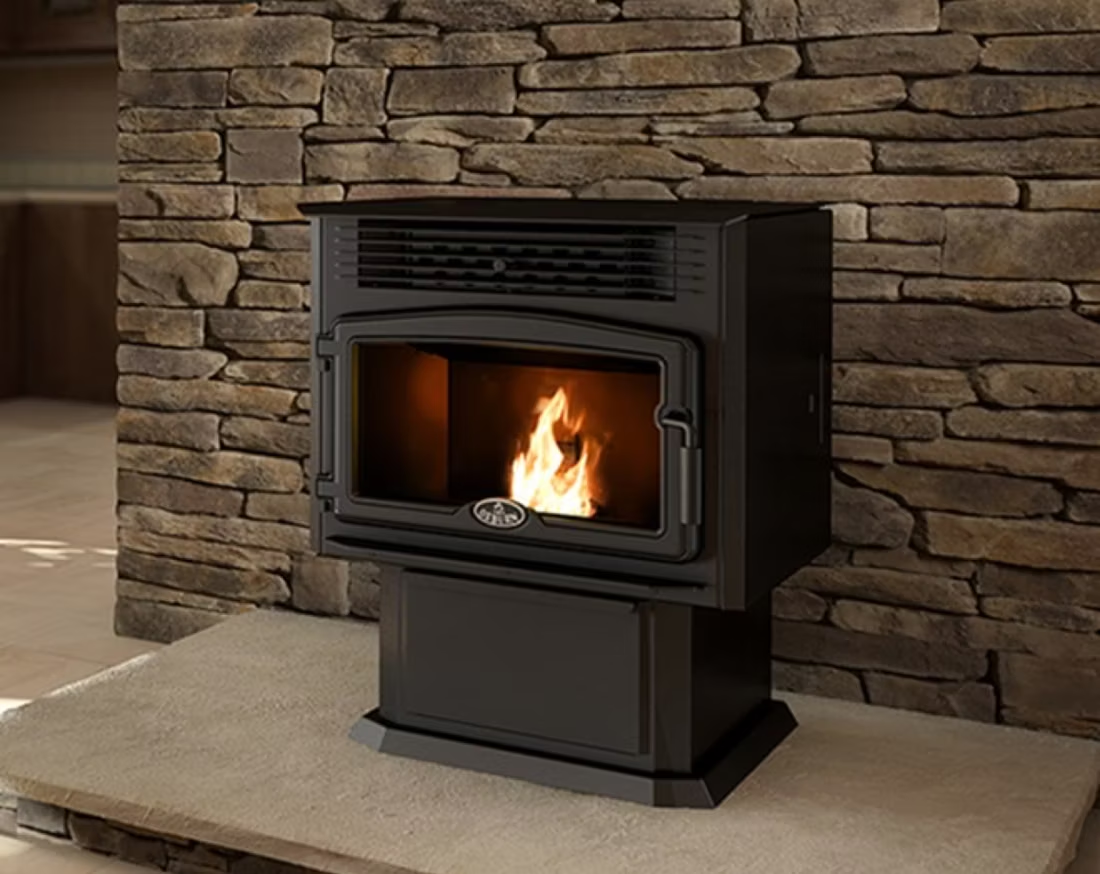
That said, pellet stoves aren't nonexistent here. A small number of New Brunswick homeowners install them—usually in older homes without a convenient gas hookup, as supplemental zone heat for a drafty addition, or because they like the idea of a self-contained, thermostat-controlled fire without cutting and stacking cordwood. Regional pellet brands like Energex, Hamer Pellet Fuel, and Greene Team Pellet Fuel are sold through hearth and hardware dealers across central New Jersey, so fuel supply isn't the obstacle—it's more that gas is simply already at the wall in most homes here. If you're set on pellet heat, a local dealer can tell you honestly whether your house is a good candidate or whether gas will serve you better.
Three steps. No salesperson until you're ready.
Tell us about your project
Your zip code, your situation, and the fuel you're leaning toward—or let the answers point you to one.
See what's actually available
The brands dealers within 100 miles genuinely carry—real options, never a catalog mirage.
Get your dealer & Project Guide
A trusted local dealer, plus the free Project Guide & Parts List that names every component of the job.
Frequently Asked Questions
Are pellet stoves actually common in New Brunswick?
Not especially. New Brunswick is a natural gas town—PSE&G service reaches most of the city, and that makes a direct-vent gas insert or fireplace the more common retrofit choice than a pellet stove. Pellet appliances show up here in specific situations: a home without an existing gas line, a converted attic or garage space used as supplemental living area, or a homeowner who specifically wants the lower-carbon-footprint burn of compressed wood pellets over gas. It's a legitimate option, just not the default one in this market the way it might be in a more rural, gas-limited part of the state.
How much does a pellet stove installation cost in New Brunswick?
Expect a similar range to most Northeast pellet installations—roughly $3,000 to $6,000 depending on the stove model, whether you're venting through an exterior wall (the standard approach for pellet units, since no chimney is required) and whether any electrical work is needed to power the auger and blower. Because pellet installs are less common locally, it's worth getting quotes from at least two dealers who regularly install pellet appliances rather than a shop that primarily handles gas conversions, since venting placement and clearance requirements differ from gas units.
Where can I buy pellet fuel near New Brunswick?
Regional brands including Energex, Hamer Pellet Fuel, and Greene Team Pellet Fuel are distributed through hearth dealers and home improvement stores across central New Jersey, and most New Brunswick-area retailers can order pellets by the ton or the pallet even if they don't stock large quantities on-site given limited local demand. Because pellet stoves are a smaller share of the local market compared to gas fireplaces, it's worth confirming with your dealer that they keep a reliable pellet supply chain before you commit to a stove—some homeowners end up ordering fuel a season ahead to guarantee availability.
Do I need a chimney to install a pellet stove?
No—this is actually one of pellet's advantages for a dense city like New Brunswick. Pellet stoves vent through a small-diameter pipe run horizontally out an exterior wall, rather than requiring a full masonry chimney or Class A vertical chimney like a wood stove does. That makes them workable in rowhomes and older colonials near downtown that were never built with a fireplace chimney, as long as there's a suitable exterior wall and the unit meets the required clearances. A local installer will confirm the venting path works with your home's layout before installation.
Will my pellet stove work during a power outage?
Not without a backup power source. Pellet stoves rely on an electric auger to feed fuel and a blower to distribute heat and exhaust combustion gases, so a standard unit shuts down the moment the power does—unlike a wood stove, which burns with no electricity at all. Given that PSE&G's service area does see occasional storm-related outages, some New Brunswick homeowners pair a pellet stove with a small battery backup or portable generator specifically to keep it running. If uninterrupted backup heat during outages is your top priority, that's worth discussing with a local dealer before you buy, since it affects unit selection.
Pellet stove vs. gas fireplace—which makes more sense for a New Brunswick home?
For most homes here, gas wins on convenience: PSE&G natural gas service already reaches the majority of New Brunswick, so adding a direct-vent gas fireplace or insert is often simpler and cheaper than adding pellet, and gas units with battery-backup ignition can run during power outages, which standard pellet stoves can't. Pellet makes more sense if your home lacks a gas line and running one would be costly, if you specifically want to avoid a fossil fuel appliance, or if you like the visual and heat character of an actual solid-fuel fire without the venting demands of wood. A local dealer who sells both can walk you through the real cost comparison for your specific address.
Do I need a permit to install a pellet stove in New Brunswick?
Yes—New Brunswick's Construction Code Office requires a permit for new solid-fuel or pellet-burning appliance installations, covering both the mechanical installation and the exterior wall penetration for venting. Most established hearth dealers handle this paperwork as part of the installation quote, so you generally don't need to file anything yourself. Given how infrequently pellet permits come through relative to gas fireplace permits in this city, it's worth confirming your installer has direct experience with pellet-specific code requirements, not just gas.
What size pellet stove do I need for a New Brunswick home?
New Brunswick's heating season is moderate rather than extreme—winter lows averaging around 23°F over a fairly typical winter stretch—so most homes don't need a stove sized for sustained sub-zero output. A smaller pellet stove (rated for 1,000–1,500 sq ft) is usually plenty for zone heating a single living area or addition, which is the most common use case locally. Whole-home heating with pellet alone is less common here given how many homes already run gas-fired central heat; most local buyers are looking for supplemental warmth in one room, not a primary furnace replacement, and a dealer can size accordingly.
Is a pellet stove a good backup heat source for New Brunswick winters?
It's a reasonable supplemental option, but with caveats. Pellet stoves need electricity to operate, so during a PSE&G outage a standard unit won't run unless it's paired with a battery backup or generator—something to plan for given the region's occasional storm-related outages. For pure emergency backup heat with zero dependency on utilities, a vented gas fireplace with battery-ignition or a wood-burning appliance is more reliable. Pellet tends to work better as everyday supplemental heat for a specific room—a converted garage, sunroom, or finished basement—rather than as a whole-house outage plan.
Why is a fireplace insert so efficient?
An insert does two things: it seals the chimney completely, so you stop losing air you already paid to heat, and it radiates warmth into the room through the firebox and glass. Most add a heat-exchange fan that pulls cool room air underneath, wraps it around the hot firebox, and pushes it back out warm. Your home is more efficient before you've even lit the first fire.
What's the difference between an insert and a zero-clearance fireplace?
An insert is a fireplace that slides into a pre-existing wood-burning fireplace—if you don't have one, there's nothing to insert it into. A zero-clearance fireplace is built into a framed wall, which makes it the answer for remodels and new construction. Simple test: existing masonry fireplace means insert; blank or framed wall means zero-clearance.
Does a fireplace add value to my home?
On average, a fireplace adds back to the home about the same amount you spent installing it. Add the monthly savings from heating the rooms you actually use instead of the whole house—often hundreds of dollars a year—and the value case is strong before you even count what a fire does for how your family uses the room.
Can I install a fireplace myself?
If you're putting a fire in your house on purpose, it's best to work with an expert. Unless you're genuinely experienced in framing, gas line, vent pipe, and the national code on clearances to combustibles, have a professional do it—and ideally the same company that sells you the fireplace, so warranty, service, and liability all live under one roof.
Nearby Dealers
Hearth shops serving New Brunswick and the surrounding area. Every listing shows whether it is a WhyFire partner, a dealer we have verified as authorized for the brands we recommend, or a local business carrying hearth products. No manufacturer pays for placement. How we verify dealers →
Fireplaces R Us
Appliance Brokers, Ltd.
Island Renovations
Hot Concepts Fireplaces
Costello's Hearth & Spa - Bernardsville
Fireside Pros/Awning Design
Harris Hearth And Home
My Deck, Llc
Flemington Supply Co. Inc
Central Jersey Masonry & Chimney Sweep
Builders Architectural Millwork
Pellet Brands Stocked Around New Brunswick
Manufacturers will point you to the nearest stocking dealer.
Find your pellet stove in New Brunswick.
Tell us about your home and where you're hoping to add heat, and we'll put together a free Project Guide & Parts List—the exact parts, including the vent kit, and a trusted local New Brunswick-area dealer who can tell you straight whether pellet or gas is the smarter call for your house.
Find Your Fireplace →