
Warm Up Fast on the Coldest Camden County Nights.
Instant, no-mess heat for Magnolia's older Capes and colonials—find the right gas fireplace or insert and get matched with a trusted local dealer.
Every Project Starts From One of These Five Situations
Reliable heat without the hassle of tending a fire.
Magnolia is a small, tightly built borough in Camden County, just a few miles from Philadelphia, with winter lows averaging around 26°F and a heating season that's noticeably milder than harsher climates. That's a fraction of what a place like Duluth, MN sees, but South Jersey still gets its share of raw, damp winter nights and nor'easter-driven power outages—and a lot of Magnolia's housing stock, from postwar Capes to older colonials near the borough center, was built with a fireplace or chimney already in place.
Wood stoves and pellet stoves are essentially a non-factor here—small lots, attached garages, and no nearby woodlot access make cordwood impractical for most residents, and few dealers in this corridor stock wood-burning equipment for a market this size. Natural gas, on the other hand, is well established: PSE&G, which also supplies electricity to the borough, runs gas service through most of Magnolia's streets. That makes a direct-vent gas fireplace or insert the practical, low-maintenance option—instant heat at the flip of a switch, no ash, no chimney sweep, and (with the right ignition system) a unit that keeps working when the power doesn't.
Three steps. No salesperson until you're ready.
Tell us about your project
Your zip code, your situation, and the fuel you're leaning toward—or let the answers point you to one.
See what's actually available
The brands dealers within 100 miles genuinely carry—real options, never a catalog mirage.
Get your dealer & Project Guide
A trusted local dealer, plus the free Project Guide & Parts List that names every component of the job.
Frequently Asked Questions
How much does a gas fireplace installation cost in Magnolia?
Most gas fireplace and insert installations in the Magnolia area run somewhere between $4,000 and $9,500. A direct-vent insert dropped into an existing masonry fireplace—common in Magnolia's older Cape Cods—sits toward the lower end when a gas line is already nearby. A new built-in gas fireplace for a remodel or addition, which requires framing, venting through an exterior wall, and a longer gas line run, lands higher, sometimes reaching $11,000 to $12,000 depending on the unit and finish work. A local dealer will give you a firm number after seeing the space in person.
Can I convert my existing wood fireplace to gas?
Yes, and it's a common project in Magnolia's older housing stock, where original masonry fireplaces are more decorative than functional at this point. A gas insert typically vents through the existing chimney with a stainless liner, so you keep the look of the fireplace while gaining real, controllable heat. Since almost nobody in this part of Camden County is set up to burn cordwood regularly, this conversion is usually about upgrading an underused fireplace into something that actually gets used all winter—expect $4,500 to $9,000 depending on the insert and whether PSE&G gas service already reaches that wall of the house.
Do I need natural gas, or would propane work in Magnolia?
Nearly every home in the borough has access to natural gas through PSE&G, so propane is rarely necessary here—it's mainly used for outdoor fire features or in the rare case where a specific interior wall sits too far from the gas main to extend service affordably. If you already have a gas stove, water heater, or furnace, adding a gas fireplace is usually a straightforward tie-in for your installer rather than a new utility setup.
Will my gas fireplace still work if the power goes out?
It can, depending on the ignition system. Units with intermittent pilot ignition (IPI) run on a small battery backup that kicks in automatically during an outage, so the fireplace still lights on demand. Valor fireplaces go a step further—their pilot assembly generates its own electricity through the thermocouple, so there are no batteries to remember at all. That matters in Magnolia during the nor'easters that periodically knock out PSE&G service across Camden County for a day or more; a gas fireplace with battery backup or a self-powering pilot is one of the few heat sources that keeps running through it.
What's the difference between a gas fireplace, gas insert, and gas stove?
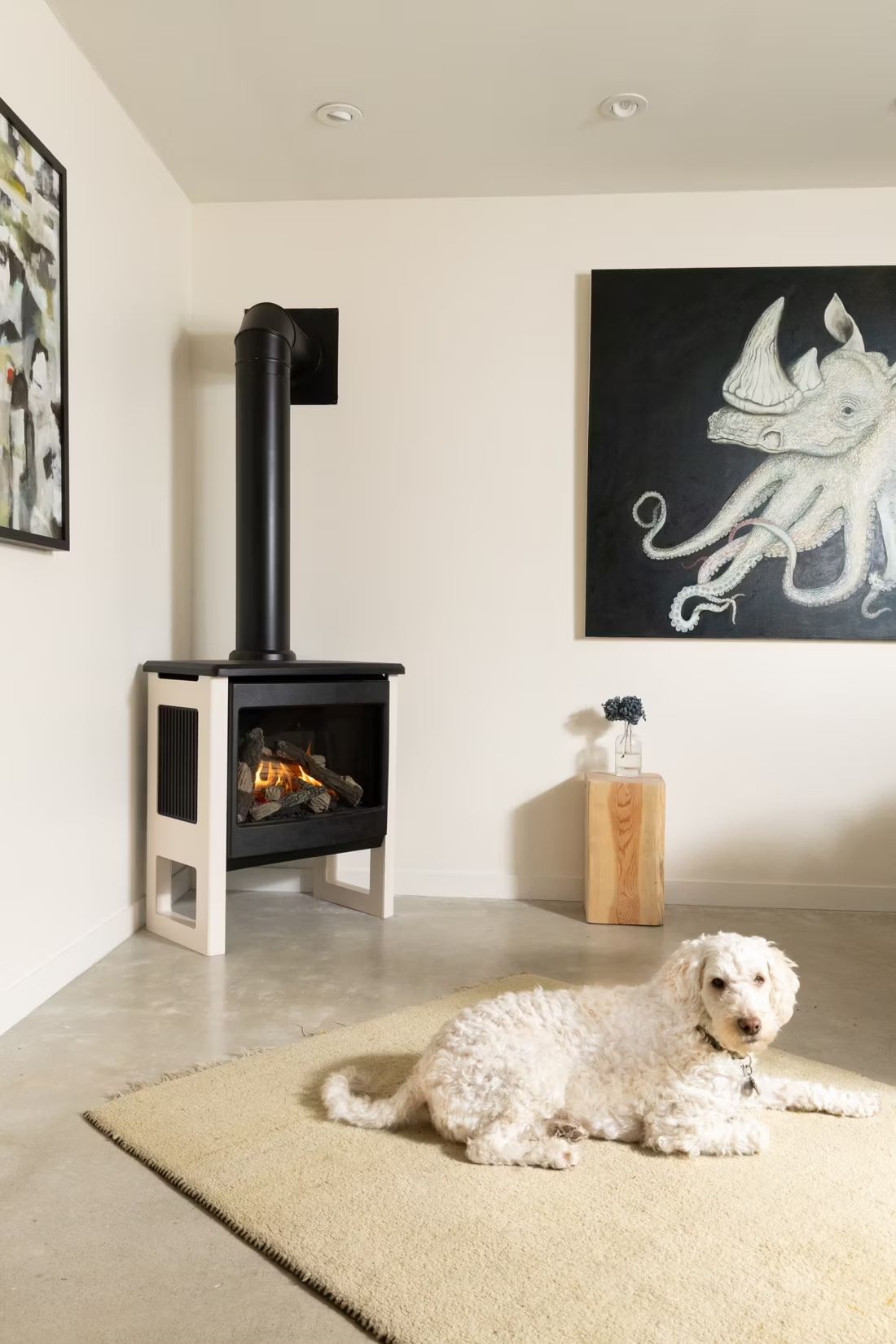
A gas fireplace is a fully framed-in unit, typically chosen for new construction or a remodel where there's no existing masonry opening. A gas insert is built to slide into an existing fireplace and uses that chimney as its vent path—the most common upgrade for Magnolia's older homes with a fireplace already in place. A gas stove is freestanding, sits on its own hearth pad, and can go almost anywhere with the right clearances, which makes it a useful option for a finished basement or a room with no existing chimney at all.
Do I need a permit to install a gas fireplace in Magnolia?
Yes. Installations fall under the New Jersey Uniform Construction Code, and you'll need both a construction permit and a plumbing subcode permit (gas piping falls under plumbing in the NJ UCC) through the Borough of Magnolia's Construction Code Office. In practice, most established hearth dealers pull these permits as part of the job and coordinate the licensed gas-fitting work directly, so you're not left managing separate inspections yourself.
Are vent-free gas fireplaces allowed in New Jersey?
Vented, direct-vent units—which pull combustion air from outside and exhaust it back outside through a sealed pipe—are the standard and safest choice, and they're what most Magnolia installers recommend by default. Vent-free (unvented) gas fireplaces are permitted under New Jersey code but come with strict room-size and ventilation requirements, plus mandatory oxygen depletion sensors, since they release combustion byproducts into the living space. For a borough of small, well-insulated homes like Magnolia, a direct-vent unit is almost always the more practical and healthier option, but a local dealer can walk you through both if you're set on a vent-free model for a specific room.
How often does a gas fireplace need to be serviced?
Plan on an annual inspection, ideally before the heating season starts in the fall. A technician checks the burner, pilot or ignition system, gas connections, and venting, and cleans the glass and interior components. It's a much lighter job than chimney sweeping for wood-burning units, but skipping it is how sooted glass, weak flames, and pilot problems creep in. Local gas appliance service providers typically charge in the $150–$250 range for a standard annual visit.
Gas vs. electric fireplace—which makes more sense in Magnolia?
Gas fireplaces produce real, sustained heat output and can meaningfully offset a furnace's workload on cold nights, which matters given PSE&G's residential electric rate of roughly 19.8 cents per kWh—running electric resistance heat as anything more than occasional supplemental warmth gets expensive fast in South Jersey. Electric fireplaces cost far less to install (often under $1,200, with no venting or gas line needed) and work well for ambiance, rentals, or rooms where running a gas line isn't practical. For a primary secondary-heat source in a Magnolia home, gas usually wins on performance; electric wins on simplicity and low upfront cost. Wood-burning options are essentially off the table for most homes here given lot sizes and the lack of local firewood infrastructure.
Is my gas fireplace wasting gas?
If it was installed more than 15 years ago, probably. Older gas fireplaces keep a standing pilot light burning all the time, and that little flame can cost a couple hundred dollars a year. Newer models use pilot-on-demand ignition—the pilot lights only when you use the fireplace and goes out when you turn it off.
Why is a fireplace insert so efficient?
An insert does two things: it seals the chimney completely, so you stop losing air you already paid to heat, and it radiates warmth into the room through the firebox and glass. Most add a heat-exchange fan that pulls cool room air underneath, wraps it around the hot firebox, and pushes it back out warm. Your home is more efficient before you've even lit the first fire.
Does a fireplace add value to my home?
On average, a fireplace adds back to the home about the same amount you spent installing it. Add the monthly savings from heating the rooms you actually use instead of the whole house—often hundreds of dollars a year—and the value case is strong before you even count what a fire does for how your family uses the room.
Can a fireplace actually lower my heating bill?
Yes—by creating a comfort zone. A furnace heats every square foot of the house just to warm the one room you're in; a gas fireplace on low burns roughly a sixth of the gas a typical furnace does. Set the furnace around 55–60 degrees as a baseline, then heat the rooms your family actually uses. Families who heat this way commonly save $20–$60 a month.
Nearby Dealers
Hearth shops serving Magnolia and the surrounding area. Every listing shows whether it is a WhyFire partner, a dealer we have verified as authorized for the brands we recommend, or a local business carrying hearth products. No manufacturer pays for placement. How we verify dealers →
Rettinger Fireplace Systems Inc
South Jersey Hearthside LLC Dba Modern Gas Products
McCloskey's Garden & Hearth
Rattan Patio & Fireplace Shoppe
Plumbarama Co. Inc.
Kester Fireplace
Estates Chimney & Fireplace
Maple Glen Mechanical
Ambler Fireplace And Patio
E & E Stoves & Fireplaces
Find your gas fireplace in Magnolia.
Tell us about your home and we'll match you with a trusted local dealer and send over a free Project Guide & Parts List—the exact parts, including the vent kit, for your Magnolia gas fireplace project.
Find Your Fireplace →