
Real Warmth, No Chimney Required, in Magnolia.
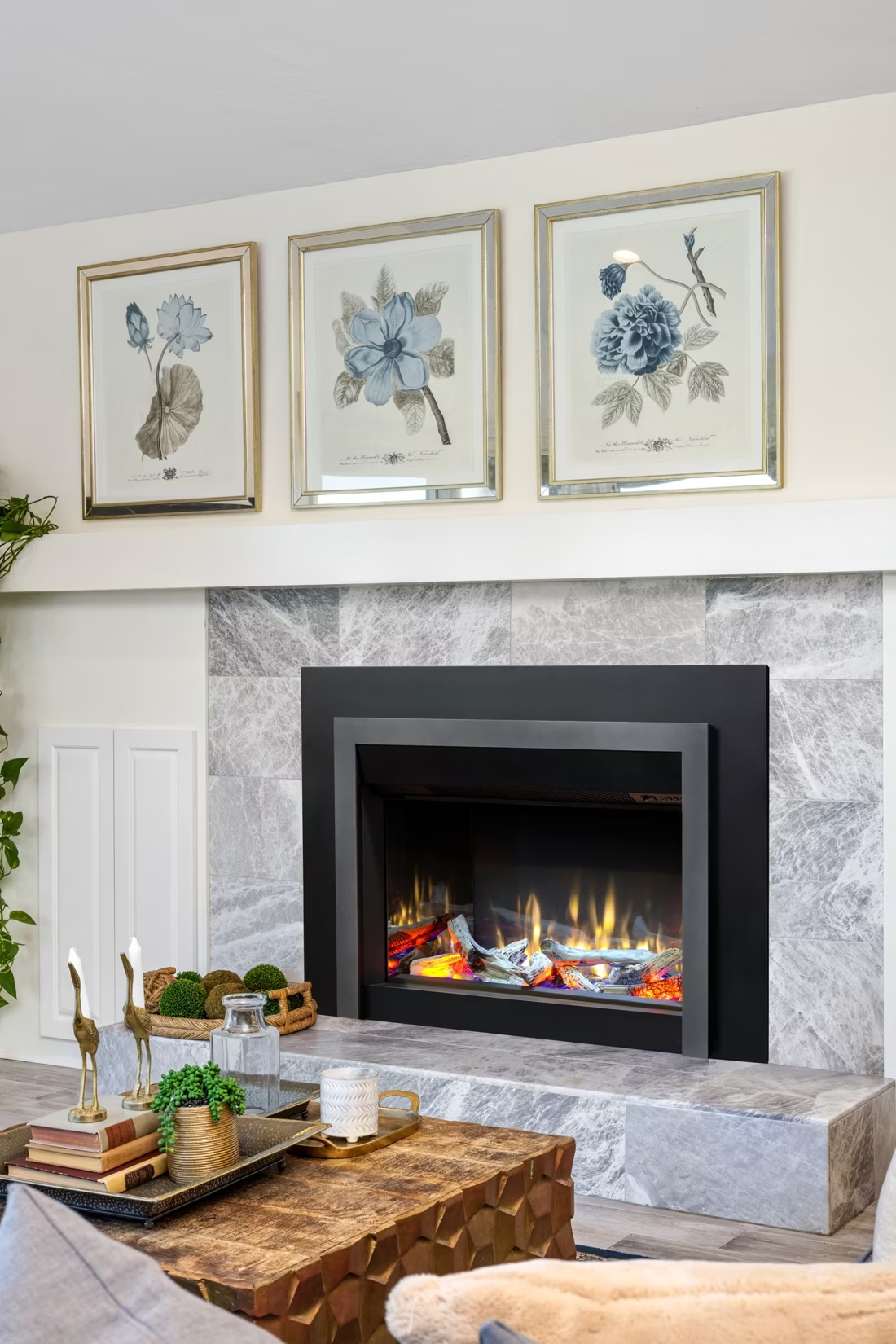
For Magnolia's colonials, capes, and rowhomes without an existing flue, an electric fireplace adds instant ambiance and zone heat—no venting, no gas line, no masonry work.
Every Project Starts From One of These Five Situations
A half-square-mile borough built for electric heat.
Magnolia is a tight, tree-lined Camden County borough of about 4,300 residents, sitting at just 83 feet of elevation in climate zone 4A. Winters here average a low around 26°F with a moderately cold, multi-month heating season—cold enough to want real supplemental heat in a family room or bedroom, but nowhere near the punishing stretch a place like Duluth, MN logs every winter. Most Magnolia housing stock is older single-family and twin homes on small lots, many without a chimney or masonry fireplace to work with.
That lot size and housing style is exactly why wood and pellet appliances see almost no demand here—there's rarely room for a woodpile, a chimney retrofit, or the clearances a wood stove needs, and the borough simply isn't set up for cutting or hauling cordwood the way a rural county would be. Electric fireplaces fill that gap well: PSE&G serves Magnolia at roughly $0.1981 per kWh, and a plug-in or built-in unit gives you real, controllable heat in the one or two rooms you actually use, without touching your home's structure.
Three steps. No salesperson until you're ready.
Tell us about your project
Your zip code, your situation, and the fuel you're leaning toward—or let the answers point you to one.
See what's actually available
The brands dealers within 100 miles genuinely carry—real options, never a catalog mirage.
Get your dealer & Project Guide
A trusted local dealer, plus the free Project Guide & Parts List that names every component of the job.
Frequently Asked Questions
How much does an electric fireplace cost to install in Magnolia?
A freestanding or mantel-style electric fireplace that simply plugs into an existing outlet typically runs $200 to $600 for the unit itself, with no installation labor beyond mounting. A built-in or wall-recessed unit—the more common upgrade in Magnolia's older colonials and capes—runs $1,500 to $4,500 once you add framing, a dedicated 120V or 240V circuit, and an electrician's time. Because there's no venting or gas line involved, electric is consistently the least expensive fireplace category to install here.
What size electric fireplace do I need for my Magnolia home?
Most electric inserts are rated to comfortably heat 300 to 1,000 square feet, which covers a single living room, den, or primary bedroom in a typical Magnolia twin or single-family home. Since electric units are supplemental heaters rather than whole-house furnaces, sizing is more about matching the room than the whole footprint—a 26-to-36-inch insert handles most Magnolia living rooms, while smaller wall-mount units suit bedrooms or finished basements. A local dealer can size it to your specific room in a few minutes.
What will an electric fireplace cost to run with PSE&G rates?
PSE&G's residential rate in Magnolia runs about $0.1981 per kWh, a bit above the national average, so it's worth doing the math before buying. A typical 1,500-watt electric fireplace on high heat costs roughly $0.30 an hour to run—about $2.40 for an 8-hour evening of use. That's still far cheaper than running central heat to warm a whole house just to keep one room comfortable, which is the main reason electric fireplaces get used for zone heating rather than as a primary furnace here.
Electric vs. gas fireplace—which makes more sense in Magnolia?
Gas is a strong option in Magnolia too, and many homes here already have natural gas service for the furnace and water heater, which makes a direct-vent gas insert straightforward to add. Gas puts out more real heat and can double as backup heat during a power outage with the right ignition system. Electric wins on install simplicity and cost—no venting, no gas line, and it works in any room with an outlet, including finished basements or upper-floor bedrooms where running gas line or venting isn't practical. Many Magnolia homeowners choose gas for the main living area and electric for a secondary room.
Do I need a permit for an electric fireplace in Magnolia?
A plug-in electric fireplace that uses an existing standard outlet generally doesn't require a permit. If you're adding a built-in unit that needs a new dedicated circuit or panel work, that electrical work typically does require a permit through Magnolia Borough, and it should be pulled by a licensed electrician—not skipped. Because there's no venting, gas line, or combustion involved, electric fireplace permitting in Magnolia is far simpler than a wood or gas installation.
What type of electric fireplace fits an older Magnolia home best?
For the capes and colonials common in Magnolia, a built-in or recessed wall unit installed into an existing wall cavity gives the cleanest look without needing a chimney or hearth that many of these homes never had. Homes with an old, unused masonry fireplace can use an electric insert that slides into the existing firebox opening, keeping the mantel and surround while eliminating the draft and maintenance of an open hearth. Mantel-style freestanding units are the easiest option for renters or homeowners who don't want any wall modification at all.
Can an electric fireplace actually heat a room in Magnolia's winters?
Yes, for the room it's in. With winter lows averaging around 26°F and a moderately cold, multi-month heating season, Magnolia's climate is moderate compared to colder parts of the country, so a 1,500-watt electric fireplace can meaningfully warm a well-insulated 300-to-400-square-foot room on its own. It won't replace your central furnace on a 20-degree night, but it's genuinely useful for taking the chill off a den or bedroom without running the whole-house system.
Are wood stoves or pellet stoves an option in Magnolia?
They're uncommon here, and honestly not a great fit for most Magnolia properties. The borough is under a square mile with small, closely spaced lots, most homes lack the chimney or clearance space a wood stove needs, and there's no practical local source of cut firewood the way there would be in a more rural part of the state. A handful of larger properties on the borough's edges could technically support a wood insert, but for the vast majority of Magnolia homes, gas and electric are the realistic, code-friendly choices.
How much maintenance does an electric fireplace need?
Very little. There's no chimney to sweep, no gas line to inspect, and no combustion byproducts to worry about. Occasional dusting of the heater vents, an annual check that the fan and heating element are running cleanly, and replacing the LED ember bed bulbs every several years (on models that use them) is about the extent of it. That low-maintenance profile is a big part of why electric fireplaces are popular in Magnolia's smaller, low-upkeep homes.
Does an electric fireplace need a vent or chimney?
No—that's its superpower. An electric fireplace needs a wall and an outlet, period. No vent pipe, no gas line, no clearances to design around, which is why it works in bedrooms, offices, apartments, and walls where venting a gas or wood unit would be impractical or impossible. Installation is typically the simplest and least expensive of any fireplace type.
Do electric fireplaces actually produce heat?
Yes—most put out around 4,800–5,000 BTUs from a standard outlet, which comfortably warms a bedroom, office, or den as a comfort-zone heater. What they won't do is carry a whole house the way wood, gas, or pellet can. Think of electric as ambiance-first with honest supplemental heat: flames on with no heat in July, flames plus warmth in January.
Can a fireplace actually lower my heating bill?
Yes—by creating a comfort zone. A furnace heats every square foot of the house just to warm the one room you're in; a gas fireplace on low burns roughly a sixth of the gas a typical furnace does. Set the furnace around 55–60 degrees as a baseline, then heat the rooms your family actually uses. Families who heat this way commonly save $20–$60 a month.
What is an in-home preview and do I need one?
It's a visit where a hearth professional measures your space, confirms the model you picked actually works in your home, and walks the specs—framing, gas line, venting, finish work—before anything is ordered. Some details you just can't know until you see the house. Never make a down payment without one; it's the single most-skipped step that burns buyers.
Nearby Dealers
Hearth shops serving Magnolia and the surrounding area. Every listing shows whether it is a WhyFire partner, a dealer we have verified as authorized for the brands we recommend, or a local business carrying hearth products. No manufacturer pays for placement. How we verify dealers →
Rettinger Fireplace Systems Inc
South Jersey Hearthside LLC Dba Modern Gas Products
McCloskey's Garden & Hearth
Rattan Patio & Fireplace Shoppe
Plumbarama Co. Inc.
Kester Fireplace
Estates Chimney & Fireplace
Maple Glen Mechanical
Ambler Fireplace And Patio
E & E Stoves & Fireplaces
Electric Service in Magnolia
An electric fireplace's heater draws about 1,500 watts—pennies per hour at local rates.
Public Service Elec & Gas Co
Find your electric fireplace in Magnolia.
Tell us about your room and your home, and we'll match you with a trusted local Magnolia-area dealer and send over a free Project Guide & Parts List—the right unit, the electrical work needed, and a clear plan for your space.
Find Your Fireplace →