
Steady pellet heat for Hunterdon County's cold country nights.
Thermostat-controlled warmth for the farmhouses and river towns of Hunterdon County—from Flemington to Frenchtown to the Highlands townships. Find the right unit and connect with a trusted local dealer.
Every Project Starts From One of These Five Situations
A clean, low-effort option for a county built on old farmhouses.
Hunterdon County sits in the rolling farmland and ridge country of northwestern New Jersey, stretching from the Delaware River towns of Lambertville and Frenchtown east through Flemington and up into the Highlands around High Bridge and Clinton. With a population of just under 27,100 spread across mostly rural townships, the county sees real winter—a 5A climate zone, a heating season on par with a typical January in Burlington, Vermont, and winter lows averaging 21°F. That's enough cold to matter for six months of the year, especially in the older, less-insulated farmhouses that make up a large share of the county's housing stock.
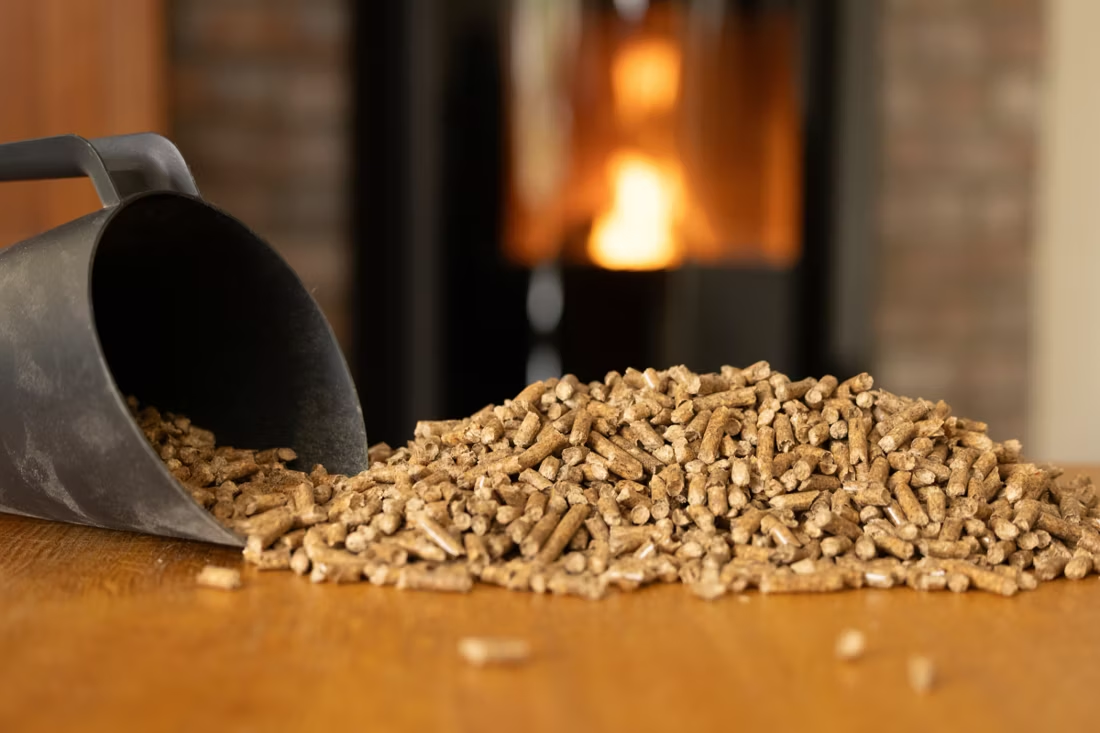
Pellet stoves have found real traction in a county like this: many of the older homes off the beaten path in townships like Kingwood, Franklin, and Delaware run on propane or oil rather than piped natural gas, and pellet heat offers a cleaner, more controllable, and often cheaper alternative for zone heating a drafty farmhouse living room or a converted barn space. Regional pellet producers—Energex, Hamer Pellet Fuel, and Greene Team Pellet Fuel—all supply dealers within reach of the county, so fuel supply isn't the issue it can be in more remote parts of the country. With no air quality restrictions or burn curtailments on the books for Hunterdon County, pellet stoves also run without the seasonal red-flag days that complicate wood burning elsewhere in the region.
Three steps. No salesperson until you're ready.
Tell us about your project
Your zip code, your situation, and the fuel you're leaning toward—or let the answers point you to one.
See what's actually available
The brands dealers within 100 miles genuinely carry—real options, never a catalog mirage.
Get your dealer & Project Guide
A trusted local dealer, plus the free Project Guide & Parts List that names every component of the job.
Frequently Asked Questions
How much does a pellet stove installation cost in Hunterdon County?
A freestanding pellet stove installation typically runs $3,000 to $6,000 in Hunterdon County, including the unit, the through-wall vent kit, and a dedicated electrical outlet for the auger and blower—pellet stoves are electric appliances even though they burn a solid fuel. A pellet insert into an existing masonry fireplace usually runs a bit higher, $4,000 to $7,000, since it involves fitting the liner through the existing chimney and adapting the surround. Homes without an existing 120V outlet near the install location will see a modest added cost for electrical work. Because pellet venting runs through an exterior wall rather than up a full chimney, installs are generally faster and less invasive than wood stove projects in the county's older stone and frame farmhouses.
What size pellet stove do I need for my Hunterdon County home?
Most homeowners in the county are using a pellet stove for zone heating a main living space rather than heating an entire drafty farmhouse, so a mid-size unit rated for 1,200 to 1,800 square feet covers most living rooms and open first floors. Older stone farmhouses common around Kingwood and Frenchtown, or converted barns and additions with less insulation, often need to size up a step compared to a newer, tighter-built home of the same square footage. A local dealer can walk your space and account for ceiling height, insulation, and how much of the home you're actually trying to heat versus supplement.
Where can I find certified pellet stove installers in Hunterdon County?
Look for installers with NFI (National Fireplace Institute) pellet certification, which covers proper venting, electrical hookup, and clearance requirements specific to pellet appliances. Dealers serving Hunterdon County typically cover the full county, from the Delaware River towns to the Highlands, and most handle the vent kit and any needed electrical work as part of the installation rather than subcontracting it out. Ask specifically about pellet experience—a chimney sweep who mostly services wood stoves isn't automatically set up to size a through-wall pellet vent correctly.
What's the difference between a pellet stove and a pellet insert?
A pellet stove is a freestanding unit that vents through a wall and can go almost anywhere with access to an exterior wall and an electrical outlet—no existing chimney needed, which makes it a good fit for additions, converted outbuildings, or rooms that never had a fireplace. A pellet insert is built to slide into an existing masonry fireplace opening, using a liner run up the old chimney and a surround panel to close the gap. For Hunterdon County's stock of older fieldstone and brick fireplaces, an insert is often the cleaner upgrade path since it keeps the original fireplace face intact while converting it from an inefficient open hearth to a controllable heat source.
Do I need a permit to install a pellet stove in Hunterdon County?
Yes. New Jersey handles construction permitting at the municipal level under the statewide Uniform Construction Code, so in Hunterdon County that means going through the individual township or borough construction office—Readington, Raritan, Clinton, Franklin, and the rest each issue their own permits rather than routing through a single county office. A pellet stove installation typically needs a mechanical permit covering the appliance and venting, and an electrical permit if new wiring is run for the outlet. Most local dealers handle the permit filing as part of the installation, so you generally don't need to coordinate directly with the township yourself.
What's the best pellet stove for Hunterdon County's climate?
With a heating season on par with a typical January in Burlington, Vermont, and winter lows in the low 20s, Hunterdon County doesn't demand the extreme-cold, oversized units you'd see in northern Minnesota or Maine—a well-sized mid-range pellet stove with a hopper large enough to run 24 to 40 hours on a fill is plenty for most homes here. Look for a unit with a reliable auger feed system and easy access for weekly ash removal, since that's the maintenance rhythm you'll actually live with. Because winter storms occasionally knock out power in the county's more rural stretches, ask your dealer about battery backup options for the blower and igniter—a pellet stove without power won't run, unlike a wood stove.
Where do I buy pellets in and around Hunterdon County?
Regional producers Energex, Hamer Pellet Fuel, and Greene Team Pellet Fuel all supply dealers and hearth retailers within range of Hunterdon County, and most local pellet stove dealers sell bagged pellets by the ton on-site or can direct you to a nearby bulk supplier. Northeast pellet pricing generally runs in the $250 to $300 per ton range, and a typical home burning a stove as supplemental heat uses two to three tons over a season, more if it's your primary heat source. Pellets need to be stored dry—a garage, basement, or covered shed works, but any moisture exposure will ruin bags quickly, so plan storage before delivery season hits.
How much maintenance does a pellet stove need?
Pellet stoves need more frequent light maintenance than wood stoves but far less than a masonry chimney sweep schedule. Plan on emptying the ash pan every few days to weekly depending on use, and a full glass and burn-pot cleaning every one to two weeks during heavy winter use. Once a year, before the season starts, have a technician clean the exhaust venting and check the auger, blower, and gaskets—this is a shorter, less involved visit than an annual wood chimney sweep, but skipping it is the most common cause of poor ignition and error codes mid-winter.
Pellet stove vs. wood stove—which makes more sense for my Hunterdon County home?
Wood stoves burn oak, hickory, and maple—all common locally—cost nothing to fuel if you're cutting your own, and keep working during a power outage, which matters in the county's more rural corners where storm-related outages happen most winters. Pellet stoves trade that off-grid reliability for real convenience: thermostat control, a steady even burn, no splitting or stacking firewood, and a cleaner appearance with far less ash and creosote to manage. For homes in town or in newer developments where reliable power is a safe bet, pellet is often the easier day-to-day choice. For farmhouses and rural properties where storm outages are a real concern, many owners in the county end up with a wood stove for backup and resilience, sometimes alongside a pellet unit for everyday convenience.
Why is my open fireplace making my house colder?
Open fireplaces suck—literally. As the fire burns, it consumes air your furnace already paid to heat and pulls it out through the chimney, so the house is actually colder after the fire goes out than before you lit it. An insert fixes this: it seals the chimney, puts fixed glass across the front, and turns that hole in your house into a real heat source.
What do I measure to size a fireplace insert?
Four numbers tell you what fits: the front width, the front height, the back width, and the overall depth of your existing fireplace opening. Grab a tape measure, jot those down, and snap a photo of the wall—those two things do more to move your project forward than anything else you can do today.
How much should I budget for a fireplace?
For an average home—covering the fireplace, the vent pipe, and basic installation—a budget between $3,900 and $5,500 gives you a lot of options across wood, gas, and pellet. By the time you add finish work, gas line, and electrical, the average complete installation lands between $5,000 and $12,000 all-in. In a remodel or new build, a good rule is to put about 2.5% of the total project cost toward the fireplace.
Does a fireplace add value to my home?
On average, a fireplace adds back to the home about the same amount you spent installing it. Add the monthly savings from heating the rooms you actually use instead of the whole house—often hundreds of dollars a year—and the value case is strong before you even count what a fire does for how your family uses the room.
Stove and Fireplace Dealers in Hunterdon County
Pellet Brands Stocked Around Hunterdon County
Manufacturers will point you to the nearest stocking dealer.
Find your pellet stove in Hunterdon County.
Tell us a bit about your home and we'll match you with the right pellet stove or insert, plus a free Project Guide & Parts List, and connect you with a trusted local dealer.
Find Your Fireplace →