
Find the right electric fireplace for your Hunterdon County home.
No chimney, no gas line, no venting—electric fireplaces bring instant ambiance and supplemental warmth to farmhouses, colonials, and new builds from Flemington to the Delaware River towns. Find the right unit and connect with a trusted local dealer.
Every Project Starts From One of These Five Situations
Real ambiance, zero venting, installed almost anywhere.
Hunterdon County sits in climate zone 5A with about 5,547 heating degree days a year and winter lows averaging 21°F—cold enough that a well-insulated home in Clinton or Readington Township feels it, though not the punishing depth of a place like Burlington, VT. That's the sweet spot for electric fireplaces: they're rarely the whole-house heating plan here, but they're an increasingly common way to add real zone heat and a genuine flame look to a room without opening a wall, running a gas line, or touching a chimney flue.
That matters in a county like this one, where a large share of the housing stock is older stone or clapboard farmhouses around Frenchtown and Lambertville, and where historic-district rules can complicate any project that involves masonry alteration or new venting. An electric insert or wall-mounted unit sidesteps that entirely—plug it in, mount it, and you're done. Local hearth retailers can walk you through BTU output, mantel and surround options, and how to size supplemental heat for a drafty room without overloading a circuit fed by JCP&L, the primary electric utility across most of the county.
Three steps. No salesperson until you're ready.
Tell us about your project
Your zip code, your situation, and the fuel you're leaning toward—or let the answers point you to one.
See what's actually available
The brands dealers within 100 miles genuinely carry—real options, never a catalog mirage.
Get your dealer & Project Guide
A trusted local dealer, plus the free Project Guide & Parts List that names every component of the job.
Frequently Asked Questions
How much does an electric fireplace installation cost in Hunterdon County?
A typical electric fireplace installation in Hunterdon County runs from $400 to $1,200, depending on whether you're installing a plug-in freestanding or wall-mount unit versus a built-in insert that requires a dedicated circuit and finish carpentry around a mantel or surround. A simple wall-mount unit on an existing outlet sits at the low end. A recessed built-in with custom trim, a new 120V or 240V circuit run by a licensed electrician, and drywall or millwork patching lands at the higher end. Because there's no chimney, gas line, or venting to plan around, electric installs are generally the fastest and least invasive hearth project a local dealer will quote.
Will an electric fireplace actually heat a room, or is it just for looks?
Most electric fireplace inserts include a built-in fan-forced heater rated between 4,600 and 5,200 BTU, enough to noticeably warm a single room of 400 square feet or so—comparable to a good space heater, but built into the unit and controlled by a thermostat rather than an open-coil heater sitting on the floor. In Hunterdon County's older farmhouses with drafty rooms and inconsistent zone heat, that's often exactly the use case: supplemental warmth in a den or sunroom rather than a replacement for the furnace. Don't expect it to carry a whole floor through a January cold snap the way a wood or gas system would.
What size electric fireplace do I need for my home?
Sizing is mostly about the wall or opening you're working with rather than BTU output for whole-home heat. Wall-mount units typically run 40 to 60 inches wide and work well in living rooms and primary bedrooms; smaller 30-to-36-inch units suit dens, offices, or secondary spaces common in the older farmhouse floor plans found around Delaware Township and Kingwood. If you're converting an existing masonry fireplace opening—common in the older stone homes near Lambertville and Frenchtown—an insert sized to that firebox opening is usually the right call rather than a standalone wall unit. A local retailer can measure your opening or wall space and recommend a fit.
Do I need a permit to install an electric fireplace in Hunterdon County?
In most cases, a plug-in electric fireplace that uses an existing outlet doesn't require a permit. If your installation involves running a new dedicated circuit—common for larger built-in units—an electrical permit is typically required through your local township's construction office (Flemington Borough, Raritan Township, Clinton Township, and Readington Township each handle their own permitting rather than routing through a single countywide office). Most hearth retailers or the electrician they work with will pull the permit as part of the job, so you generally don't need to coordinate it yourself.
Can I install an electric insert into my existing masonry fireplace?
Yes, and it's a common project in Hunterdon County's stone and brick farmhouses, particularly around Frenchtown and Lambertville where original fireplaces are common but many haven't been used as wood-burning hearths in years. An electric insert slides into the existing firebox opening, requires no venting or chimney work, and can often run on a standard outlet or a simple circuit added behind the surround. It's a popular way to bring an old, unused fireplace back into daily use without the maintenance, chimney inspection, or clearance requirements that come with wood or gas.
What's the difference between an electric insert, a wall-mount unit, and a freestanding electric stove?
An electric insert is built to slide into an existing masonry or factory-built fireplace opening, matching the footprint of what's already there. A wall-mount unit hangs flat against a wall like a large TV, with no fireplace opening required—popular in newer construction and additions around Raritan Township and Flemington. A freestanding electric stove sits on the floor and mimics the look of a wood or pellet stove, which some Hunterdon County homeowners choose for a rustic look in a den or finished basement without any of the fuel handling or venting a real wood stove requires.
Electric vs. gas vs. wood—which is right for my Hunterdon County home?
Wood remains common in the more rural parts of the county, where oak, hickory, and maple are locally available and a wood stove or fireplace provides genuine backup heat during a power outage—a real consideration given how often storms take down lines along the wooded backroads near Kingwood and Union Township. Gas offers instant, higher-output heat but requires either natural gas service (limited outside denser parts of the county) or a propane tank. Electric is the simplest option: no fuel storage, no venting, no combustion byproducts, and it can go almost anywhere there's an outlet—but it depends entirely on grid power and won't help you through an outage. Many Hunterdon County homeowners use electric for supplemental warmth and ambiance in a secondary room while keeping wood or gas as the primary heat source elsewhere in the house.
Will my electric fireplace work during a power outage?
No—this is the one honest limitation to plan around. Electric fireplaces require grid power to run both the flame effect and the heater, so during an outage they simply won't operate, unlike a wood stove or a battery-backed gas unit. If backup heat during storm-related outages is a priority for your Hunterdon County home—which matters given how exposed overhead lines are along the county's rural roads—pair an electric fireplace for daily ambiance with a wood stove, generator, or battery-backed gas unit for true outage resilience rather than relying on electric alone.
Are there rebates available for electric fireplaces in Hunterdon County?
JCP&L, the primary electric utility serving most of Hunterdon County, periodically offers efficiency rebate programs, though they're generally aimed at heat pumps, insulation, and whole-home electrification rather than electric fireplaces specifically, since fireplace inserts are a supplemental appliance rather than a primary heating upgrade. It's still worth checking current JCP&L and New Jersey Clean Energy Program offerings before you buy, particularly if you're bundling the fireplace install with a broader electrical upgrade like a new circuit panel or heat pump, where efficiency incentives are more likely to apply.
Can I put a TV above my fireplace?
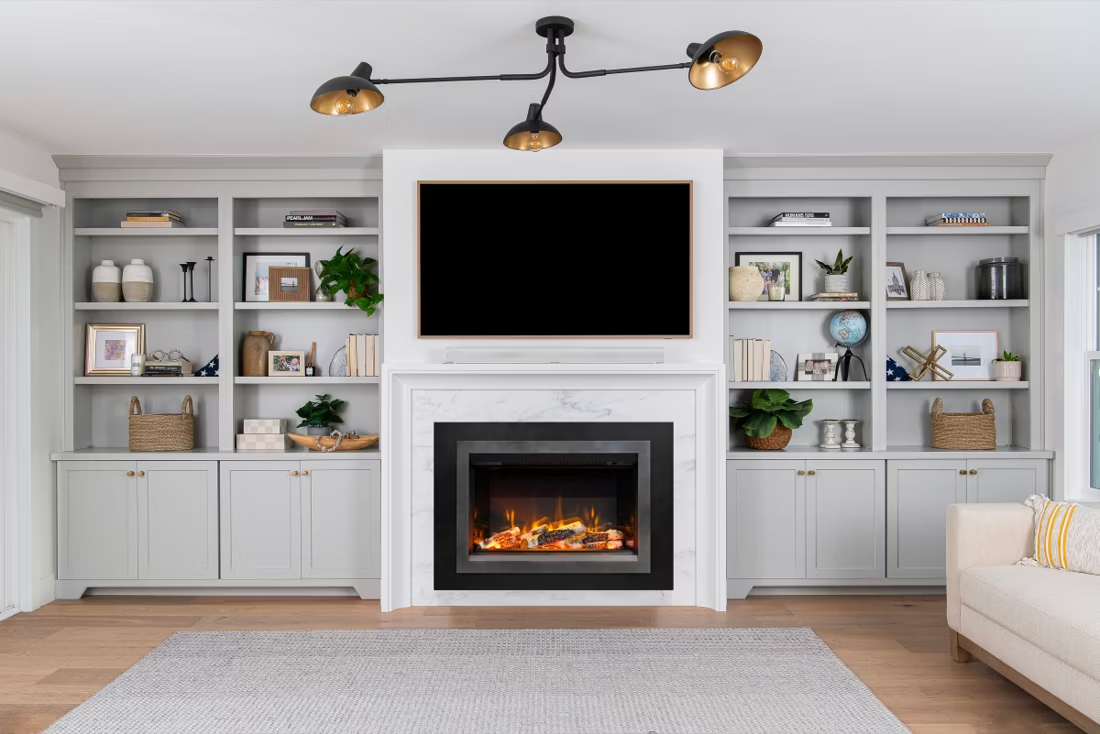
Yes—with an asterisk. Fireplaces are hot and TVs don't like heat. Either put a mantel between them to deflect rising warmth, or choose a fireplace with heat-management technology that creates a cool zone on the wall above—the wall stays around 125 degrees, barely warm, while the room still gets full heat. If you like clean lines and don't want a mantel, heat management is the answer.
Do electric fireplaces actually produce heat?
Yes—most put out around 4,800–5,000 BTUs from a standard outlet, which comfortably warms a bedroom, office, or den as a comfort-zone heater. What they won't do is carry a whole house the way wood, gas, or pellet can. Think of electric as ambiance-first with honest supplemental heat: flames on with no heat in July, flames plus warmth in January.
Can a fireplace actually lower my heating bill?
Yes—by creating a comfort zone. A furnace heats every square foot of the house just to warm the one room you're in; a gas fireplace on low burns roughly a sixth of the gas a typical furnace does. Set the furnace around 55–60 degrees as a baseline, then heat the rooms your family actually uses. Families who heat this way commonly save $20–$60 a month.
Can I install a fireplace myself?
If you're putting a fire in your house on purpose, it's best to work with an expert. Unless you're genuinely experienced in framing, gas line, vent pipe, and the national code on clearances to combustibles, have a professional do it—and ideally the same company that sells you the fireplace, so warranty, service, and liability all live under one roof.
Stove and Fireplace Dealers in Hunterdon County
Find your electric fireplace in Hunterdon County.
Tell us a bit about your home and we'll match you with the right electric fireplace, insert, or wall-mount unit—plus a free Project Guide & Parts List and a trusted local dealer to install it.
Find Your Fireplace →