
Instant heat for Highland Park's older homes.
From Craftsman bungalows near Raritan Avenue to foursquares along South 2nd Avenue, a direct-vent gas fireplace or insert delivers real heat at the flip of a switch. Find the right unit and connect with a trusted local dealer.
Every Project Starts From One of These Five Situations
Reliable warmth for a borough of century-old homes.
Highland Park sits low along the Raritan River across from New Brunswick, at just 77 feet of elevation, with winter lows averaging around 23°F and a winter heating season noticeably longer and colder than Washington D.C.'s—colder than Washington D.C. but nowhere near the extremes of a place like Burlington, VT. Much of the borough's housing stock dates to the early 1900s: Craftsman bungalows, Colonial Revivals, and foursquares that often came with a decorative masonry fireplace never designed to actually heat a room.
Public Service Electric & Gas (PSE&G) runs both the electric and natural gas mains through nearly every block in this dense, walkable borough, so most homes already have gas service at the curb. That makes converting a drafty, rarely-used fireplace into a real heat source straightforward. Wood burning is uncommon here—small lots, tight setbacks between homes, and borough ordinances make cordwood impractical for most residents—so gas has become the default upgrade when homeowners want to actually use that old firebox again instead of just looking at it.
Three steps. No salesperson until you're ready.
Tell us about your project
Your zip code, your situation, and the fuel you're leaning toward—or let the answers point you to one.
See what's actually available
The brands dealers within 100 miles genuinely carry—real options, never a catalog mirage.
Get your dealer & Project Guide
A trusted local dealer, plus the free Project Guide & Parts List that names every component of the job.
Frequently Asked Questions
How much does a gas fireplace installation cost in Highland Park?
Most gas fireplace installations in Highland Park run between $4,000 and $9,500. A direct-vent insert dropped into an existing masonry firebox—common in the borough's early-1900s Craftsman and Colonial Revival homes—tends to land on the lower end, especially when a gas line already serves the house from PSE&G's main. A new built-in gas fireplace as part of a renovation, with fresh venting and a new gas line run, sits at the higher end. Local dealers will give you a firm number after seeing the space in person.
Can I convert my existing wood fireplace to gas?
Yes, and it's one of the most common projects in Highland Park given how many homes here still have their original early-1900s masonry firebox. A gas insert typically slides into that opening using the existing chimney as the venting path with a stainless liner, running $4,000 to $8,000 depending on the model and whether new gas piping is needed from the PSE&G main. The result keeps the original mantel and brickwork intact while turning a drafty decorative fireplace into a working heat source.
Do I need natural gas to install a gas fireplace, or can I use propane?
Nearly every home in Highland Park sits on PSE&G's natural gas distribution network, so natural gas is the default choice and the simplest install if you already have a gas water heater or furnace. Propane is uncommon within the borough itself—you'd typically only see it on a property that, for some reason, isn't tied into the gas main. Most gas fireplace models can run on either fuel with the right orifice kit, but for Highland Park's dense, already-piped housing stock, natural gas is almost always the practical answer.
Will my gas fireplace work during a power outage?
Most modern direct-vent gas fireplaces will, provided they use intermittent pilot ignition (IPI) with a battery backup—the unit lights on demand off AA batteries when the power drops. That matters in Highland Park, where nor'easters and occasional Raritan River flooding have knocked out power to parts of the borough for extended stretches. Valor's gas fireplaces take a different approach: the pilot's thermocouple generates its own electricity, so there are no batteries to remember at all. Ask your local dealer which ignition system a given model uses before you buy.
What's the difference between a gas fireplace, gas insert, and gas stove?
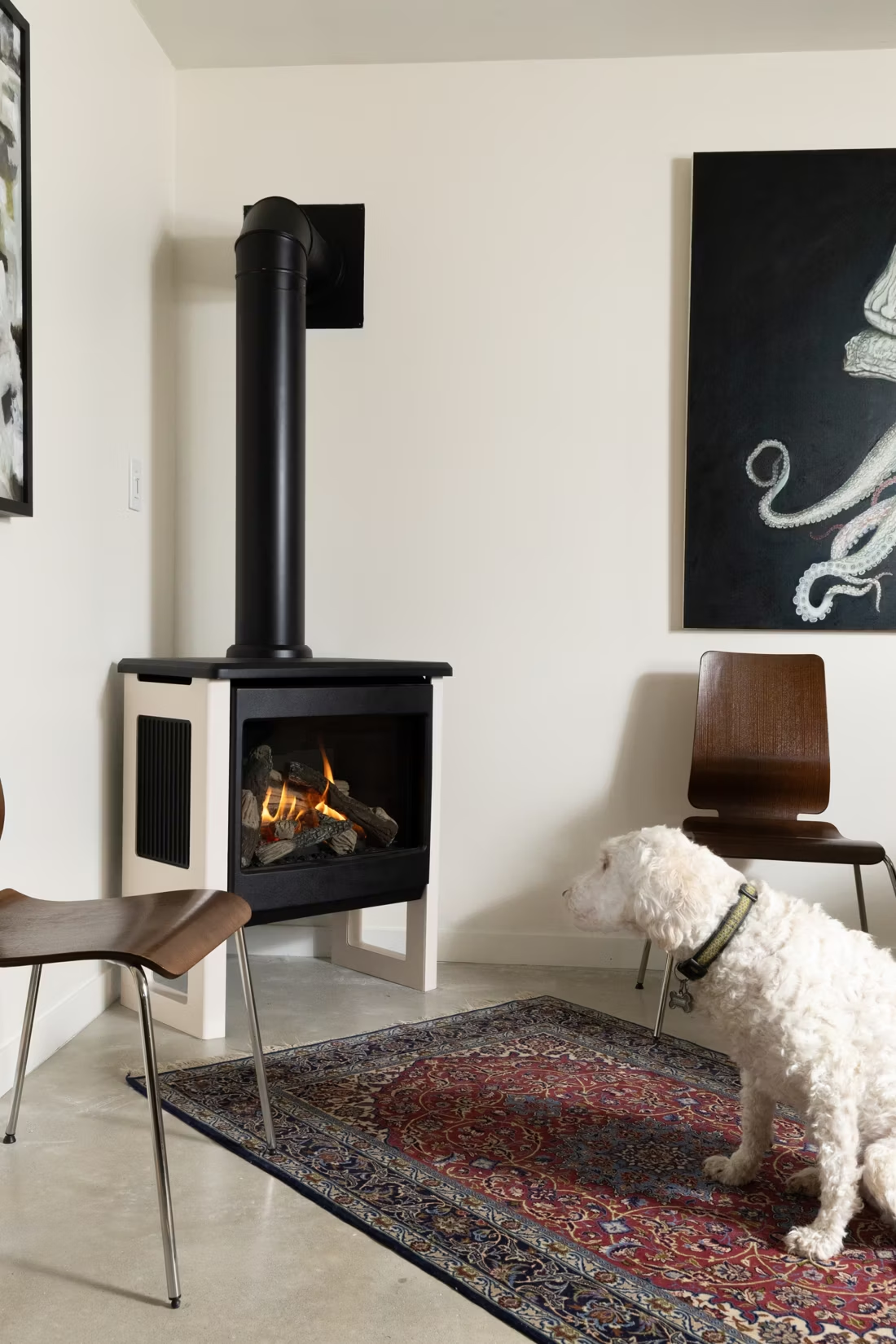
A gas insert is built to slide into an existing masonry firebox—the right fit for Highland Park's many original 1900s-1920s fireplaces that were never efficient to begin with. A gas fireplace is a fully framed-in built-in unit, typically used in additions or full renovations where there's no existing chimney. A gas stove is a freestanding cast-iron or steel unit that vents through a wall or existing flue, a good option for a sunporch or converted attic space common in this borough's older homes. Most Highland Park homeowners upgrading an existing hearth go with an insert.
Do I need a permit to install a gas fireplace in Highland Park?
Yes. New Jersey's Uniform Construction Code requires both a building permit and a gas permit for a new gas fireplace or insert, handled through the Highland Park Borough Construction Code Office. The gas line connection itself needs a licensed gas-fitter. Most established local hearth dealers manage the permitting and inspection scheduling as part of the installation, which is one reason to avoid a big-box or unlicensed install for gas work specifically.
What's the difference between vented and vent-free gas fireplaces?
Vented (direct-vent) gas fireplaces draw combustion air from outside and exhaust it back outside through a sealed pipe—they're the cleanest and most universally code-compliant option. Vent-free units burn directly into the room without external venting; New Jersey's Uniform Construction Code permits them but restricts their use in bedrooms and requires minimum room volume calculations tied to BTU output. Given the modest room sizes in many of Highland Park's older homes, most local dealers steer customers toward direct-vent units to sidestep those sizing restrictions entirely and get better real-world heat output.
How often should my gas fireplace be serviced?
Plan on an annual inspection, ideally in early fall before you're relying on it. A certified technician checks the burner, pilot assembly, venting, and gas connections, and cleans the glass and interior—a much quicker visit than a wood chimney sweep, but just as important given how many of Highland Park's gas fireplaces run daily through a New Jersey winter. Expect to pay roughly $150 to $250 for a standard annual service call from a local hearth technician.
Gas vs. electric fireplace—which makes more sense in Highland Park?
A gas fireplace, run off PSE&G's natural gas main, delivers real radiant heat—enough to actually offset a furnace on a cold night—and most models keep working during a power outage with battery-backup ignition. An electric fireplace or insert plugs into a standard outlet, costs far less to install (often under $1,000), and produces a realistic flame effect, but at PSE&G's residential electric rate of roughly $0.198 per kWh, running one as a primary heat source gets expensive fast, and it offers zero benefit during an outage. For Highland Park's older homes with an existing masonry firebox, a gas insert is usually the better long-term investment; electric units tend to work best as a low-cost supplement in a bedroom or den.
Why is my open fireplace making my house colder?
Open fireplaces suck—literally. As the fire burns, it consumes air your furnace already paid to heat and pulls it out through the chimney, so the house is actually colder after the fire goes out than before you lit it. An insert fixes this: it seals the chimney, puts fixed glass across the front, and turns that hole in your house into a real heat source.
Can I put a TV above my fireplace?
Yes—with an asterisk. Fireplaces are hot and TVs don't like heat. Either put a mantel between them to deflect rising warmth, or choose a fireplace with heat-management technology that creates a cool zone on the wall above—the wall stays around 125 degrees, barely warm, while the room still gets full heat. If you like clean lines and don't want a mantel, heat management is the answer.
Does a fireplace add value to my home?
On average, a fireplace adds back to the home about the same amount you spent installing it. Add the monthly savings from heating the rooms you actually use instead of the whole house—often hundreds of dollars a year—and the value case is strong before you even count what a fire does for how your family uses the room.
Can a fireplace actually lower my heating bill?
Yes—by creating a comfort zone. A furnace heats every square foot of the house just to warm the one room you're in; a gas fireplace on low burns roughly a sixth of the gas a typical furnace does. Set the furnace around 55–60 degrees as a baseline, then heat the rooms your family actually uses. Families who heat this way commonly save $20–$60 a month.
Nearby Dealers
Hearth shops serving Highland Park and the surrounding area. Every listing shows whether it is a WhyFire partner, a dealer we have verified as authorized for the brands we recommend, or a local business carrying hearth products. No manufacturer pays for placement. How we verify dealers →
Fireplaces R Us
Appliance Brokers, Ltd.
Island Renovations
Hot Concepts Fireplaces
Costello's Hearth & Spa - Bernardsville
Harris Hearth And Home
Fireside Pros/Awning Design
Builders Architectural Millwork
My Deck, Llc
Central Jersey Masonry & Chimney Sweep
Flemington Supply Co. Inc
Find your gas fireplace in Highland Park.
Tell us a bit about your home—including whether you've got an existing masonry firebox—and we'll match you with a trusted local dealer and a free Project Guide & Parts List for your Highland Park gas fireplace project.
Find Your Fireplace →