
Fireplace Warmth Without the Chimney in Highland Park.
No masonry, no gas line, no venting—just a fireplace that fits a 2.7-square-mile borough of rowhomes, colonials, and rentals near Rutgers. Get matched with a local dealer who knows what actually fits your wall.
Every Project Starts From One of These Five Situations
Electric heat fits the borough's tightest floor plans.
Highland Park packs close to 15,000 people into under three square miles across the Raritan River from New Brunswick, and the housing stock reflects it: early-1900s colonials on narrow lots, duplexes, and garden apartments near Raritan Avenue, many without an existing masonry chimney or a gas line anywhere near the living room. Winters here are Mid-Atlantic moderate rather than brutal—average lows sit around 23°F and the borough sees a moderate winter heating season—which means most homes already run on oil or gas furnaces and just want supplemental warmth and ambiance in one room, not a full heating retrofit.
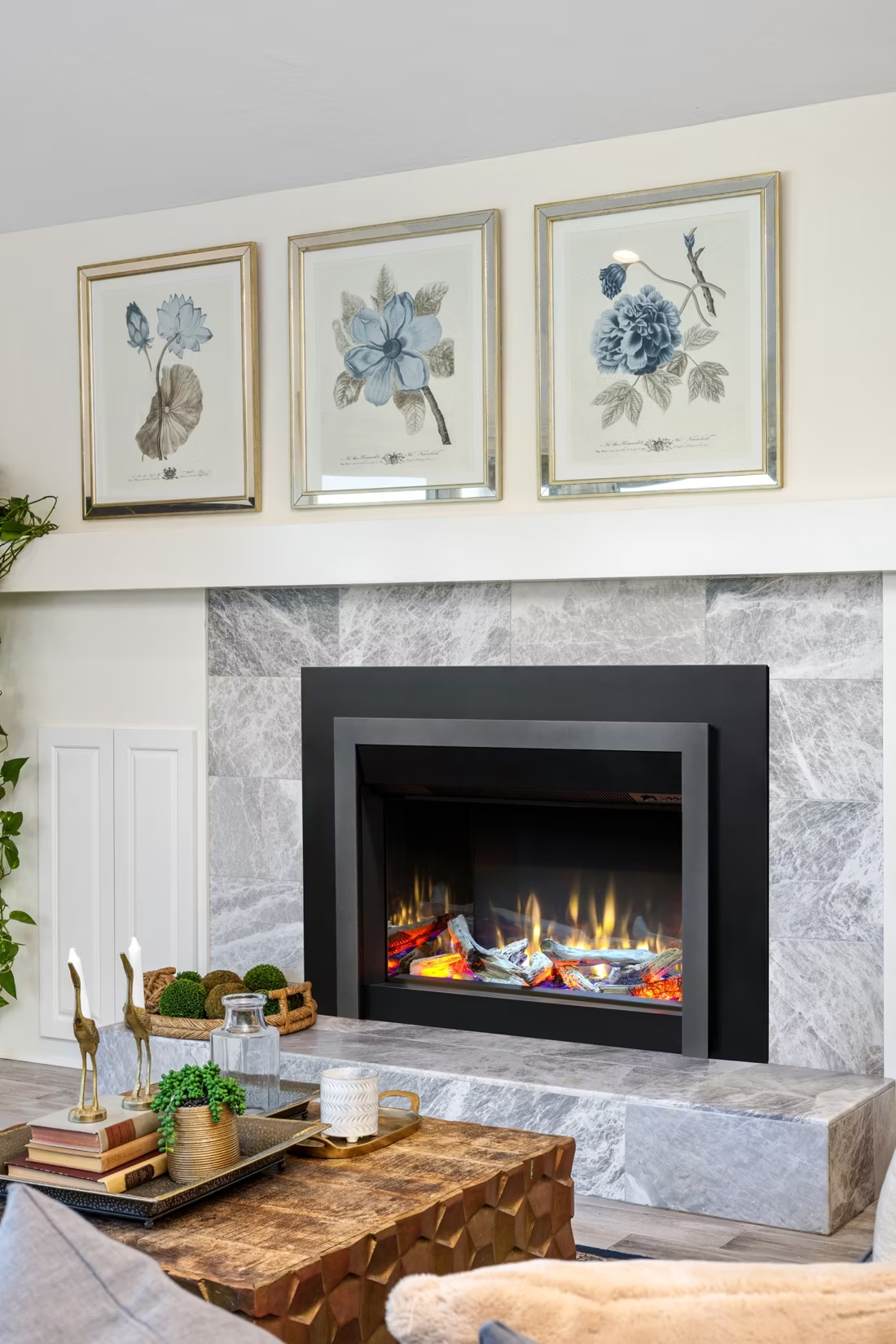
That's exactly the gap an electric fireplace fills. A plug-in insert or wall-mount unit needs a standard outlet and zero venting, which matters in a borough where landlords and condo boards near downtown often won't approve chimney or gas-line work. Wood-burning and pellet setups are effectively off the table here—Highland Park's dense lot lines, lack of any local cutting-permit infrastructure, and borough fire code make them impractical for the overwhelming majority of homes. Electric, on the other hand, installs in an afternoon and runs on PSE&G power that's already wired to the house.
Three steps. No salesperson until you're ready.
Tell us about your project
Your zip code, your situation, and the fuel you're leaning toward—or let the answers point you to one.
See what's actually available
The brands dealers within 100 miles genuinely carry—real options, never a catalog mirage.
Get your dealer & Project Guide
A trusted local dealer, plus the free Project Guide & Parts List that names every component of the job.
Frequently Asked Questions
How much does an electric fireplace cost to install in Highland Park?
Plug-in inserts and freestanding stoves run $200 to $700 and need nothing more than an existing outlet—many Highland Park homeowners in the borough's older duplexes and rowhomes go this route because it requires no electrical work and no landlord sign-off. Built-in wall units or mantel packages that need a dedicated circuit or in-wall wiring typically run $1,500 to $3,500 installed, including an electrician's time. A local dealer can tell you within minutes which category your space calls for.
Electric or gas—which makes more sense for my Highland Park home?
Both are common here, but they solve different problems. Gas fireplaces need a gas line and venting, which works well in homes already served by PSE&G's natural gas network but is a bigger project in older colonials without existing fireplace infrastructure. Electric skips both requirements entirely—it's the faster, lower-cost path for condos, rentals, and any room where running new gas line or venting isn't realistic. If you want a stronger, furnace-supplementing heat source and already have gas to the house, ask a local dealer about gas; if you want plug-and-play ambiance with real heat on cold evenings, electric is usually the simpler answer in this borough's housing stock.
Do I need a permit to install an electric fireplace in Highland Park?
A plug-in unit that uses an existing outlet doesn't require a permit. A built-in unit that needs a new dedicated circuit or any wiring modification falls under New Jersey's Uniform Construction Code and requires an electrical permit through the Highland Park Construction Code Office. Most licensed electricians who install these units pull the permit as part of the job, so it's worth confirming that's included in your quote before work starts.
I rent my Highland Park apartment—can I still install one?
Yes, and it's one of the most common reasons people in the borough choose electric in the first place. A plug-in insert or freestanding electric stove requires no permanent modification to the unit, no venting, and no landlord approval in most leases—you plug it in, use it, and take it with you when you move. If you're in one of the garden apartment complexes near downtown or a rented duplex, this is almost always the practical choice over gas or a masonry retrofit.
Will an electric fireplace actually heat my room, or is it just for looks?
Most electric fireplaces include a 1,500-watt heater rated for roughly 400 to 1,000 square feet, which is enough to comfortably supplement a living room or bedroom on a 23°F Highland Park evening—but it's a zone heater, not a furnace replacement. If you're trying to warm an entire first floor of an older colonial with high ceilings and older windows, you'll want a whole-home heating source running alongside it. For a single room, den, or condo unit, an electric fireplace can realistically be your only supplemental heat.
What's the difference between an electric insert, a wall-mount, and a mantel package?
An electric insert drops into an existing fireplace opening—useful if your Highland Park colonial has a non-functioning masonry firebox you want to bring back to life without burning wood. A wall-mount unit hangs flush against the wall like a flat-screen TV, popular in condos and newer construction where floor space is tight. A mantel package pairs an electric firebox with a surrounding mantel and hearth for a more traditional look, often chosen by homeowners replacing an old wood-burning setup entirely. A local dealer can walk your specific room and tell you which fits.
How much does it cost to run an electric fireplace with PSE&G rates?
PSE&G's residential rate in Highland Park runs about $0.198 per kWh, a bit above the national average, so it's worth doing the math. A typical 1,500-watt unit run on the heat setting for three hours an evening uses about 4.5 kWh, or roughly 89 cents a night—call it $25 to $30 a month for regular evening use. Most owners run these units on flame-only mode (a few watts) far more often than on heat, which costs pennies. It's a modest add to a PSE&G bill compared to running a furnace longer.
Is an electric fireplace safe to install in an older Highland Park home with older wiring?
Plug-in units are generally fine on a modern circuit, but many of Highland Park's early-1900s colonials still have sections of older wiring, and a 1,500-watt heater pulling sustained current on an overloaded or outdated circuit can trip breakers or, in older knob-and-tube sections, pose a real risk. A licensed electrician can confirm your circuit's capacity in a few minutes, and if you're installing a built-in unit, running a new dedicated circuit is standard practice and usually included in the installed price.
Why don't people install wood or pellet stoves in Highland Park?
They're not impossible, but they're genuinely uncommon here. Highland Park's lots are narrow and close together, the borough has no cutting-permit infrastructure of its own the way rural New Jersey counties might, and fire and building code in this dense a footprint make chimney work and clearance requirements hard to satisfy in most homes. A handful of older houses with intact masonry chimneys can still support a wood insert, but for the vast majority of Highland Park homeowners—especially in condos, duplexes, and rentals—electric or gas is the realistic path, and that's reflected in what local dealers actually stock and install.
Do electric fireplaces actually produce heat?
Yes—most put out around 4,800–5,000 BTUs from a standard outlet, which comfortably warms a bedroom, office, or den as a comfort-zone heater. What they won't do is carry a whole house the way wood, gas, or pellet can. Think of electric as ambiance-first with honest supplemental heat: flames on with no heat in July, flames plus warmth in January.
Can I put a TV above my fireplace?
Yes—with an asterisk. Fireplaces are hot and TVs don't like heat. Either put a mantel between them to deflect rising warmth, or choose a fireplace with heat-management technology that creates a cool zone on the wall above—the wall stays around 125 degrees, barely warm, while the room still gets full heat. If you like clean lines and don't want a mantel, heat management is the answer.
Does a fireplace add value to my home?
On average, a fireplace adds back to the home about the same amount you spent installing it. Add the monthly savings from heating the rooms you actually use instead of the whole house—often hundreds of dollars a year—and the value case is strong before you even count what a fire does for how your family uses the room.
Can a fireplace actually lower my heating bill?
Yes—by creating a comfort zone. A furnace heats every square foot of the house just to warm the one room you're in; a gas fireplace on low burns roughly a sixth of the gas a typical furnace does. Set the furnace around 55–60 degrees as a baseline, then heat the rooms your family actually uses. Families who heat this way commonly save $20–$60 a month.
Nearby Dealers
Hearth shops serving Highland Park and the surrounding area. Every listing shows whether it is a WhyFire partner, a dealer we have verified as authorized for the brands we recommend, or a local business carrying hearth products. No manufacturer pays for placement. How we verify dealers →
Fireplaces R Us
Appliance Brokers, Ltd.
Island Renovations
Hot Concepts Fireplaces
Costello's Hearth & Spa - Bernardsville
Harris Hearth And Home
Fireside Pros/Awning Design
Builders Architectural Millwork
My Deck, Llc
Central Jersey Masonry & Chimney Sweep
Flemington Supply Co. Inc
Electric Service in Highland Park
An electric fireplace's heater draws about 1,500 watts—pennies per hour at local rates.
Public Service Elec & Gas Co
Find your electric fireplace in Highland Park.
Tell us about your room and we'll send your free Project Guide & Parts List—the right unit, the exact parts, and a trusted local Highland Park dealer to install it.
Find Your Fireplace →