
Keep Your Family Warm and Safe—No Matter What
Fords is dense, gas-piped, and built on small suburban lots—wood heat isn't the default here. If you still want it, we'll connect you with a local dealer who can tell you honestly whether it fits your house.
Every Project Starts From One of These Five Situations
Fords is built for gas heat, not wood.
Fords is a densely settled section of Woodbridge Township in Middlesex County, sitting at just 169 feet of elevation with a climate zone of 4A and a moderate winter heating load. That's a real but moderate heating load—winters average lows around 24°F, nowhere near the sustained cold of a place like Burlington, VT, where the winter heating load runs much heavier. Lots in Fords tend to be small and closely spaced, there's no adjacent public forest land for cutting firewood, and Public Service Electric & Gas (PSE&G) runs extensive natural gas infrastructure through the township. Put those factors together and wood heat simply never became the local norm the way it has in more rural or colder parts of the country.
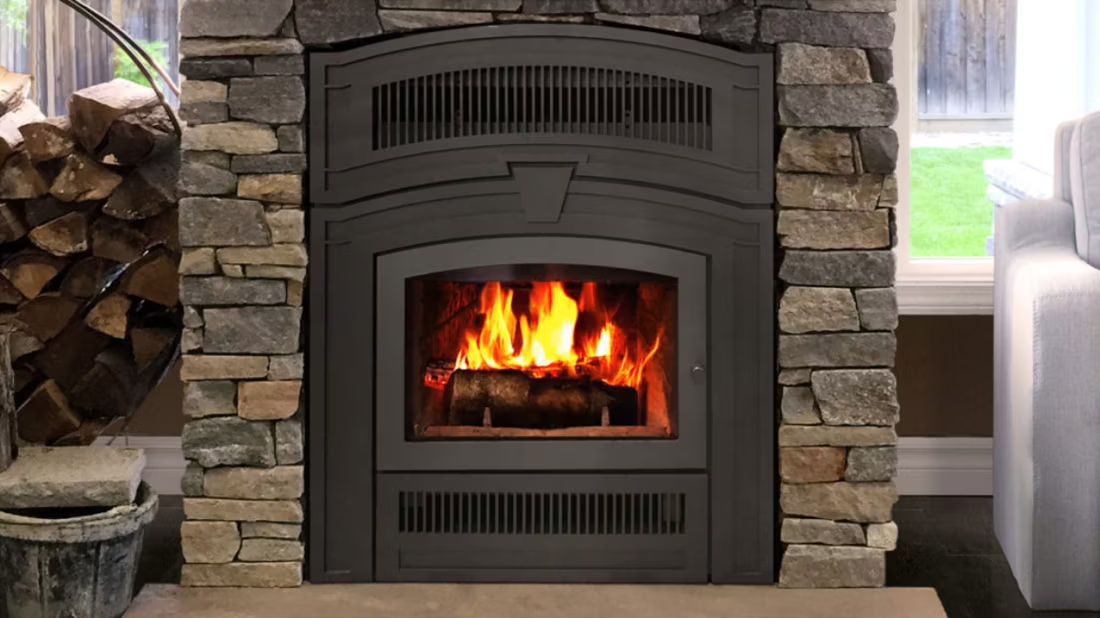
That doesn't mean wood is off the table—it means the use case is narrower. The homeowners who do install a wood stove or insert in Fords are usually working with an older house that already has a masonry fireplace and chimney, and they want supplemental warmth, ambiance, or backup heat that doesn't depend on the electric grid. Oak, hickory, and maple are the species most commonly available from regional firewood dealers and tree services, since there's no national forest cutting-permit program nearby. Anyone installing a new unit still goes through the same Woodbridge Township building permit process and EPA 2020 NSPS certification requirements as anywhere else—the process is standard even though the demand is low.
Three steps. No salesperson until you're ready.
Tell us about your project
Your zip code, your situation, and the fuel you're leaning toward—or let the answers point you to one.
See what's actually available
The brands dealers within 100 miles genuinely carry—real options, never a catalog mirage.
Get your dealer & Project Guide
A trusted local dealer, plus the free Project Guide & Parts List that names every component of the job.
Frequently Asked Questions
Is a wood stove even practical in Fords?
For most Fords homes, no—not as a primary heat source. With PSE&G natural gas service throughout the township and moderate heating needs (a moderate winter heating load, winter lows around 24°F), gas heat covers the job more simply and without wood handling, ash cleanup, or chimney maintenance. Where a wood stove does make sense is as a secondary heat source or an upgrade to an existing masonry fireplace in an older home—particularly if you want heat that keeps working during a PSE&G outage. It's a real option, just not the default one here.
What does a wood stove installation cost in Fords?
Because wood heat is a niche request in Middlesex County rather than the norm, pricing is less standardized than it would be in a wood-heavy market. A wood insert into an existing masonry fireplace typically runs in the $3,500-$7,500 range depending on the unit and whether the chimney needs a new liner. A freestanding stove with new Class A chimney and through-roof venting in a home without an existing flue runs higher, often $7,000-$12,000, since you're building venting from scratch. A local dealer can give you a firm number after seeing your chimney or lack of one.
Where do I get firewood near Fords?
There's no national forest land near Fords, so self-cut permits aren't part of the picture the way they are in the mountain West. Most homeowners here buy seasoned, split cordwood from local firewood dealers and tree services around Middlesex, Union, and Somerset counties. Oak and hickory are the preferred species for heat output and are widely available regionally; maple is common too and burns a bit faster. Expect to pay for delivery and stacking since most Fords properties don't have the space to store a full winter's supply of unprocessed rounds.
Do I need a permit to install a wood stove in Fords?
Yes. Fords falls under Woodbridge Township, and any new wood-burning appliance, chimney, or venting work requires a permit through the township's Construction Code Office, along with a stove that meets current EPA 2020 NSPS emissions standards. Most hearth dealers who install wood stoves in this area will handle the permit application and inspection scheduling as part of the job, since it's not something they do every day here—make sure whoever you hire is explicit about including it.
What size or type of wood stove makes sense for a Fords home?
Because Fords sees a moderate heating load compared to genuinely cold climates—nowhere near Duluth, MN or International Falls, MN territory—most homes don't need the extreme 20+ hour catalytic burn times that Blaze King stoves are built for in sub-zero regions. A mid-size non-catalytic stove or insert, in the 1,000-1,800 square foot heating range, is usually plenty for supplemental heat in a typical Fords home. If the stove will be your primary heat source in an older, less-insulated house, size up and talk to a local dealer about your specific floor plan.
How often should my chimney be inspected in Fords?
The CSIA recommends an annual inspection for any wood-burning appliance, and it matters more in a town like Fords where a lot of the housing stock is older with original masonry chimneys that may never have been relined. If you're converting an existing fireplace to a wood insert, get the chimney inspected and likely relined with a stainless liner as part of the install—an unlined or deteriorating flue is the biggest safety issue local sweeps find in this area.
Wood stove or pellet stove—which fits Fords better?
Honestly, neither is a common local choice, but between the two, wood is generally the more practical fit for backup heat since it doesn't need electricity to run. Pellet stoves require power for the auger and blower, so they go dark in the same PSE&G outage a wood stove would ride through. Regional pellet brands like Energex, Hamer, and Greene Team Pellet Fuel are available if you go that route, and pellet appliances burn cleaner with less ash—but if the reason you're considering wood heat at all is storm resilience, a wood stove is the more logical pick for a Fords home.
Should I just install a gas fireplace instead of wood?
For most Fords homeowners, yes—gas is the more practical answer. PSE&G's natural gas network covers the township, gas units require no wood storage or ash removal, and installation costs are generally more predictable since local dealers handle gas work far more often than wood work here. Wood still has a case if you want heat that survives a power outage without a battery-backup ignition system, or if you specifically want the experience of a real wood fire. Plenty of Fords homeowners end up choosing gas for daily convenience and reserve wood only if they already have a fireplace they don't want to give up.
Are there local restrictions on burning wood in Fords?
Fords isn't in a wood-smoke nonattainment area, so you won't run into the seasonal burn curtailment rules that some Western cities enforce. That said, Woodbridge Township, like most dense New Jersey municipalities, has local nuisance ordinances covering smoke drifting onto neighboring properties—worth keeping in mind given how close houses sit to each other here. A properly sized, EPA-certified stove burning seasoned oak or hickory produces far less visible smoke than an older uncertified unit, which helps avoid any neighbor complaints.
Why won't my new wood stove get going like my old one?
New wood stoves are 70%+ efficient, so far less heat goes up the flue—which also means less draft to get a fire established. The rule: build a genuinely hot fire for about 45 minutes before you choke it down. Skip that and you get smoke in the room, creosote in the chimney, and a fire that never takes off. Most performance complaints trace straight back to this.
Why is a fireplace insert so efficient?
An insert does two things: it seals the chimney completely, so you stop losing air you already paid to heat, and it radiates warmth into the room through the firebox and glass. Most add a heat-exchange fan that pulls cool room air underneath, wraps it around the hot firebox, and pushes it back out warm. Your home is more efficient before you've even lit the first fire.
How much should I budget for a fireplace?
For an average home—covering the fireplace, the vent pipe, and basic installation—a budget between $3,900 and $5,500 gives you a lot of options across wood, gas, and pellet. By the time you add finish work, gas line, and electrical, the average complete installation lands between $5,000 and $12,000 all-in. In a remodel or new build, a good rule is to put about 2.5% of the total project cost toward the fireplace.
Can a fireplace actually lower my heating bill?
Yes—by creating a comfort zone. A furnace heats every square foot of the house just to warm the one room you're in; a gas fireplace on low burns roughly a sixth of the gas a typical furnace does. Set the furnace around 55–60 degrees as a baseline, then heat the rooms your family actually uses. Families who heat this way commonly save $20–$60 a month.
Nearby Dealers
Hearth shops serving Fords and the surrounding area. Every listing shows whether it is a WhyFire partner, a dealer we have verified as authorized for the brands we recommend, or a local business carrying hearth products. No manufacturer pays for placement. How we verify dealers →
Hot Concepts Fireplaces
Fireplaces R Us
Harris Hearth And Home
Appliance Brokers, Ltd.
Island Renovations
Costello's Hearth & Spa - Bernardsville
Builders Architectural Millwork
D & D Design Center
Fireside Pros/Awning Design
East Coast Energy Products Inc.
Central Jersey Masonry & Chimney Sweep
Alternate Energy Products
See what's actually possible for wood heat in Fords.
Tell us about your home and your existing chimney situation, and we'll match you with a trusted local dealer and send over a free Project Guide & Parts List—a realistic plan for your Fords wood project, including the exact parts and vent kit needed.
Find Your Fireplace →