
Efficient pellet heat, sized right for Cumberland County homes.
From the farmhouses outside Bridgeton to newer construction around Vineland and Millville, pellet stoves give South Jersey homeowners thermostat-controlled warmth without a wood pile or a masonry chimney. Find the right unit and get matched with a trusted local dealer.
Every Project Starts From One of These Five Situations
Consistent warmth, without the wood pile.
Cumberland County sits on New Jersey's outer coastal plain, a flat, agricultural landscape running from Vineland and Bridgeton down to the Delaware Bayshore towns like Port Norris and Fortescue. At roughly 4,934 heating degree days and an average winter low near 24°F, the county's winters are real but moderate—nothing like the 8,000-plus HDD winters of a place like Duluth, MN. Most homes here need a solid five months of heat, from November through March, and a lot of that housing stock is older farmhouses without existing chimneys, plus newer subdivisions built without one at all.
That's exactly the gap pellet appliances fill well. A pellet stove vents through a side wall instead of a full masonry chimney, runs on a thermostat rather than constant tending, and delivers steady BTU output through the coldest stretches of the season. Cumberland County has no wood-burning air quality restrictions on the books, so there's no regulatory pressure pushing homeowners toward pellets the way there is in some Western non-attainment counties—here, the appeal is pure convenience and control. Regional brands like Energex, Hamer Pellet Fuel, and Greene Team Pellet Fuel are commonly stocked by mid-Atlantic dealers, which keeps fuel supply straightforward heading into winter.
Three steps. No salesperson until you're ready.
Tell us about your project
Your zip code, your situation, and the fuel you're leaning toward—or let the answers point you to one.
See what's actually available
The brands dealers within 100 miles genuinely carry—real options, never a catalog mirage.
Get your dealer & Project Guide
A trusted local dealer, plus the free Project Guide & Parts List that names every component of the job.
Frequently Asked Questions
How much does a pellet stove installation cost in Cumberland County?
Across South Jersey, a typical pellet stove or insert installation runs roughly $3,500 to $7,000, depending on the unit, the venting path, and whether you need a new hearth pad or a dedicated 120V electrical outlet for the auger and combustion blower. Installs into an existing masonry fireplace in one of Cumberland County's older Bridgeton or Millville farmhouses tend to land on the lower end since the chimney chase already exists. New construction or a fresh through-wall vent run in a home without a fireplace pushes toward the higher end. Ask any local dealer for a firm quote after an in-home walkthrough—venting length and wall material both affect the final number.
Pellet stove or pellet insert—which fits my home?
A pellet insert slides into an existing masonry fireplace and uses a stainless liner run up your current chimney—a good option for the older farmhouse stock common around Bridgeton and Millville. A freestanding pellet stove doesn't need an existing fireplace at all; it vents directly through an exterior wall with a horizontal PL-vent pipe, which makes it the more practical choice for newer Vineland-area construction or homes without a chimney. Both burn the same fuel and offer the same thermostat control—the decision usually comes down to what your home already has to work with.
What pellet brands are available near me, and what do pellets cost?
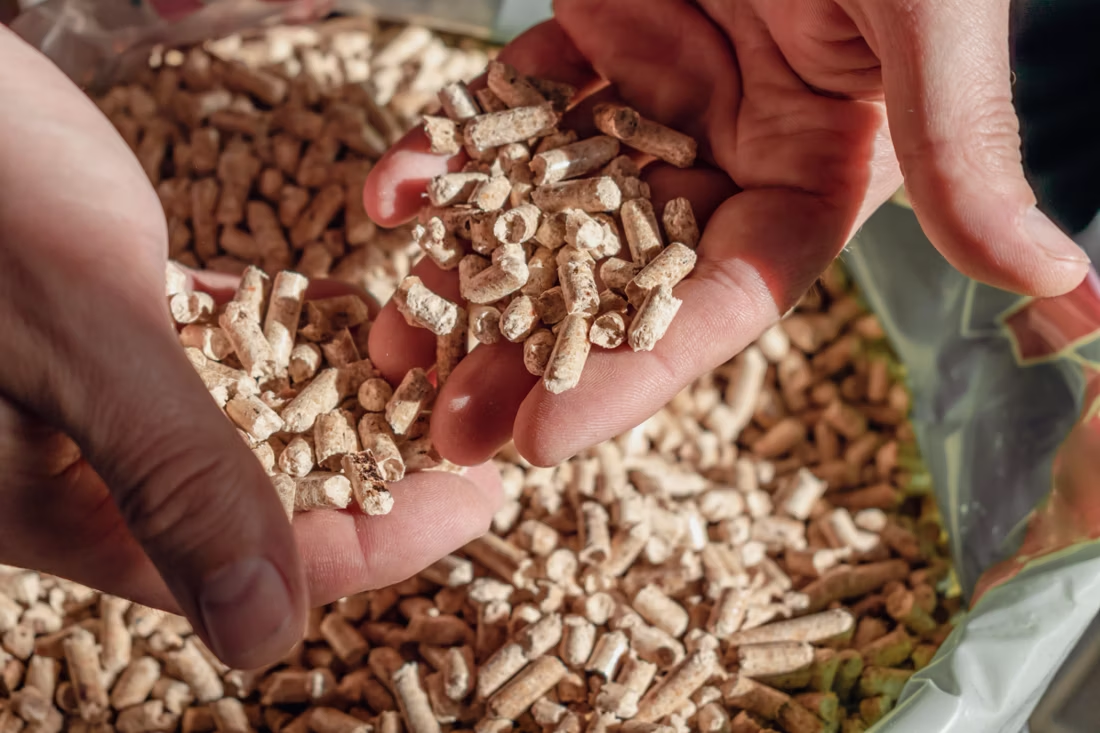
Energex, Hamer Pellet Fuel, and Greene Team Pellet Fuel are the brands most commonly stocked by mid-Atlantic hearth dealers and hardware suppliers serving Cumberland County. Premium hardwood pellets typically run in the $250 to $320 per ton range, sold by the pallet (a ton is usually fifty 40-pound bags). Most homeowners buy their season's supply in fall before demand peaks—waiting until a January cold snap to stock up often means picked-over inventory. Your local dealer can usually tell you which brands burn cleanest in your specific stove model.
Do I need a permit to install a pellet stove in Cumberland County?
Yes—a building permit is required through your local municipality, whether that's Vineland, Bridgeton, Millville, or one of the county's smaller townships. The inspection typically covers wall penetration clearances, venting termination distance from windows and doors, and hearth pad specifications if the unit sits on combustible flooring. Unlike wood stoves, pellet installations don't require any forestry or cutting permits since there's no wood harvesting involved—pellets are a manufactured fuel you buy by the bag or pallet. Most local dealers handle the permit paperwork as part of the installation.
What size pellet stove do I need for my home?
Sizing depends on square footage, ceiling height, and how well-insulated the home is. As a rough guide for Cumberland County's moderate climate—4,934 HDD is meaningfully milder than a northern-tier city like Bozeman, MT—a small stove (up to 1,000 sq ft) suits a single addition or converted porch, a medium stove (1,000 to 1,800 sq ft) covers most main living areas in a Vineland ranch or Bridgeton farmhouse, and a large stove (1,800-plus sq ft) can serve as primary heat for an open-concept home. Because winters here are less extreme than in colder climate zones, oversizing is a more common mistake locally than undersizing—a local dealer can size your space correctly during an in-home visit.
Will my pellet stove work during a power outage?
Not without a backup power source. Pellet stoves rely on electricity to run the auger that feeds fuel, the igniter, and the combustion blower—so a standard unit shuts down the moment the power drops. That's worth planning for in Cumberland County, where nor'easters and coastal storms occasionally knock out Atlantic City Electric service for the Bayshore and rural parts of the county for a day or more. Homeowners who want heat during an outage typically pair the stove with a small battery backup or inverter generator sized to the unit's low wattage draw (most pellet stoves use well under 500 watts). If outage resilience is your top priority, it's worth discussing a wood-burning backup option with your dealer alongside the pellet unit.
How much maintenance does a pellet stove need?
Plan on emptying the ash pan and cleaning the burn pot every few days to weekly during regular use, plus a monthly vacuum of the hopper and exhaust passages. Glass cleaning is a quick wipe-down as needed. Beyond that, an annual professional service—checking the auger motor, gaskets, combustion blower, and exhaust venting—keeps the stove running efficiently and catches wear before it causes a shutdown mid-winter. Compared to the annual chimney sweep a wood stove needs, pellet maintenance is lighter but more frequent in small doses.
Pellet stove vs. wood stove—which makes more sense in Cumberland County?
Cumberland County's oak, hickory, and maple forests make self-cut or locally sourced firewood genuinely practical, and wood stoves keep working with no electricity at all—a real advantage during a Bayshore nor'easter outage. Pellet stoves trade that off for convenience: no splitting or stacking cordwood, a thermostat instead of manual damper adjustments, and a cleaner burn with far less ash. For homeowners on smaller Vineland or Millville lots where a woodpile isn't practical, or for anyone who wants set-it-and-forget-it heat, pellet usually wins. For rural properties with wood access and outage concerns, wood still has a strong case. Since there's no air quality restriction in the county pushing either fuel, the choice really comes down to lifestyle.
Are there rebates or tax credits for installing a pellet stove?
Qualifying high-efficiency biomass stoves—including many pellet stoves rated at 75% efficiency or higher on the higher heating value scale—are eligible for the federal Energy Efficient Home Improvement Credit, currently 30% of the installed cost up to a $2,000 annual cap. Manufacturers list which specific models qualify, and your local dealer can point you to the right paperwork and IRS certification statement to keep with your tax records. New Jersey doesn't currently run a dedicated state pellet stove rebate, so the federal credit is typically the main savings lever for Cumberland County homeowners.
What's the difference between an insert and a zero-clearance fireplace?
An insert is a fireplace that slides into a pre-existing wood-burning fireplace—if you don't have one, there's nothing to insert it into. A zero-clearance fireplace is built into a framed wall, which makes it the answer for remodels and new construction. Simple test: existing masonry fireplace means insert; blank or framed wall means zero-clearance.
Why is my open fireplace making my house colder?
Open fireplaces suck—literally. As the fire burns, it consumes air your furnace already paid to heat and pulls it out through the chimney, so the house is actually colder after the fire goes out than before you lit it. An insert fixes this: it seals the chimney, puts fixed glass across the front, and turns that hole in your house into a real heat source.
Can a fireplace actually lower my heating bill?
Yes—by creating a comfort zone. A furnace heats every square foot of the house just to warm the one room you're in; a gas fireplace on low burns roughly a sixth of the gas a typical furnace does. Set the furnace around 55–60 degrees as a baseline, then heat the rooms your family actually uses. Families who heat this way commonly save $20–$60 a month.
Can I install a fireplace myself?
If you're putting a fire in your house on purpose, it's best to work with an expert. Unless you're genuinely experienced in framing, gas line, vent pipe, and the national code on clearances to combustibles, have a professional do it—and ideally the same company that sells you the fireplace, so warranty, service, and liability all live under one roof.
Stove and Fireplace Dealers in Cumberland County
Pellet Brands Stocked Around Cumberland County
Manufacturers will point you to the nearest stocking dealer.
Get matched with a pellet dealer in Cumberland County.
Tell us about your home and heating goals, and we'll match you with a trusted local dealer plus a free Project Guide & Parts List—the exact parts, including the vent kit, for your pellet stove or insert project.
Find Your Fireplace →