
Real flame look, zero venting hassle in Cumberland County.
From the Vineland row homes to the historic Victorians of Bridgeton and the converted mill lofts of Millville, electric fireplaces bring instant ambiance and zone heat without a chimney, gas line, or wood pile. Find the right unit and connect with a trusted local dealer.
Every Project Starts From One of These Five Situations
The no-chimney way to add heat and ambiance.
Cumberland County sits at the southern tip of New Jersey along the Delaware Bay, with winters that are real but moderate by regional standards—average lows around 24°F and roughly 4,934 heating degree days a year, placing the county in climate zone 4A. That's meaningfully milder than the Pinelands winters just to the north, which is part of why so many homes here—from Vineland's ranch-style subdivisions to Bridgeton's historic district row homes to converted apartments near Millville's old glass-factory district—don't need a full-time wood or gas heating appliance to stay comfortable. An electric fireplace fills the gap: supplemental warmth in a bonus room, a bedroom, or a finished basement, without the structural work a vented appliance requires.
Because electric units plug into a standard outlet or, for larger built-ins, tie into a dedicated 120V or 240V circuit, there's no chimney to build, no gas line to run, and no combustion byproducts to vent—a real advantage in Bridgeton's older masonry homes where adding venting to an existing fireplace opening can get expensive fast. Power comes from Atlantic City Electric across most of the county, and running a modern electric insert with LED flame technology costs only a few cents an hour. It won't replace central heat on Cumberland County's colder January nights, but for daily-use ambiance and targeted room heat, it's often the simplest project on this list—and a local dealer can tell you in minutes whether your space needs a plug-in insert or a hardwired built-in.
Three steps. No salesperson until you're ready.
Tell us about your project
Your zip code, your situation, and the fuel you're leaning toward—or let the answers point you to one.
See what's actually available
The brands dealers within 100 miles genuinely carry—real options, never a catalog mirage.
Get your dealer & Project Guide
A trusted local dealer, plus the free Project Guide & Parts List that names every component of the job.
Frequently Asked Questions
How much does an electric fireplace installation cost in Cumberland County?
Plug-in electric inserts and freestanding units typically run $200 to $1,200 installed, since most just need placement and, for a wall-mounted model, basic mounting hardware. Built-in electric fireplaces that require a dedicated 240V circuit, custom framing, or a mantel surround run higher—commonly $1,500 to $3,500 in Cumberland County once an electrician and finish carpentry are factored in. Converting an existing masonry fireplace in an older Bridgeton or Millville home to an electric insert usually lands in the middle of that range, since the opening often needs a surround panel to seal the old flue.
Do I need a permit to install an electric fireplace in Cumberland County?
In most cases, no—a plug-in electric fireplace or insert that uses an existing outlet doesn't trigger a building or electrical permit anywhere in the county. If you're adding a new dedicated circuit for a larger built-in unit, that electrical work generally does require a permit through your local jurisdiction—Vineland, Bridgeton, and Millville each issue their own, while unincorporated townships go through the Cumberland County Construction Office. A licensed electrician pulling the permit as part of the job is standard practice and keeps the inspection simple.
Is an electric fireplace a good fit for an older Bridgeton or Millville home without a working chimney?
Often, yes. Many of Bridgeton's historic district homes and the converted properties near Millville's old glass-factory district have masonry fireplaces that were capped or sealed off decades ago. Rather than reline a chimney for wood or gas, homeowners frequently install an electric insert directly into the existing firebox opening—it restores the visual focal point of the fireplace without touching the flue at all. It's also the most common route for renters and condo owners in Vineland who want the look of a fireplace but can't modify the building's exterior venting.
How much heat does an electric fireplace actually put out?
Most residential electric fireplaces and inserts produce around 4,600 to 5,000 BTU (roughly 1,500 watts), enough to comfortably heat a single room of 300 to 400 square feet as supplemental heat. That's a meaningful amount of zone heat for a bedroom, den, or finished basement in Cumberland County's zone 4A winters, but it won't replace a central furnace on the coldest nights when temperatures drop into the teens. Think of it as a way to lower your thermostat a few degrees in the room you're actually using, not a whole-home heating solution.
What are the best electric fireplace brands available through Cumberland County dealers?
Dimplex, Napoleon, and Touchstone are the brands most frequently stocked or ordered by hearth retailers serving South Jersey, ranging from compact wall-mounted units to larger mantel-style built-ins with realistic LED flame effects. Amantii is a common choice for higher-end linear built-ins in newer Vineland construction. A local dealer can walk you through flame realism, heater wattage, and remote/app control features side by side rather than relying on online product photos alone.
Electric fireplace vs. wood-burning fireplace conversion—which makes more sense for my home?
Cumberland County has real wood-heat tradition in its rural stretches, where oak, hickory, and maple are the common local species for firewood. But converting an existing wood fireplace to electric is the lower-cost, lower-maintenance route if you're after ambiance rather than a primary heat source—no chimney sweeping, no ash cleanup, no cutting or hauling wood. Wood still wins for homeowners who want real heat output during a power outage or who already have access to a woodlot. For a supplemental accent in a living room or bedroom, especially in town, electric is usually the simpler upgrade.
What does it cost to run an electric fireplace on my Atlantic City Electric bill?
A typical 1,500-watt electric fireplace running on high heat for a few hours a night adds roughly $10 to $20 a month to an Atlantic City Electric bill, depending on your rate plan and how often you run it. Most units let you run the flame effect alone, with the heater off, for pennies an hour—useful if you want the visual without the added electric load during shoulder-season months when you don't need extra heat.
Will my electric fireplace work during a power outage?
No—electric fireplaces require power to run both the flame display and the heater, so they'll go dark along with everything else during an outage. This matters in Cumberland County's rural areas, where Atlantic City Electric restoration times can stretch during major storms off the Delaware Bay. If backup heat during outages is a priority, a wood stove or a battery-backed direct-vent gas fireplace is a better complement to an electric unit than a replacement for it.
Electric vs. pellet stove—which is right for my home?
Pellet stoves, using regional brands like Energex, Hamer Pellet Fuel, and Greene Team Pellet Fuel, produce real heat output—often enough to serve as a primary or near-primary heat source—but they require venting, an annual hopper of pellets, and regular ash removal. Electric fireplaces need none of that: no venting, no fuel storage, and cleaning is limited to dusting the glass. For Cumberland County homeowners who want genuine supplemental heat and don't mind the upkeep, pellet is worth a look. For anyone prioritizing simplicity, rental-friendly installation, or a fireplace in a room where venting isn't practical, electric is the more straightforward choice.
Can I put a TV above my fireplace?
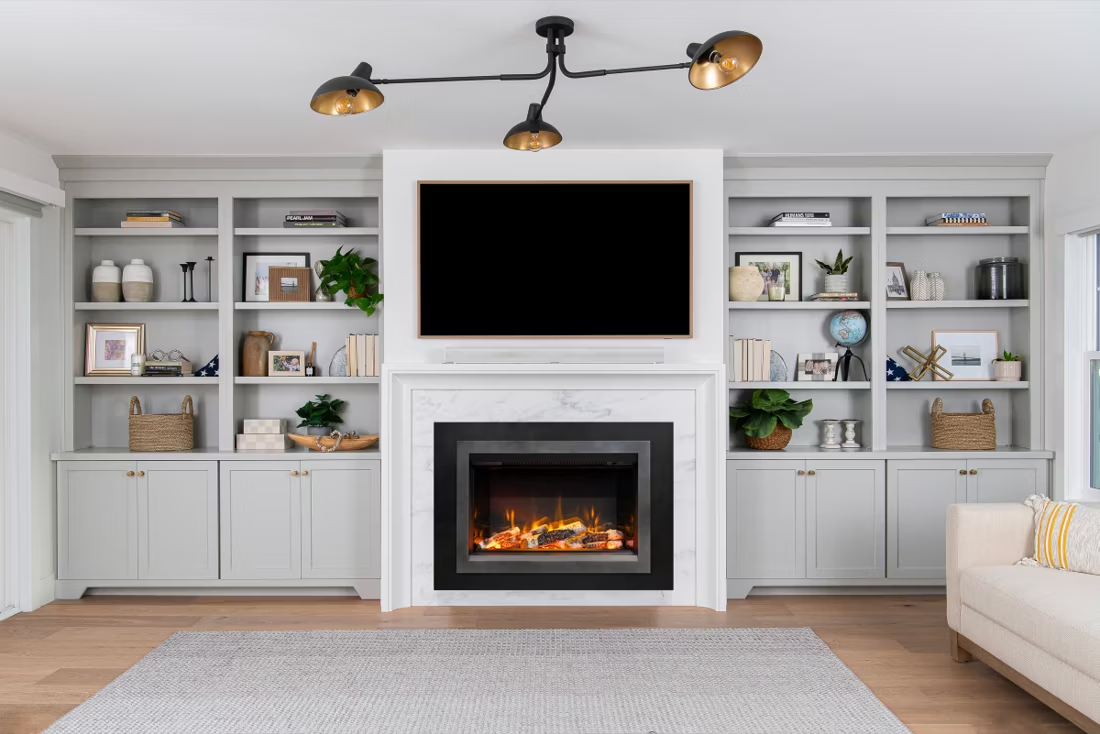
Yes—with an asterisk. Fireplaces are hot and TVs don't like heat. Either put a mantel between them to deflect rising warmth, or choose a fireplace with heat-management technology that creates a cool zone on the wall above—the wall stays around 125 degrees, barely warm, while the room still gets full heat. If you like clean lines and don't want a mantel, heat management is the answer.
Do electric fireplaces actually produce heat?
Yes—most put out around 4,800–5,000 BTUs from a standard outlet, which comfortably warms a bedroom, office, or den as a comfort-zone heater. What they won't do is carry a whole house the way wood, gas, or pellet can. Think of electric as ambiance-first with honest supplemental heat: flames on with no heat in July, flames plus warmth in January.
What is an in-home preview and do I need one?
It's a visit where a hearth professional measures your space, confirms the model you picked actually works in your home, and walks the specs—framing, gas line, venting, finish work—before anything is ordered. Some details you just can't know until you see the house. Never make a down payment without one; it's the single most-skipped step that burns buyers.
Can a fireplace actually lower my heating bill?
Yes—by creating a comfort zone. A furnace heats every square foot of the house just to warm the one room you're in; a gas fireplace on low burns roughly a sixth of the gas a typical furnace does. Set the furnace around 55–60 degrees as a baseline, then heat the rooms your family actually uses. Families who heat this way commonly save $20–$60 a month.
Stove and Fireplace Dealers in Cumberland County
Find your electric fireplace in Cumberland County.
Tell us a bit about your home and we'll put together a free Project Guide & Parts List for your electric fireplace project—the right unit, the exact parts, and a trusted local Cumberland County dealer to install it.
Find Your Fireplace →