
Consistent warmth for Cape May County's mild, storm-prone winters.
From Cape May City to the Wildwoods to Stone Harbor, pellet heat delivers thermostat-like convenience for shore homes and vacation properties alike. Find the right stove or insert and connect with a trusted local dealer.
Every Project Starts From One of These Five Situations
Steady, efficient heat without the woodpile.
Cape May County sits at the southern tip of New Jersey in climate zone 4A, with roughly 4,189 heating degree days and an average winter low near 30°F—a noticeably milder heating season than inland New Jersey or true cold-climate towns like Burlington, VT (upwards of 7,000 HDD). That doesn't mean winters here are trivial, especially in barrier-island communities like Wildwood, Stone Harbor, and Avalon where damp, wind-driven cold off the Atlantic can make a house feel colder than the thermometer suggests. Pellet stoves have become a popular fit for exactly this kind of climate: enough heating need to justify a dedicated appliance, but not so severe that homeowners want the daily labor of splitting and stacking cordwood, even though local oak, hickory, and maple are readily available for those who prefer it.
The county's large stock of seasonal and second homes—many left unoccupied for stretches of the off-season—is another reason pellet appliances make sense here. A hopper-fed stove holds a burn for many hours between reloads and doesn't require the kind of hands-on tending a wood stove does, which matters for owners who split time between the shore and elsewhere. Cape May County has no wood-smoke air quality restrictions, so burning isn't the issue; the bigger local consideration is coastal exposure. Nor'easters and tropical storm remnants regularly knock out power along the barrier islands, and because pellet stoves rely on an electric auger and blower, they won't run during an outage without a battery backup—something worth discussing with your dealer if resilience matters to you. Regional pellet brands including Energex, Hamer Pellet Fuel, and Greene Team Pellet Fuel supply much of South Jersey, and salt air near the bay and ocean makes stainless steel venting components a smart upgrade over standard galvanized parts.
Three steps. No salesperson until you're ready.
Tell us about your project
Your zip code, your situation, and the fuel you're leaning toward—or let the answers point you to one.
See what's actually available
The brands dealers within 100 miles genuinely carry—real options, never a catalog mirage.
Get your dealer & Project Guide
A trusted local dealer, plus the free Project Guide & Parts List that names every component of the job.
Frequently Asked Questions
How much does a pellet stove installation cost in Cape May County?
Most pellet stove installations in Cape May County run in the range of $3,000 to $7,000, with the total depending on whether you're installing a freestanding stove versus a fireplace insert, how far the exterior wall venting run needs to travel, and whether a dedicated electrical circuit needs to be added for the unit's auger and blower motor. Homes in barrier-island communities like Wildwood Crest or North Wildwood sometimes see modest added cost for stainless venting components, which hold up better against salt air than standard galvanized parts. A local dealer will give you a firm number after an in-home look at your chimney or planned wall location.
What size pellet stove do I need for my Cape May County home?
Because Cape May County's roughly 4,189 heating degree days put it on the milder end of the Northeast heating spectrum, many homes here get by with a small-to-medium pellet stove rated for 1,000 to 1,800 square feet, even as supplemental or zone heat for a main living area. Larger, less-insulated older shore homes—the kind of raised beach houses common in Cape May City and along the bayside—sometimes need a bigger unit to compensate for lower floors and more exterior wall exposure to wind. A dealer will look at your square footage, ceiling height, and insulation before recommending a size; oversizing is a common mistake that leads to a stove cycling on and off rather than running efficiently.
Where can I find certified pellet stove installers near me?
Look for NFI (National Fireplace Institute)-certified technicians, since proper venting termination and electrical hookup are the two places DIY or handyman installs most often go wrong. Cape May County's population is spread across many small municipalities—Cape May City, Wildwood, Ocean City, Sea Isle City, Stone Harbor, and Avalon among them—so most local hearth dealers cover the whole county rather than a single town, and can advise on the specific permitting quirks of wherever you live.
What's the difference between a pellet stove and a pellet insert?
A pellet stove is a freestanding appliance that sits on its own hearth pad and vents through an exterior wall or existing chimney—it can go almost anywhere with the right clearances. A pellet insert is built to slide into an existing masonry fireplace opening, which is common in Cape May County's older shore homes and gives you a way to convert a rarely-used wood fireplace into an efficient, thermostat-controlled heat source without altering the home's exterior look. If you already have a fireplace you're not using, an insert is usually the simpler and more cost-effective route.
Do I need a permit to install a pellet stove in Cape May County?
Yes—a building permit is generally required, and because Cape May County is made up of many independent municipalities, permitting is handled at the local level rather than by a single county office. Cape May City, Wildwood, Ocean City, and the other shore towns each run their own building department, so the specific process and fees vary slightly by town. Most local hearth dealers pull the permit as part of the installation and are familiar with the requirements in whichever municipality you're in, including the electrical permit that typically accompanies the dedicated circuit a pellet stove needs.
What's the best pellet stove for Cape May County's climate?
For a mild, damp coastal climate like Cape May County's, mid-sized pellet stoves and inserts from mainstream manufacturers work well without needing the extreme burn times you'd want in a colder inland climate. What matters more locally is corrosion-resistant venting given the salt air, and—if you're in a storm-prone barrier-island town—asking your dealer about battery backup options so the stove can keep running through a nor'easter-related outage. Regional pellet brands like Energex, Hamer Pellet Fuel, and Greene Team Pellet Fuel are widely stocked in South Jersey, so fuel availability generally isn't a concern once you've chosen a unit.
How much maintenance does a pellet stove need?
Pellet stoves need less chimney maintenance than wood stoves but still require regular attention: the ash pan should be emptied every few days during heavy use, the hopper and auger system needs periodic cleaning, and the exhaust venting should get a professional inspection and cleaning at least once a year. In Cape May County's salt-air environment, it's also worth having a technician check exterior venting components for corrosion during that annual visit—stainless steel components hold up considerably better than standard galvanized parts on homes near the bay or ocean.
Where can I buy pellet fuel in Cape May County?
Regional pellet brands including Energex, Hamer Pellet Fuel, and Greene Team Pellet Fuel are commonly stocked at hearth retailers and hardware stores throughout South Jersey, typically sold in 40-pound bags or by the ton. Buying a full ton ahead of the season is generally the most economical option and ensures you're not scrambling for bags during a cold stretch or after a storm knocks out regional supply chains. Your local dealer can usually point you toward the closest stocking retailer once your stove is installed.
Pellet stove vs. wood stove—which is right for my Cape May County home?
Wood stoves burn local hardwoods like oak, hickory, and maple, need no electricity to run, and keep working through a power outage—a real advantage on the barrier islands where nor'easters and tropical storm remnants regularly cut power. Pellet stoves are more convenient day to day, with automated feed and thermostat control, and burn cleaner with less ash, but they depend on electricity for the auger and blower unless paired with a battery backup. For primary residences that see year-round use, pellet convenience is hard to beat. For storm-exposed vacation homes where you want reliable heat with no dependence on the grid, wood—or a pellet stove with battery backup—is worth serious consideration.
How often does a pellet stove need cleaning?
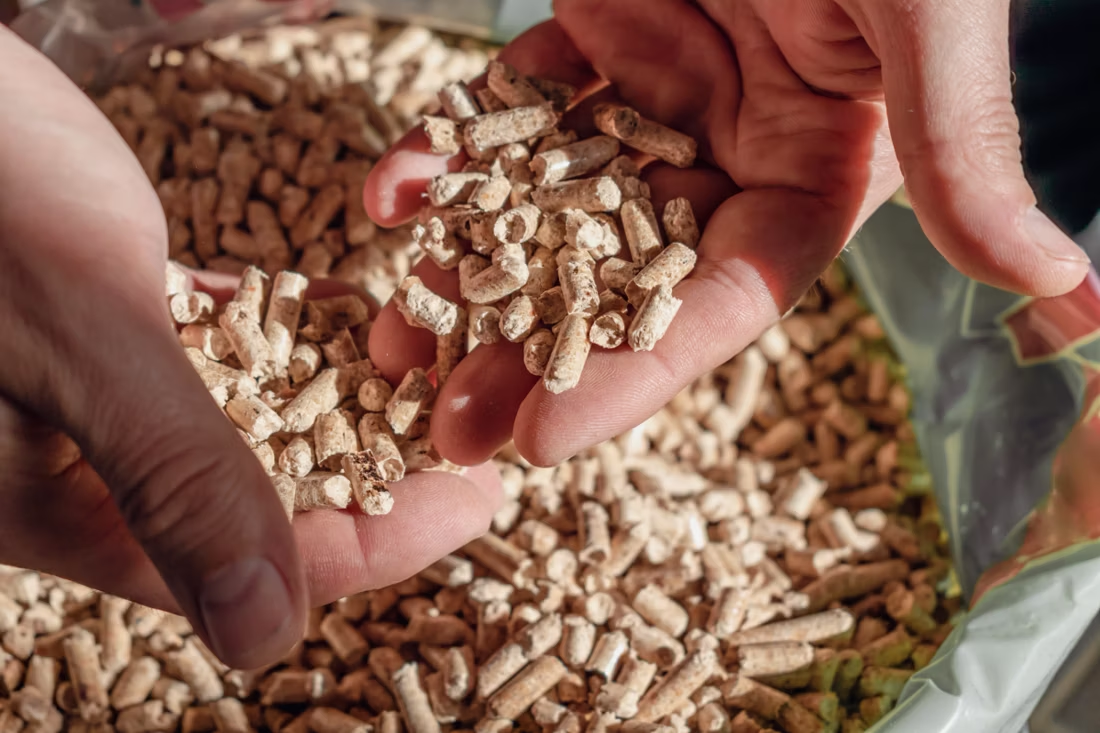
A clean pellet stove is a happy pellet stove. Plan on cleaning the burn pot about once a week when you're burning regularly—ash and clinkers gum up the air holes just like a pellet barbecue. Most pellet stove problems trace back to skipped cleaning that nobody explained up front. Some designs make it easy with a trapdoor burn pot: pull a lever and the gunk drops into the ash pan.
What's the difference between an insert and a zero-clearance fireplace?
An insert is a fireplace that slides into a pre-existing wood-burning fireplace—if you don't have one, there's nothing to insert it into. A zero-clearance fireplace is built into a framed wall, which makes it the answer for remodels and new construction. Simple test: existing masonry fireplace means insert; blank or framed wall means zero-clearance.
What is an in-home preview and do I need one?
It's a visit where a hearth professional measures your space, confirms the model you picked actually works in your home, and walks the specs—framing, gas line, venting, finish work—before anything is ordered. Some details you just can't know until you see the house. Never make a down payment without one; it's the single most-skipped step that burns buyers.
How much should I budget for a fireplace?
For an average home—covering the fireplace, the vent pipe, and basic installation—a budget between $3,900 and $5,500 gives you a lot of options across wood, gas, and pellet. By the time you add finish work, gas line, and electrical, the average complete installation lands between $5,000 and $12,000 all-in. In a remodel or new build, a good rule is to put about 2.5% of the total project cost toward the fireplace.
Stove and Fireplace Dealers in Cape May County
Pellet Brands Stocked Around Cape May County
Manufacturers will point you to the nearest stocking dealer.
Find your pellet stove in Cape May County.
Tell us a bit about your home and we'll match you with a trusted local dealer and send over a free Project Guide & Parts List—the exact stove or insert, vent kit, and installation plan for your Cape May County pellet project.
Find Your Fireplace →