
Find your fireplace anywhere in Cape May County.
Wood, gas, pellet, and electric fireplace resources for the whole Jersey Cape—from the Victorian streets of Cape May City out to the barrier islands and inland to the mainland townships. Pick a fuel and get matched with a local dealer who actually installs it here.
Every Project Starts From One of These Five Situations
Mild coastal winters, roughly half the heating load of Burlington, Vermont, and a county built on shore towns and Victorian architecture.
Cape May County occupies the southern tip of New Jersey, bounded by the Atlantic Ocean and the Delaware Bay, with a mix of barrier-island resort towns—Wildwood, Avalon, Stone Harbor, Sea Isle City, Ocean City—and quieter mainland communities like Cape May Court House, Woodbine, and Rio Grande. The surrounding water moderates the winters considerably: average lows near 30°F put the county at roughly half the heating load of a place like Burlington, Vermont, which is a real factor in how homeowners here choose between fuels. Oak, hickory, and maple are the hardwoods most commonly burned on the mainland side, dense enough to hold a fire through a shoulder-season night without demanding constant attention.
Permitting here runs through New Jersey's statewide Uniform Construction Code, but enforcement is handled town by town—Cape May County is made up of 16 separate municipalities, each with its own construction office, so an install in Wildwood Crest follows a different local process than one in Cape May Court House. There's no regional non-attainment designation or wood-burning curtailment program affecting this county, which is uncommon compared to inland Western basins but typical for the Jersey Shore. What does matter locally is salt exposure on the barrier islands, and the fact that a large share of the housing stock is seasonal—second homes and weekly rentals that sit empty midweek, which shapes which fuels and venting choices make the most sense. This hub rolls up hearth retailers, service techs, and fuel suppliers across the entire county, from Cape May Point up through the barrier islands to Marmora and Ocean View on the mainland. Pick your fuel below for local dealers, install costs, and recommendations specific to your town.
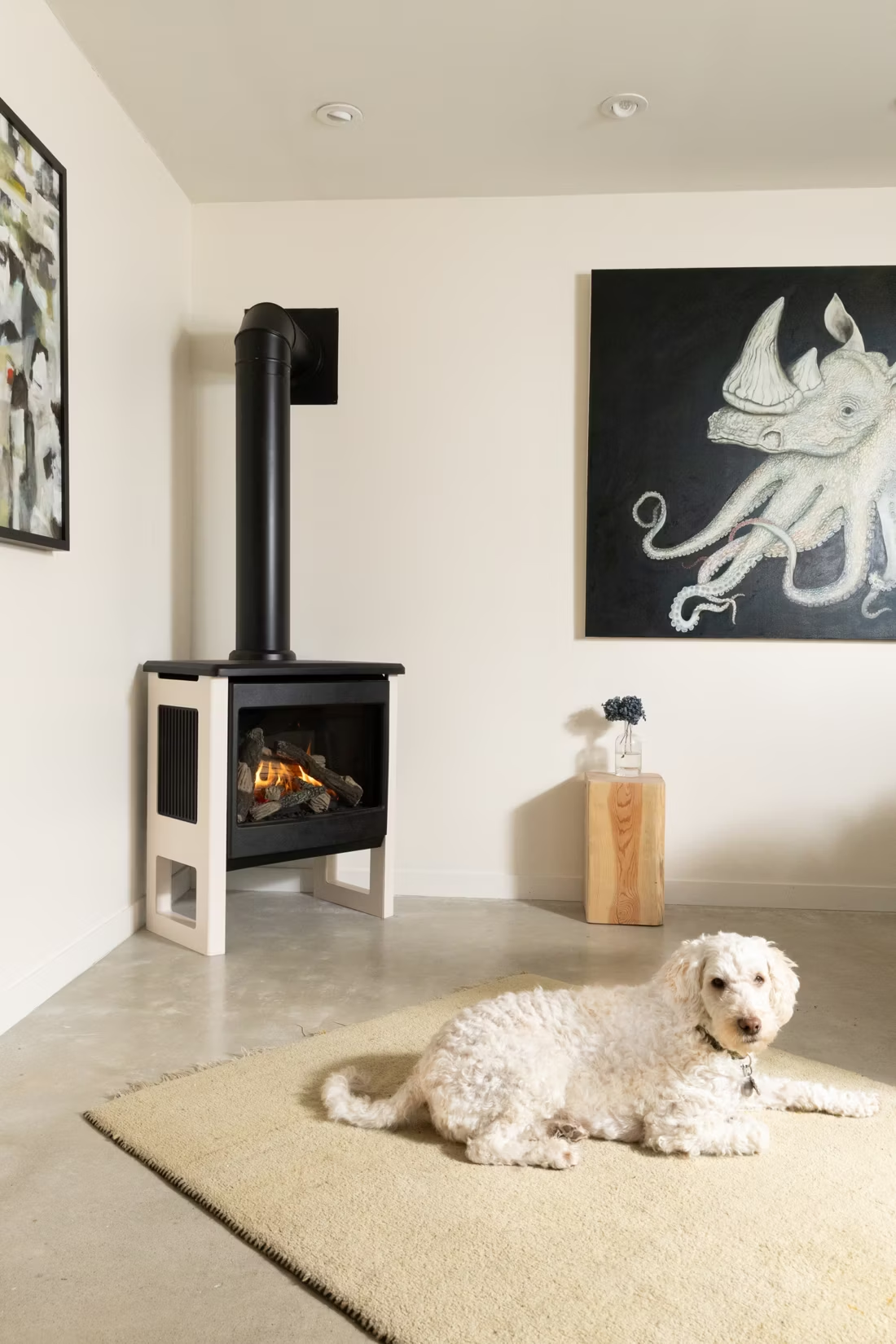
Four fuels. One honest answer for Cape May County.
Three steps. No salesperson until you're ready.
Tell us about your project
Your zip code, your situation, and the fuel you're leaning toward—or let the answers point you to one.
See what's actually available
The brands dealers within 100 miles genuinely carry—real options, never a catalog mirage.
Get your dealer & Project Guide
A trusted local dealer, plus the free Project Guide & Parts List that names every component of the job.
Frequently Asked Questions
Which fireplace fuel fits best in Cape May County's mild shore winters?
With average winter lows near 30°F, Cape May County runs a noticeably milder heating season than most of the Northeast—roughly half the heating load of a place like Burlington, Vermont. Wood remains popular on the mainland side, in towns like Cape May Court House, Woodbine, and Marmora, where oak, hickory, and maple are the standard local hardwoods and a modest stove or insert can carry a home through the shoulder season without needing to burn around the clock. Gas is common in the barrier-island towns—Wildwood, Avalon, Stone Harbor, Sea Isle City, Ocean City—where South Jersey Gas service reaches, and it's the low-maintenance choice for second homes that sit empty midweek. Pellet stoves have a real following too, with Energex, Hamer Pellet Fuel, and Greene Team all distributed regionally, and they suit homeowners who want wood-like ambiance without stacking cordwood on a small island lot. Electric fireplaces do genuine work here as well, especially in condos and rentals along the boardwalk corridor where a vented chimney isn't practical.
Do I need a permit to install a fireplace or stove in Cape May County?
Yes. New Jersey administers construction permitting through the statewide Uniform Construction Code, but enforcement happens at the municipal level. Cape May County is made up of 16 separate municipalities, so an install in Cape May Court House goes through that township's construction office, while a job in Wildwood, Stone Harbor, or Ocean City goes through that borough's own building department—timelines and inspection scheduling can vary noticeably from town to town as a result. Gas installations also require a licensed gas fitter and a separate gas-line permit. Most hearth retailers we match homeowners with handle the construction permit and gas sign-off directly as part of the install.
Does the salt air along the Jersey Shore affect fireplace or chimney equipment?
It does, especially on the barrier islands. Homes in Wildwood Crest, Avalon, and Stone Harbor sit close enough to the Atlantic that salt-laden air accelerates corrosion on exposed metal—chimney caps, spark arrestors, and gas appliance venting in particular. Stainless steel liners and marine-grade or powder-coated caps hold up considerably better than standard galvanized components, and it's worth asking your installer to spec for the coastal exposure rather than a generic inland kit. Homes further inland toward Cape May Court House or Woodbine don't need to plan around this to the same degree.
A lot of homes here are seasonal or weekend properties—does that change what fireplace makes sense?
It does. Cape May County's housing stock skews heavily toward second homes and weekly rentals, especially in Cape May City's Victorian district and the barrier-island towns, and a fireplace that sits idle for long stretches needs different upkeep than one burning nightly all winter. Gas units are popular in these properties because they start reliably after weeks unused and don't require someone to manage a wood supply between visits. Electric fireplaces are common in rental units for the same reason, and they also sidestep the exterior-alteration review that a new chimney can trigger in Cape May City's historic Victorian homes. If you do want wood in a vacation home, plan on a fall chimney inspection before the first weekend fire rather than assuming last spring's flue is still clear.
What does a fireplace installation typically cost in Cape May County?
Costs run in line with the rest of southern New Jersey, though barrier-island jobs can carry a small premium for coastal-rated venting. Wood stove or insert installs generally run $4,000–$8,500, depending on chimney condition and liner work. Gas fireplaces, inserts, and stoves typically run $4,500–$10,500, with the range driven mostly by how far the gas line has to be extended. Pellet stove and insert installs land around $4,000–$7,000. Electric fireplaces are the most affordable entry point at $200–$2,800 for the unit, plus $300–$1,000 in labor for a built-in installation. The county + fuel pages above break these numbers down further with local retailer pricing.
Where does firewood come from in Cape May County, and is it good quality?
Unlike counties with National Forest land nearby, Cape May County doesn't have public-land cutting permits—firewood here comes mostly from local tree services, mainland woodlots, and dedicated firewood dealers seasoning oak, hickory, and maple pulled from storm cleanup and land-clearing work around Rio Grande, Ocean View, and Green Creek. That hardwood mix burns hot and clean once properly seasoned, but the county's humid summers slow the drying process, so six months is a bare minimum and a full year is better. It's worth asking any firewood supplier about moisture content before buying rather than assuming a delivered load is ready to burn.
Wood, gas, pellet, or electric—how do I choose?
Match the fuel to your life, not the other way around. Wood: lowest fuel cost and total power-outage independence, but you're hauling and stacking. Gas: press a button, set a thermostat, no maintenance to speak of. Pellet: wood economics with automatic feeding, in exchange for weekly cleaning and a need for electricity. Electric: plugs in anywhere with honest supplemental heat. Nobody regrets the fuel that fits how they actually live.
Can I install a fireplace myself?
If you're putting a fire in your house on purpose, it's best to work with an expert. Unless you're genuinely experienced in framing, gas line, vent pipe, and the national code on clearances to combustibles, have a professional do it—and ideally the same company that sells you the fireplace, so warranty, service, and liability all live under one roof.
How much should I budget for a fireplace?
For an average home—covering the fireplace, the vent pipe, and basic installation—a budget between $3,900 and $5,500 gives you a lot of options across wood, gas, and pellet. By the time you add finish work, gas line, and electrical, the average complete installation lands between $5,000 and $12,000 all-in. In a remodel or new build, a good rule is to put about 2.5% of the total project cost toward the fireplace.
Can a fireplace actually lower my heating bill?
Yes—by creating a comfort zone. A furnace heats every square foot of the house just to warm the one room you're in; a gas fireplace on low burns roughly a sixth of the gas a typical furnace does. Set the furnace around 55–60 degrees as a baseline, then heat the rooms your family actually uses. Families who heat this way commonly save $20–$60 a month.
Stove and Fireplace Dealers in Cape May County
Listings include WhyFire partner dealers, dealers we have verified as authorized for the brands we recommend, and established local businesses that carry hearth products. Every listing shows which one it is. The ones marked Preferred run on WhyFire's software, so they can show you real pricing and book your appointment right here. No manufacturer pays for placement. How we verify dealers →
Quality Home Center
The Chimney Doctor Inc.
Get matched with a local Cape May County dealer.
Pick your fuel below and we'll put together a free Project Guide & Parts List—the right unit, the vent kit it needs, and the local dealer we recommend for your project.
Find Your Fireplace →