
Instant Warmth for Camden's Rowhome Blocks.
Clean, on-demand gas heat built for Camden's tight lots and older rowhomes. Get matched with a trusted local dealer who knows how to vent it right.
Every Project Starts From One of These Five Situations
The practical choice for compact, riverfront housing stock.
Camden sits at just 16 feet of elevation along the Delaware River, directly across from Philadelphia, in a climate zone (4A) with a winter heating season running roughly from mid-fall through early spring and winter lows averaging around 28°F—cold enough to want supplemental heat, but nowhere near the extremes of places like Buffalo or Burlington. What defines heating choices here isn't the weather so much as the housing stock: Camden is a city of rowhomes, twins, and narrow-lot single-families, many built in the early-to-mid 1900s with tight setbacks and chimneys that were never designed for modern wood-burning appliances.
That's why wood stoves are essentially absent from Camden neighborhoods, while gas fireplaces and inserts have become the standard hearth upgrade. Public Service Electric & Gas Co. (PSE&G) serves natural gas throughout the city, and most Camden blocks already have gas service running to the home for cooking or water heating—which makes adding a fireplace or converting an old masonry firebox to gas a relatively straightforward project. A properly sized direct-vent unit delivers real heat at the flip of a switch, without asking a 90-year-old chimney to do a job it was never built for.
Three steps. No salesperson until you're ready.
Tell us about your project
Your zip code, your situation, and the fuel you're leaning toward—or let the answers point you to one.
See what's actually available
The brands dealers within 100 miles genuinely carry—real options, never a catalog mirage.
Get your dealer & Project Guide
A trusted local dealer, plus the free Project Guide & Parts List that names every component of the job.
Frequently Asked Questions
How much does a gas fireplace installation cost in Camden?
In Camden's rowhome and twin housing stock, a typical gas fireplace or insert installation runs roughly $3,500 to $9,000. The lower end covers a gas log set or a smaller direct-vent insert going into an existing (even if long-unused) masonry firebox with gas already run to the house. The higher end applies to installations that need sidewall venting through a party wall or exterior brick, a new gas line from the meter, or a full built-in unit for a renovated living space. Because so many Camden fireplaces are decorative and non-functional, expect your installer to spend real time assessing the existing flue before quoting.
Can I convert my Camden rowhome's old fireplace to gas?
In most cases, yes. Many Camden rowhomes still have their original brick fireboxes, even if the chimney hasn't carried smoke in decades. A local installer will typically run a stainless liner down the existing flue and install a direct-vent or B-vent gas insert, or in simpler cases just add a vented gas log set to a fireplace that still drafts properly. Where the old chimney is compromised or was capped years ago, a sidewall direct-vent unit that exhausts straight through the exterior wall is often the more reliable—and less invasive—fix. Either way, plan on $3,500 to $7,500 depending on venting complexity.
Is Camden a natural gas or propane market?
Camden is almost entirely natural gas territory. PSE&G's distribution network covers the full city, so nearly every rowhome and rowhome-adjacent property already has gas service or a gas main at the curb. Propane shows up occasionally on the outer edges of Camden County where properties sit farther from the gas main, but within city limits it's the exception, not the rule. If your home already has a gas stove or gas water heater, adding a fireplace is usually a matter of tapping an existing line rather than starting from scratch.
Will my gas fireplace still work if the power goes out?
Most modern gas fireplaces will, which matters in Camden given the nor'easters and occasional flooding events that roll through the Delaware Valley and knock out PSE&G service for hours at a time. Units with standing pilot or IPI (intermittent pilot ignition) systems run on battery backup and will light and heat the room with no household power at all. Valor fireplaces take it further—their pilot assembly generates its own electricity through the thermocouple, so there's no battery to remember to replace. Ask your local dealer about ignition type specifically if outage backup is a priority for you.
Fireplace, insert, or stove—what fits a Camden rowhome best?
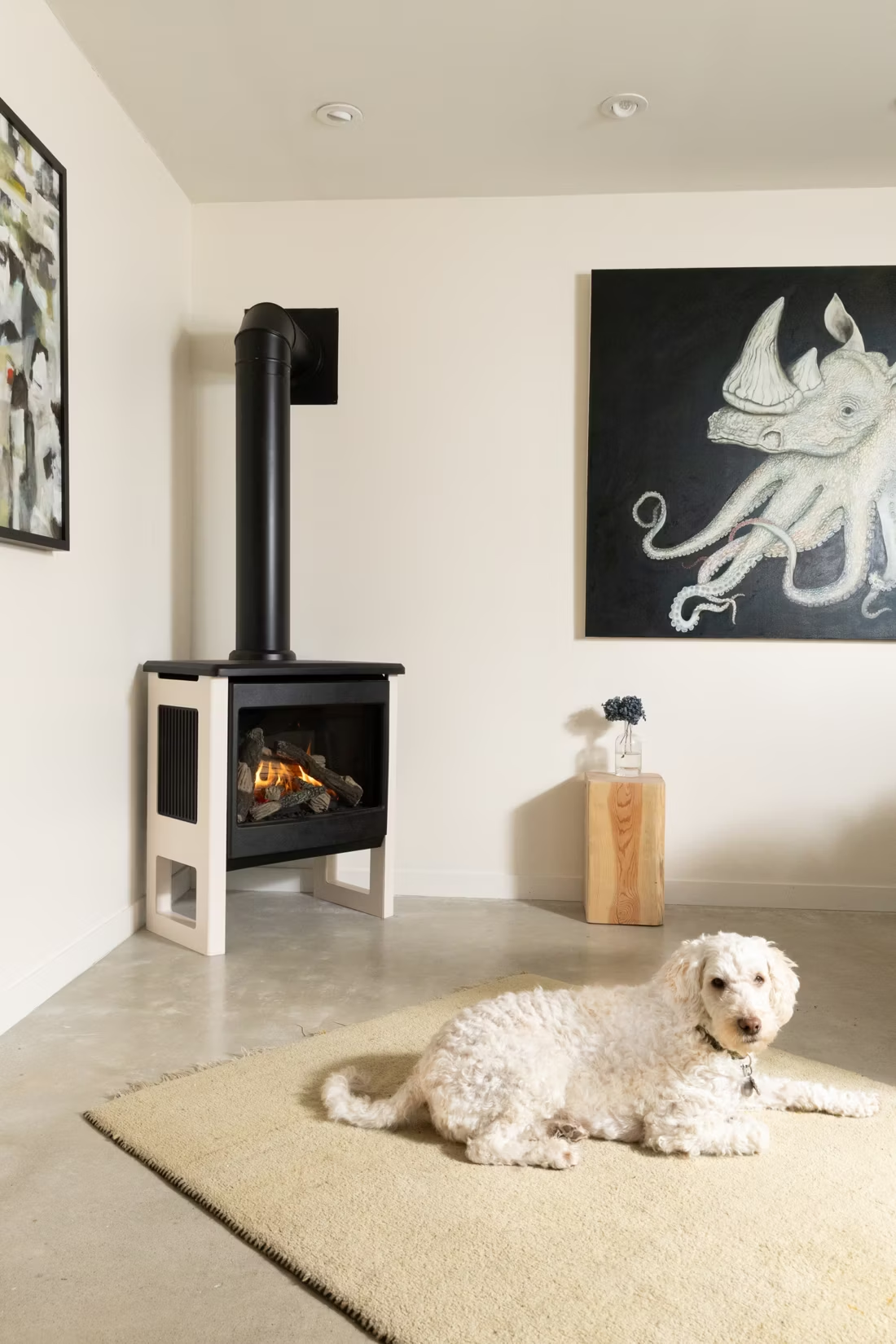
Given how narrow most Camden lots are, a gas insert into an existing fireplace opening is usually the path of least resistance—it uses space you already have and doesn't eat into a tight living room. A freestanding gas stove works well in a finished basement, which many Camden rowhomes have and which otherwise runs cold in winter. A fully built-in gas fireplace is really only practical during a larger renovation or addition where you're framing new wall space anyway. Most local dealers will tell you the insert route first simply because it's the least disruptive to the house.
Do I need a permit to install a gas fireplace in Camden?
Yes. Gas fireplace installations in Camden require a construction permit through the City of Camden's construction code office, plus a licensed gas-fitter for any new or modified gas line, per New Jersey's Uniform Construction Code. Most established hearth dealers handle the permit application and inspection scheduling as part of the installation price, which is worth confirming up front—coordinating a separate gas-fitter yourself adds time and cost without much benefit.
Vented vs. vent-free gas fireplaces—which works in Camden's older homes?
Vented (direct-vent) units draw combustion air from outside and exhaust it back outside, which is why they're the default recommendation almost everywhere, including Camden. Vent-free gas fireplaces are legal in New Jersey under specific room-size and ventilation rules, but they release combustion byproducts into the living space—a real consideration in older, tightly sealed rowhomes where air exchange is already limited. Because so many Camden homes can't run a vertical chimney vent, direct-vent sidewall venting through an exterior wall has become the practical standard here: it delivers the safety profile of a vented unit without needing a working chimney at all.
How often does a gas fireplace need to be serviced?
Plan on an annual inspection, ideally in early fall before the heating season starts. A technician checks the burner, pilot assembly, venting, and gas connections, and cleans the glass and interior. This runs $150 to $225 in the Camden/South Jersey area for most units. It's a lighter lift than wood chimney sweeping, but skipping it is still the most common cause of ignition problems and inefficient burns.
Gas vs. electric fireplace—which makes more sense in Camden?
Wood stoves are rare to nonexistent in Camden—most rowhomes lack a chimney built to modern wood-burning code, and tight lot lines make clearance requirements hard to meet, so the real comparison here is gas versus electric. Gas delivers genuine heat output, works during power outages with battery-backup ignition, and holds up as a primary supplemental heat source through Camden's winters. Electric fireplaces install almost anywhere with no venting or gas line at all, which suits renters or upper-floor rowhome units, but at PSE&G's residential rate of roughly 19.8 cents per kWh, running one as a serious heat source costs more per BTU than gas. For a rowhome living room that needs real winter heat, gas is usually the better long-term investment; for supplemental ambiance in a bedroom or apartment unit, electric is the easier install.
Why is a fireplace insert so efficient?
An insert does two things: it seals the chimney completely, so you stop losing air you already paid to heat, and it radiates warmth into the room through the firebox and glass. Most add a heat-exchange fan that pulls cool room air underneath, wraps it around the hot firebox, and pushes it back out warm. Your home is more efficient before you've even lit the first fire.
Are new gas fireplaces really better than old ones?
Two ways, and they're both big. Looks: modern gas fireplaces are realistic enough that it's hard to believe they aren't burning wood. Cost: old units burn a standing pilot year-round (roughly $200 a year), while new ones use pilot-on-demand ignition and modern burners. Add remote controls and thermostat operation, and the day-to-day experience isn't close.
Can a fireplace actually lower my heating bill?
Yes—by creating a comfort zone. A furnace heats every square foot of the house just to warm the one room you're in; a gas fireplace on low burns roughly a sixth of the gas a typical furnace does. Set the furnace around 55–60 degrees as a baseline, then heat the rooms your family actually uses. Families who heat this way commonly save $20–$60 a month.
What is an in-home preview and do I need one?
It's a visit where a hearth professional measures your space, confirms the model you picked actually works in your home, and walks the specs—framing, gas line, venting, finish work—before anything is ordered. Some details you just can't know until you see the house. Never make a down payment without one; it's the single most-skipped step that burns buyers.
Nearby Dealers
Hearth shops serving Camden and the surrounding area. Every listing shows whether it is a WhyFire partner, a dealer we have verified as authorized for the brands we recommend, or a local business carrying hearth products. No manufacturer pays for placement. How we verify dealers →
Rettinger Fireplace Systems Inc
South Jersey Hearthside LLC Dba Modern Gas Products
Plumbarama Co. Inc.
Kester Fireplace
Maple Glen Mechanical
McCloskey's Garden & Hearth
Rattan Patio & Fireplace Shoppe
Ambler Fireplace And Patio
Estates Chimney & Fireplace
Norristown Chimney
E & E Stoves & Fireplaces
Find your gas fireplace in Camden.
Tell us about your rowhome or property and we'll match you with a trusted local Camden-area dealer, plus a free Project Guide & Parts List covering the right unit, venting approach, and parts for your space.
Find Your Fireplace →