
Fireplace Heat Built for Camden's Rowhomes.
No chimney, no gas line, no venting—just plug-in or wired-in warmth that fits the attached rowhomes and apartment buildings that make up most of Camden. Find the right unit and connect with a trusted local dealer.
Every Project Starts From One of These Five Situations
Zero-clearance heat for a city built on rowhomes.
Camden sits at just 16 feet of elevation along the Delaware River, directly across from Philadelphia, in climate zone 4A with a winter heating season roughly on par with Baltimore and winter lows averaging 28°F. It's a real heating season, but not a brutal one—nothing like the deep-freeze winters of Duluth or Burlington. What sets Camden apart isn't the climate, it's the housing stock: dense blocks of attached brick rowhomes in neighborhoods like Cooper-Grant and Fairview, plus a large share of apartment and rental units, most of them built without a masonry fireplace, chimney, or flue to work with.
That housing reality is exactly why wood and pellet stoves see almost no use here—there's nowhere to vent them, nowhere to store cordwood or pellet bags on a narrow rowhome lot, and no existing chimney to retrofit. Electric fills that gap. Public Service Electric & Gas (PSE&G) serves the city, and at a residential rate of $0.1981 per kWh—noticeably higher than the national average—the smart approach is treating an electric fireplace as supplemental zone heat for the room you're actually in, not a whole-home heat source. Used that way, a unit installed against any wall, with no clearance requirements and no venting, pays for itself in comfort fast.
Three steps. No salesperson until you're ready.
Tell us about your project
Your zip code, your situation, and the fuel you're leaning toward—or let the answers point you to one.
See what's actually available
The brands dealers within 100 miles genuinely carry—real options, never a catalog mirage.
Get your dealer & Project Guide
A trusted local dealer, plus the free Project Guide & Parts List that names every component of the job.
Frequently Asked Questions
How much does an electric fireplace cost to install in Camden?
A plug-in electric fireplace or insert that runs off a standard household outlet typically costs $150 to $600 installed, since there's no venting, gas line, or new wiring required—most homeowners or landlords can have one in place same-day. A built-in electric fireplace that requires a dedicated circuit—common in rowhome renovations or when recessing a unit into an existing wall opening—runs $800 to $2,500 once a licensed electrician is involved. Either option is far less invasive than the gas line and venting work a comparable gas fireplace install requires in a Camden rowhome.
Do I need a permit to install an electric fireplace in Camden?
Most plug-in electric fireplaces need no permit at all—they're an appliance, not a fixed installation. If you're having a built-in unit wired to a new dedicated circuit, that electrical work should go through a licensed electrician and typically requires an electrical permit through Camden's Construction Code office, per the New Jersey Uniform Construction Code. There's no chimney, gas line, or venting inspection involved either way, which is one of the reasons electric is the simplest fireplace option for the city's attached housing stock.
Can I put an electric fireplace in a rowhome that has no chimney?
Yes—that's precisely the situation electric fireplaces are built for. A large share of Camden's rowhomes, particularly in older sections like Cooper-Grant, were never built with a masonry fireplace or flue. Electric units have zero clearance to combustibles, so they can be recessed into an existing wall niche, mounted flush against drywall, or set up as a freestanding mantel-style unit with no structural changes to the home at all.
How much does it cost to run an electric fireplace with PSE&G rates?
Most electric fireplaces draw around 1,500 watts on the heat setting, which at PSE&G's residential rate of $0.1981 per kWh works out to roughly 30 cents an hour to run. Used a few hours an evening as supplemental heat in a living room or bedroom, that's a modest add to a monthly bill—a few dollars for the month, not the hundreds a whole-home heating system would cost. Running the flame effect alone, without heat, uses only a fraction of that.
What's the difference between an electric insert, a wall-mount unit, and a freestanding stove?
An electric insert is built to slide into an existing fireplace opening or a framed wall cavity, giving a built-in look. A wall-mount unit hangs flat against any wall like a television, with no fireplace opening required—a common choice in Camden apartments and rowhomes without existing hearths. A freestanding electric stove sits on the floor and mimics the look of a wood stove without any venting, which works well for renters who want the aesthetic without any wiring or wall modifications. All three plug into a standard outlet unless you're stepping up to a larger built-in model on a dedicated circuit.
Will an electric fireplace work in a rental unit or apartment?
Yes, and it's often the only real option for Camden's renter-occupied housing, which makes up a significant share of the city's units. A freestanding or wall-mount electric fireplace needs no construction, no permit, and no landlord sign-off beyond basic electrical safety—it plugs into an existing outlet and can be unplugged and taken with you when you move. That portability is a real advantage over gas or wood options, which require permanent venting or chimney work a tenant typically can't do.
Electric vs. gas fireplace—which makes more sense for a Camden home?
Gas fireplaces, which PSE&G also supplies as a utility, deliver more heat output and lower cost per hour to run, but they require a gas line, venting, and a real installation—often $4,000 or more in an older rowhome without existing gas fireplace infrastructure. Electric costs far less upfront, needs no venting or gas work, and installs in a fraction of the time, but it's better suited to supplemental zone heat than as a primary heat source given PSE&G's residential electric rate. For a rowhome without existing gas fireplace plumbing, or for a rental unit, electric is usually the more practical near-term choice.
What about wood or pellet stoves—are those an option in Camden?
Not really, and it's worth being upfront about that. Camden's dense rowhome and rowhouse-style housing stock generally lacks the chimneys, flues, and lot space that wood and pellet stoves need, and there's little of the cordwood or pellet delivery infrastructure that supports those fuels in more rural parts of South Jersey. A small number of detached homes on larger lots could technically accommodate a wood or pellet unit, but for the vast majority of Camden's housing, electric or gas is the realistic path to fireplace heat.
What should I look for in an electric fireplace for a Camden home?
Look at heat output (most quality units put out 4,600 to 9,000 BTU, enough for a single room), a built-in thermostat so it cycles off rather than running constantly, and LED flame technology that looks convincing rather than gimmicky—brands like Dimplex and Napoleon are common recommendations from local dealers. If you're recessing a unit into an existing wall opening, confirm the clearance and depth requirements before buying, since insert dimensions vary more than freestanding units.
Can I put a TV above my fireplace?
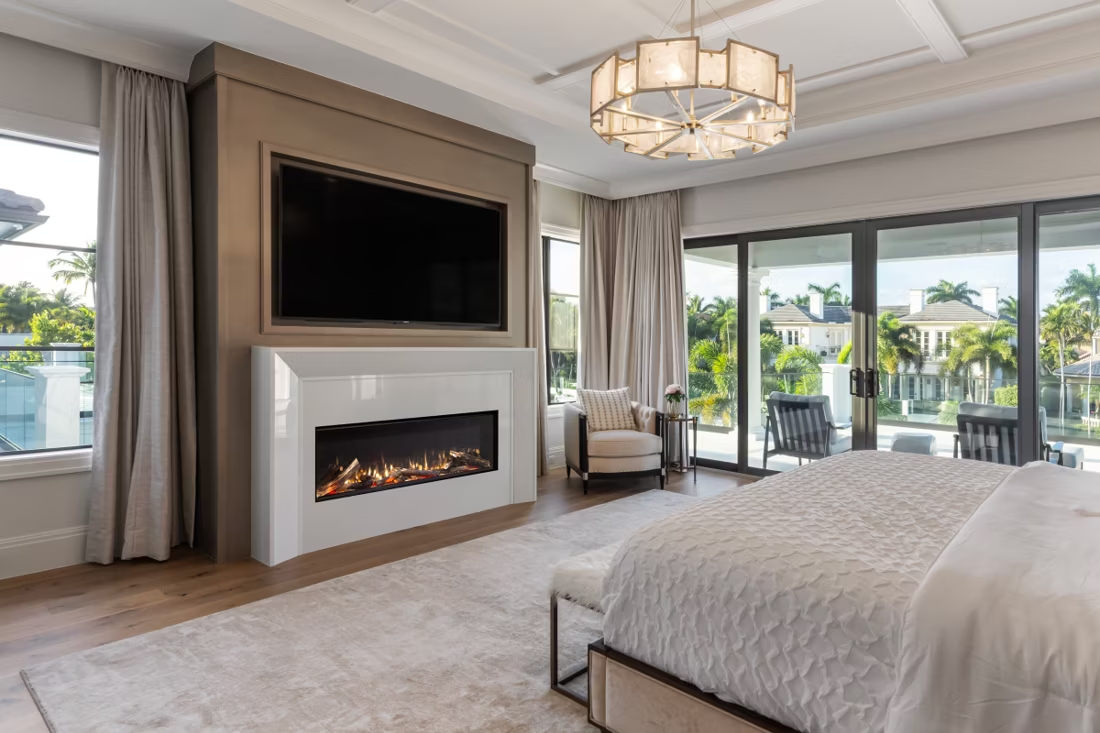
Yes—with an asterisk. Fireplaces are hot and TVs don't like heat. Either put a mantel between them to deflect rising warmth, or choose a fireplace with heat-management technology that creates a cool zone on the wall above—the wall stays around 125 degrees, barely warm, while the room still gets full heat. If you like clean lines and don't want a mantel, heat management is the answer.
Do electric fireplaces actually produce heat?
Yes—most put out around 4,800–5,000 BTUs from a standard outlet, which comfortably warms a bedroom, office, or den as a comfort-zone heater. What they won't do is carry a whole house the way wood, gas, or pellet can. Think of electric as ambiance-first with honest supplemental heat: flames on with no heat in July, flames plus warmth in January.
What is an in-home preview and do I need one?
It's a visit where a hearth professional measures your space, confirms the model you picked actually works in your home, and walks the specs—framing, gas line, venting, finish work—before anything is ordered. Some details you just can't know until you see the house. Never make a down payment without one; it's the single most-skipped step that burns buyers.
Can a fireplace actually lower my heating bill?
Yes—by creating a comfort zone. A furnace heats every square foot of the house just to warm the one room you're in; a gas fireplace on low burns roughly a sixth of the gas a typical furnace does. Set the furnace around 55–60 degrees as a baseline, then heat the rooms your family actually uses. Families who heat this way commonly save $20–$60 a month.
Nearby Dealers
Hearth shops serving Camden and the surrounding area. Every listing shows whether it is a WhyFire partner, a dealer we have verified as authorized for the brands we recommend, or a local business carrying hearth products. No manufacturer pays for placement. How we verify dealers →
Rettinger Fireplace Systems Inc
South Jersey Hearthside LLC Dba Modern Gas Products
Plumbarama Co. Inc.
Kester Fireplace
Maple Glen Mechanical
McCloskey's Garden & Hearth
Rattan Patio & Fireplace Shoppe
Ambler Fireplace And Patio
Estates Chimney & Fireplace
Norristown Chimney
E & E Stoves & Fireplaces
Electric Service in Camden
An electric fireplace's heater draws about 1,500 watts—pennies per hour at local rates.
Public Service Elec & Gas Co
Find your electric fireplace in Camden.
Tell us a bit about your home and we'll match you with the right electric fireplace or insert, plus a free Project Guide & Parts List with the exact parts and your recommended local Camden dealer.
Find Your Fireplace →