
Keep Your Family Warm and Safe—No Matter What
Somersworth sits at just 208 feet, but its long, cold heating season, with winter lows averaging 15°F, puts it closer to Burlington, VT than to most of coastal New England. I'll match you with a trusted local dealer who knows what actually holds up through a full Seacoast winter.
Every Project Starts From One of These Five Situations
Wood heat here is mainstream, not novelty.
Somersworth's low elevation can be deceiving—this is a Merrimack Valley mill city on the Maine border, not a mountain town, yet its winter heating season runs long and cold, with average lows of 15°F, putting it firmly in the same demand tier as the Champlain Valley. Older homes in the Great Falls and Rollinsford Junction neighborhoods, many built during the city's 19th-century mill era, often carry less insulation than newer construction, which makes a dependable wood stove or insert genuinely useful rather than decorative—especially during the ice storms that periodically take down power lines across Strafford County.
Maple, birch, beech, and oak are the hardwoods most local burners split and stack, and all four are dense, high-BTU species that hold a coal bed well overnight. The White Mountain National Forest, about an hour northwest, issues cutting permits for $20 per cord with a season running May through October—a straightforward, affordable source for anyone willing to make the drive and do the work. Somersworth has no air quality non-attainment designation, so unlike some western towns there's no winter curtailment period to plan around here; the main regulatory bar is New Hampshire's building code and EPA 2020 NSPS certification on new stoves.
Firewood Cutting Permits Near Somersworth
Three steps. No salesperson until you're ready.
Tell us about your project
Your zip code, your situation, and the fuel you're leaning toward—or let the answers point you to one.
See what's actually available
The brands dealers within 100 miles genuinely carry—real options, never a catalog mirage.
Get your dealer & Project Guide
A trusted local dealer, plus the free Project Guide & Parts List that names every component of the job.
Frequently Asked Questions
How much does a wood stove installation cost in Somersworth?
Most installations in the Somersworth area run in the $4,000 to $8,500 range. An insert going into an existing masonry fireplace—common in the older mill-era homes near downtown—lands toward the lower end. A freestanding stove in a newer home without an existing chimney, which needs a full Class A pipe run through the roof, pushes toward the top of that range or beyond. Either way you'll need a permit through the City of Somersworth's building department, and most established installers include that paperwork in their quote.
What size wood stove do I need for a Somersworth home?
With winter lows averaging 15°F and routine cold snaps well below that, undersizing is the mistake to avoid. A small stove rated under 1,000 square feet works fine as backup heat in a well-insulated newer build, but for a main living area in one of Somersworth's older two-and-a-half-story homes—with higher ceilings and less insulation than current code—a medium to large stove in the 1,500 to 2,500 square foot range holds a fire through the night without constant reloading. A local dealer will size against your actual floor plan and insulation, not just square footage.
Do I need a permit to install a wood stove in Somersworth?
Yes. New installations require a building permit through the City of Somersworth, and any stove sold new must meet EPA 2020 NSPS emissions standards under New Hampshire code. Somersworth carries no air quality non-attainment designation, so unlike some parts of the country there's no seasonal curtailment period restricting older stoves—but a permit and inspection are still required for insurance purposes and to satisfy your homeowner's policy after installation.
What's the difference between a wood stove and a wood insert for my house?
A freestanding stove sits on its own hearth pad and vents through new Class A pipe, which suits homes without an existing masonry fireplace—common in newer construction outside the historic downtown. A wood insert slides into an existing masonry firebox and reuses the chimney already there, which is the more typical retrofit in Somersworth's older mill-era housing stock where open fireplaces were standard when the homes were built. Inserts generally land toward the lower end of the local $4,000-$8,500 install range since the chimney structure doesn't need to be built from scratch.
Where can I get a firewood cutting permit near Somersworth?
The White Mountain National Forest, roughly an hour to the northwest, issues cutting permits for $20 per cord with a season running May through October. It's a common source for local burners willing to make the trip, and maple, birch, beech, and oak—the four species that dominate Strafford County woodlots—are all available there. Closer to home, plenty of Somersworth-area burners also buy seasoned cordwood directly from private landowners and small logging operations around the Seacoast, since a round trip to the White Mountains isn't always practical for a single cord.
What's the best wood stove for a Somersworth winter?
Given a heating season that runs from October well into April, a stove that can hold a long, even burn matters more here than raw output. Catalytic stoves from Jotul or Vermont Castings—both companies with deep roots in New England and easy parts availability through regional dealers—are popular choices for holding an overnight fire on dense oak or beech. Non-catalytic stoves from Pacific Energy or Lopi are a solid, lower-maintenance option if wood is supplemental rather than primary heat. Either way, EPA 2020 NSPS certification is required for a new install in New Hampshire.
How often should my chimney be swept in Somersworth?
Plan on an annual inspection in September before the first cold snap, which is the Chimney Safety Institute of America's standard recommendation—and it holds especially true here given how many Somersworth households run wood through a six-month-plus heating season. If you're burning green or less-seasoned birch, which dries slower than oak or maple and tends to build creosote faster, a mid-season check partway through winter is worth the cost of avoiding a chimney fire during the coldest stretch.
Are there any tax credits for upgrading to a more efficient wood stove?
Yes—the federal biomass stove tax credit under IRC Section 25(C) allows a 30% credit (up to $2,000) on the purchase and installation cost of a qualifying wood or pellet stove rated at 75% efficiency or higher. It applies nationwide, including here in Somersworth, and most EPA 2020 NSPS-certified stoves from major manufacturers qualify. Ask your local installer for the manufacturer's certification statement—you'll need it at tax time, and a reputable dealer will have it on hand for whatever model they recommend.
Wood stove vs. pellet stove—which makes more sense in Somersworth?
Wood runs without electricity, which is a real advantage during the ice storms that periodically knock out power across Strafford County, and it pairs with affordable $20-per-cord permits from the White Mountain National Forest. Pellet stoves—using regional brands like New England Wood Pellet, made just over the border in Jaffrey, NH, or Maine Woods Pellet Co and Lignetics—burn cleaner and are easier to load and maintain day to day, but they need electricity for the auger and blower. With Unitil and PSNH/Eversource residential rates both above 18.5 cents per kWh, a multi-day outage that knocks out a pellet stove's electronics is more than an inconvenience—it's why a lot of local households keep a wood stove as the primary or backup unit even if pellets handle daily convenience.
Why is my open fireplace making my house colder?
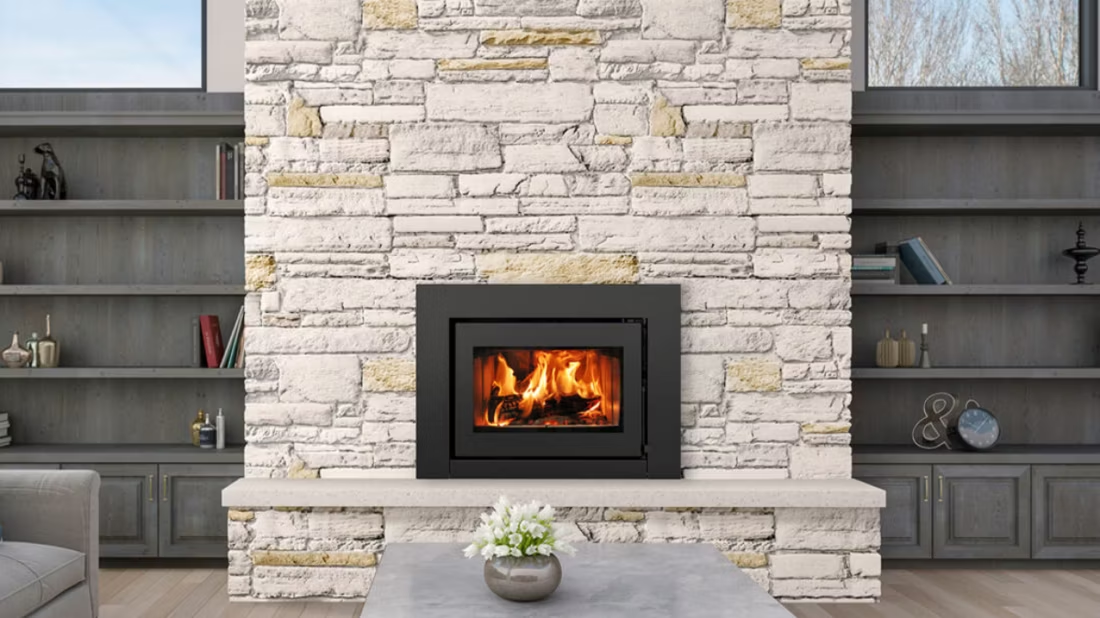
Open fireplaces suck—literally. As the fire burns, it consumes air your furnace already paid to heat and pulls it out through the chimney, so the house is actually colder after the fire goes out than before you lit it. An insert fixes this: it seals the chimney, puts fixed glass across the front, and turns that hole in your house into a real heat source.
Can a wood stove burn all night?
The right one can. If waking up to a warm house and live coals matters to you, say exactly that when you're shopping—firebox size and burn-rate control determine overnight performance far more than any number on a spec sheet. It's a much more useful question than asking about BTUs.
How much should I budget for a fireplace?
For an average home—covering the fireplace, the vent pipe, and basic installation—a budget between $3,900 and $5,500 gives you a lot of options across wood, gas, and pellet. By the time you add finish work, gas line, and electrical, the average complete installation lands between $5,000 and $12,000 all-in. In a remodel or new build, a good rule is to put about 2.5% of the total project cost toward the fireplace.
What is an in-home preview and do I need one?
It's a visit where a hearth professional measures your space, confirms the model you picked actually works in your home, and walks the specs—framing, gas line, venting, finish work—before anything is ordered. Some details you just can't know until you see the house. Never make a down payment without one; it's the single most-skipped step that burns buyers.
Nearby Dealers
Hearth shops serving Somersworth and the surrounding area. Every listing shows whether it is a WhyFire partner, a dealer we have verified as authorized for the brands we recommend, or a local business carrying hearth products. No manufacturer pays for placement. How we verify dealers →
Somersworth Stove Shop
D & J Home & Hearth
Drogold Dba A Merrie Sweepe Chimney Service
The Stove Shoppe & Fences
Northeast Distribution
Jackson Fireplace
Home & Hearth
Get your Somersworth wood heat project mapped out.
Tell me about your home and I'll match you with a trusted local dealer and send a free Project Guide & Parts List—sized for Strafford County's long heating season, with the vent kit and parts specified.
Find Your Fireplace →