
Find a pellet stove that can handle a Grafton County winter.
With a long, cold winter season and lows averaging 9°F, Grafton County homes need heat that keeps up night after night. Find the right pellet stove or insert, sized for your home, and connect with a trusted local dealer.
Every Project Starts From One of These Five Situations
Steady, thermostat-controlled heat for a long White Mountain winter.
Grafton County stretches from the Connecticut River valley around Hanover and Lebanon up into the White Mountain National Forest near Lincoln and Franconia, with heating seasons that run from October well into April. With a long, cold winter season and a Zone 6A classification, the county sits in territory comparable to Burlington, VT—long, cold winters where a heat source has to perform for six months straight, not just look good on a mantel. Plenty of Grafton County households already burn maple, birch, beech, and oak cut under permits from the White Mountain National Forest, but splitting and stacking cordwood isn't for everyone, and that's where pellet heat has found a steady following.
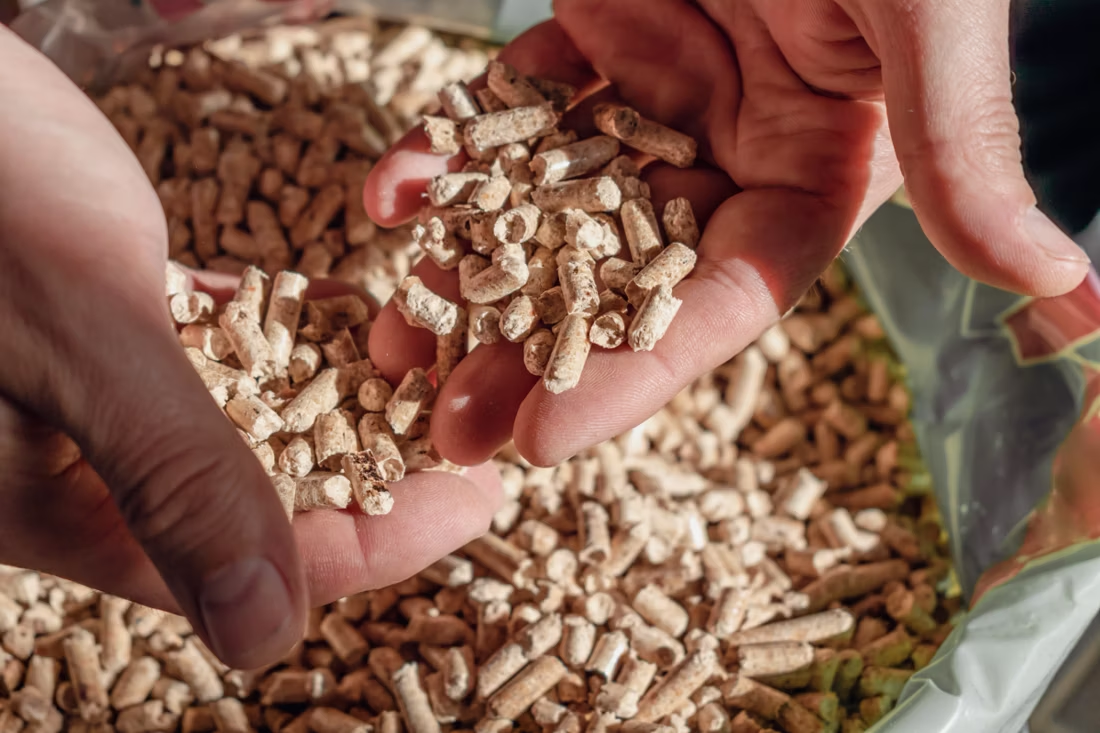
A pellet stove loads from a hopper, feeds itself on a timer or thermostat, and burns far cleaner than cordwood—no creosote buildup, minimal ash, and no need to season wood for a year before it's ready to burn. Regional pellet brands like Lignetics, New England Wood Pellet, and Maine Woods Pellet Co mill their product close to home, which keeps supply reliable through a Grafton County winter and means your pellets aren't traveling cross-country to reach you. For homeowners who want consistent, set-it-and-forget-it heat through a Zone 6A winter without the labor of a wood pile, pellet is often the right fit.
Three steps. No salesperson until you're ready.
Tell us about your project
Your zip code, your situation, and the fuel you're leaning toward—or let the answers point you to one.
See what's actually available
The brands dealers within 100 miles genuinely carry—real options, never a catalog mirage.
Get your dealer & Project Guide
A trusted local dealer, plus the free Project Guide & Parts List that names every component of the job.
Frequently Asked Questions
How much does a pellet stove installation cost in Grafton County?
Pellet stove installations in Grafton County typically run in the range most New England installers quote for a straightforward setup—generally $3,000 to $6,000 depending on the unit, whether you're venting through an existing chimney or running new PL vent through an exterior wall, and any hearth pad work needed for clearance. A pellet insert going into an existing masonry fireplace tends to land on the lower end since it reuses the existing opening; a freestanding stove in a room without a chimney costs more once wall venting and a hearth pad are added. Local dealers will give you a firm number after seeing your space, since venting path is the biggest cost variable.
What size pellet stove do I need for a Grafton County home?
With winter lows averaging 9°F and a winter season as long and cold as the county sees, Grafton County sits solidly in cold-climate territory, so sizing matters more here than it would in a milder region. Small pellet stoves (rated for roughly 1,000 sq ft) suit a single room, cabin, or camp; medium units (1,500–2,000 sq ft) cover most main living areas in the county's farmhouses and capes; larger units can handle an open-concept home if it's reasonably well insulated. Older homes around Lebanon, Plymouth, or Littleton with less insulation and higher ceilings often need to size up from the manufacturer's square-footage rating. A local dealer will size your space based on insulation, ceiling height, and layout during an in-home visit—worth doing before you buy, since an undersized stove will run flat-out on the coldest nights and still fall short.
Where can I find certified pellet stove installers near me?
Look for installers with NFI (National Fireplace Institute) certification, which covers proper venting, clearances, and code compliance for pellet appliances specifically. Certified dealers serving Grafton County generally cover the corridor from Hanover and Lebanon up through Plymouth, Littleton, and the Lincoln/Franconia area, though expect a modest travel charge for installs in the more remote reaches of the county. Having the same company sell and install the unit simplifies warranty coverage if the auger, igniter, or blower needs service down the road—pellet stoves have more moving parts than a wood stove, so factory-trained service matters.
What's the difference between a pellet stove and a pellet insert?
A pellet stove is a freestanding unit that sits on a hearth pad and vents through a wall or existing chimney—it can go almost anywhere in a room with the right clearances. A pellet insert is built to slide into an existing masonry fireplace opening, sealing it off and venting through a liner run up the existing chimney. For Grafton County's older housing stock—plenty of farmhouses and capes with a masonry fireplace already in place—an insert is often the simpler retrofit, since it uses infrastructure you already have. Homes without an existing fireplace, or rooms where you're starting from scratch, are better suited to a freestanding stove.
Do I need a permit to install a pellet stove in Grafton County?
Yes, in nearly every case—pellet stove installations require a building permit, but Grafton County's 32 towns each handle permitting through their own town office rather than a single county building department. Hanover, Lebanon, Plymouth, Littleton, and the smaller towns all issue permits locally, so the process and turnaround time vary by town. Most established dealers handle the permit application as part of the install and know the requirements for their service area, which saves you from tracking down the right office yourself. Because pellet stoves burn cleanly, there are no burn-ban or air-quality curtailment concerns to navigate in Grafton County the way there sometimes are with wood.
What's the best pellet stove for Grafton County's climate?
For a Zone 6A climate with a long, cold heating season, look for a pellet stove rated for continuous cold-weather operation rather than one marketed mainly for ambiance. Brands like Harman, Lopi, and Enviro make units with larger hopper capacities and higher maximum BTU output that hold up well through a full Grafton County winter, running for 12-24 hours per hopper load depending on the setting. If the stove is your primary heat source rather than backup, ask your dealer about hopper size and burn rate at the highest heat setting—that's what determines how often you're reloading pellets on the coldest nights near Franconia Notch or up around Lincoln.
How often does a pellet stove need to be serviced?
Pellet stoves need more frequent attention than wood stoves, but the tasks are lighter. Ash should be emptied every few days during regular use, the burn pot and glass cleaned weekly, and the venting and exhaust fan professionally cleaned at least once a year—typically before the season starts, in late summer or early fall. A full annual service also checks the auger motor, igniter, and gaskets, since these are the parts most likely to wear out. Skipping the annual service is the most common cause of pellet stoves losing efficiency or shutting down mid-winter, which is a bad time to discover a problem in a county where lows regularly sit in the single digits.
Where can I buy pellets in Grafton County?
Pellets are sold by the 40-lb bag or by the ton at hardware stores, farm supply stores, and hearth dealers throughout Grafton County. Regional brands like Lignetics, New England Wood Pellet, and Maine Woods Pellet Co are milled in the Northeast, which keeps them reasonably priced and reliably in stock even during a hard winter when demand spikes. Many households buy a full ton (roughly 50 bags) in the fall to lock in a price and guarantee supply before cold weather hits, rather than buying bag by bag through the season. Your dealer can usually point you to the most consistent local supplier for the brand your stove is calibrated for.
Pellet stove vs. wood stove—which is right for my Grafton County home?
Wood stoves burn cordwood—maple, birch, beech, and oak are all common locally, and cutting permits through the White Mountain National Forest run about $20 per cord during the May-to-October season, so self-sufficient heat is genuinely affordable if you're willing to cut and split. Wood also keeps working with no electricity, which matters during the ice storms that periodically knock out power across the county. Pellet stoves are more convenient—thermostat control, no splitting or stacking, cleaner burn—but the auger and blower need electricity, so a pellet stove alone won't heat your house through a multi-day outage unless it's paired with a generator or battery backup. For a primary living space where convenience matters most, pellet is a strong choice. For backup heat during storms, wood still has the edge.
Why is a fireplace insert so efficient?
An insert does two things: it seals the chimney completely, so you stop losing air you already paid to heat, and it radiates warmth into the room through the firebox and glass. Most add a heat-exchange fan that pulls cool room air underneath, wraps it around the hot firebox, and pushes it back out warm. Your home is more efficient before you've even lit the first fire.
What's the difference between an insert and a zero-clearance fireplace?
An insert is a fireplace that slides into a pre-existing wood-burning fireplace—if you don't have one, there's nothing to insert it into. A zero-clearance fireplace is built into a framed wall, which makes it the answer for remodels and new construction. Simple test: existing masonry fireplace means insert; blank or framed wall means zero-clearance.
What is an in-home preview and do I need one?
It's a visit where a hearth professional measures your space, confirms the model you picked actually works in your home, and walks the specs—framing, gas line, venting, finish work—before anything is ordered. Some details you just can't know until you see the house. Never make a down payment without one; it's the single most-skipped step that burns buyers.
How much should I budget for a fireplace?
For an average home—covering the fireplace, the vent pipe, and basic installation—a budget between $3,900 and $5,500 gives you a lot of options across wood, gas, and pellet. By the time you add finish work, gas line, and electrical, the average complete installation lands between $5,000 and $12,000 all-in. In a remodel or new build, a good rule is to put about 2.5% of the total project cost toward the fireplace.
Stove and Fireplace Dealers in Grafton County
Pellet Brands Stocked Around Grafton County
Manufacturers will point you to the nearest stocking dealer.
Find the right pellet stove for your Grafton County home.
Tell us about your home and heating needs, and we'll match you with a trusted local dealer and send over your free Project Guide & Parts List—sized for a Grafton County winter, with the exact parts, vent kit, and recommended installer.
Find Your Fireplace →