
Instant warmth for Grafton County's long White Mountains winters.
No chimney, no gas line, no venting—just plug in or wire up and go. From Hanover apartments to Plymouth farmhouses, find the right electric fireplace and connect with a trusted local dealer.
Every Project Starts From One of These Five Situations
Reliable warmth wherever power reaches.
Grafton County stretches from the Connecticut River valley across the White Mountains, and winter here is not a light commitment—a 6A climate zone, an average winter low near 9°F, and a long, demanding heating season put towns like Hanover, Lebanon, Plymouth, and Lincoln among the coldest in the Northeast outside Vermont's Northeast Kingdom. Most homes in the county rely on propane, oil, or wood as primary heat, which is exactly where electric fireplaces earn their place—not as the furnace, but as a clean, no-hassle way to add real warmth and ambiance to a single room without touching the chimney or the gas line.
That matters a lot in a county built around old farmhouses, converted barns, and the dense rental stock around Dartmouth College and Dartmouth-Hitchcock Medical Center in Hanover and Lebanon. A landlord can install an electric insert in a Hanover rental without a single permit call about venting. A homeowner in Plymouth or Littleton can add supplemental zone heat to a sunroom or finished basement that the propane furnace never quite reaches. Eversource and the New Hampshire Electric Cooperative serve most of the county's grid, and as long as the power stays on, an electric unit runs clean, quiet, and instant—no chimney sweep, no gas fitter, no cutting permit required.
Three steps. No salesperson until you're ready.
Tell us about your project
Your zip code, your situation, and the fuel you're leaning toward—or let the answers point you to one.
See what's actually available
The brands dealers within 100 miles genuinely carry—real options, never a catalog mirage.
Get your dealer & Project Guide
A trusted local dealer, plus the free Project Guide & Parts List that names every component of the job.
Frequently Asked Questions
How much does an electric fireplace installation cost in Grafton County?
Electric fireplaces are the least expensive hearth option to install, and that holds true across Grafton County. A plug-in freestanding unit or a basic insert that uses an existing outlet typically runs $300 to $800 for the unit itself, with no installation cost beyond hanging or setting it. A built-in wall unit or a mantel package that needs a dedicated 20-amp circuit run by an electrician generally lands between $1,500 and $3,500, depending on how far the circuit has to travel and whether an electrical panel upgrade is needed—more common in older Hanover and Plymouth housing stock with dated wiring. Local dealers can quote a firm number after seeing your wall and panel.
Will an electric fireplace actually heat a room in a Grafton County winter?
It will take the edge off, but it should not be your primary heat plan in a climate with a long, demanding heating season and average winter lows around 9°F. Most electric fireplace inserts put out around 1,500 watts (roughly 5,000 BTU), which comfortably supplements a well-insulated room of 300 to 400 square feet—a den, a finished basement, a Hanover condo living room. In an older, drafty Grafton County farmhouse, expect the electric unit to handle ambiance and modest supplemental warmth while your propane furnace, oil boiler, or wood stove carries the real heating load on the coldest nights.
Do I need a permit to install an electric fireplace in Grafton County?
Usually not much of one. Because electric units don't need venting or gas lines, most towns in Grafton County—Hanover, Lebanon, Plymouth, and the smaller towns around the White Mountains—only require an electrical permit when a new dedicated circuit is being run, and that's typically pulled by the electrician doing the work, not the homeowner. Plug-in freestanding units generally need no permit at all. Since each town in the county runs its own building or code enforcement office rather than a single countywide department, it's worth a quick call to your local office if you're doing a built-in installation, but this is one of the simplest hearth permitting processes available.
Will my electric fireplace work if the power goes out?
No—and this is worth being honest about in a county where ice storms and nor'easters regularly knock out power for hours or days in the more rural stretches around Lincoln, Bristol, and the Connecticut River towns. An electric fireplace needs grid power (or a generator) to run; it offers zero backup heat during an outage, unlike a wood stove burning local maple or oak. If outage resilience matters to you, plenty of Grafton County homeowners pair an electric fireplace for daily convenience and ambiance with a wood stove or propane heater as the outage-proof backup—a common setup in a county where the power lines run through a lot of forest.
What's the difference between an electric fireplace, insert, and mantel package?
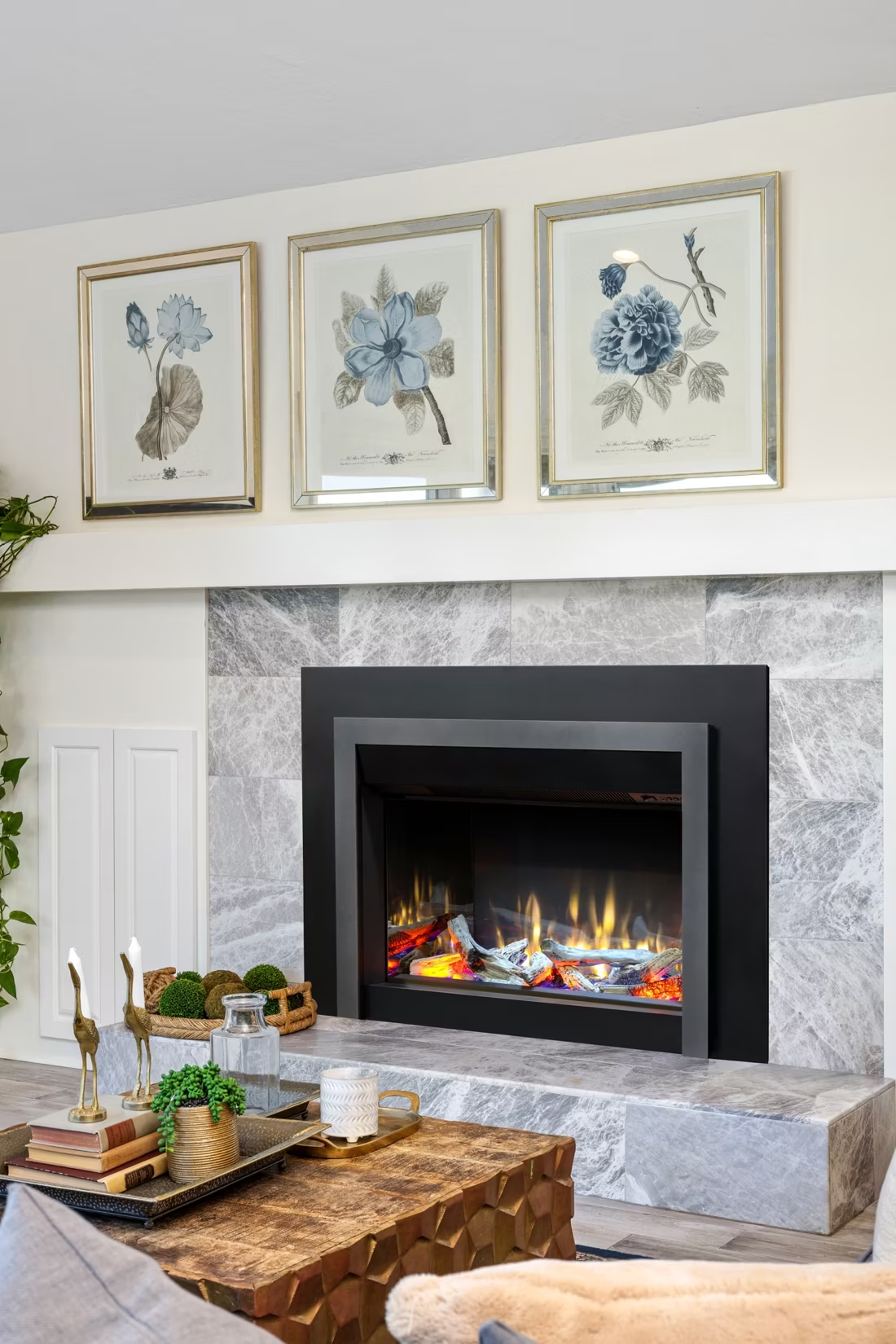
A freestanding electric fireplace is a standalone unit you plug in and place almost anywhere—no installation required. An electric insert is built to slide into an existing masonry fireplace opening or a custom-framed wall cavity, giving a more built-in look, and it usually needs a dedicated circuit if it draws more than a standard outlet can handle. A mantel package combines an insert with a surround and mantel shelf, often used to convert an old wood fireplace opening in a Grafton County farmhouse into a clean, maintenance-free focal point without touching the chimney. For homes with an existing but unused masonry fireplace, an insert or mantel package is usually the more finished-looking option.
What's the best electric fireplace for a Grafton County home?
Look for a unit with a true 1,500-watt heater and a thermostat, from established brands like Dimplex, Napoleon, or Amantii—these hold up well as daily-use supplemental heaters rather than novelty units. In older, drafty farmhouses around Plymouth or Woodstock where a wood stove already handles the heavy lifting, a lower-wattage model focused on flame realism is fine, since it's serving ambiance more than BTUs. In newer, well-insulated construction near Hanover or Lebanon, a full-output insert can meaningfully offset propane or oil use in a single room during shoulder-season weather. A local dealer can match wattage to your specific room and insulation level.
How much does it cost to run an electric fireplace in Grafton County?
Running cost depends on your electric rate through Eversource, the New Hampshire Electric Cooperative, or Liberty Utilities, whichever serves your address, but the math is straightforward: a 1,500-watt unit on high draws 1.5 kilowatt-hours per hour of use. Run it a few hours an evening during the shoulder seasons and it's a modest add to the bill; run it as a primary heat source through a full Grafton County winter and the cost adds up quickly compared to propane or wood, since electric resistance heat is one of the more expensive ways to make BTUs. That's the core tradeoff—low upfront cost and zero venting, against higher per-BTU running cost if you lean on it heavily.
Is an electric fireplace a good fit for a rental or condo in Grafton County?
It's often the best fit. The rental market around Dartmouth College and Dartmouth-Hitchcock Medical Center in Hanover and Lebanon includes a lot of apartments and condos where landlords can't or won't modify a chimney or run a gas line. A plug-in electric fireplace needs nothing more than an outlet and can move with a tenant or come out entirely at lease-end. Even a built-in insert installed by a landlord adds real ambiance and modest heat without the code and insurance considerations that come with a live flame appliance—a meaningful factor in multi-unit buildings.
Electric vs. wood—which makes more sense for my Grafton County home?
Wood remains the primary or backup heat choice for a lot of Grafton County households, and for good reason: the county sits inside the White Mountain National Forest permit area, where cutting permits run about $20 per cord during the May-to-October season, and local maple, birch, beech, and oak burn well and are genuinely abundant here. Wood also keeps working when the power doesn't. Electric wins on convenience, zero maintenance, no chimney, no ash, and instant on-off operation—but it contributes nothing during an outage and costs more per BTU if used heavily. Many Grafton County homes end up with both: wood for real heat and storm backup, electric for the room where a chimney isn't practical.
Do electric fireplaces actually produce heat?
Yes—most put out around 4,800–5,000 BTUs from a standard outlet, which comfortably warms a bedroom, office, or den as a comfort-zone heater. What they won't do is carry a whole house the way wood, gas, or pellet can. Think of electric as ambiance-first with honest supplemental heat: flames on with no heat in July, flames plus warmth in January.
Can I put a TV above my fireplace?
Yes—with an asterisk. Fireplaces are hot and TVs don't like heat. Either put a mantel between them to deflect rising warmth, or choose a fireplace with heat-management technology that creates a cool zone on the wall above—the wall stays around 125 degrees, barely warm, while the room still gets full heat. If you like clean lines and don't want a mantel, heat management is the answer.
What is an in-home preview and do I need one?
It's a visit where a hearth professional measures your space, confirms the model you picked actually works in your home, and walks the specs—framing, gas line, venting, finish work—before anything is ordered. Some details you just can't know until you see the house. Never make a down payment without one; it's the single most-skipped step that burns buyers.
Can a fireplace actually lower my heating bill?
Yes—by creating a comfort zone. A furnace heats every square foot of the house just to warm the one room you're in; a gas fireplace on low burns roughly a sixth of the gas a typical furnace does. Set the furnace around 55–60 degrees as a baseline, then heat the rooms your family actually uses. Families who heat this way commonly save $20–$60 a month.
Stove and Fireplace Dealers in Grafton County
Find your electric fireplace in Grafton County.
Tell us a bit about your home and we'll put together a free Project Guide & Parts List—the right electric fireplace or insert for your space, plus a match with a trusted local Grafton County dealer who can install it.
Find Your Fireplace →