
Clean, dependable heat for Lincoln County's high desert winters.
From Pioche to Caliente, Panaca, and Alamo, pellet stoves give Lincoln County's small, spread-out communities a clean-burning way to heat through long, cold nights. Get matched with a real local dealer who can size, permit, and install it right.
Every Project Starts From One of These Five Situations
A quiet county with a colder climate than most people expect.
Lincoln County is one of the largest counties in Nevada by land area and one of the smallest by population—roughly 4,100 people spread across more than 10,000 square miles of high desert, from the county seat in Pioche down through Caliente, Panaca, and Alamo. The elevation here runs high, the climate zone is 5B, and winters bring hard freezes and real cold, not the sun-belt image most people associate with Nevada. Locals have long relied on pinyon, juniper, and sagebrush wood cut from the surrounding public land for heat, but pellet appliances have become a genuine alternative for households that want consistent warmth without tending a fire every few hours.
Pellet stoves burn fuel bagged by regional suppliers like Bear Mountain, Lignetics, and Forest Energy—a cleaner-burning option that matters in a county where summer wildfire smoke already strains air quality some years. The tradeoff is that a pellet stove's auger, igniter, and blower all run on electricity, and much of Lincoln County is served by Lincoln County Power District No. 1, a small rural utility where winter storm outages can mean longer restoration times than you'd see in a city grid. Most local installers will talk you through battery backup or a small generator alongside the stove itself, so a cold snap doesn't also mean a cold house.
Three steps. No salesperson until you're ready.
Tell us about your project
Your zip code, your situation, and the fuel you're leaning toward—or let the answers point you to one.
See what's actually available
The brands dealers within 100 miles genuinely carry—real options, never a catalog mirage.
Get your dealer & Project Guide
A trusted local dealer, plus the free Project Guide & Parts List that names every component of the job.
Frequently Asked Questions
How much does a pellet stove installation cost in Lincoln County?
A typical pellet stove installation runs in the neighborhood of $3,500 to $6,500 in this part of Nevada, depending on the unit, whether it's a freestanding stove or an insert going into an existing masonry fireplace, and how much venting work is involved. Because Lincoln County is so rural, expect installers coming from Las Vegas, Cedar City, or Ely to factor in a trip charge on top of the install itself—worth asking about up front when you get quotes.
What size pellet stove do I need for my home?
Sizing comes down to square footage, insulation, and whether the stove is your primary or backup heat source. Many homes in Pioche, Panaca, and the surrounding high-desert communities are older, less-insulated structures built for a milder-seeming Nevada than the one that actually shows up in January—so it's common for a local installer to size slightly larger than a chart alone would suggest. A stove rated for 1,200 to 2,000 square feet is a reasonable starting point for a modest single-family home here, but an in-home visit from a dealer beats guessing every time.
Where can I find a pellet stove dealer near me in Lincoln County?
There's no large retail presence inside the county itself given the population, so most Lincoln County households end up working with dealers based out of Las Vegas (about 150 miles south), Cedar City, Utah (roughly 100 miles east), or Ely (around 100 miles north). All three routes are workable, but distance means scheduling ahead and possibly a modest travel fee. We match Lincoln County homeowners with a dealer who actually services this stretch of Nevada regularly, rather than one who's never made the drive out past Alamo.
What's the difference between a pellet stove and a pellet insert?
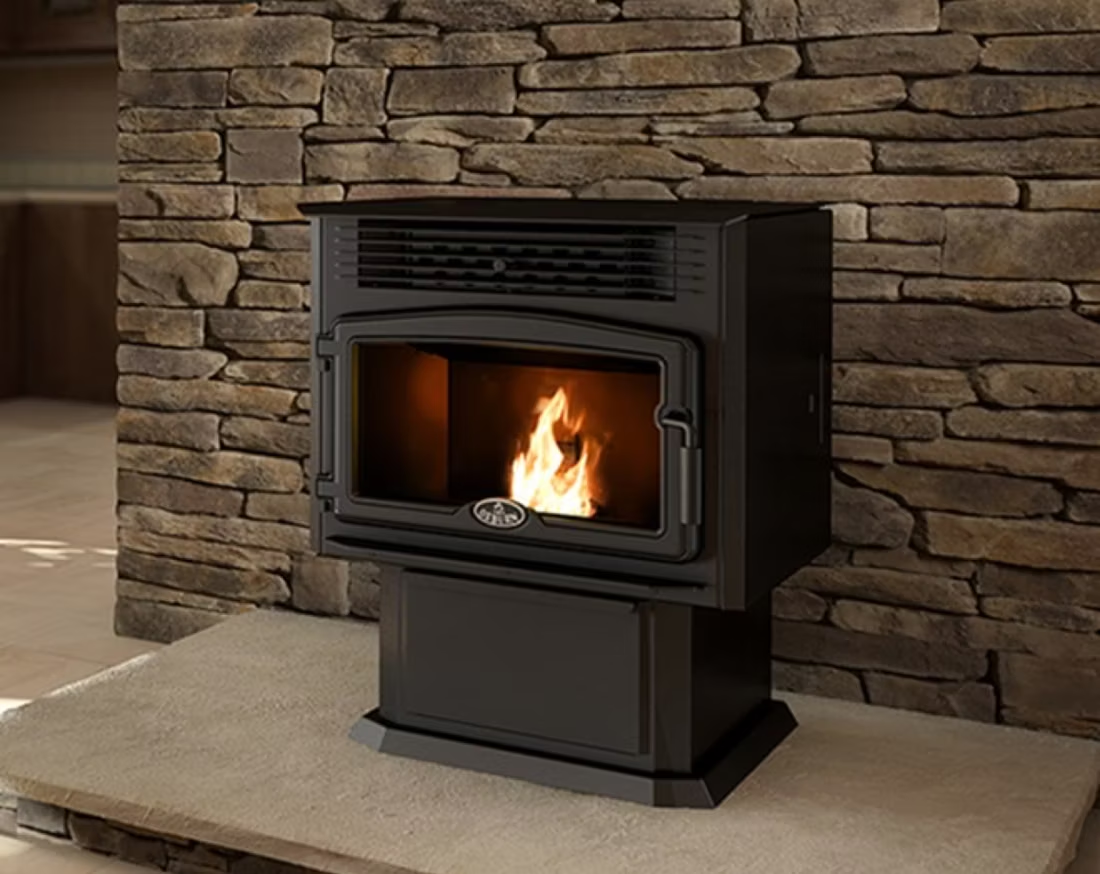
A pellet stove is a freestanding unit that sits on its own hearth pad and vents through an exterior wall—it can go almost anywhere with the right clearances, which makes it a common choice for homes without an existing fireplace. A pellet insert slides into an existing masonry fireplace opening, turning a rarely-used wood fireplace into a thermostatically controlled heat source. For older homes around Panaca and Caliente that already have a masonry fireplace, an insert is often the simpler and less invasive route.
Do I need a permit to install a pellet stove in Lincoln County?
Yes—new solid-fuel appliance installations, pellet included, require a building permit through the Lincoln County Building Department in Pioche. Most established dealers handle the permit paperwork as part of the installation, which is one good reason to work with a certified installer rather than a DIY setup, especially given how far a re-inspection trip can be if something's flagged.
What's the best pellet stove for Lincoln County's climate?
Look for a stove rated for sustained cold-climate use rather than a light-duty or supplemental model—Lincoln County's elevation and 5B climate zone mean real winter, even if the rest of the state's reputation suggests otherwise. Brands stocking pellets locally through Bear Mountain, Lignetics, and Forest Energy are common here, and any of the major stove manufacturers carried by a Las Vegas- or Cedar City-based dealer will perform fine as long as it's sized for your square footage and you've got a backup power plan for outages on Lincoln County Power District No. 1's rural lines.
How often does a pellet stove need to be serviced?
Plan on a full cleaning and inspection once a year, ideally before the start of winter—the hopper, auger, burn pot, and exhaust venting all need regular attention to keep the stove running efficiently. Because Lincoln County doesn't have a dense network of local service techs, many homeowners here schedule their annual service around a dealer's regular route through the area, or learn basic burn-pot and glass cleaning themselves between professional visits.
Where can I buy pellets in Lincoln County?
There's limited retail pellet stock inside the county itself given the small population, so most households stock up when they're already making a trip to Las Vegas, Cedar City, or Ely—Bear Mountain, Lignetics, and Forest Energy are all commonly carried brands in those markets. Buying a season's worth of bags at once, rather than a bag or two at a time, is the practical approach most Lincoln County pellet stove owners settle into.
Pellet stove or wood stove—which makes more sense out here?
Wood has deep roots in Lincoln County—pinyon, juniper, and sagebrush wood are all cut locally off surrounding public land, and a wood stove keeps working with no electricity at all, which matters when a winter storm knocks out power on the rural grid. A pellet stove trades that off for cleaner burning, a thermostat instead of constant tending, and no need to cut, split, or haul cordwood—but it depends on the utility staying up, or on you having a battery or generator backup. Plenty of households here end up with wood as the primary heat source and a pellet stove or insert for daily convenience in the main living space.
Why is a fireplace insert so efficient?
An insert does two things: it seals the chimney completely, so you stop losing air you already paid to heat, and it radiates warmth into the room through the firebox and glass. Most add a heat-exchange fan that pulls cool room air underneath, wraps it around the hot firebox, and pushes it back out warm. Your home is more efficient before you've even lit the first fire.
Why is my open fireplace making my house colder?
Open fireplaces suck—literally. As the fire burns, it consumes air your furnace already paid to heat and pulls it out through the chimney, so the house is actually colder after the fire goes out than before you lit it. An insert fixes this: it seals the chimney, puts fixed glass across the front, and turns that hole in your house into a real heat source.
How much should I budget for a fireplace?
For an average home—covering the fireplace, the vent pipe, and basic installation—a budget between $3,900 and $5,500 gives you a lot of options across wood, gas, and pellet. By the time you add finish work, gas line, and electrical, the average complete installation lands between $5,000 and $12,000 all-in. In a remodel or new build, a good rule is to put about 2.5% of the total project cost toward the fireplace.
What is an in-home preview and do I need one?
It's a visit where a hearth professional measures your space, confirms the model you picked actually works in your home, and walks the specs—framing, gas line, venting, finish work—before anything is ordered. Some details you just can't know until you see the house. Never make a down payment without one; it's the single most-skipped step that burns buyers.
Pellet Brands Stocked Around Lincoln County
Manufacturers will point you to the nearest stocking dealer.
Find your pellet stove in Lincoln County.
Tell us about your home and we'll match you with a trusted local dealer and send over a free Project Guide & Parts List—the stove, vent kit, and install plan sized for your Lincoln County home.
Find Your Fireplace →