
Find the right fireplace for Lincoln County's high desert winters.
Wood, gas, pellet, and electric fireplace resources for every town in Lincoln County—from Pioche and Panaca to Caliente, Alamo, and Rachel. Get matched with a trusted local dealer instead of guessing at what a big-box store can actually install out here.
Every Project Starts From One of These Five Situations
Heating a basin-and-range county where almost everyone burns something.
Lincoln County covers roughly 10,600 square miles of eastern Nevada, and nearly all of it—well over 90 percent—is federal land managed by the BLM. Towns sit in narrow valleys like the Meadow Valley Wash at around 3,800 feet, while the Wilson Creek and Highland ranges climb past 9,000 feet. Winters in this Zone 5B climate are cold and dry, with the kind of temperature swings you'd expect at elevation in the Great Basin—closer to Bismarck, North Dakota than to Las Vegas, despite sharing a state line. Wood heat has deep roots here: pinyon and juniper cut under BLM woodland permits, along with sagebrush wood used for quick, hot kindling fires, have warmed ranch houses and mining-town homes for generations.
What you'll find on this hub: hearth retailers, service technicians, and fuel suppliers reaching every community in the county—Pioche (the county seat), Panaca, Caliente, Alamo, and the remote outpost of Rachel near the Extraterrestrial Highway. Because the county's population is small, some of the businesses serving Lincoln County are actually based in Cedar City, Utah or the Las Vegas valley and travel in for installs and service—that's normal here, and we'll tell you when to expect it. Pick your fuel below for local dealers, real installation costs, and recommended units for this climate.
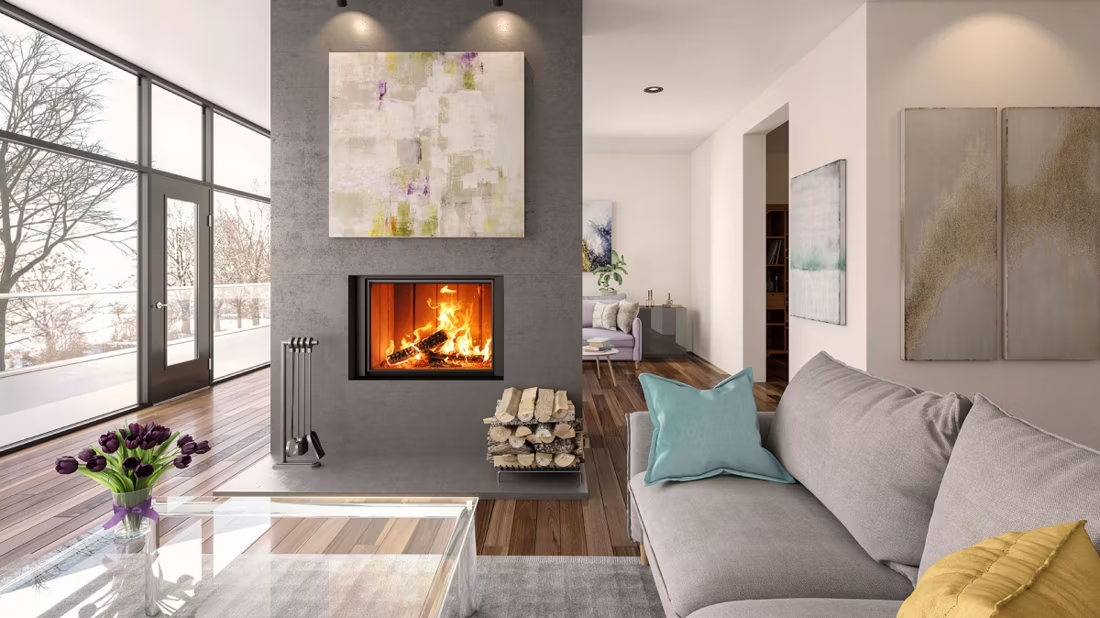
Four fuels. One honest answer for Lincoln County.
Three steps. No salesperson until you're ready.
Tell us about your project
Your zip code, your situation, and the fuel you're leaning toward—or let the answers point you to one.
See what's actually available
The brands dealers within 100 miles genuinely carry—real options, never a catalog mirage.
Get your dealer & Project Guide
A trusted local dealer, plus the free Project Guide & Parts List that names every component of the job.
Frequently Asked Questions
Which fuel makes the most sense for a home in Lincoln County?
It depends on where you are and what your home already has. Wood is the traditional choice across the county—pinyon and juniper cut under BLM woodland permits from the Caliente-Pioche field office keep fuel costs low, and a good catalytic stove can carry a ranch house through a cold basin-and-range winter on far less wood than an old open-hearth fireplace. Gas here almost always means propane, not piped natural gas—there's little to no natural gas infrastructure in Pioche, Panaca, Caliente, or Alamo, so a propane fireplace or insert with a tank is the realistic 'gas' option, and it delivers the instant, no-loading convenience wood can't. Pellet stoves are a solid middle ground if you don't want to cut and haul your own wood—Bear Mountain and Lignetics pellets are both available through regional suppliers, though delivery lead times matter more out here than in a city. Electric fireplaces work well for supplemental warmth in a bedroom or a Rachel vacation cabin, but given the cold snaps at elevation, they're not a realistic primary heat source on their own.
Do I need a permit to install a wood stove or gas fireplace in Lincoln County?
Generally yes. New wood stove, insert, or gas appliance installations typically require a building permit through Lincoln County's building department in Pioche, and any propane line or tank work should go through a licensed propane installer. If you're planning to cut your own firewood on public land—which most Lincoln County wood-burners do—you'll also need a separate woodcutting permit from the BLM Caliente-Pioche Field Office; pinyon and juniper are the permitted species in most units. Electric fireplaces are usually exempt from a building permit unless you're hardwiring a built-in unit into a new circuit. Most hearth retailers who install in the county—even the ones traveling in from Cedar City or Las Vegas—will handle the county permit paperwork as part of the job.
Is wood burning restricted in Lincoln County?
There's no winter inversion advisory system here like you'd see in a basin city—Lincoln County's concern is wildfire smoke, not stagnant valley air. During fire season (typically July through September), smoke from regional wildfires can settle into the Meadow Valley Wash and other low-lying towns, and the Nevada Division of Environmental Protection may issue smoke advisories that affect outdoor burning more than indoor stove use. There's no mandatory curtailment program for indoor wood stoves in Lincoln County the way there is in parts of Oregon or California. That said, installing an EPA-certified stove still matters—it burns pinyon and juniper more completely, uses less wood per BTU, and produces far less visible smoke than an old uncertified unit, which matters in tight valley towns like Panaca or Caliente.
Can I find one dealer in Lincoln County who carries wood, gas, pellet, and electric fireplaces?
Realistically, no single retailer physically located within Lincoln County stocks all four fuel types—the county's population of roughly 4,100 doesn't support a full-line hearth showroom. Most homeowners here end up working with a multi-fuel dealer based in Cedar City, Utah (about 90 minutes from Caliente) or in the Las Vegas valley, both of which regularly install in Pioche, Panaca, Alamo, and even out to Rachel. Local hardware stores and propane companies in the county can handle basic stove sales and propane tank setup, but for anything involving venting, chimney work, or electrical for a built-in electric unit, plan on a dealer traveling in. We match you with whichever of those covers your specific fuel and address.
How does installation or repair scheduling work when you're this far from a dealer?
Plan ahead. Technicians and installers serving Lincoln County are typically driving in from Cedar City, St. George, or the Las Vegas area, so a service call usually includes a trip charge—often $75-$150 depending on how far out you are, with Rachel and the northern county towns near Alamo on the higher end. Pre-season scheduling (August through October) gives you a much better shot at a convenient appointment than calling in December when the first cold snap hits and every dealer's calendar backs up. If you're on a ranch or in a more remote spot, it's worth asking your installer to bundle a chimney sweep or gas inspection with the original installation trip so you're not paying for a second drive out.
What does fireplace installation typically cost in Lincoln County?
Costs run close to regional Nevada/Utah averages, with a modest premium for travel distance. Wood stove or insert: roughly $4,000-$8,500 installed, depending on chimney or liner work. Propane fireplace, insert, or stove: roughly $4,500-$10,000, and that range often includes a new or upgraded propane tank if the property doesn't already have adequate capacity. Pellet stove or insert: roughly $4,000-$7,000. Electric fireplace: $200-$2,500 for the unit itself, plus $300-$1,000 in labor for anything beyond a simple plug-in install. Because most installers are traveling from Cedar City or Las Vegas, ask whether a trip charge is bundled into your quote or billed separately.
How much should I budget for a fireplace?
For an average home—covering the fireplace, the vent pipe, and basic installation—a budget between $3,900 and $5,500 gives you a lot of options across wood, gas, and pellet. By the time you add finish work, gas line, and electrical, the average complete installation lands between $5,000 and $12,000 all-in. In a remodel or new build, a good rule is to put about 2.5% of the total project cost toward the fireplace.
Can I install a fireplace myself?
If you're putting a fire in your house on purpose, it's best to work with an expert. Unless you're genuinely experienced in framing, gas line, vent pipe, and the national code on clearances to combustibles, have a professional do it—and ideally the same company that sells you the fireplace, so warranty, service, and liability all live under one roof.
Wood, gas, pellet, or electric—how do I choose?
Match the fuel to your life, not the other way around. Wood: lowest fuel cost and total power-outage independence, but you're hauling and stacking. Gas: press a button, set a thermostat, no maintenance to speak of. Pellet: wood economics with automatic feeding, in exchange for weekly cleaning and a need for electricity. Electric: plugs in anywhere with honest supplemental heat. Nobody regrets the fuel that fits how they actually live.
Does a fireplace add value to my home?
On average, a fireplace adds back to the home about the same amount you spent installing it. Add the monthly savings from heating the rooms you actually use instead of the whole house—often hundreds of dollars a year—and the value case is strong before you even count what a fire does for how your family uses the room.
Stove and Fireplace Dealers in Lincoln County
Listings include WhyFire partner dealers, dealers we have verified as authorized for the brands we recommend, and established local businesses that carry hearth products. Every listing shows which one it is. The ones marked Preferred run on WhyFire's software, so they can show you real pricing and book your appointment right here. No manufacturer pays for placement. How we verify dealers →
Southwest Plumbing Supply- Mesquite
Carpet Plus
Dixie Fireplace
Custom Fireplace
Find your fireplace in Lincoln County.
Tell us your fuel and your town—Pioche, Panaca, Caliente, Alamo, or Rachel—and we'll match you with a trusted dealer who actually installs out here, plus a free Project Guide & Parts List with the exact parts, vent kit, and recommended local dealer for your project.
Find Your Fireplace →