
Steady pellet heat for Churchill County's high desert winters.
From Fallon to the Lahontan Valley, pellet stoves deliver thermostat-like heat through Churchill County's long, dry winters—without the smoke concerns that come with open burning in a wildfire-prone basin. Get matched with a local dealer who can size and install the right unit.
Every Project Starts From One of These Five Situations
Clean, consistent heat without wildfire-season smoke worries.
Churchill County sits in the Lahontan Valley basin at roughly 3,965 feet, a high-desert climate zone 5B community where winter lows average 20°F and the county sees a winter heating load comparable to the cold stretch a place like Bismarck, ND sees most winters. Fallon and the surrounding farmland have long relied on locally cut pinyon, juniper, and sagebrush for wood heat, but wildfire smoke is a recurring air quality concern across the Great Basin, and pellet stoves offer a way to get real, radiant heat without adding to that smoke load or dealing with the seasonal haze that can settle into the valley.
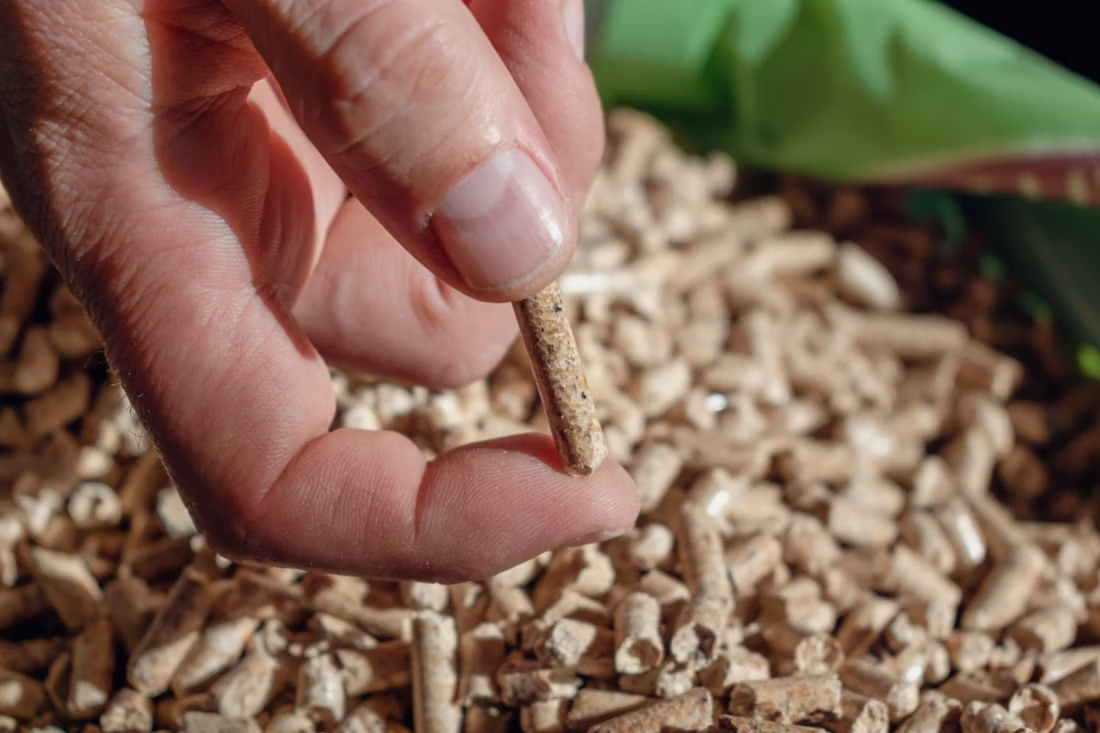
Regional pellet brands—Bear Mountain, Lignetics, and Forest Energy—are all distributed through the Nevada/California pellet supply corridor and commonly stocked by dealers serving Churchill County, typically running in the $250-$300 per ton range depending on availability. A pellet stove or insert also sidesteps the Forest Service and BLM cutting permit process altogether (permits through Humboldt-Toiyabe National Forest and the BLM Nevada State Office run $5-$20 per cord and are only valid May through October), which matters for households who don't want to plan their heat supply around a short cutting season. The tradeoff is that pellet stoves need electricity to run the auger and blower—worth weighing given how wind events can occasionally knock out power in this part of the Great Basin.
Three steps. No salesperson until you're ready.
Tell us about your project
Your zip code, your situation, and the fuel you're leaning toward—or let the answers point you to one.
See what's actually available
The brands dealers within 100 miles genuinely carry—real options, never a catalog mirage.
Get your dealer & Project Guide
A trusted local dealer, plus the free Project Guide & Parts List that names every component of the job.
Frequently Asked Questions
How much does a pellet stove installation cost in Churchill County?
A typical pellet stove or insert installation in Churchill County runs about $3,000 to $6,500, depending on the unit, whether it's a freestanding stove or an insert into an existing fireplace, and how much venting work is needed. Pellet venting is simpler than a masonry chimney—most installs use a straightforward horizontal through-wall vent—which keeps costs down compared to a full wood-stove chimney job. Homes without an existing 120V outlet near the install site may see a modest add-on for electrical work. Local dealers around Fallon will give a firm quote after seeing the room and hearth setup.
What size pellet stove do I need for my Churchill County home?
Sizing depends on square footage, ceiling height, and how leaky or tight your home's construction is. As a general guide for the valley's cold, dry winters: smaller units (under 40,000 BTU) suit a single room or manufactured home in Fallon proper, while larger units (50,000+ BTU) are better suited to open-concept homes or drafty older farmhouses out toward Stillwater or Hazen. Because winter lows in Churchill County average around 20°F with regular colder snaps, it's worth sizing slightly generous rather than marginal—a local dealer can walk your space and recommend hopper capacity and BTU output that matches how many hours you want between refills.
Where can I find certified pellet stove installers near me?
Look for installers with NFI (National Fireplace Institute) certification, which covers proper venting, clearance, and electrical setup for pellet appliances. Given Churchill County's smaller population, dealer coverage tends to be concentrated in and around Fallon, with some willingness to travel out to Stillwater, Hazen, and the outlying ranch and farm properties for an added trip charge. Working with the same company that sells the stove for the install simplifies warranty coverage if the auger motor or igniter needs service down the road.
Pellet stove vs. wood stove—which fits better in Churchill County?
Wood stoves burning local pinyon, juniper, or sagebrush pair naturally with the cutting permits available through Humboldt-Toiyabe National Forest and the BLM Nevada State Office (roughly $5-$20 per cord, valid May through October), and they keep working with no electricity—a real advantage during a power outage. Pellet stoves trade that off-grid resilience for cleaner burns, easier day-to-day operation (load the hopper, set the thermostat), and no cutting-season planning. Given the wildfire smoke concerns that affect the Great Basin most summers and falls, pellet is often the choice for households who want reliable heat without adding to seasonal smoke, while wood remains the go-to for backup heat on rural properties without dependable grid power.
Do I need a permit to install a pellet stove in Churchill County?
Yes—new pellet stove and insert installations require a building permit through Churchill County, and installers typically handle that paperwork as part of the job. Because pellet appliances burn cleaner than cordwood, they're generally not a target of the air quality advisories that can accompany wildfire smoke events in the Lahontan Valley, which is one reason some households switch to pellet specifically for the smoke-season months.
What's the best pellet stove for Churchill County's climate?
For a high-desert climate with winter lows averaging 20°F and a winter heating load comparable to the cold stretch a place like Bismarck, ND sees most winters, look for a stove with a large hopper capacity so you're not refilling every few hours overnight, paired with pellets from regional brands like Bear Mountain, Lignetics, or Forest Energy that are consistently available through local dealers. Because pellet stoves depend on electricity for the auger and combustion blower, ask your dealer about models compatible with a small battery backup or generator hookup—worth considering given the occasional wind-driven power interruptions common to the Great Basin.
Where can I buy pellets in Churchill County?
Bear Mountain, Lignetics, and Forest Energy pellets are the regional standards carried by dealers serving Fallon and the surrounding valley, typically running around $250-$300 per ton depending on the season and how far in advance you buy. Stocking up before the fall rush is common practice here, since demand climbs quickly once temperatures drop and supply can tighten during a hard winter.
How often does a pellet stove need to be serviced?
Plan on a full cleaning and inspection once a year, ideally before the heating season starts in the fall. This includes clearing the burn pot, cleaning the exhaust vent, checking the auger and igniter, and inspecting the gasket seals. Households running the stove as a primary heat source through Churchill County's full winter should also expect to clean the burn pot every one to two weeks during heavy use—pellet stoves are lower-maintenance than wood but not maintenance-free.
Is a pellet stove a good backup heat source during a power outage?
Not on its own—pellet stoves need electricity to run the auger and blower, so a standard unit goes cold the moment the power does. For Churchill County households in outlying areas around Stillwater or Hazen who want heat that survives an outage, a wood stove burning local pinyon or juniper is the more dependable backup. Some homeowners split the difference: pellet for daily convenience, with a small battery backup or generator sized to keep the pellet stove running through a short outage, or a wood stove kept as true off-grid insurance.
What's the difference between an insert and a zero-clearance fireplace?
An insert is a fireplace that slides into a pre-existing wood-burning fireplace—if you don't have one, there's nothing to insert it into. A zero-clearance fireplace is built into a framed wall, which makes it the answer for remodels and new construction. Simple test: existing masonry fireplace means insert; blank or framed wall means zero-clearance.
Why is a fireplace insert so efficient?
An insert does two things: it seals the chimney completely, so you stop losing air you already paid to heat, and it radiates warmth into the room through the firebox and glass. Most add a heat-exchange fan that pulls cool room air underneath, wraps it around the hot firebox, and pushes it back out warm. Your home is more efficient before you've even lit the first fire.
Does a fireplace add value to my home?
On average, a fireplace adds back to the home about the same amount you spent installing it. Add the monthly savings from heating the rooms you actually use instead of the whole house—often hundreds of dollars a year—and the value case is strong before you even count what a fire does for how your family uses the room.
Can I install a fireplace myself?
If you're putting a fire in your house on purpose, it's best to work with an expert. Unless you're genuinely experienced in framing, gas line, vent pipe, and the national code on clearances to combustibles, have a professional do it—and ideally the same company that sells you the fireplace, so warranty, service, and liability all live under one roof.
Stove and Fireplace Dealers in Churchill County
Pellet Brands Stocked Around Churchill County
Manufacturers will point you to the nearest stocking dealer.
Find your pellet stove in Churchill County.
Tell us a bit about your home and we'll put together a free Project Guide & Parts List—the right pellet stove or insert, the vent kit it needs, and a trusted local dealer to install it.
Find Your Fireplace →