
Bring warmth to your Churchill County home—without the smoke.
No venting, no chimney, no wood to split—just plug-in or hardwired warmth for homes across the Lahontan Valley, from Fallon to the outlying ranches. Find the right unit and get matched with a trusted local dealer.
Every Project Starts From One of These Five Situations
Instant heat, zero emissions, easy installs.
Churchill County sits in the Lahontan Valley of west-central Nevada, with Fallon at roughly 3,965 feet and winter lows averaging 20°F across a climate zone 5B county that sees a heating season on par with places needing heat from about mid-September clear through May. The surrounding high desert—sagebrush flats giving way to pinyon-juniper foothills—has a real fire-heating tradition, but the county's biggest air quality issue isn't local wood smoke, it's wildfire smoke drifting in from Sierra and Great Basin fire seasons. That's part of why electric fireplaces have found a steady footing here: a spread-out county of roughly 10,000 residents, a mix of in-town Fallon homes, Naval Air Station Fallon housing, and rural manufactured homes on larger lots, many of which need supplemental zone heat without adding another combustion appliance or another thing to permit.
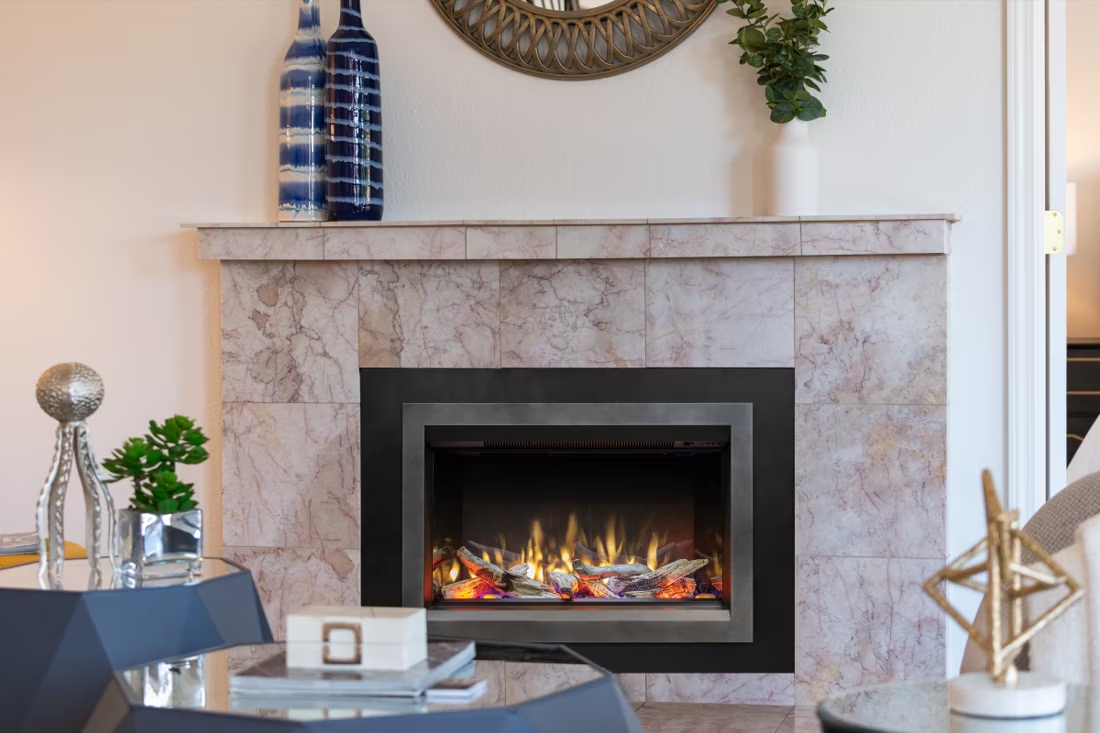
An electric fireplace or insert doesn't need a chimney, a flue liner, or a gas line—which matters in a county where cutting a load of pinyon or juniper means a Humboldt-Toiyabe National Forest or BLM Nevada permit ($5 to $20 per cord) and a trip out to the woodlot. For a bedroom addition, a sunroom, a mobile or manufactured home, or a rental unit where venting work isn't practical, electric heat gets you real supplemental warmth and a fire's ambiance with a same-day plug-in unit or a modest electrical job for a built-in wall model. It's not a fit for every situation—more on that below—but for a large share of Churchill County homes, it's the simplest project on this list.
Three steps. No salesperson until you're ready.
Tell us about your project
Your zip code, your situation, and the fuel you're leaning toward—or let the answers point you to one.
See what's actually available
The brands dealers within 100 miles genuinely carry—real options, never a catalog mirage.
Get your dealer & Project Guide
A trusted local dealer, plus the free Project Guide & Parts List that names every component of the job.
Frequently Asked Questions
How much does an electric fireplace installation cost in Churchill County?
A freestanding, plug-in electric stove or insert runs roughly $150 to $800 for the unit itself, with no installation cost beyond finding an outlet—that's the option most Churchill County renters and manufactured-home owners choose. A built-in wall unit or a linear electric insert set into an existing fireplace opening typically runs $1,500 to $3,500 installed, once you factor in a dedicated 120V or 240V circuit run by a licensed electrician, framing or trim work, and the unit itself. Compare that to the venting and chimney work a wood or gas project requires in this county, and electric is consistently the lower-cost, lower-hassle route—though it produces less raw heat output per unit.
Do I need a permit to install an electric fireplace in Churchill County?
Most plug-in electric stoves and inserts don't require any permit—they're treated like any other appliance you plug into an existing outlet. If you're having a built-in electric fireplace hardwired with a new dedicated circuit, that electrical work generally does require a permit through Churchill County's building department, and it should be done by a licensed electrician regardless of whether you pull a permit, since electric fireplaces draw enough current to matter on an older home's panel. A local dealer can tell you which category your project falls into before you buy.
What size electric fireplace do I need for my home?
Electric units are rated in square footage the same way space heaters are, and most models comfortably heat 400 to 1,000 square feet—enough for a single room, an addition, or an open living area, but not a whole rural ranch house on their own. Older manufactured and double-wide homes common outside Fallon tend to run drafty, so plan on treating an electric fireplace as zone heat for the room it's in rather than a replacement for your central system. If you're trying to heat more than one room, you're usually better off with two smaller units than one oversized one, since electric heat output doesn't scale the way a wood stove's does.
Electric vs. wood—which makes more sense in Churchill County?
Wood—burning pinyon, juniper, or sagebrush cut under a Humboldt-Toiyabe National Forest or BLM permit—delivers far more heat output and, critically, keeps working when the power goes out, which matters on rural Churchill County lines that can take longer to restore after a storm. Electric fireplaces need grid power to run, full stop, so they're not a backup-heat option unless you've got a generator. Where electric wins is simplicity and cleanliness: no ash, no smoke, no permit trip to the woodlot, and no combustion byproducts to think about—a real advantage during wildfire smoke season when air quality is already compromised and adding wood smoke isn't ideal. Many county homes end up with both: wood or propane as the real backup heat, electric for daily ambiance and supplemental warmth in a specific room.
Electric vs. gas—which is the better fit for my home?
Gas fireplaces put out considerably more heat and, with the right ignition system, can run during a power outage—a real plus in rural parts of the county without piped natural gas, where propane is the standard fuel and most households already have a tank. Electric fireplaces skip the propane tank, the gas line, and any combustion venting entirely, which makes them faster and cheaper to install, but they can't compete with gas on raw BTU output or outage resilience. If you want a straightforward supplemental heat source with the lowest possible install cost and don't need it to work when the grid is down, electric is the simpler choice. If you want real heating capacity that survives an outage, a propane fireplace or insert is worth the added cost.
Will my electric fireplace work during a power outage?
No—electric fireplaces require grid power to run the heating element, fan, and flame effect, so they shut off the moment the power does. That's an important consideration in Churchill County's more rural stretches, where outages can run longer than they do in town. If you're relying on your fireplace for actual winter heat security and not just supplemental warmth, pair it with a generator, or consider a wood stove or propane unit as your backup heat source alongside the electric fireplace you use day to day.
Is an electric fireplace enough to heat a whole room, or just for ambiance?
Most electric fireplaces sold today put out real, usable heat—typically around 4,600 to 5,000 BTUs, comparable to a decent space heater—not just a flickering light effect. That's enough to noticeably warm a bedroom, den, or small living area, especially paired with your home's existing central heat on Churchill County's colder nights when lows average around 20°F. It won't replace a furnace for a whole manufactured home or ranch house, but as supplemental heat for the room you actually spend your evening in, it does real work.
What electrical work does an electric fireplace installation require?
Small plug-in freestanding units run on a standard 120V household outlet—no electrical work needed. Larger built-in or wall-mounted electric fireplaces typically draw enough current that they need a dedicated circuit, and depending on the model, that circuit may need to be 240V rather than the standard 120V. That's a job for a licensed electrician, not a DIY project, particularly in older Churchill County homes where the panel may already be near capacity. A local dealer can spec out the electrical requirements for the specific model you're considering before the work starts.
Is an electric fireplace a good option during wildfire smoke season?
Yes—it's one of the clearest advantages electric heat has in this county. Wildfire smoke drifting in from Sierra and Great Basin fires is Churchill County's primary air quality concern, and an electric fireplace adds zero combustion byproducts to either the outdoor air or your home's indoor air, unlike a wood stove that needs a working, unobstructed flue. On smoke-heavy days when you might otherwise think twice about running a wood stove, an electric unit keeps providing supplemental heat and ambiance with no emissions tradeoff at all.
Can I put a TV above my fireplace?
Yes—with an asterisk. Fireplaces are hot and TVs don't like heat. Either put a mantel between them to deflect rising warmth, or choose a fireplace with heat-management technology that creates a cool zone on the wall above—the wall stays around 125 degrees, barely warm, while the room still gets full heat. If you like clean lines and don't want a mantel, heat management is the answer.
Do electric fireplaces actually produce heat?
Yes—most put out around 4,800–5,000 BTUs from a standard outlet, which comfortably warms a bedroom, office, or den as a comfort-zone heater. What they won't do is carry a whole house the way wood, gas, or pellet can. Think of electric as ambiance-first with honest supplemental heat: flames on with no heat in July, flames plus warmth in January.
Can I install a fireplace myself?
If you're putting a fire in your house on purpose, it's best to work with an expert. Unless you're genuinely experienced in framing, gas line, vent pipe, and the national code on clearances to combustibles, have a professional do it—and ideally the same company that sells you the fireplace, so warranty, service, and liability all live under one roof.
Can a fireplace actually lower my heating bill?
Yes—by creating a comfort zone. A furnace heats every square foot of the house just to warm the one room you're in; a gas fireplace on low burns roughly a sixth of the gas a typical furnace does. Set the furnace around 55–60 degrees as a baseline, then heat the rooms your family actually uses. Families who heat this way commonly save $20–$60 a month.
Stove and Fireplace Dealers in Churchill County
Find your electric fireplace in Churchill County.
Tell us a bit about your home and we'll match you with the right electric fireplace, insert, or stove for Churchill County—plus a free Project Guide & Parts List with the exact parts and a recommended local dealer who can install it.
Find Your Fireplace →