
Keep Your Family Warm and Safe—No Matter What
With a long, cold heating season and winter lows averaging 11°F, Stanton County homes need real heat, not just ambiance. We match you with a vetted local dealer who can size the right wood stove or insert for your farmhouse or in-town home and get it installed correctly.
Every Project Starts From One of These Five Situations
Heating with wood is a farm-country tradition here.
Stanton County sits in northeast Nebraska along the Elkhorn River, a flat, wide-open stretch of farm country home to about 3,628 residents spread across Stanton, Pilger, and the surrounding townships. This is Climate Zone 5A—winters that run from November into March with an average low near 11°F and a long, cold heating season on par with Madison, Wisconsin. That kind of sustained cold is exactly what a properly sized wood stove is built to handle, especially in the older farmhouses common throughout the county, where drafty construction and high ceilings can make central heat alone feel like it's fighting a losing battle.
Oak and hickory from the Elkhorn River bottoms and cottonwood off shelterbelt trees and windbreaks are the firewood staples here—cottonwood burns fast and lighter on heat, so most local burners mix it with oak or hickory for an overnight load. Stanton County has no air quality non-attainment designations and no winter burn restrictions, so wood heat isn't something homeowners have to work around here—it's simply a practical, low-cost way to stay warm, and a real backup source of heat when rural electric lines go down in an ice storm.
Three steps. No salesperson until you're ready.
Tell us about your project
Your zip code, your situation, and the fuel you're leaning toward—or let the answers point you to one.
See what's actually available
The brands dealers within 100 miles genuinely carry—real options, never a catalog mirage.
Get your dealer & Project Guide
A trusted local dealer, plus the free Project Guide & Parts List that names every component of the job.
Frequently Asked Questions
How much does a wood stove installation cost in Stanton County?
Costs depend on the stove size, whether you're installing into an existing masonry fireplace or starting from scratch with new Class A chimney pipe, and any hearth pad work needed for code clearance. Rather than guess at a number that doesn't fit your specific farmhouse or in-town home, the local dealer we match you with will walk your space and put together an itemized quote as part of your free Project Guide & Parts List—including the exact stove, venting, and hearth components your installation needs.
What size wood stove do I need for my home in Stanton County?
Sizing depends on square footage, ceiling height, and insulation—and Stanton County has a lot of older farmhouses with higher heat loss than newer construction. As a rough guide, small stoves suit a single room or a smaller in-town home in Stanton or Pilger, while medium and large stoves are more common for full farmhouse heating where the goal is to offset a big share of the propane or electric bill through a long winter. An oversized stove smolders and builds creosote; an undersized one can't keep up when temperatures drop into single digits. A local dealer will size your specific home during an in-home visit, which is more reliable than any online calculator.
Where can I find a wood stove installer near me in Stanton County?
Look for installers with NFI (National Fireplace Institute) or CSIA (Chimney Safety Institute of America) credentials—both indicate real training in wood-burning clearances and venting, not just general contracting experience. In a county this size, most installations are handled by dealers based in Norfolk or other nearby northeast Nebraska towns who travel out to Stanton, Pilger, and the surrounding rural addresses. We match you with a trusted dealer who actually services your part of the county, rather than leaving you to guess who covers rural routes.
What's the difference between a wood stove and a wood fireplace insert?
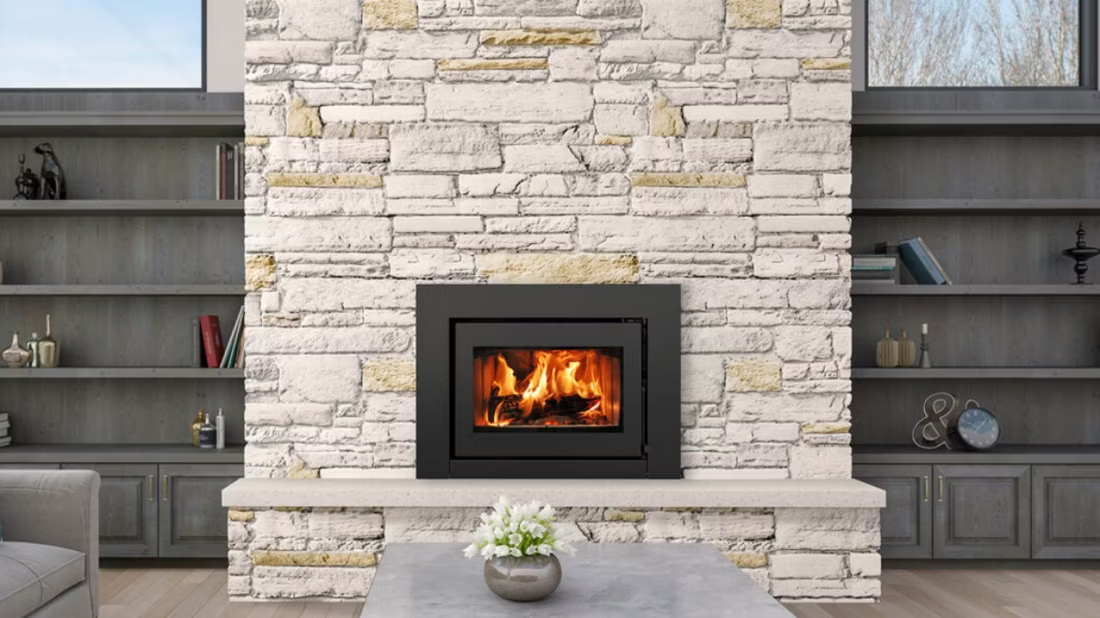
A freestanding wood stove sits on a hearth pad and can go almost anywhere with proper clearances—a common choice in Stanton County outbuildings, shops, and homes without an existing chimney. A wood insert slides into an existing masonry fireplace opening and uses the chimney you already have, turning a drafty open hearth into a sealed, efficient heat source. If your Stanton County home already has a masonry fireplace that barely puts out heat, an insert is usually the better upgrade; if you're starting from zero, a freestanding stove gives you more placement flexibility.
Do I need a permit to install a wood stove in Stanton County?
New wood stove installations typically require a building permit, and the stove needs to meet current EPA emissions standards. For a project in Stanton County, check with the county building department on permitting before installation—most local dealers handle this paperwork as part of the job, so you're not chasing it down yourself. Because Stanton County has no air quality non-attainment designation, there are no winter burn curtailment periods to plan around like there are in some western states—once it's installed and permitted, you're free to burn.
What's the best wood stove for Stanton County's winters?
With average lows around 11°F and a burn season that runs a full five months, a mid-to-large catalytic or non-catalytic stove capable of a long, steady overnight burn is worth prioritizing over a smaller decorative unit. Catalytic stoves from brands like Blaze King hold a fire well past the eight-hour mark, which matters on the nights when the wind is coming straight off the fields and the furnace is working overtime. Whether catalytic or non-catalytic is right for your home depends on how much of your heat load you want the stove to carry—a local dealer can walk through that tradeoff with you directly.
How often should my chimney be inspected in Stanton County?
The CSIA recommends an annual inspection for any wood-burning appliance, and that holds regardless of county size. If your Stanton County stove is doing serious heating work through a five-month burn season rather than occasional weekend use, plan on a full sweep before the season starts each fall, with a mid-winter check if you're burning heavily. Rural homes should treat this as non-negotiable—response time for a chimney fire out in the county is longer than it is in town.
Where does firewood come from in Stanton County?
Stanton County doesn't have national forest land or a Forest Service cutting-permit system the way some western counties do—this is farm country, so most firewood comes from private landowners clearing storm-damaged trees, thinning shelterbelts and windbreaks, or cleaning up timber along the Elkhorn River bottoms. Oak and hickory from the river bottoms burn longer and hotter; cottonwood from windbreaks is plentiful but burns faster and is often mixed with a denser species for an overnight load. Local firewood sellers and neighbors trading cut wood are the norm here rather than a public permit office.
Wood stove vs. pellet stove—which makes more sense for Stanton County?
Wood stoves run on cordwood, work with zero electricity, and pair naturally with the oak, hickory, and cottonwood already available locally—a real advantage when a winter ice storm takes down rural power lines, which happens in this part of Nebraska. Pellet stoves burn compressed pellets from brands like Lignetics or Indeck Energy Services, are easier to load and run cleaner, but need electricity to run the auger and blower, so they go dark in an outage unless you add battery backup. For a farmhouse relying on wood as real backup heat, wood usually wins; for an in-town home in Stanton or Pilger prioritizing convenience with reliable grid power, pellet is a reasonable option worth discussing with a local dealer.
Why is my open fireplace making my house colder?
Open fireplaces suck—literally. As the fire burns, it consumes air your furnace already paid to heat and pulls it out through the chimney, so the house is actually colder after the fire goes out than before you lit it. An insert fixes this: it seals the chimney, puts fixed glass across the front, and turns that hole in your house into a real heat source.
What does it take to replace an existing fireplace?
Fireplaces are like icebergs—bigger behind the wall than in front of it. Replacement means removing the surrounding tile or stone (the finish material laps onto the fireplace face), pulling the old unit, setting the new one in the same enclosure, and re-finishing the wall. A hearth professional can determine what's behind your wall without demolition during an in-home preview.
Does a fireplace add value to my home?
On average, a fireplace adds back to the home about the same amount you spent installing it. Add the monthly savings from heating the rooms you actually use instead of the whole house—often hundreds of dollars a year—and the value case is strong before you even count what a fire does for how your family uses the room.
Can a fireplace actually lower my heating bill?
Yes—by creating a comfort zone. A furnace heats every square foot of the house just to warm the one room you're in; a gas fireplace on low burns roughly a sixth of the gas a typical furnace does. Set the furnace around 55–60 degrees as a baseline, then heat the rooms your family actually uses. Families who heat this way commonly save $20–$60 a month.
Find your wood fireplace in Stanton County.
Tell us about your home and heating goals, and we'll match you with a trusted local dealer serving Stanton County—plus a free Project Guide & Parts List spelling out the exact stove, venting, and hearth parts your project needs.a
Find Your Fireplace →