
Reliable Pellet Heat for Stanton County's Long Winters.
With roughly 6,549 heating degree days and average lows near 11°F, Stanton County farmhouses and in-town homes alike need heat that holds steady through January without daily tending. Find the right pellet stove or insert, and connect with a trusted local dealer.
Every Project Starts From One of These Five Situations
Consistent warmth without the wood-splitting work.
Stanton County sits in the Elkhorn River valley of northeast Nebraska, a farming community of roughly 3,600 people spread across Stanton, Pilger, and the surrounding township roads. Winters here run long and cold—closer in character to Madison, Wisconsin than to the milder river towns further south—with average lows around 11°F and a heating season that stretches from October through April in most years. For farm families who are out doing chores before sunrise, a heat source that runs on a thermostat and doesn't need constant feeding matters more than it does in a milder climate.
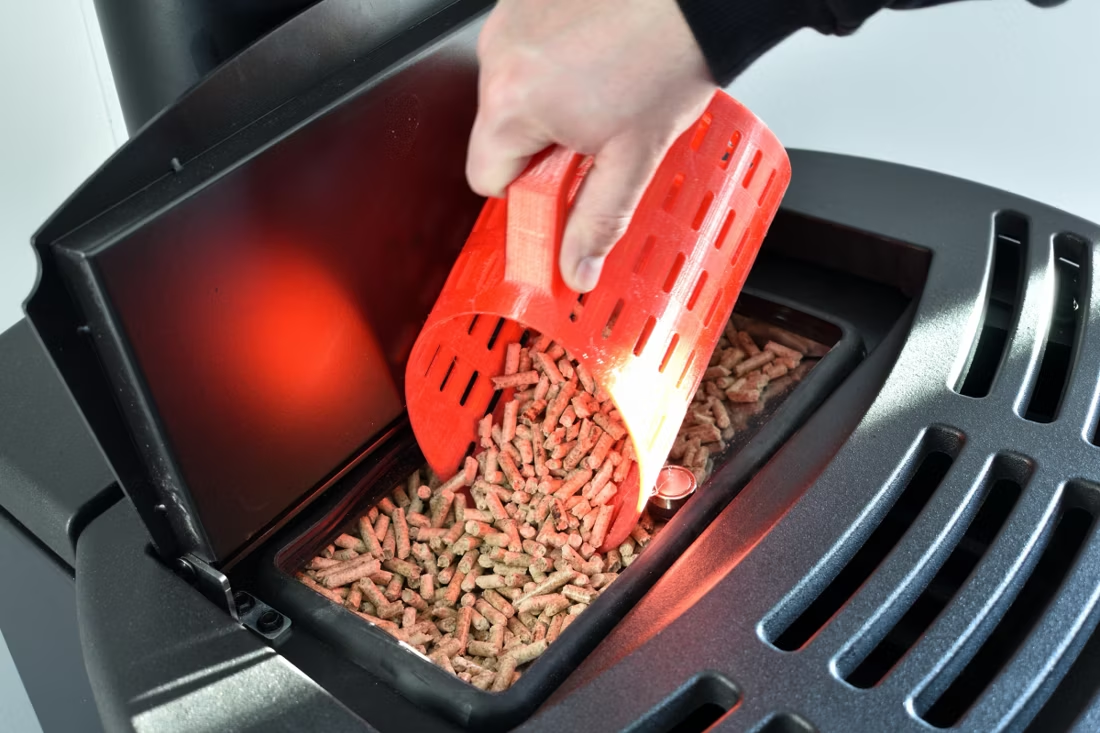
Pellet stoves fit that need well. Local hearth dealers and farm supply stores in and around Stanton stock bagged pellets from Lignetics and Indeck Energy Services, both regional brands with reliable supply into the county. Because Stanton County has no air quality non-attainment designation or winter inversion issues, there are no local burning restrictions to navigate—pellet appliances here are chosen for efficiency and convenience, not to satisfy an air district. For older farmhouses with drafty additions or newer in-town homes wanting supplemental heat, a pellet insert or freestanding stove delivers even, thermostat-controlled warmth with far less labor than splitting and stacking cordwood.
Three steps. No salesperson until you're ready.
Tell us about your project
Your zip code, your situation, and the fuel you're leaning toward—or let the answers point you to one.
See what's actually available
The brands dealers within 100 miles genuinely carry—real options, never a catalog mirage.
Get your dealer & Project Guide
A trusted local dealer, plus the free Project Guide & Parts List that names every component of the job.
Frequently Asked Questions
How much does a pellet stove installation cost in Stanton County?
Cost depends mainly on the venting path and whether the install location already has a dedicated electrical circuit—pellet stoves need power to run the auger and combustion blower, unlike a wood stove. A through-wall vent kit into an existing exterior wall is the simplest and least expensive path; running vent pipe vertically through a roof, or extending wiring to a new location, adds cost. Because every Stanton County home is different—older farmhouses with masonry chimneys, newer ranch-style builds, outbuildings being converted to living space—the honest answer is that a firm number comes from a local dealer walking the space. That's the purpose of our free Project Guide & Parts List: it lays out the parts, including the vent kit, and matches you with a dealer who can quote the job accurately.
What size pellet stove do I need for my home?
Sizing depends on square footage, ceiling height, insulation quality, and whether the stove is your primary heat or a supplement to a furnace. Given Stanton County's cold-climate heating load—nearly 6,550 heating degree days a year—homes should generally size up rather than down compared to a milder climate at the same square footage. An older farmhouse with single-pane windows and minimal insulation will need more BTU output than a newer, tightly built home of the same size. A local dealer familiar with the county's housing stock, from in-town Stanton homes to rural acreages, will size the unit correctly during an in-home visit rather than relying on a generic square-footage chart.
Pellet stove vs. wood stove—which makes more sense in Stanton County?
Stanton County has plenty of oak, hickory, and cottonwood along the Elkhorn River bottoms and in farm windbreaks, so self-cut or locally sourced firewood is genuinely available here—wood heat has real appeal if you have access to timber or a neighbor willing to share. Pellet stoves trade that self-sufficiency for convenience: load the hopper, set the thermostat, and walk away, with far less ash and no chimney creosote buildup to manage. The tradeoff to keep in mind is that pellet stoves require electricity to run the auger and blower, so they won't provide heat during a power outage the way a wood stove will. For farm families who want low-maintenance daily heat and aren't relying on it as storm backup, pellet is often the easier choice.
Pellet stove vs. propane fireplace—which is better for a rural Stanton County home?
Outside the town of Stanton, most rural Stanton County homes run on propane rather than natural gas, and propane prices can swing hard during a cold snap when demand spikes across the region. Pellet stoves offer an alternative fuel source with more predictable seasonal pricing, especially when you buy a season's supply of Lignetics or Indeck Energy Services pellets in the fall before the first hard freeze. Propane fireplaces still win on convenience and instant on-off operation, and many rural homeowners run both—propane for daily living-room use, a pellet stove in a shop, basement, or secondary living space as a cost-effective supplement.
Do I need a permit to install a pellet stove in Stanton County?
Most solid-fuel and pellet-burning appliance installations require a building permit, so check with your local building department before installation—this is typically less involved for pellet stoves than for wood stoves, since pellet vent kits are smaller-diameter and don't require full Class A chimney construction in most cases. A licensed installer will know exactly what documentation your specific jurisdiction requires and will usually handle the permit application as part of the job. Since Stanton County has no air quality non-attainment status, there are no burning curtailment periods or emissions restrictions to worry about once the unit is installed.
What's the best pellet stove for a Stanton County winter?
With average lows around 11°F and a heating season that runs six months or more, look for a stove with a higher continuous BTU output and a hopper large enough to get through an overnight burn without refilling—smaller units designed for mild-climate supplemental use will struggle to keep up on the coldest nights here. Local dealers stocking Lignetics and Indeck Energy Services pellets can also point you toward stove models known to run cleanly on the pellet quality typically available in the region, since ash content and pellet hardness vary by brand and affect how often you'll need to clean the burn pot. Ask your dealer which stoves in their lineup are rated for continuous heavy-use burning rather than occasional ambiance.
How much maintenance does a pellet stove need?
Plan on emptying the ash pan every few days during heavy winter use and giving the burn pot and glass a quick cleaning weekly. A full professional cleaning and inspection—covering the auger, blower motor, gaskets, and exhaust venting—is recommended once a year, typically at the end of the burning season or before it starts back up in the fall. Compared to a wood stove and chimney, pellet stove maintenance is lighter and more mechanical than sweep-based, but skipping the annual service is still the most common cause of performance problems reported by pellet stove owners.
Where can I buy pellets in Stanton County?
Lignetics and Indeck Energy Services are the two regional pellet brands most commonly stocked by hearth dealers and farm supply retailers serving the Stanton County area. Pellets are typically sold in 40-pound bags by the ton, and buying a full season's supply in early fall—before the first hard freeze drives up local demand—is the standard practice for farm households that rely on a pellet stove for daily heat. Some suppliers offer delivery for full-ton orders, which is worth asking about if you're on a rural route outside Stanton or Pilger.
Pellet stove vs. electric fireplace—which should I choose?
An electric fireplace or insert is inexpensive to install and plugs into a standard outlet, but most models are built for ambiance and light supplemental warmth rather than heating a whole room through a Nebraska winter. A pellet stove costs more upfront and needs its own venting, but it produces genuine BTU output capable of carrying a room or a whole small home through sustained cold. Both require electricity to operate, so neither is a true backup during a power outage—for that, a wood stove sourced from local oak or hickory remains the more resilient option. For everyday heating value in a cold-climate county like Stanton, pellet generally outperforms electric on comfort per dollar.
What's the difference between an insert and a zero-clearance fireplace?
An insert is a fireplace that slides into a pre-existing wood-burning fireplace—if you don't have one, there's nothing to insert it into. A zero-clearance fireplace is built into a framed wall, which makes it the answer for remodels and new construction. Simple test: existing masonry fireplace means insert; blank or framed wall means zero-clearance.
Why is my open fireplace making my house colder?
Open fireplaces suck—literally. As the fire burns, it consumes air your furnace already paid to heat and pulls it out through the chimney, so the house is actually colder after the fire goes out than before you lit it. An insert fixes this: it seals the chimney, puts fixed glass across the front, and turns that hole in your house into a real heat source.
How much should I budget for a fireplace?
For an average home—covering the fireplace, the vent pipe, and basic installation—a budget between $3,900 and $5,500 gives you a lot of options across wood, gas, and pellet. By the time you add finish work, gas line, and electrical, the average complete installation lands between $5,000 and $12,000 all-in. In a remodel or new build, a good rule is to put about 2.5% of the total project cost toward the fireplace.
Can I install a fireplace myself?
If you're putting a fire in your house on purpose, it's best to work with an expert. Unless you're genuinely experienced in framing, gas line, vent pipe, and the national code on clearances to combustibles, have a professional do it—and ideally the same company that sells you the fireplace, so warranty, service, and liability all live under one roof.
Pellet Brands Stocked Around Stanton County
Manufacturers will point you to the nearest stocking dealer.
Find your pellet stove in Stanton County.
Tell us a bit about your home and we'll match you with a trusted local dealer, plus a free Project Guide & Parts List—a plan for your pellet stove project in Stanton County with the exact parts, including the vent kit, and a dealer recommendation to go with it.
Find Your Fireplace →