
Thermostat-easy heat for Seward County winters.
From Seward and Milford out to Beaver Crossing and Utica, pellet stoves give southeastern Nebraska farmhouses and in-town homes a hands-off way to fight a winter with a heating load in the same range as Madison, Wisconsin. Find the right unit and get matched with a trusted local dealer.
Every Project Starts From One of These Five Situations
A hopper-fed answer to a genuine four-season climate.
Seward County sits in Nebraska's climate zone 5A, with a heating load in the same range as Madison, Wisconsin, and winter lows that average around 12°F with sharper drops during Arctic outbreaks that push down across the plains. The county seat, Seward, is well known locally as "America's Official Fourth of July City," but come January the bigger concern for homeowners in Seward, Milford, Beaver Crossing, and the smaller towns like Utica, Goehner, Bee, Garland, and Tamora is keeping a farmhouse or a slab-on-grade ranch warm through a long stretch of sub-freezing nights.
Oak, hickory, and cottonwood grow throughout the county and plenty of households still burn cordwood, but a lot of Seward County homeowners choose pellet appliances instead because they trade the splitting, stacking, and daily tending of wood for a thermostat-controlled hopper and auger. Regional hardwood pellet brands like Lignetics and Indeck Energy Services are carried by farm and ag supply outlets across the region, and a pellet stove or insert vents through a simple wall-thimble pipe rather than a full masonry chimney—which matters for newer homes and additions that were never built with a flue in mind. The tradeoff is that pellet stoves run on electricity to feed the auger and blower, so they're not a stand-alone backup during the ice storms and wind events that occasionally take down rural power lines in this part of Nebraska.
Three steps. No salesperson until you're ready.
Tell us about your project
Your zip code, your situation, and the fuel you're leaning toward—or let the answers point you to one.
See what's actually available
The brands dealers within 100 miles genuinely carry—real options, never a catalog mirage.
Get your dealer & Project Guide
A trusted local dealer, plus the free Project Guide & Parts List that names every component of the job.
Frequently Asked Questions
How much does a pellet stove installation cost in Seward County?
A freestanding pellet stove installation in Seward County typically runs several thousand dollars less than a comparable wood stove install, mainly because pellet units vent through a smaller-diameter pipe run through a wall or existing chase rather than requiring new Class A chimney construction. Costs vary based on the stove size, whether you're converting an existing fireplace opening with a pellet insert, and how far the vent run has to travel through an exterior wall. A local dealer will walk your home and give you a firm number—that's part of the free Project Guide & Parts List we set you up with once you're matched.
What size pellet stove do I need for my home?
Sizing comes down to square footage, ceiling height, and how tight the building envelope is. Many Seward County homes are older farmhouses outside town—around Beaver Crossing, Utica, and Tamora—with less insulation and more air infiltration than newer construction, so they often need a larger-capacity stove than a comparably sized newer home in Seward or Milford. As a rough guide, small pellet stoves handle a single room or addition, mid-size units cover most main living areas in a typical ranch, and larger units are built for open-concept or whole-home heating. A local dealer will size it to your actual house rather than a square-footage chart alone.
Where can I buy pellet fuel in Seward County?
Hardwood pellets from brands like Lignetics and Indeck Energy Services are the most common bagged fuel available through ag supply and farm stores serving southeastern Nebraska, and many households buy a season's worth by the ton or pallet in the fall before demand picks up. Pricing shifts year to year with wood pellet supply and freight costs, so it's worth checking with a local dealer or supplier directly rather than assuming last year's number holds. Buying early in the season, before the first cold snap, is the most reliable way to avoid picked-over stock at the local retailers.
Do I need a permit to install a pellet stove in Seward County?
Most jurisdictions require a building permit for a new solid-fuel appliance installation, and Seward County is no exception—whether that's handled through the city of Seward's building department for in-town projects or the county for rural addresses depends on where your property sits. The good news is that pellet stove installs are usually simpler to permit than wood stoves, since the vent pipe is smaller and doesn't require the same chimney clearances. Most local dealers handle the permit paperwork as part of the installation, so you typically don't have to track it down yourself.
What's the best pellet stove for Seward County's climate?
Look for an EPA-certified pellet stove with a hopper large enough to get you through an overnight burn without a refill—many mid-size hoppers hold 40 to 60 pounds of pellets and can run 24 hours or more on a low setting, which matters on the coldest nights when lows dip well below the 12°F winter average. For larger or older farmhouses with more air leakage, size up rather than down; a stove that's slightly undersized will run on high constantly and burn through fuel faster than one properly matched to the space. A local dealer familiar with the older housing stock around Beaver Crossing and Utica can tell you quickly whether a given model will keep up.
What's the difference between a pellet stove and a pellet insert?
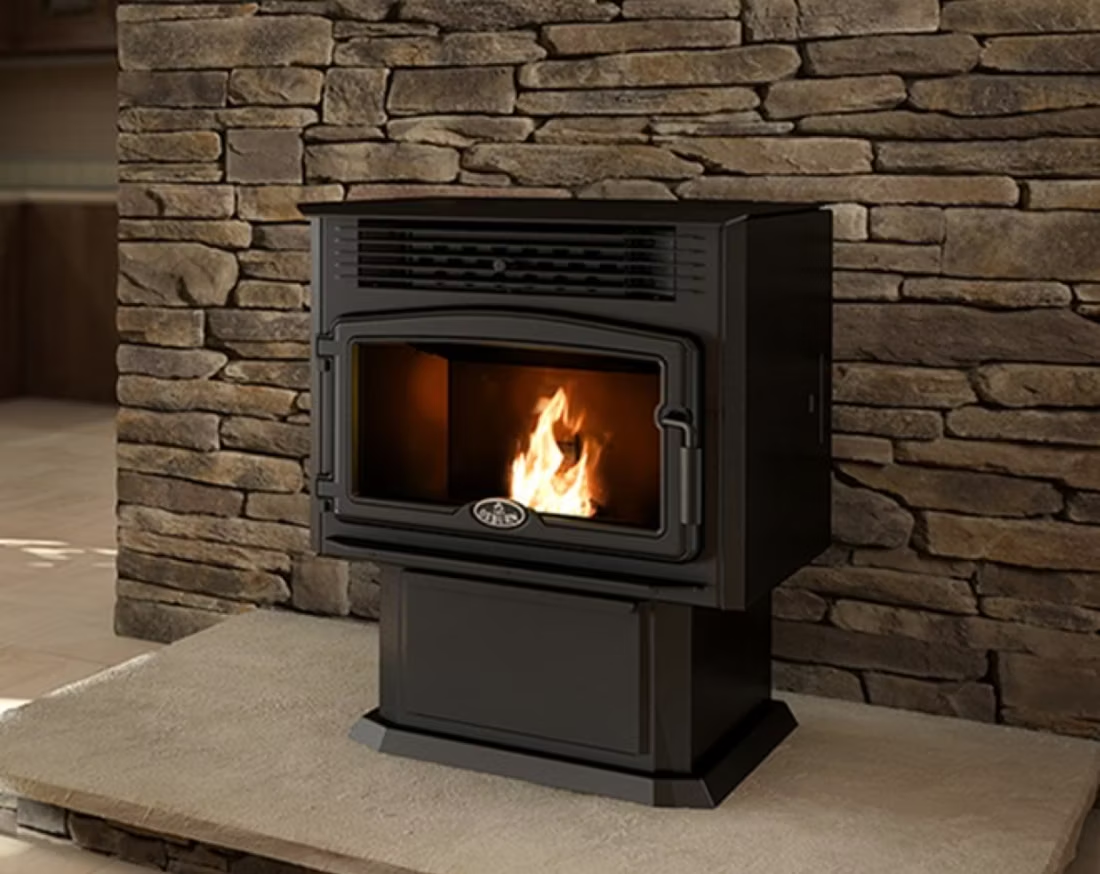
A pellet stove is a freestanding unit that sits on its own hearth pad and vents through a wall or existing chase—it can go almost anywhere in a room with the right clearances. A pellet insert is built to slide into an existing masonry fireplace opening, using a vent liner run up through the old flue instead of the open chimney throat. For Seward County homes with an existing wood-burning fireplace that's rarely used, an insert is often the more efficient upgrade since it repurposes an opening that's already there. Homes without an existing fireplace usually do better with a freestanding stove.
Will my pellet stove work during a power outage?
Not on its own. Pellet stoves rely on an electric auger to feed fuel and a blower to circulate heat, so a standard unit shuts down when the power goes out—worth knowing given how ice storms and high wind events can knock out rural power in this part of Nebraska for hours at a time. Some homeowners pair a pellet stove with a small battery backup or portable generator sized to run the auger and blower, which keeps the appliance operating through an outage. If uninterrupted backup heat during outages is the priority, a wood stove that needs no electricity may be worth considering alongside a pellet unit.
Pellet vs. wood—which is right for my Seward County home?
Wood is abundant locally—oak, hickory, and cottonwood are all common in the county—and a wood stove will keep running with zero electricity, which matters during a winter outage. But wood means splitting, stacking, hauling ash daily, and tending the fire by hand. Pellet stoves trade that labor for a thermostat and an auger: load the hopper, set the temperature, and the stove modulates itself, with far less ash and no chimney creosote buildup to worry about. For a primary living space where convenience matters most, pellet usually wins; for a shop, cabin, or true backup-heat scenario where grid power can't be assumed, wood still has the edge.
How often does a pellet stove vent need to be cleaned?
Pellet vent pipe collects fly ash rather than the heavy creosote a wood chimney builds up, but it still needs regular attention—most manufacturers recommend a full vent cleaning at least once a year, and the exhaust fan and burn pot should be cleaned far more often during the season, sometimes weekly with heavy use. Given how many hours a pellet stove runs through a Seward County winter that stretches from roughly November into March, staying ahead of ash buildup keeps the auger feeding properly and the stove burning efficiently. Local dealers and service techs can handle the annual vent inspection if you'd rather not do it yourself.
What does it take to replace an existing fireplace?
Fireplaces are like icebergs—bigger behind the wall than in front of it. Replacement means removing the surrounding tile or stone (the finish material laps onto the fireplace face), pulling the old unit, setting the new one in the same enclosure, and re-finishing the wall. A hearth professional can determine what's behind your wall without demolition during an in-home preview.
Why is my open fireplace making my house colder?
Open fireplaces suck—literally. As the fire burns, it consumes air your furnace already paid to heat and pulls it out through the chimney, so the house is actually colder after the fire goes out than before you lit it. An insert fixes this: it seals the chimney, puts fixed glass across the front, and turns that hole in your house into a real heat source.
What is an in-home preview and do I need one?
It's a visit where a hearth professional measures your space, confirms the model you picked actually works in your home, and walks the specs—framing, gas line, venting, finish work—before anything is ordered. Some details you just can't know until you see the house. Never make a down payment without one; it's the single most-skipped step that burns buyers.
How much should I budget for a fireplace?
For an average home—covering the fireplace, the vent pipe, and basic installation—a budget between $3,900 and $5,500 gives you a lot of options across wood, gas, and pellet. By the time you add finish work, gas line, and electrical, the average complete installation lands between $5,000 and $12,000 all-in. In a remodel or new build, a good rule is to put about 2.5% of the total project cost toward the fireplace.
Pellet Brands Stocked Around Seward County
Manufacturers will point you to the nearest stocking dealer.
Find your pellet stove in Seward County.
Tell us a bit about your home and we'll match you with a trusted local dealer and send over your free Project Guide & Parts List—the exact parts, vent kit, and dealer recommendation for your pellet project in Seward County.
Find Your Fireplace →