
Add real warmth to any room in Seward County—no venting, no chimney.
With winter lows averaging 12°F and a heating season on par with Madison, Wisconsin, Seward County homes need more than ambiance from a fireplace. An electric unit plugs into a standard or dedicated circuit and adds real zone heat to a basement, den, or old farmhouse room a furnace never quite reaches—no masonry, no gas line, no permit hassle for most models.
Every Project Starts From One of These Five Situations
A straightforward heat source for a county that already knows cold winters.
Seward County sits in southeastern Nebraska's Climate Zone 5A, just up the road from Lincoln, with winters that run cold and long enough—average lows around 12°F, with a heating season on par with Madison, Wisconsin—to put it in the same general range as Madison, Wisconsin. Many of the county's older farmhouses in and around Seward, Milford, Utica, Beaver Crossing, Goehner, and Pleasant Dale were built with a wood-burning hearth as the original heat source, often fed with local oak, hickory, or cottonwood. Plenty of those fireplaces still stand, but they're not always used—chimneys deteriorate, families move away from tending fires, and an unused masonry opening just leaks heat all winter.
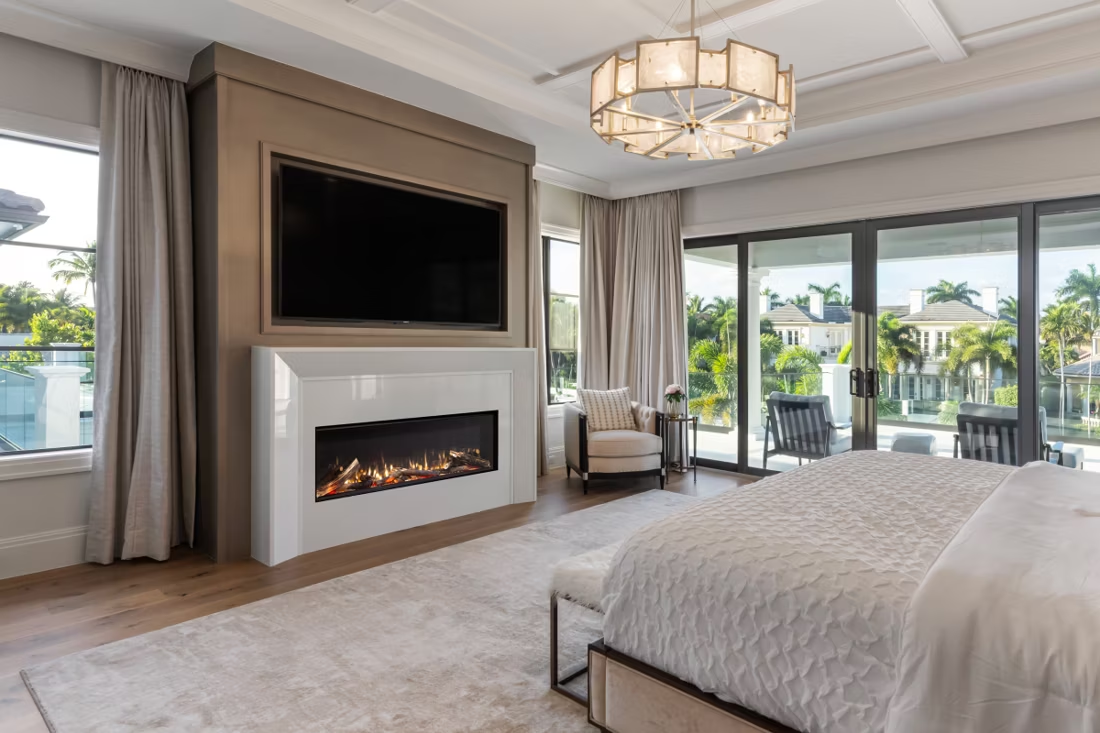
That's where electric fireplaces do the most good in Seward County. Nebraska is the only state in the country served entirely by public power, so electricity here runs through the City of Seward's municipal utility in town and Norris Public Power District across the rural parts of the county—a simple, stable setup that makes a plug-in or hard-wired electric insert an easy add almost anywhere. A built-in electric unit turns a cold, unused fireplace into a working zone heater for the room, a wall-mounted linear unit warms a finished basement or a Concordia University rental without any construction, and none of it requires a flue, a gas line, or a fuel delivery. It's not a replacement for the furnace on a January night, but it's a real, honest supplement—and a much safer option for older homes and renters than trying to bring a dead chimney back into service.
Three steps. No salesperson until you're ready.
Tell us about your project
Your zip code, your situation, and the fuel you're leaning toward—or let the answers point you to one.
See what's actually available
The brands dealers within 100 miles genuinely carry—real options, never a catalog mirage.
Get your dealer & Project Guide
A trusted local dealer, plus the free Project Guide & Parts List that names every component of the job.
Frequently Asked Questions
How much does an electric fireplace installation cost in Seward County?
Most electric fireplace projects in Seward County run far cheaper than a wood or gas install because there's no chimney, no venting, and usually no gas line to worry about. A plug-in insert or freestanding unit that uses an existing outlet can be installed in an afternoon for the cost of the unit itself, often a few hundred to around $1,500. A wall-mounted or built-in linear unit that needs a dedicated 20-amp circuit run by an electrician adds labor—typically another few hundred dollars depending on how far the circuit has to travel, which matters more in older farmhouses around Utica and Beaver Crossing with older panels. Larger, high-end built-ins with custom surrounds can run higher. A local dealer can quote the exact number once they see your panel and the room.
Will an electric fireplace actually heat a room in Seward County's winters?
Yes, for the room it's in—but keep expectations honest. Most electric fireplaces put out 5,000 to 9,000 BTUs, similar to a space heater, and are built to zone-heat a single room rather than carry a whole house through a Seward County winter with a heating season on par with Madison, Wisconsin. They work well as supplemental heat in a finished basement, a converted porch, or a room the furnace struggles to keep warm, and they're a smart way to turn the thermostat down elsewhere while still feeling warm where you sit. For whole-home heating during the coldest stretches, most Seward County homes still lean on a furnace, and some use wood or pellet as a backup.
Do I need a permit to install an electric fireplace in Seward County?
Usually not for a plug-in unit—if it uses an existing 120-volt outlet, there's no construction and no permit required. If you're having an electrician run a new dedicated circuit for a built-in or wall-mounted unit, that electrical work typically needs a permit through your local building department, whether that's the City of Seward or Seward County depending on where the home sits. Most licensed electricians pull that permit as a standard part of the job, so it's rarely something a homeowner has to manage directly.
What kind of electric fireplace makes sense for a Seward County home?
It depends on what you're starting with. For the many older farmhouses around Seward, Milford, and Beaver Crossing with an existing but unused masonry fireplace, an electric insert is often the easiest fix—it slides into the opening, needs no venting, and turns a cold, drafty hole into a working heat source. For newer construction or a finished basement without an existing hearth, a wall-mounted linear unit or a built-in framed into a wall gives a clean, modern look with real supplemental heat. Freestanding electric stoves are a good fit for a rental or a room where you don't want to modify the wall at all—just set it down and plug it in.
Electric vs. wood—which is right for my home in Seward County?
Wood, burned in local oak, hickory, or cottonwood, offers real heat output that keeps working through a power outage—a genuine consideration during a Seward County ice storm—plus lower fuel costs if you're cutting or buying cordwood locally. Electric offers instant on-off convenience, no ash, no smoke, and no chimney maintenance, but it depends entirely on the grid: if the power's out, so is the fireplace. For a primary farmhouse where storm-related outages are a real concern, many homeowners keep a wood stove as backup even after adding electric heat elsewhere in the house. For a basement, rental, or a room where convenience matters more than emergency backup, electric is usually the simpler answer.
How much does it cost to run an electric fireplace in Seward County?
Nebraska's public power structure keeps electricity rates lower than the national average, which helps here. A typical electric fireplace draws around 1,500 watts on the heat setting, so running one for a few hours an evening costs roughly the same as running a couple of space heaters—generally a modest addition to a monthly bill through the City of Seward's municipal utility or Norris Public Power District, depending on where you're served. Most owners run the heat function only when they're actually in the room, using flame-only mode the rest of the time, which uses a fraction of the electricity.
Can I install an electric fireplace in a rental or apartment near Concordia University?
Yes—this is one of the more common uses in Seward. A plug-in freestanding electric stove or a tabletop/wall-mount unit that doesn't require modifying the wall is a straightforward, landlord-friendly option for renters near Concordia University Nebraska or elsewhere in town. There's no venting, no construction, and it comes with you if you move. If a tenant or landlord wants a more built-in look, that's a bigger project requiring the property owner's involvement for any electrical work.
Can I convert my old, unused wood fireplace to electric?
Yes, and it's a common project for older Seward County farmhouses with a masonry fireplace that hasn't been used in years, sometimes because the chimney needs expensive repair. An electric insert slides into the existing opening and plugs into a nearby outlet or a new dedicated circuit, with no need to repair or reline the chimney since there's no combustion or venting involved. It's usually the least expensive way to bring a dead fireplace back into use, though a local dealer should still confirm the opening's dimensions before you buy a unit.
Electric vs. pellet stove—which should I choose?
Pellet stoves, using brands like Lignetics or Indeck Energy Services pellets available regionally, burn a renewable fuel and can put out meaningful whole-room heat, but they need electricity to run the auger and blower and require a hopper you refill regularly plus occasional ash cleanout. Electric fireplaces skip the fuel handling and venting entirely, but produce less raw heat and, like pellet units, stop working the moment the power goes out. For a Seward County homeowner who wants supplemental heat with the least maintenance and no venting at all, electric is simpler. For someone who wants more heat output and doesn't mind loading a hopper, pellet is worth a look—a local dealer can walk through both for your specific room.
Do electric fireplaces actually produce heat?
Yes—most put out around 4,800–5,000 BTUs from a standard outlet, which comfortably warms a bedroom, office, or den as a comfort-zone heater. What they won't do is carry a whole house the way wood, gas, or pellet can. Think of electric as ambiance-first with honest supplemental heat: flames on with no heat in July, flames plus warmth in January.
Can I put a TV above my fireplace?
Yes—with an asterisk. Fireplaces are hot and TVs don't like heat. Either put a mantel between them to deflect rising warmth, or choose a fireplace with heat-management technology that creates a cool zone on the wall above—the wall stays around 125 degrees, barely warm, while the room still gets full heat. If you like clean lines and don't want a mantel, heat management is the answer.
Can a fireplace actually lower my heating bill?
Yes—by creating a comfort zone. A furnace heats every square foot of the house just to warm the one room you're in; a gas fireplace on low burns roughly a sixth of the gas a typical furnace does. Set the furnace around 55–60 degrees as a baseline, then heat the rooms your family actually uses. Families who heat this way commonly save $20–$60 a month.
How much should I budget for a fireplace?
For an average home—covering the fireplace, the vent pipe, and basic installation—a budget between $3,900 and $5,500 gives you a lot of options across wood, gas, and pellet. By the time you add finish work, gas line, and electrical, the average complete installation lands between $5,000 and $12,000 all-in. In a remodel or new build, a good rule is to put about 2.5% of the total project cost toward the fireplace.
Find your electric fireplace in Seward County.
Tell us about your home and the room you're trying to heat, and we'll match you with a trusted local dealer serving Seward County—plus a free Project Guide & Parts List laying out the right unit, the electrical work involved, and the exact parts for your project.
Find Your Fireplace →