
Keep Your Family Warm and Safe—No Matter What
Reliable wood heat for the wind-driven cold of south-central Nebraska—from Holdrege to Bertrand, Loomis, Funk, and the farmsteads in between. Find the right stove or insert, and get matched with a trusted local dealer.
Every Project Starts From One of These Five Situations
Built for wind, cold, and open ground.
Phelps County sits in south-central Nebraska along the Platte River and the Tri-County Canal irrigation system, in corn and cattle country anchored by Holdrege and the smaller communities of Bertrand, Loomis, Funk, and Atlanta. At roughly 2,350 feet elevation, the county falls in climate zone 5A with a winter heating load in the same range as Fargo, North Dakota. Average winter lows sit around 13°F, but with almost nothing to block the wind across the open plains, wind chill regularly makes a still 13-degree night feel considerably colder. Ice storms and high-wind events are a regular part of a Phelps County winter, and they're also the events most likely to knock out electric heat for a day or two.
Wood sourcing here looks different than in a national-forest county. There's no public timberland to buy a cutting permit for—most Phelps County firewood comes from private ground: downed cottonwood along the Platte River bottoms and canal corridors, and oak or hickory pulled from the shelterbelts planted across the county's farmsteads generations ago as windbreaks. Cottonwood burns fast and is easy to source locally, while oak and hickory split from older shelterbelt trees burn longer and hotter for overnight heat. Phelps County has no air quality non-attainment designation and no winter burn curtailment periods, so unlike some mountain and valley counties out west, there's no inversion-driven restriction on when you can run a wood stove—just the practical question of whether you want primary heat, backup heat for the next ice storm, or something in between.
Three steps. No salesperson until you're ready.
Tell us about your project
Your zip code, your situation, and the fuel you're leaning toward—or let the answers point you to one.
See what's actually available
The brands dealers within 100 miles genuinely carry—real options, never a catalog mirage.
Get your dealer & Project Guide
A trusted local dealer, plus the free Project Guide & Parts List that names every component of the job.
Frequently Asked Questions
How much does a wood stove installation cost in Phelps County?
Installed cost for a wood stove or insert in Phelps County typically runs $3,000 to $8,000, depending on the unit, whether you're venting through an existing masonry chimney or need new Class A pipe run through a roof, and whether a hearth pad upgrade is needed for code clearance. Older farmhouses around Holdrege, Bertrand, and Loomis without an existing chimney tend to land on the higher end once a full through-the-roof venting system is factored in. New EPA 2020 NSPS-certified stoves are required for any new installation, and a permit through the Phelps County Building Department is part of most installers' standard process.
What size wood stove or insert do I need for my home?
Sizing depends on square footage, ceiling height, insulation, and whether the stove is meant as primary or backup heat. As a starting point for Phelps County's older farmhouse stock: small stoves (up to 1,000 sq ft) suit a single large room or a smaller ranch home, medium stoves (1,000–2,000 sq ft) cover most main living areas, and large stoves (2,000+ sq ft) can carry a whole home if it's reasonably well insulated. Many farmhouses in this part of the county were built well before modern insulation standards, and constant wind exposure on open ground adds to the real-world heat loss—it's common for a local dealer to size a stove a step larger than square footage alone would suggest. An in-home consultation from a local retailer is the most reliable way to get this right.
Where can I find certified wood stove installers near Phelps County?
Look for installers with NFI (National Fireplace Institute) certification or CSIA (Chimney Safety Institute of America) credentials—both indicate specific training in wood-burning appliance installation, not just general contracting. Given Phelps County's population is under 7,000, most certified hearth dealers are based in Holdrege or in the larger nearby trade centers of Kearney or Hastings, and they cover rural routes throughout the county. Expect installers serving farmsteads outside Holdrege, Bertrand, or Funk to add a modest travel charge for the drive. Sticking with a dealer that both sells and installs the stove keeps warranty coverage and code compliance in one hand instead of split between a retailer and a separate contractor.
What's the difference between a wood stove and a wood insert?
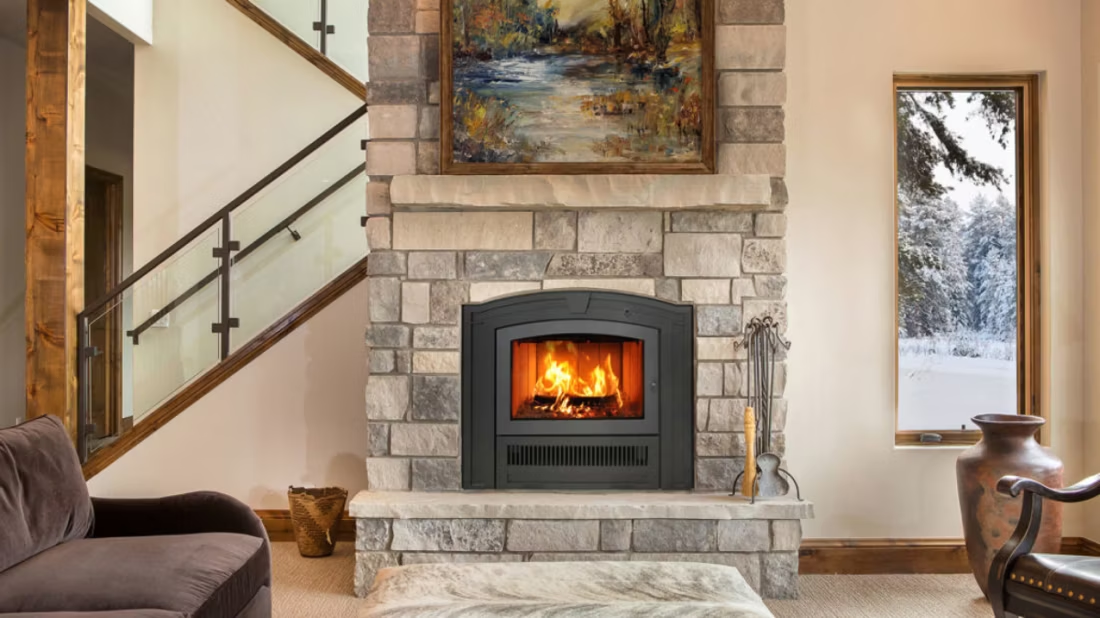
A wood stove is a freestanding unit on its own hearth pad, vented through a chimney, and can go almost anywhere in a home with the right clearances. A wood insert is built to slide into an existing masonry fireplace, turning a drafty open firebox into a sealed, high-efficiency heat source. Many older homes around Holdrege and the surrounding farm towns still have the original open masonry fireplace from when the house was built—for those, an insert is usually the better upgrade, since it reuses the existing chimney and dramatically improves the heat actually delivered to the room. Homes without an existing fireplace, or newer construction, are better suited to a freestanding stove.
Do I need a permit to install a wood stove in Phelps County?
Yes—a new wood stove or insert installation requires a building permit, and the unit itself has to meet current EPA emissions standards (2020 NSPS). In Phelps County, that permit is handled through the county building department, and most local installers fold the paperwork into the installation so it isn't something you have to track down yourself. Because Phelps County has no air quality non-attainment designation, there are no seasonal burn curtailment periods to plan around—once the stove is permitted and installed, you're free to burn on your own schedule.
What's the best wood stove for Phelps County's climate?
With average winter lows around 13°F and wind chill that regularly pushes conditions colder than the thermometer reading, a catalytic stove—from a brand like Blaze King—is worth a look for its ability to hold a fire 20+ hours on a single load, which matters when an overnight ice storm knocks out power on the plains. For a smaller home, a farmhouse used seasonally, or supplemental heat alongside a furnace, a non-catalytic model from Pacific Energy or Lopi is a simpler, lower-maintenance option. A local dealer can match the stove to your home's square footage and how exposed it is to the wind—a farmstead with no windbreak nearby loses heat faster than a similarly sized home in town.
How often should my chimney be inspected and cleaned?
The CSIA recommends an annual inspection for any wood-burning appliance, and that holds in Phelps County whether the stove is your primary heat or a backup for winter power outages. Late summer, before burning season starts, is the typical window local sweeps use. Homes burning wood as a primary heat source through a full Nebraska winter—several cords a season—sometimes need a mid-winter cleaning if creosote builds up faster than expected. For rural farmsteads well outside Holdrege, it's worth scheduling ahead, since emergency response and same-week sweep availability can be tighter than in town.
Where can I get firewood in Phelps County?
Firewood here comes almost entirely from private ground rather than public land—there's no national forest in the county to buy a cutting permit for. Local tree services and individual farmers sell split cottonwood cut from Platte River bottoms and canal corridors, along with oak and hickory taken from aging farmstead shelterbelts as they're removed or thinned. Cordwood typically runs in the $150 to $250 range locally, on the lower end of national pricing, since supply is regional and transport distances are short. Cottonwood burns hot and fast and is easiest to find in volume; oak and hickory take more searching but burn longer, which matters for an overnight load during a stretch of sub-20°F nights.
Wood stove vs. pellet stove—which is right for me?
Wood stoves burn cordwood, work with zero electricity, and pair naturally with the locally available cottonwood, oak, and hickory around Phelps County—a real advantage when a plains ice storm takes down power for a day or more. Pellet stoves, using bagged pellets from brands like Lignetics or Indeck Energy Services, are simpler to run day-to-day and produce less ash, but the auger and blower need electricity, so they go dark in the same outage a wood stove would ride out. For a farmstead where backup heat during a winter power outage is a real concern, wood tends to win. For an in-town home in Holdrege or Bertrand with reliable power and a preference for low-maintenance convenience, pellet is a reasonable alternative—talk to a local dealer about which fits your situation.
Why is my open fireplace making my house colder?
Open fireplaces suck—literally. As the fire burns, it consumes air your furnace already paid to heat and pulls it out through the chimney, so the house is actually colder after the fire goes out than before you lit it. An insert fixes this: it seals the chimney, puts fixed glass across the front, and turns that hole in your house into a real heat source.
Can a wood stove burn all night?
The right one can. If waking up to a warm house and live coals matters to you, say exactly that when you're shopping—firebox size and burn-rate control determine overnight performance far more than any number on a spec sheet. It's a much more useful question than asking about BTUs.
How much should I budget for a fireplace?
For an average home—covering the fireplace, the vent pipe, and basic installation—a budget between $3,900 and $5,500 gives you a lot of options across wood, gas, and pellet. By the time you add finish work, gas line, and electrical, the average complete installation lands between $5,000 and $12,000 all-in. In a remodel or new build, a good rule is to put about 2.5% of the total project cost toward the fireplace.
What is an in-home preview and do I need one?
It's a visit where a hearth professional measures your space, confirms the model you picked actually works in your home, and walks the specs—framing, gas line, venting, finish work—before anything is ordered. Some details you just can't know until you see the house. Never make a down payment without one; it's the single most-skipped step that burns buyers.
Find your wood stove in Phelps County.
Tell us about your home and we'll put together a free Project Guide & Parts List—the right stove or insert, the vent kit it needs, and a trusted local dealer near Holdrege ready to install it.
Find Your Fireplace →