
Find a pellet stove built for Perkins County's plains winters.
Steady, thermostat-controlled heat for a county of under 2,000 people spread across open high plains—from Grant to Madrid, Elsie, and Venango. Get matched with a local dealer who knows what actually works out here.
Every Project Starts From One of These Five Situations
Consistent heat for a county with little wood to spare.
Perkins County is high plains farm and ranch country—flat, wind-exposed, and thin on natural timber outside the cottonwood stands along the South Platte drainage and the shelterbelts planted around farmsteads. With roughly 1,898 residents spread across the county and Grant as the only real town of any size, a lot of households here don't have easy access to a standing woodlot the way a family in the Nebraska Sandhills or eastern timber counties might. At a 5A climate classification, an average winter low near 14°F, and a winter heating workload not far off from Madison, Wisconsin, Perkins County needs real heat, not just ambiance, for a good chunk of the year.
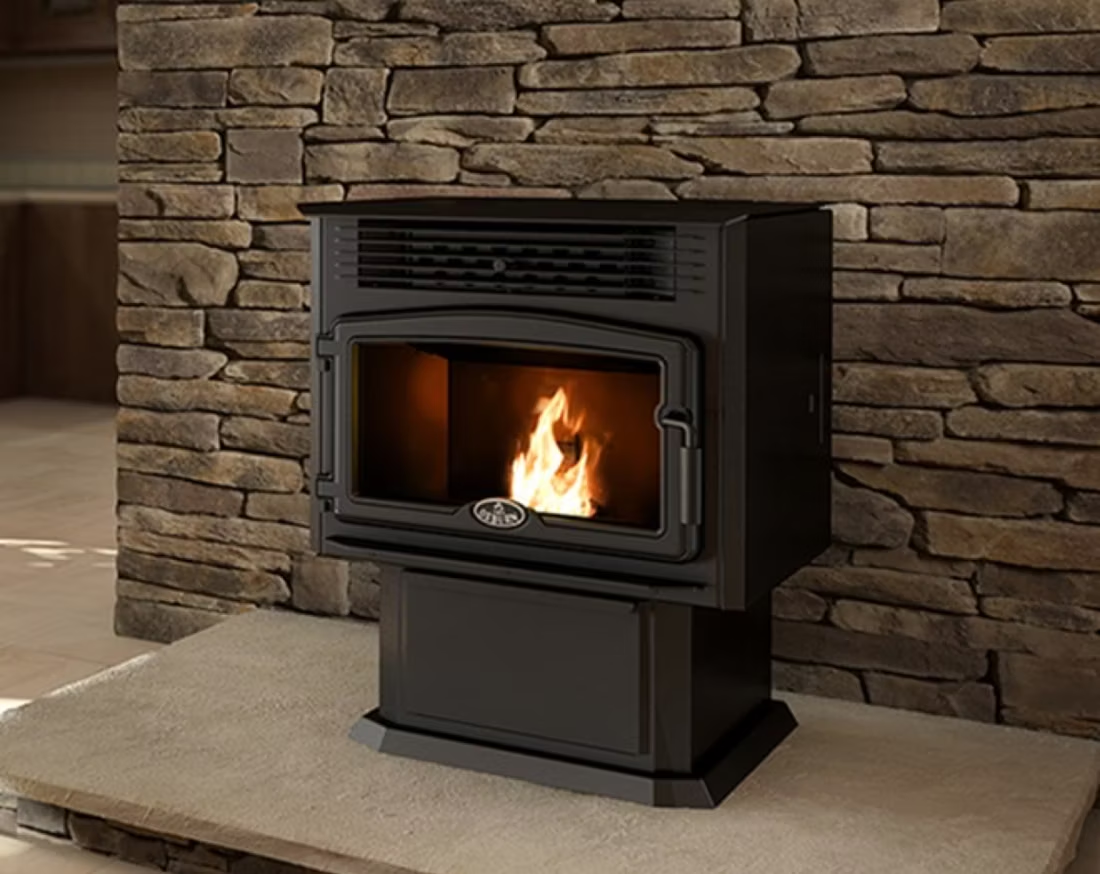
That's where pellet heat earns its place. Instead of relying on standing timber or hauling cordwood long distances, a pellet stove burns bagged fuel sourced from regional mills—Lignetics and Indeck Energy Services both supply the broader Midwest market, which keeps freight distances shorter than trucking pellets in from the Pacific Northwest. A pellet stove also gives you thermostat-level control and a burn that doesn't need splitting, stacking, or seasoning—a real advantage on a working farm where time in winter is already tight. The tradeoff is that pellet stoves need electricity to run the auger and blower, which matters in a county served by Nebraska's public power system where rural line outages during ice storms aren't unheard of. A local dealer can walk you through battery-backup options and hopper capacity so a cold spell doesn't turn into a cold house.
Three steps. No salesperson until you're ready.
Tell us about your project
Your zip code, your situation, and the fuel you're leaning toward—or let the answers point you to one.
See what's actually available
The brands dealers within 100 miles genuinely carry—real options, never a catalog mirage.
Get your dealer & Project Guide
A trusted local dealer, plus the free Project Guide & Parts List that names every component of the job.
Frequently Asked Questions
How much does a pellet stove installation cost in Perkins County?
Exact pricing depends on the appliance you choose, whether you're installing into an existing masonry fireplace or placing a freestanding unit against an exterior wall, and whether any electrical work is needed for the auger and blower circuit. Pellet venting is simpler than a full wood-burning chimney—typically a small-diameter pipe run straight through an exterior wall—which tends to keep both material and labor costs down compared to a masonry chimney project. Because Perkins County has so few installers in-county, expect your quote to include a modest travel charge if your dealer is coming from North Platte, Ogallala, or McCook. A local dealer will give you a firm number after seeing your home.
What size pellet stove do I need for a Perkins County home?
Sizing depends on square footage, ceiling height, and how well-sealed the house is—and older farmhouses common throughout the county, with single-pane windows and minimal wall insulation, often need more heating capacity than a newer build of the same size. Add in constant plains wind, which drives up heat loss through exterior walls, and a stove that would be adequately sized in a sheltered town lot might come up short on an exposed farmstead outside Grant or Venango. A local dealer will walk your home and size the unit based on your actual conditions rather than square footage alone.
Where can I find a pellet stove dealer near Perkins County?
With a county population under 2,000, Perkins County doesn't support a full-time hearth showroom of its own—most homeowners in Grant, Madrid, Elsie, and Venango end up working with a dealer based in a larger regional hub like North Platte or Ogallala who covers the surrounding rural counties. That's normal for this part of Nebraska, and it doesn't mean lower-quality service—it just means scheduling your in-home consultation a bit further in advance, especially heading into fall when installation calendars fill up fast across the region.
Where do I buy pellet fuel in a county with limited retail options?
Bagged pellets from regional mills—Lignetics and Indeck Energy Services both supply the Midwest market—are typically available through farm and ranch supply stores and co-ops in the area, sometimes supplemented by seasonal pallet deliveries direct to your property. Because Perkins County is rural and delivery routes cover a lot of ground, it pays to buy your season's supply early rather than waiting for a January cold snap, when pellet inventory at nearby stores can run thin. A full ton typically covers a season of moderate use in a well-sized stove, though homes leaning on pellet heat as a primary source through a Nebraska panhandle winter should plan for more.
Do I need a permit to install a pellet stove in Perkins County?
Most solid-fuel and pellet appliance installations require a building permit, issued through the county zoning office in Grant for anyone outside city limits, or through the applicable town office if you're within Grant, Madrid, Elsie, or Venango. Requirements are generally straightforward for pellet units compared to wood—there's no masonry chimney to inspect—but the permit still confirms proper clearances and venting termination. Most installers fold this into the project rather than leaving you to file it yourself.
What's the best pellet stove for Perkins County's winters?
Look for a unit with a large hopper capacity and a long burn time between reloads—useful on nights when the plains wind pushes the effective cold well past the 14°F average low. Auto-ignition models are worth the upgrade for anyone running a farm schedule where you're not always home to tend a fire manually. Because power reliability matters more out here than in a city grid, ask your local dealer about models compatible with a battery backup system, so a winter outage doesn't leave you without heat exactly when you need it most.
What happens to my pellet stove during a power outage?
A standard pellet stove won't run without electricity—the auger that feeds pellets and the blower that distributes heat both need power, so an outage stops the stove even with a full hopper. Perkins County is served by Nebraska's public power system, and while outages are relatively infrequent, ice storms and high wind events on the open plains can knock out rural lines for stretches. Homeowners who want heat regardless of grid status typically pair a pellet stove with a small battery backup unit or a generator sized to the stove's draw—something worth discussing with your dealer before you're relying on it in January.
How often does a pellet stove need cleaning and service?
Plan on cleaning the burn pot and ash pan every few days during heavy use, a deeper cleaning of the exhaust venting and hopper a few times per season, and a full professional inspection annually—typically in late summer before the heating season ramps up. This is far less involved than sweeping a wood-burning chimney, but skipping it still reduces efficiency and can trip the stove's safety sensors. Since dedicated hearth technicians are thin on the ground in a county this size, ask your dealer at time of purchase what their service coverage looks like for Perkins County addresses.
Pellet stove vs. wood stove—which makes more sense in Perkins County?
Wood stoves can burn locally available cottonwood, oak, or hickory, but standing timber is genuinely scarce across the open high plains here—most households would need to source and haul cordwood rather than cut it off their own land, and wood requires electricity-free operation that's valuable during outages. Pellet stoves trade that self-sufficiency for convenience: thermostat control, no splitting or stacking, and cleaner burns, but they depend on the power grid to run the auger and blower. For a working farm or ranch household short on time to tend a fire and manage a woodpile, pellet is often the more practical daily-use choice—some homeowners keep a wood stove or fireplace as backup for outages and use pellet for everyday heat.
How often does a pellet stove need cleaning?
A clean pellet stove is a happy pellet stove. Plan on cleaning the burn pot about once a week when you're burning regularly—ash and clinkers gum up the air holes just like a pellet barbecue. Most pellet stove problems trace back to skipped cleaning that nobody explained up front. Some designs make it easy with a trapdoor burn pot: pull a lever and the gunk drops into the ash pan.
What's the difference between an insert and a zero-clearance fireplace?
An insert is a fireplace that slides into a pre-existing wood-burning fireplace—if you don't have one, there's nothing to insert it into. A zero-clearance fireplace is built into a framed wall, which makes it the answer for remodels and new construction. Simple test: existing masonry fireplace means insert; blank or framed wall means zero-clearance.
Does a fireplace add value to my home?
On average, a fireplace adds back to the home about the same amount you spent installing it. Add the monthly savings from heating the rooms you actually use instead of the whole house—often hundreds of dollars a year—and the value case is strong before you even count what a fire does for how your family uses the room.
Can a fireplace actually lower my heating bill?
Yes—by creating a comfort zone. A furnace heats every square foot of the house just to warm the one room you're in; a gas fireplace on low burns roughly a sixth of the gas a typical furnace does. Set the furnace around 55–60 degrees as a baseline, then heat the rooms your family actually uses. Families who heat this way commonly save $20–$60 a month.
Pellet Brands Stocked Around Perkins County
Manufacturers will point you to the nearest stocking dealer.
Find your pellet stove in Perkins County.
Tell us about your home and we'll put together a free Project Guide & Parts List for your pellet stove or insert—sized right for your house and matched with a trusted local dealer serving Perkins County.
Find Your Fireplace →