
Find the right electric fireplace for your Perkins County home.
With roughly 6,400 heating degree days and winter lows averaging 14°F, Perkins County homes need real heat—not just a glow. See where an electric unit fits your Grant or Madrid-area home, and get matched with a trusted local dealer.
Every Project Starts From One of These Five Situations
A no-vent option for a county built around wood and propane.
Perkins County is sparsely populated—under 1,900 residents spread across a stretch of southwest Nebraska farmland anchored by Grant and Madrid. Winters here run cold and long, with average lows around 14°F and roughly 6,400 heating degree days a year, putting Perkins County in the same climate zone (5A) as Bismarck, ND, for how hard a home has to work to stay warm. Many older farmhouses in the county still lean on wood—oak, hickory, and cottonwood cut from shelterbelts and river bottoms—while propane fills in for whole-home heat where natural gas service doesn't reach.
That's where electric fireplaces earn their place. A rental in Grant, a manufactured home outside Madrid, or an add-on sunroom rarely has a chimney or gas line to work with—but every one of them has a wall outlet. Electric units install without venting, without a masonry chimney, and without touching the propane or gas furnace that already carries the whole-home heating load. They won't replace a wood stove or a furnace at 14°F, but for zone heat in a living room, basement, or bonus space, they're the simplest project on this list—and the local rural electric cooperative, Southwest Public Power District, is set up to handle the modest additional draw without issue.
Three steps. No salesperson until you're ready.
Tell us about your project
Your zip code, your situation, and the fuel you're leaning toward—or let the answers point you to one.
See what's actually available
The brands dealers within 100 miles genuinely carry—real options, never a catalog mirage.
Get your dealer & Project Guide
A trusted local dealer, plus the free Project Guide & Parts List that names every component of the job.
Frequently Asked Questions
How much does an electric fireplace installation cost in Perkins County?
Most electric fireplace projects in Perkins County run in the $400 to $1,200 range. A plug-in wall-mount or freestanding unit on the low end just needs a standard 120-volt outlet—often already in place. A built-in insert or a larger unit that calls for a dedicated 240-volt circuit costs more, since it means bringing in a licensed electrician to run new wiring. Given the distances involved in a rural county this size, expect a trip charge if your installer is coming from North Platte or Ogallala rather than working locally.
What size electric fireplace do I need for my home?
Electric fireplaces are rated for supplemental heat, typically covering 400 to 1,000 square feet per unit depending on the model and your ceiling height. In a Perkins County farmhouse with drafty older construction, size toward the higher end of that range and treat the unit as zone heat for one room rather than a whole-house solution. For a well-insulated addition or a smaller Grant or Madrid rental unit, a mid-size wall-mount or insert is usually enough to take the edge off without running the propane furnace as hard.
Where can I find electric fireplace dealers near Perkins County?
Perkins County's population is small enough that dedicated hearth retailers aren't based in Grant or Madrid itself—most homeowners work with dealers out of North Platte or Ogallala, both within reasonable driving distance. These dealers cover installation and warranty service throughout the county, including farms and acreages well outside town limits. Vet any installer for electrical licensing if the job involves a new circuit, and confirm they've handled rural service calls in Perkins County before, since travel time factors into scheduling.
What's the difference between an electric insert, wall-mount, and freestanding unit?
An electric insert is built to slide into an existing masonry fireplace opening, giving an old wood-burning fireplace a clean, no-mess heat source without touching the chimney. A wall-mount unit hangs flush on a wall like a flat-screen TV—popular in additions, basements, and manufactured homes where there's no existing fireplace to work with. A freestanding electric stove or fireplace sits on the floor and can go almost anywhere with an outlet nearby. For Perkins County homes with an old wood-burning fireplace that's fallen out of use, an insert is usually the simplest upgrade; new construction and additions lean toward wall-mount or freestanding.
Do I need a permit to install an electric fireplace in Perkins County?
A plug-in electric fireplace generally doesn't require a permit since it's no different from any other appliance on an existing outlet. If your installer needs to add a dedicated 240-volt circuit or run new wiring for a built-in unit, that electrical work typically requires a permit—your electrician will handle that through the appropriate county process as part of the job. Confirm with your installer up front so it's baked into the timeline rather than a surprise.
Will an electric fireplace heat my whole Perkins County home?
No—and this is worth being honest about upfront. At 14°F average winter lows and roughly 6,400 heating degree days, Perkins County winters are too demanding for an electric fireplace to carry a whole house. These units are built for zone heat: warming a living room, den, or bonus space while your propane furnace or existing wood stove handles the rest of the home. If you're trying to heat an entire farmhouse, a wood stove sized for cold climates or a propane furnace upgrade is the more realistic answer.
How much does it cost to run an electric fireplace day-to-day?
Running cost depends on your electric rate and how many hours you use the heat setting versus flame-only. Most electric fireplaces draw around 1,500 watts on full heat, which works out to a modest daily cost even at rural cooperative rates. Because Southwest Public Power District and similar rural co-ops in this part of Nebraska often carry slightly higher per-kWh rates than urban utilities, it's worth asking your dealer for the wattage draw on any unit you're considering and running the math against your own bill before committing to it as a regular supplemental heat source.
How much maintenance does an electric fireplace need?
Very little. There's no chimney to sweep, no ash to haul, and no combustion byproducts to worry about—a real advantage in a county with no reported air quality concerns, where keeping it that way matters to a lot of households. Maintenance amounts to occasionally dusting the blower vents and replacing the LED ember bed bulbs every several years on most models. Compare that to the annual chimney inspection a wood stove needs, and it's part of why electric units are popular in rentals and homes where nobody wants to manage a burning appliance.
Electric vs. wood—which makes sense for my Perkins County home?
Wood remains the backbone of heat for a lot of older Perkins County farmhouses, especially where oak, hickory, and cottonwood are cut locally and burned as primary or serious supplemental heat through a long, cold winter. Wood also keeps working during a power outage, which matters on a rural line that can be slow to restore after an ice storm. Electric can't do either of those things—no self-supplied fuel, no heat without power. But electric wins on convenience and cleanliness for a rental, a bonus room, an elderly homeowner who can't manage cordwood, or anywhere adding a chimney isn't practical. Many households in the county end up with both: wood or propane carrying the real heating load, electric handling ambiance and quick warmth in a secondary space.
Can I put a TV above my fireplace?
Yes—with an asterisk. Fireplaces are hot and TVs don't like heat. Either put a mantel between them to deflect rising warmth, or choose a fireplace with heat-management technology that creates a cool zone on the wall above—the wall stays around 125 degrees, barely warm, while the room still gets full heat. If you like clean lines and don't want a mantel, heat management is the answer.
Does an electric fireplace need a vent or chimney?
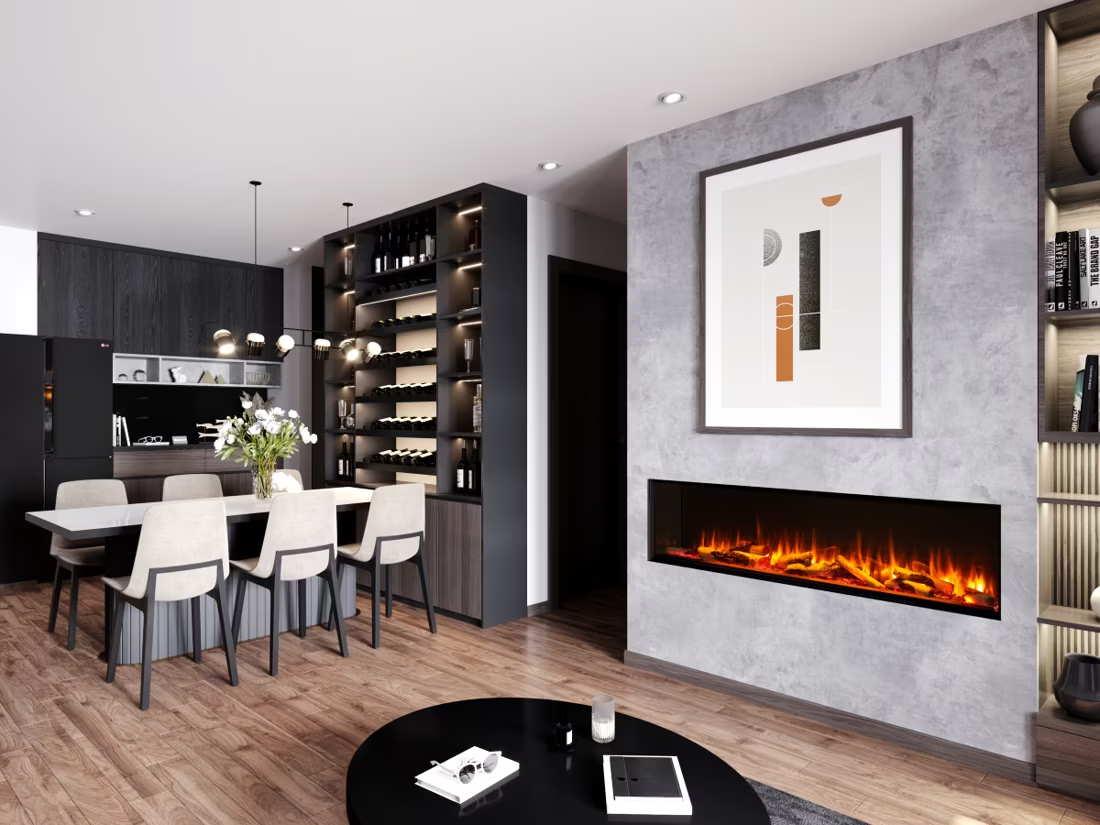
No—that's its superpower. An electric fireplace needs a wall and an outlet, period. No vent pipe, no gas line, no clearances to design around, which is why it works in bedrooms, offices, apartments, and walls where venting a gas or wood unit would be impractical or impossible. Installation is typically the simplest and least expensive of any fireplace type.
What is an in-home preview and do I need one?
It's a visit where a hearth professional measures your space, confirms the model you picked actually works in your home, and walks the specs—framing, gas line, venting, finish work—before anything is ordered. Some details you just can't know until you see the house. Never make a down payment without one; it's the single most-skipped step that burns buyers.
Does a fireplace add value to my home?
On average, a fireplace adds back to the home about the same amount you spent installing it. Add the monthly savings from heating the rooms you actually use instead of the whole house—often hundreds of dollars a year—and the value case is strong before you even count what a fire does for how your family uses the room.
Find your electric fireplace in Perkins County.
Tell us about your home and how you want to use the heat, and we'll match you with a trusted local dealer and send over a free Project Guide & Parts List—sized right for your space and ready for installation.
Find Your Fireplace →