
Steady pellet heat for Logan County's long, open-plains winters.
Logan County is home to fewer than 500 people spread across wide-open ranchland, which means there's no hearth shop on Main Street in Stapleton. I'll match you with a trusted dealer who actually services this stretch of the Nebraska plains and knows how to size a pellet stove for a wind-exposed farmhouse.
Every Project Starts From One of These Five Situations
Convenient, consistent heat for a county of wide-open ranchland.
Logan County sits in climate zone 5A, which puts it in the same cold-winter category as places like Bismarck, ND or Fargo, ND—long stretches of below-freezing days, biting wind across open fields, and little tree cover to break it. With a population of only 419, most homes here are on acreages or working ranches rather than in-town lots, and firewood from local oak, hickory, and cottonwood shelterbelts is still common. But for households that don't want to fell, split, and stack cordwood every fall, a pellet stove offers the same steady radiant warmth with a hopper you fill every day or two instead.
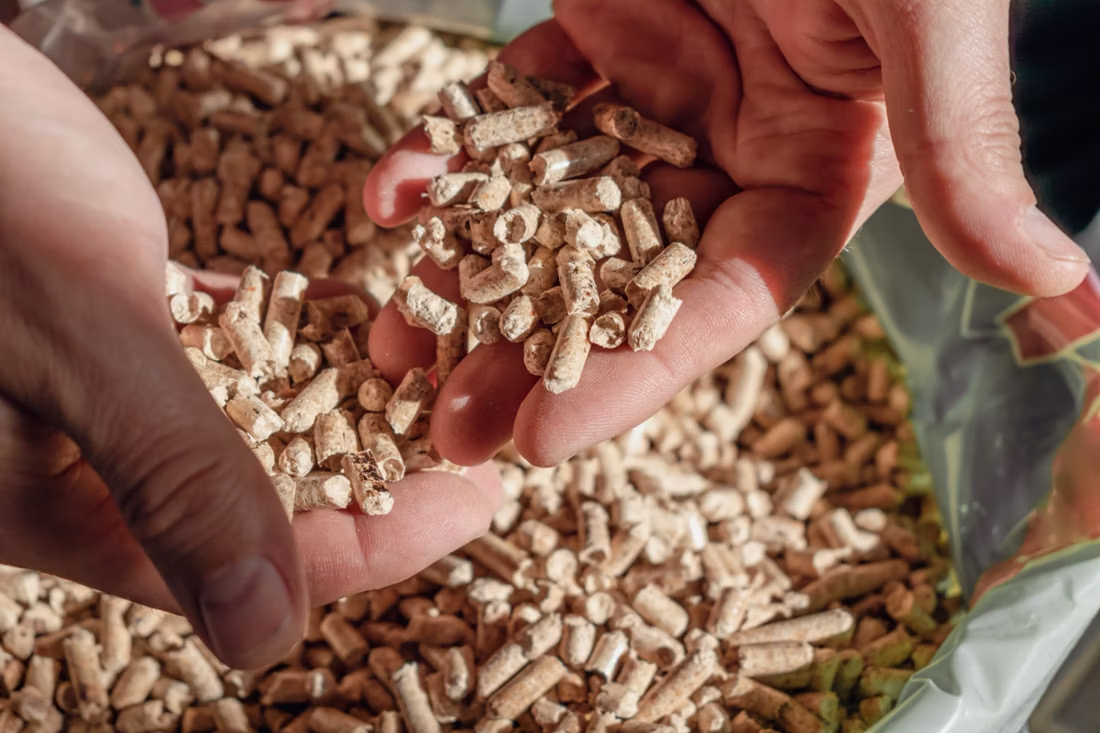
There's no air quality non-attainment issue here—Logan County has no listed burn restrictions—so the appeal of pellet heat isn't regulatory, it's practical. Bagged pellets from regional producers like Lignetics or Indeck Energy Services are easier to store than a woodpile, produce a fraction of the ash, and let an older rancher or a second-home owner run consistent heat off a thermostat instead of tending a fire. Because Logan County itself is too small to support its own hearth retailer, most installs here are handled by dealers based out of North Platte or similar regional hubs who make the drive out for install day.
Three steps. No salesperson until you're ready.
Tell us about your project
Your zip code, your situation, and the fuel you're leaning toward—or let the answers point you to one.
See what's actually available
The brands dealers within 100 miles genuinely carry—real options, never a catalog mirage.
Get your dealer & Project Guide
A trusted local dealer, plus the free Project Guide & Parts List that names every component of the job.
Frequently Asked Questions
How much does a pellet stove installation cost in Logan County?
Most pellet stove and insert installations run somewhere in the $2,500 to $5,500 range nationally, with the final number driven by the unit itself, whether a wall-thimble vent kit needs to be run through masonry or siding, and any electrical work for the stove's power cord. Because Logan County has no local hearth retailer—the county's population is only 419—expect installers to be based out of North Platte or another regional town, which can add a modest trip charge to the quote for an acreage or ranch address. A local dealer will give you a firm number after seeing your home.
What size pellet stove do I need for a Logan County home?
Sizing depends on square footage, ceiling height, and how exposed your home is to wind—a big factor on Logan County's open plains, where a farmhouse with few windbreaks loses heat faster than a similarly sized home in a sheltered subdivision. In a 5A climate zone, plan for a mid-to-large pellet stove (rated for 1,500-2,500+ square feet) if you're heating a full ranch house, or a smaller unit if it's supplemental heat for one wing or a shop. A local dealer can walk your home and account for insulation and wind exposure before recommending a model.
Where can I buy pellets in or near Logan County?
Regional producers like Lignetics and Indeck Energy Services supply pellets throughout the Nebraska plains, typically sold through farm supply stores, hardware stores, or hearth dealers in nearby towns rather than in Logan County itself given its small population. Expect to pay somewhere in the $220 to $300 per ton range depending on brand and delivery distance—buying a season's worth (roughly 2-3 tons for a typical home) in one delivery is common practice out here, since a single trip covers more ground than repeat pickups.
Pellet stove vs. wood stove—which makes more sense on a Logan County ranch?
Wood is free or cheap if you're already cutting oak, hickory, or cottonwood from a shelterbelt or windbreak, and it works without electricity—a real advantage when plains windstorms take down power lines. Pellet stoves trade that self-sufficiency for convenience: no splitting or stacking, a cleaner burn, and a thermostat that holds a steady temperature through a long winter night. For a primary residence with reliable power, pellet is often the easier daily-use choice. For a place where outages are common or where free firewood is already on hand, wood still has a strong case.
Do I need a permit to install a pellet stove in Logan County?
Logan County follows the Nebraska state building code for solid-fuel appliance installations, and a permit is typically required for a new pellet stove or insert, particularly if venting is being run through an exterior wall or existing chimney. Given how small the county government is, it's worth calling ahead to the county office in Stapleton before scheduling an install so paperwork isn't a last-minute holdup. Most dealers who regularly service this part of the state are familiar with the process and can walk you through it.
Will my pellet stove work if the power goes out?
No—pellet stoves rely on an electric auger to feed fuel and a blower to circulate heat, so they shut down in a power outage unless you have backup power. That matters on Logan County's exposed plains, where ice storms and high wind events can knock out rural power lines for extended stretches. If backup heat during outages is a priority, look at a small battery backup unit or generator sized for your stove, or keep a wood-burning option as a fallback—many ranch households here run both.
How much maintenance does a pellet stove need?
Pellet stoves need the burn pot and ash pan emptied every few days to weekly depending on use, plus a full cleaning of the hopper, auger, and venting once a season—usually before the stove sees heavy use going into a Logan County winter. Because venting on most pellet units is a simple horizontal wall-thimble run rather than a full masonry chimney, upkeep is generally lighter than wood stove chimney sweeping, though the exhaust fan and gaskets still need periodic inspection.
Is there a local dealer who services Logan County?
Logan County's population of 419 doesn't support a standalone hearth retailer, so most homeowners here work with a dealer based in a nearby regional town who makes service calls out to Stapleton and the surrounding ranch country. That's exactly the kind of matchmaking I focus on—finding a dealer who already routes through this part of the state, rather than one who'll bill you heavily for the drive or, worse, skip the install altogether.
Are pellet stoves a good fit for a second home or hunting cabin in Logan County?
Yes, with one caveat: pellet stoves need reliable electricity, so they work well for a seasonal cabin or second home that's on the grid but visited intermittently—set the thermostat, load the hopper, and go, without worrying about a woodpile drying out between visits. For a truly off-grid property with no power, a wood stove burning local oak or hickory is usually the more practical call.
How often does a pellet stove need cleaning?
A clean pellet stove is a happy pellet stove. Plan on cleaning the burn pot about once a week when you're burning regularly—ash and clinkers gum up the air holes just like a pellet barbecue. Most pellet stove problems trace back to skipped cleaning that nobody explained up front. Some designs make it easy with a trapdoor burn pot: pull a lever and the gunk drops into the ash pan.
Can a pellet stove heat a whole house?
It genuinely can. I burned a pellet stove as my only heat source for years after a furnace died, and it kept the entire house warm. Pellets feed automatically from a hopper, so you get wood-heat economics with thermostat-style control. Two honest caveats: it needs weekly cleaning during the season, and most models need electricity to run—ask about battery backup if outages are a concern.
Does a fireplace add value to my home?
On average, a fireplace adds back to the home about the same amount you spent installing it. Add the monthly savings from heating the rooms you actually use instead of the whole house—often hundreds of dollars a year—and the value case is strong before you even count what a fire does for how your family uses the room.
Can I install a fireplace myself?
If you're putting a fire in your house on purpose, it's best to work with an expert. Unless you're genuinely experienced in framing, gas line, vent pipe, and the national code on clearances to combustibles, have a professional do it—and ideally the same company that sells you the fireplace, so warranty, service, and liability all live under one roof.
Pellet Brands Stocked Around Logan County
Manufacturers will point you to the nearest stocking dealer.
Find your pellet stove in Logan County.
Tell me about your home and I'll match you with a trusted dealer who actually services Logan County, plus a free Project Guide & Parts List with the exact vent kit and parts your install needs.
Find Your Fireplace →