
Fireplace and stove options for Logan County's ranch country.
Wood, gas, pellet, and electric fireplace resources for Stapleton and the ranches and rural crossroads scattered across Logan County—home to just 419 residents. Find the right unit for your home and get matched with a retailer who actually serves this stretch of the Sandhills.
Every Project Starts From One of These Five Situations
Cold winters and Sandhills ranching in Logan County, Nebraska.
Logan County is small by any measure—about 419 people spread across open ranchland, with Stapleton as the only incorporated city and the rest of the county made up of working ranches and rural crossroads. The climate zone here (5A) means winters that run cold and long, with the kind of sustained heating season you'd see in Bismarck, ND—not brutal by Northern Plains standards, but plenty cold enough that a working heat source matters. Cottonwood grows thick along the creek bottoms and draws, and oak and hickory show up in shelterbelts and farmstead plantings, giving local wood-burners a real (if modest) supply of dense, long-burning hardwood alongside the softer cottonwood.
Because the county is so lightly populated, there isn't a hearth retailer headquartered inside Logan County's borders in most cases—homeowners here typically work with dealers and service techs based in nearby regional towns who drive out to install and service units on ranches and in Stapleton itself. That's not a knock on the county; it's just the reality of serving 419 people across a lot of open ground. Pick your fuel below to see what's realistic for your property, what it costs, and who actually covers this part of the county.
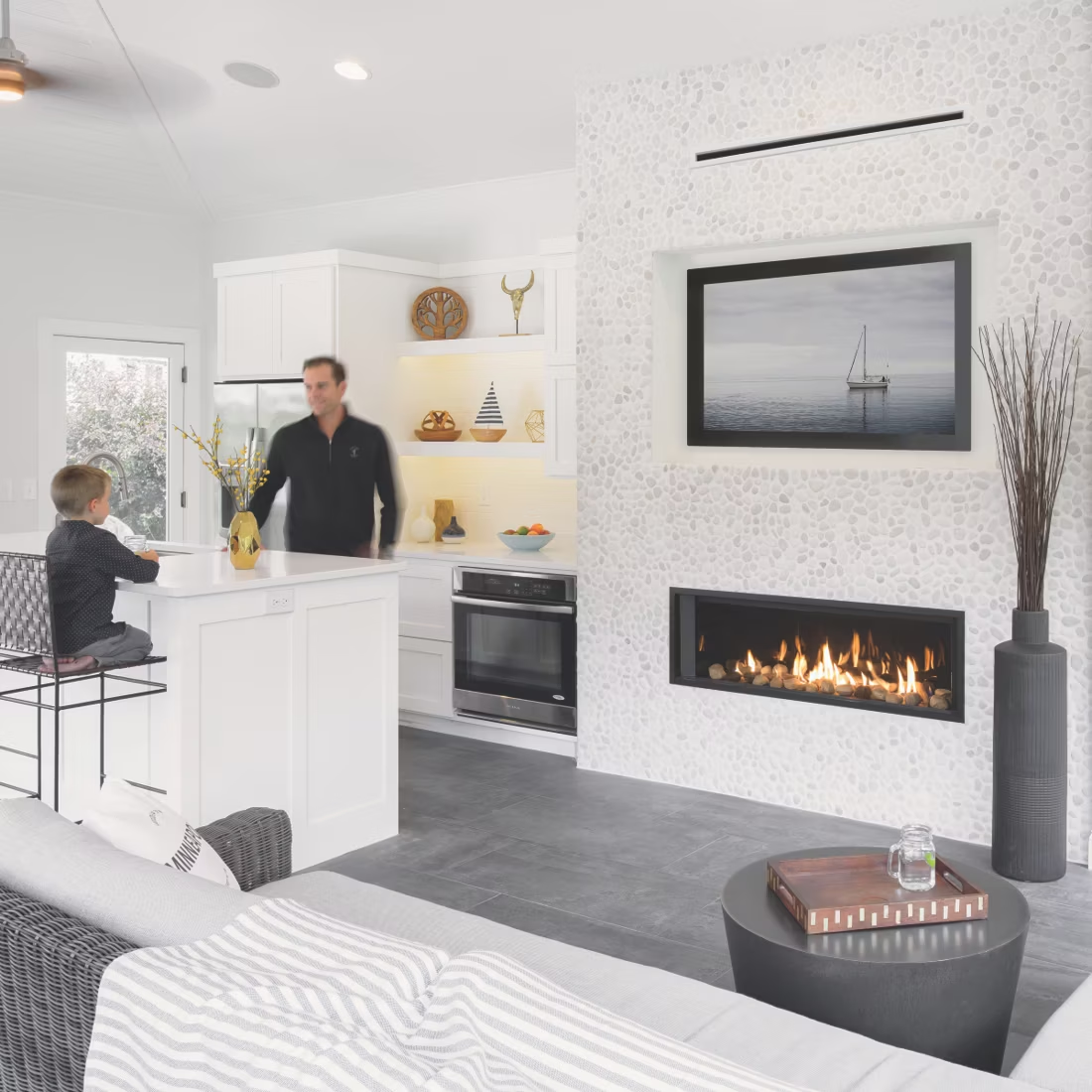
Four fuels. One honest answer for Logan County.
Three steps. No salesperson until you're ready.
Tell us about your project
Your zip code, your situation, and the fuel you're leaning toward—or let the answers point you to one.
See what's actually available
The brands dealers within 100 miles genuinely carry—real options, never a catalog mirage.
Get your dealer & Project Guide
A trusted local dealer, plus the free Project Guide & Parts List that names every component of the job.
Frequently Asked Questions
Which fuel makes the most sense for a home in Logan County?
It depends on how remote your property is and what you're trying to solve. Wood is a strong fit given the local supply—cottonwood along the draws for a quick, easy-splitting fuel, and oak or hickory from shelterbelts and farmstead plantings for a denser, longer-burning fire on the coldest nights. Gas in a county this rural usually means propane rather than piped natural gas, and it's the low-maintenance choice for homeowners who don't want to deal with cutting or hauling wood. Pellet stoves are a workable middle ground—Lignetics and Indeck Energy Services pellets are both available through regional suppliers, and a pellet stove gives you wood-style heat without needing your own woodlot. Electric fireplaces are supplemental here, not primary heat—useful for a bedroom or den, but not enough on their own through a Logan County winter. Many ranch homes end up running wood or propane as the workhorse and electric or pellet in a secondary room.
Do I need a permit to install a fireplace or stove in Logan County?
In most rural Nebraska counties this size, building permits for wood stoves, inserts, gas appliances, and pellet stoves are handled through the county courthouse rather than a dedicated building department—for Logan County, that means the Stapleton courthouse. Gas installations, whether propane or (rarely) natural gas, generally require a separate line permit and licensed installer for the fuel connection itself. Plug-in electric fireplaces typically don't need a permit; a hardwired built-in electric unit might, if it involves new wiring. Because Logan County processes far fewer permits than a metro county, it's worth calling ahead before you start a project—a local retailer who's installed here before can usually walk you through exactly what the courthouse will want.
Are there any wood-burning restrictions in Logan County?
No—Logan County has no reported air quality concerns, no non-attainment designation, and no winter burn-curtailment program. That's a real difference from more populated or geographically boxed-in areas that deal with winter inversions or wildfire smoke; out here, on open Sandhills ground, wood smoke simply doesn't concentrate the way it can in a valley or basin. New installs should still meet current EPA emissions standards for wood stoves as a matter of code and efficiency, but you won't run into a curtailment advisory telling you not to burn on a given night.
Will one dealer be able to handle wood, gas, pellet, and electric for my home?
In a county with only 419 residents, you're not going to find four separate specialty stores—but the regional dealers who cover Logan County typically carry at least two or three fuel types, since that's what makes a route out to a county this size worth running. It's common for one dealer to handle both wood and gas, or gas and pellet, with electric fireplaces available as a smaller side line. If you're not sure which fuel fits your ranch or your budget, ask the dealer directly what they stock and install—most will be straightforward about what they carry versus what they'd have to special-order.
How does service and installation work when a technician has to drive this far out?
Expect longer lead times than you'd see in a city, and expect a modest travel charge built into service calls—techs covering Logan County are usually driving in from a regional hub and serving several sparsely populated counties on the same swing. The upside is that these technicians are used to working on ranch properties: longer chimney runs, detached shops, and outbuildings with their own heat needs. Booking your annual chimney sweep or gas inspection in late summer or early fall, before the cold sets in and everyone's calling at once, is the easiest way to avoid a midwinter wait.
What should I expect to pay for a fireplace or stove installation in Logan County?
Costs run in line with typical rural Midwest pricing, sometimes with a modest premium for travel distance built in. A wood stove or insert install generally runs $4,000–$8,500 depending on chimney work. A propane fireplace, insert, or stove typically runs $4,000–$9,500, with cost driven mostly by line work and venting since a propane tank setup adds a step piped natural gas doesn't. A pellet stove or insert usually lands around $4,000–$7,000. An electric fireplace is the cheapest entry point—often $200–$3,000 for the unit itself, plus $400–$1,000 in labor if it's more than a plug-and-play install. Ask any dealer serving Logan County for a written quote that includes travel time, since that's a real line item out here in a way it isn't in a denser market.
What is an in-home preview and do I need one?
It's a visit where a hearth professional measures your space, confirms the model you picked actually works in your home, and walks the specs—framing, gas line, venting, finish work—before anything is ordered. Some details you just can't know until you see the house. Never make a down payment without one; it's the single most-skipped step that burns buyers.
Wood, gas, pellet, or electric—how do I choose?
Match the fuel to your life, not the other way around. Wood: lowest fuel cost and total power-outage independence, but you're hauling and stacking. Gas: press a button, set a thermostat, no maintenance to speak of. Pellet: wood economics with automatic feeding, in exchange for weekly cleaning and a need for electricity. Electric: plugs in anywhere with honest supplemental heat. Nobody regrets the fuel that fits how they actually live.
How much should I budget for a fireplace?
For an average home—covering the fireplace, the vent pipe, and basic installation—a budget between $3,900 and $5,500 gives you a lot of options across wood, gas, and pellet. By the time you add finish work, gas line, and electrical, the average complete installation lands between $5,000 and $12,000 all-in. In a remodel or new build, a good rule is to put about 2.5% of the total project cost toward the fireplace.
Should the dealer who sells my fireplace also install it?
Ideally, yes. A fireplace project involves vent pipe, gas line, electrical, and often tile or stone. Hire three or four separate trades and you own the liability and the game of telephone between them. One company selling and installing means one accountable party, start to finish—ask about factory training, on-time completion records, and what happens if an inspection fails.
Stove and Fireplace Dealers in Logan County
Listings include WhyFire partner dealers, dealers we have verified as authorized for the brands we recommend, and established local businesses that carry hearth products. Every listing shows which one it is. The ones marked Preferred run on WhyFire's software, so they can show you real pricing and book your appointment right here. No manufacturer pays for placement. How we verify dealers →
Lusk Heating & Ac
Hearth & Tile Creations - Platte Construction, Inc
Get matched with a dealer serving Logan County.
Tell us about your home and your fuel of choice, and we'll match you with a trusted local dealer and send over a free Project Guide & Parts List—the exact parts, including the vent kit, and the dealer we recommend for your specific project in Logan County.
Find Your Fireplace →