
Find the right pellet stove for Dixon County winters.
Consistent, thermostat-controlled heat for the long Nebraska winters around Ponca, Newcastle, Allen, and Concord. We match you with a trusted local dealer who can size and install it right.
Every Project Starts From One of These Five Situations
Steady heat for a county that sees real cold.
Dixon County sits in northeast Nebraska's Zone 5A climate, with roughly 6,824 heating degree days a year and average winter lows around 10 degrees—cold enough to rival Fargo, ND on a bad week, and cold enough that heating equipment here has to actually work, not just look nice. Farmhouses and ranch-style homes scattered between Ponca, Newcastle, Allen, and Concord often run wood or LP as their main heat, and pellet stoves have carved out a solid niche as a cleaner, lower-maintenance alternative that still delivers real, standalone warmth on the coldest nights.
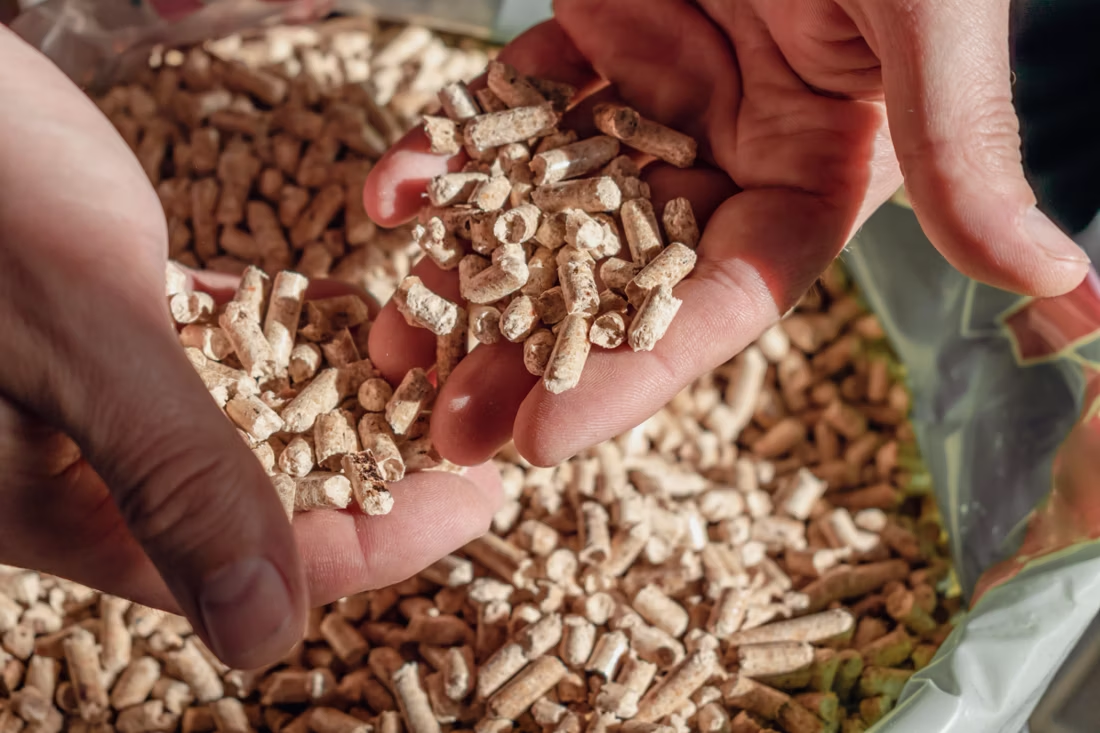
A pellet stove loads from a hopper, runs on a thermostat, and needs only a quick scoop-out every few days rather than daily wood splitting and hauling—a real advantage for households managing acreages, livestock chores, or long commutes into Sioux City or Yankton. Bagged pellets from regional suppliers like Lignetics and Indeck Energy Services are generally easier to source and store in Dixon County than in denser urban markets, since farm stores and co-ops across northeast Nebraska routinely stock pallets through the winter. The tradeoff is that pellet units need electricity to run the auger and blower, so most owners in the county pair one with a battery backup or a wood stove elsewhere in the house for outage coverage.
Three steps. No salesperson until you're ready.
Tell us about your project
Your zip code, your situation, and the fuel you're leaning toward—or let the answers point you to one.
See what's actually available
The brands dealers within 100 miles genuinely carry—real options, never a catalog mirage.
Get your dealer & Project Guide
A trusted local dealer, plus the free Project Guide & Parts List that names every component of the job.
Frequently Asked Questions
How much does a pellet stove installation cost in Dixon County?
Pellet stove and insert installations in Dixon County typically run $4,000 to $8,000, depending on whether it's a freestanding stove venting through an exterior wall or an insert going into an existing masonry fireplace. Freestanding units with a straightforward through-wall vent kit tend to land on the lower end. Insert conversions that need a liner run through an existing chimney, or installations in newer homes without an existing hearth, push toward the higher end. A local dealer will give you a firm number after seeing your home, since venting length and wall material both affect labor.
What size pellet stove do I need for my home?
Sizing depends on square footage, insulation, and whether the stove is meant to be primary or supplemental heat. For Dixon County's older farmhouses and drafty acreage homes, a mid-size unit rated for 1,500 to 2,200 square feet is common even in spaces that measure smaller on paper, simply because the house loses heat faster than a tightly built new build would. Homes built or renovated in the last decade with better insulation can often get away with a smaller unit for the same square footage. A local dealer will walk your space and size it based on your actual construction, not just a square-footage chart.
Where can I buy pellets in Dixon County?
Farm and ranch supply stores across northeast Nebraska typically stock bagged pellets through the heating season, and regional brands like Lignetics and Indeck Energy Services show up consistently in this part of the state. Because Dixon County is rural, most households buy pellets by the pallet (roughly 50 forty-pound bags) rather than a bag or two at a time, which also tends to bring the per-ton cost down. It's worth asking your local dealer where they source pellets—many hearth retailers either stock them directly or have a standing relationship with a nearby supplier and can point you to the best price in the area.
Will my pellet stove work if the power goes out?
Not without backup power. Pellet stoves rely on an electric auger to feed fuel and a blower to distribute heat, so a standard unit shuts down the moment the power drops—a real consideration in Dixon County, where winter storms and rural power lines mean outages can stretch for hours or longer. Many local homeowners pair a pellet stove with a small battery backup or generator sized to run just the stove's components, which is enough to keep it going through most outages. If uninterrupted heat during outages is your top priority, a wood stove that needs no electricity at all is worth discussing with your dealer as either a primary choice or a backup unit elsewhere in the house.
What's the difference between a pellet stove and a pellet insert?
A pellet stove is a freestanding unit that sits on its own hearth pad and vents through an exterior wall or existing chimney—it can go almost anywhere in a room with the right clearances. A pellet insert is built to slide into an existing masonry fireplace opening, converting an old wood-burning fireplace into a much more efficient, thermostat-controlled heat source. For Dixon County homes with an existing fireplace that rarely gets used because it's inefficient, an insert is often the better fit. Homes without an existing fireplace, or newer construction, are usually better served by a freestanding stove.
Do I need a permit to install a pellet stove in Dixon County?
Most jurisdictions in Nebraska require a building permit for new solid-fuel appliance installations, including pellet stoves, and Dixon County is no exception for anything beyond a like-for-like swap. Requirements can vary slightly between incorporated towns like Ponca, Newcastle, and Allen versus unincorporated parts of the county, so it's worth confirming with your dealer before work starts. In practice, most local installers handle the permitting as part of the job, so it's rarely something a homeowner has to navigate alone.
How often does a pellet stove need to be cleaned and serviced?
Pellet stoves need more frequent light maintenance than wood stoves but far less heavy cleaning. Plan to empty the ash pan every few days during regular winter use, clean the burn pot weekly, and do a deeper cleaning of the exhaust and hopper components monthly during the burning season. An annual professional service—checking the auger motor, blower, and venting—is recommended before each heating season starts, especially given how many heating degree days Dixon County racks up each winter and how hard the unit works as a result.
How does a pellet stove compare to a wood stove for heating my home?
Wood stoves burn split cordwood, work with zero electricity, and are well suited to Dixon County's oak, hickory, and cottonwood supply, which makes them a strong choice for households prioritizing storm resilience over convenience. Pellet stoves trade that off for a thermostat-controlled burn, a hopper that only needs loading every day or two instead of constant feeding, and cleaner combustion with far less ash and no chimney creosote buildup to worry about. For households managing an acreage, livestock, or long commutes where daily wood-splitting isn't practical, pellet often wins on convenience. For anyone concerned about extended rural power outages, a wood stove—or a pellet stove paired with a battery backup—is the safer bet.
Is a pellet stove a good fit for a rural Dixon County acreage?
Yes, with a couple of practical considerations. Pellet stoves are popular on acreages in this part of Nebraska because they cut down the labor of daily wood handling while still providing real, standalone heat through 6,800-plus heating degree days each winter—comparable to what a household in Bismarck, ND deals with. The two things to plan for are pellet storage (a dry, accessible spot for pallets delivered ahead of winter) and a power interruption plan, since rural lines here go down more often than in town. Most local dealers can talk through both when sizing your install.
Why is my open fireplace making my house colder?
Open fireplaces suck—literally. As the fire burns, it consumes air your furnace already paid to heat and pulls it out through the chimney, so the house is actually colder after the fire goes out than before you lit it. An insert fixes this: it seals the chimney, puts fixed glass across the front, and turns that hole in your house into a real heat source.
Why is a fireplace insert so efficient?
An insert does two things: it seals the chimney completely, so you stop losing air you already paid to heat, and it radiates warmth into the room through the firebox and glass. Most add a heat-exchange fan that pulls cool room air underneath, wraps it around the hot firebox, and pushes it back out warm. Your home is more efficient before you've even lit the first fire.
Can I install a fireplace myself?
If you're putting a fire in your house on purpose, it's best to work with an expert. Unless you're genuinely experienced in framing, gas line, vent pipe, and the national code on clearances to combustibles, have a professional do it—and ideally the same company that sells you the fireplace, so warranty, service, and liability all live under one roof.
What is an in-home preview and do I need one?
It's a visit where a hearth professional measures your space, confirms the model you picked actually works in your home, and walks the specs—framing, gas line, venting, finish work—before anything is ordered. Some details you just can't know until you see the house. Never make a down payment without one; it's the single most-skipped step that burns buyers.
Pellet Brands Stocked Around Dixon County
Manufacturers will point you to the nearest stocking dealer.
Find your pellet stove in Dixon County.
Tell us a bit about your home and we'll match you with a trusted local dealer and send over a free Project Guide & Parts List—the exact parts, including the vent kit, for your pellet project in Dixon County.
Find Your Fireplace →