
Clean, instant heat without the chimney work.
For homes across Dixon County—from Ponca to Newcastle, Allen, Dixon, and Wakefield—an electric fireplace adds real supplemental warmth to a single room without a gas line, a flue, or a wood permit. Find the right unit and connect with a trusted local dealer.
Every Project Starts From One of These Five Situations
Supplemental heat for cold Nebraska nights, without new venting.
Dixon County sits in Nebraska's northeast corner along the Missouri River, and its winters are genuinely cold—an average low near 10°F and roughly 6,824 heating degree days a year, putting the heating demand here in the same range as Madison, Wisconsin. Across a county of about 4,200 people spread thin between Ponca, Newcastle, Allen, Dixon, Wakefield, and Concord, most homes rely on a central furnace running on natural gas, propane, or electric heat pump as their primary system, since natural gas mains don't reach every rural property here.
That's exactly where electric fireplaces earn their place. They don't replace a furnace, but they add fast, controllable zone heat to a finished basement, a living room addition, or a farmhouse bedroom that the main system struggles to keep comfortable on the coldest nights. Because there's no gas line and no chimney to build, installation is usually limited to running a dedicated circuit—a fraction of the cost and disruption of a wood or gas project, and a genuinely practical option for the area's manufactured and modular homes, which make up a real share of Dixon County's rural housing stock.
Three steps. No salesperson until you're ready.
Tell us about your project
Your zip code, your situation, and the fuel you're leaning toward—or let the answers point you to one.
See what's actually available
The brands dealers within 100 miles genuinely carry—real options, never a catalog mirage.
Get your dealer & Project Guide
A trusted local dealer, plus the free Project Guide & Parts List that names every component of the job.
Frequently Asked Questions
How much does an electric fireplace installation cost in Dixon County?
Plug-in electric fireplaces and inserts that use a standard household outlet typically run $300 to $900 installed, since there's often no electrical work needed beyond mounting the unit. Built-in wall units or larger inserts that need a dedicated 20-amp circuit run higher, generally $1,000 to $2,000, depending on how far the panel is from the install location—a bigger factor in older farmhouses around Ponca and Newcastle where panel upgrades are sometimes needed. A local dealer will confirm your home's electrical capacity before quoting a firm price.
Can an electric fireplace heat my whole house through a Dixon County winter?
No, and any honest answer has to start there. Most electric fireplaces are rated around 1,500 watts, which translates to roughly 5,000 BTUs—enough to noticeably warm a single room of 300 to 500 square feet, but nowhere near enough to carry a whole home through a Dixon County winter with lows averaging 10°F and nearly 6,824 heating degree days a year. Think of electric heat here as zone heat for a specific room, layered on top of your furnace or heat pump, not a replacement for it.
Do I need a permit to install an electric fireplace in Dixon County?
Plug-in units generally don't require a permit since no wiring changes are involved. If your installer is running a new dedicated circuit for a built-in or wall-mounted unit, that electrical work typically does require a permit through the Dixon County building and zoning office, and it should be pulled by a licensed electrician. Most local dealers who install built-in units handle this step as part of the job rather than leaving it to the homeowner.
What's the difference between an electric insert, an electric stove, and a wall-mounted electric fireplace?
An electric insert is built to slide into an existing masonry or wood-burning fireplace opening, giving you flame effect and heat without touching your chimney. An electric stove is a freestanding cabinet-style unit that mimics a wood stove and can go almost anywhere with an outlet. A wall-mounted or built-in electric fireplace is designed to be recessed into a wall or set into custom cabinetry, which is popular in newer builds and remodels around Wakefield and Allen. All three use the same core heating element—the choice mostly comes down to the look you want and whether you're working with an existing fireplace opening.
Will my electric fireplace still work if the power goes out?
No—this is the tradeoff worth understanding up front. Because electric fireplaces run entirely on household current, they shut off the moment the power does, unlike some gas units that keep running on battery-backed ignition. Dixon County sees winter storms that knock out rural power lines for hours at a time, so if backup heat during an outage matters to you, a propane or wood-burning appliance elsewhere in the home is worth pairing with an electric fireplace rather than relying on electric alone.
What's the best electric fireplace for a Dixon County home?
Look for a unit with a true 1,500-watt heater and a thermostat, from established brands like Dimplex, ClassicFlame, or Napoleon—these hold up well and give you honest, consistent heat output rather than flame effect alone. For a farmhouse bedroom or basement family room, a mid-size insert or wall unit in the 30 to 50 inch range covers most spaces adequately. If you're heating a larger open room, talk to a local dealer about running two smaller units rather than one oversized one, since a single electric heater's real-world coverage tops out around 400 to 500 square feet regardless of size.
Should I get electric or propane heat for my Dixon County home?
For primary heat, propane (or natural gas where available) wins in a county with 6,824 heating degree days a year—it produces far more BTUs per dollar and keeps running through the coldest stretches of a Nebraska winter. Electric fireplaces make the most sense as supplemental heat for a specific room, or in situations where running a gas line isn't practical, such as an addition, a finished basement, or a manufactured home. Many Dixon County homeowners use both: propane or gas for the whole house, electric for the room they actually live in most.
How much does it cost to run an electric fireplace in Dixon County?
A 1,500-watt electric fireplace running at full heat costs roughly 15 to 25 cents per hour to operate at typical Nebraska electric rates, which works out to a few dollars for an evening of use. That's meaningfully less than most homeowners expect, and it's part of why electric units are popular for rooms that only need heat a few hours a day rather than around the clock. Running one as a full-time secondary heat source through a long winter will show up on your bill, so most owners use the thermostat setting rather than leaving units on max continuously.
Where can I get an electric fireplace installed near me in Dixon County?
A handful of hearth and appliance dealers serve the Dixon County area, generally out of Wayne or Sioux City with delivery and installation reaching Ponca, Newcastle, Allen, Dixon, and Wakefield. For built-in or wall-mounted units, look for a dealer who coordinates directly with a licensed electrician rather than leaving the wiring to a separate contractor—it keeps the permitting and warranty coverage simpler. Find My Fireplace can match you with a trusted local dealer who knows what's actually available and installable for your specific home.
Can I put a TV above my fireplace?
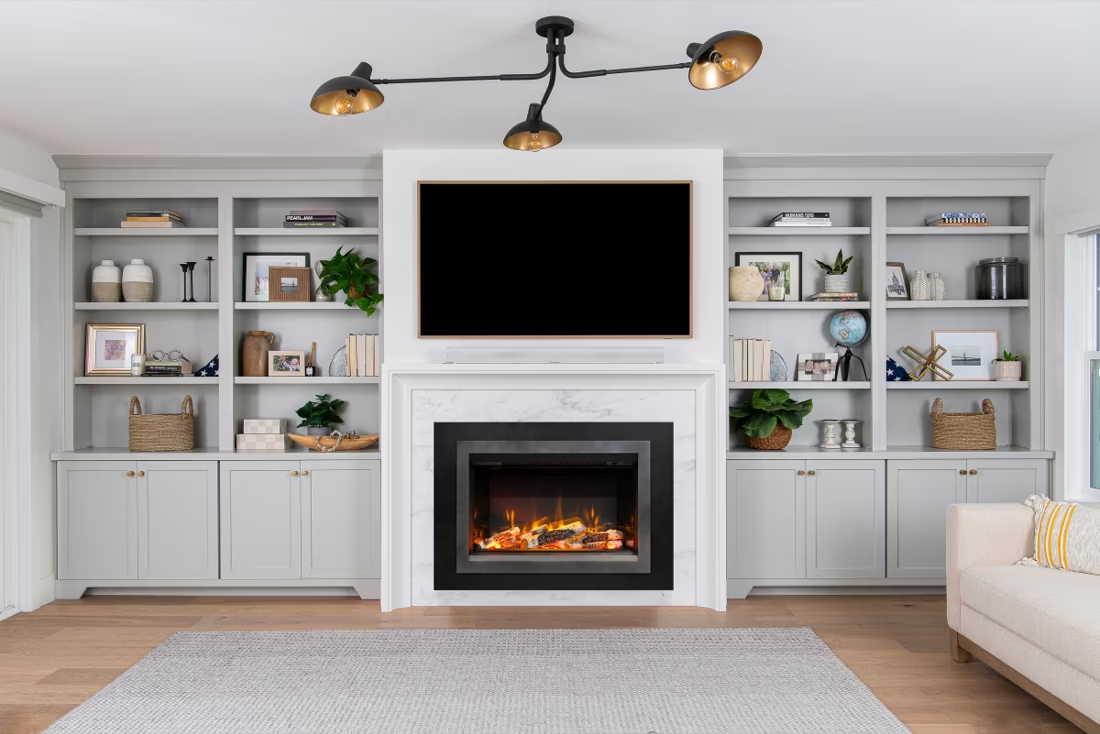
Yes—with an asterisk. Fireplaces are hot and TVs don't like heat. Either put a mantel between them to deflect rising warmth, or choose a fireplace with heat-management technology that creates a cool zone on the wall above—the wall stays around 125 degrees, barely warm, while the room still gets full heat. If you like clean lines and don't want a mantel, heat management is the answer.
What fireplace styles should I know before shopping?
Four cover most of the market: screen-front traditional (mesh front, open feel, fits craftsman homes), traditional door set (the classic look you grew up with), modern linear (wide, low, the statement piece for entertaining), and clean face contemporary (no trim—your tile or stone runs right to the fire's edge). Walk in knowing those four terms and you're ahead of most buyers.
Can I install a fireplace myself?
If you're putting a fire in your house on purpose, it's best to work with an expert. Unless you're genuinely experienced in framing, gas line, vent pipe, and the national code on clearances to combustibles, have a professional do it—and ideally the same company that sells you the fireplace, so warranty, service, and liability all live under one roof.
What is an in-home preview and do I need one?
It's a visit where a hearth professional measures your space, confirms the model you picked actually works in your home, and walks the specs—framing, gas line, venting, finish work—before anything is ordered. Some details you just can't know until you see the house. Never make a down payment without one; it's the single most-skipped step that burns buyers.
Find your electric fireplace in Dixon County.
Tell us a bit about your home and we'll match you with a trusted local dealer and send over your free Project Guide & Parts List—a clear plan for your electric fireplace project in Dixon County, right down to the wiring and mounting parts you'll need.
Find Your Fireplace →