
Steady pellet heat for Custer County's long, cold winters.
From Broken Bow out to Callaway, Ansley, Merna, and Sargent, Custer County's winters run long and the wind runs hard across the Sandhills. Find the right pellet stove or insert, and connect with a trusted local dealer who can actually get it installed.
Every Project Starts From One of These Five Situations
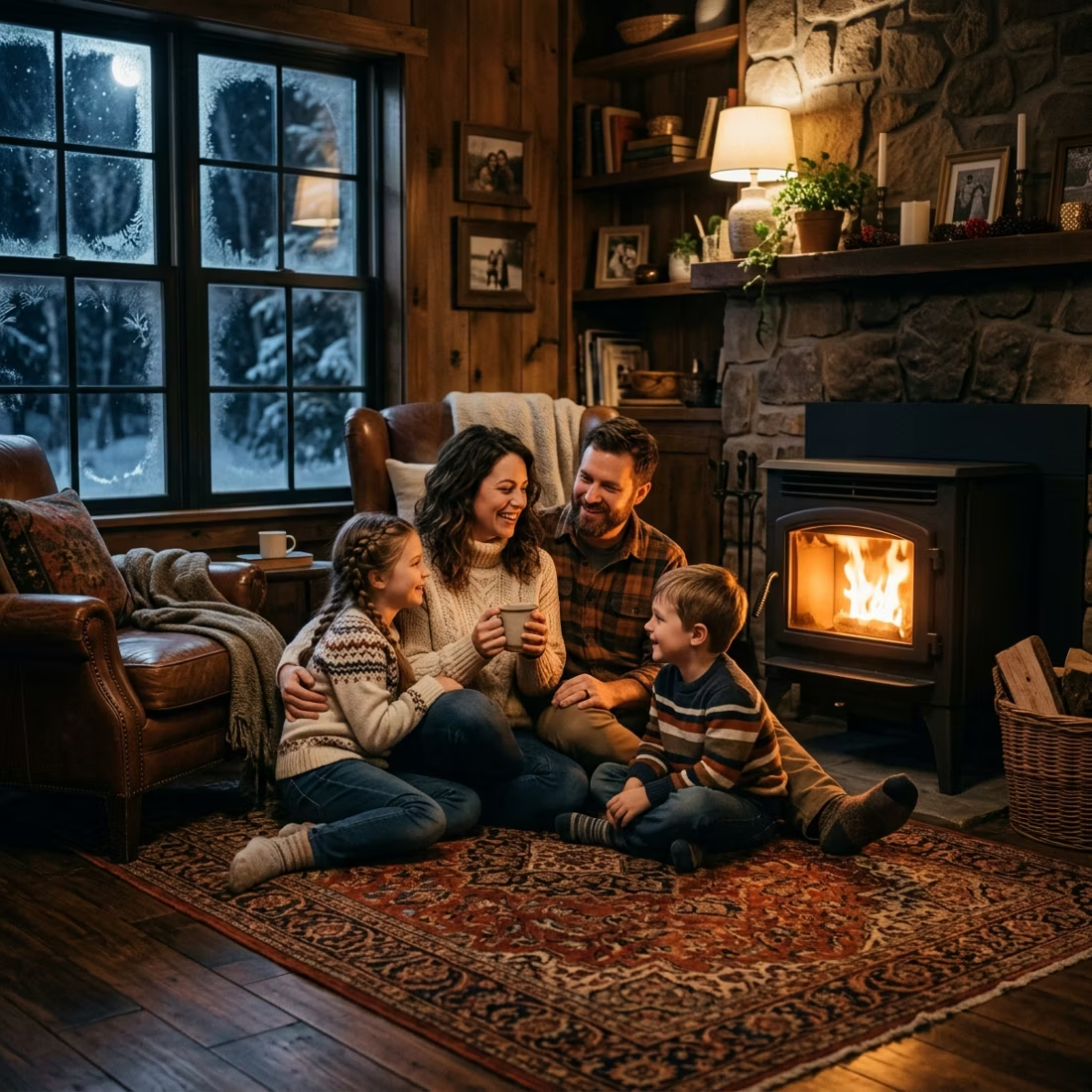
Consistent warmth without the wood-splitting work.
Custer County is Nebraska's largest county by land area, and one of its most rural—roughly 6,971 people spread across Broken Bow and small towns like Callaway, Merna, Ansley, Sargent, and Anselmo, with a lot of open Loup River valley and Sandhills grass in between. Sitting in climate zone 5A with average winter lows near 12°F, the county's heating season runs long—closer to Bismarck, ND than to anywhere on either coast. Wood heat has deep roots here, with plenty of oak, hickory, and cottonwood cut from local shelterbelts and river bottoms, but pellet stoves have become a strong second option for households that want that same radiant heat without the daily splitting and stacking.
With no air quality non-attainment issues or winter inversion restrictions to worry about in Custer County, there's nothing stopping either wood or pellet appliances on the emissions side—the choice really comes down to how much hands-on work you want. A pellet stove loads from a hopper, holds a steady burn on a thermostat, and produces a fraction of the ash of a wood stove burning local hardwood. Regional suppliers like Lignetics and Indeck Energy Services keep pellets moving through Nebraska farm and hardware distribution, which matters in a county this spread out—knowing your dealer has a reliable pellet supply chain is as important as the stove itself.
Three steps. No salesperson until you're ready.
Tell us about your project
Your zip code, your situation, and the fuel you're leaning toward—or let the answers point you to one.
See what's actually available
The brands dealers within 100 miles genuinely carry—real options, never a catalog mirage.
Get your dealer & Project Guide
A trusted local dealer, plus the free Project Guide & Parts List that names every component of the job.
Frequently Asked Questions
How much does a pellet stove installation cost in Custer County?
Across rural Nebraska, a pellet stove or insert installation typically runs $3,000 to $6,500, with the spread coming down to the unit itself, whether you need a new vent run through an exterior wall, and whether an existing masonry fireplace needs to be converted for an insert. Because Custer County is so spread out—Broken Bow to Callaway or Sargent is a real drive—some dealers based farther away (Kearney, Grand Island) may add a modest travel charge for installation. Get a firm quote after an in-home look at your setup rather than relying on a phone estimate.
What size pellet stove do I need for my Custer County home?
With winter lows averaging 12°F and dropping well below zero on the hardest nights, most Custer County homes need a mid-to-large pellet stove rather than the smallest units sold for supplemental heat. Older farmhouses and homes with 9- or 10-foot ceilings—common on Custer County acreages—generally need more hopper capacity and BTU output than a comparably sized newer, tightly insulated home in town. A local dealer can walk your square footage, ceiling height, and window count and size the unit correctly; oversizing a pellet stove wastes fuel just as much as undersizing leaves you cold on a January night.
Where can I find a pellet stove dealer near me in Custer County?
Hearth dealers are thin on the ground in a county this rural, and many Custer County homeowners end up working with an installer based in Broken Bow or driving a bit farther to Kearney or Grand Island. Look for NFI-certified installers regardless of distance—proper venting and clearance work matters just as much on a pellet unit as it does on wood, even though pellet stoves vent through a smaller, simpler pipe. Confirm ahead of time whether your dealer stocks Lignetics or comparable bagged pellets locally, since fuel availability is as important as the install itself out here.
What's the difference between a pellet stove and a pellet insert?
A pellet stove is a freestanding unit that sits on its own hearth pad and vents out through a wall or existing chimney—it works in homes without a fireplace at all, which describes a lot of the newer construction and outbuildings around Custer County. A pellet insert slides into an existing masonry fireplace opening, using the chimney chase (with a proper liner) to vent, and is the better fit if you already have a wood fireplace you want to convert to lower-maintenance heat. Both use the same hopper-and-auger mechanism; the choice mostly comes down to whether you're starting from an empty wall or an existing fireplace.
Do I need a permit to install a pellet stove in Custer County?
Nebraska doesn't require a state-level permit specifically for pellet appliances, but new venting through an exterior wall or conversion of an existing fireplace can still trigger a local building permit depending on your jurisdiction—check with the Custer County zoning and building office before work starts, especially if you're inside Broken Bow city limits versus unincorporated county land. Most established local dealers handle this coordination as part of the installation, which is one good reason to work with a certified installer rather than a DIY vent kit.
What's the best pellet stove for Custer County's climate?
For a county averaging 12°F winter lows and a long, demanding heating season, look for a pellet stove with a larger hopper (40+ pounds) so you're not refilling every few hours during a cold stretch, and a stated heat output in the 40,000-50,000 BTU range if it's your primary heat source rather than backup. Models from Harman and Enviro are common choices among rural Midwest dealers and pair well with locally distributed Lignetics pellets. If you're leaning on the stove hard during extended cold snaps, ask your dealer about bulk pellet purchasing through regional suppliers like Indeck Energy Services rather than buying bag by bag from a farm store.
How often does a pellet stove need to be cleaned and serviced?
Plan on emptying the ash pan every few days during regular winter use and a deeper cleaning of the burn pot weekly—pellet ash is fine and builds up faster than most people expect. A full professional service, including the auger, exhaust fan, and venting, is recommended once a year, ideally before the heating season starts in the fall. Rural Custer County homeowners running a pellet stove as a primary heat source through the full October-to-April season should treat that annual service as non-negotiable, since a failed auger or blocked vent in the middle of a cold snap is a real problem when the nearest dealer is a drive away.
Where can I buy pellets in Custer County?
Bagged pellets from brands like Lignetics are typically available through farm supply and hardware retailers serving the Broken Bow area, with prices fluctuating seasonally—buying your winter's supply in late summer or early fall before demand picks up is the standard advice from dealers across the Plains. For households burning heavily through a long Custer County winter, ask your dealer about ordering by the ton or ton-and-a-half at once rather than picking up bags as needed; regional suppliers like Indeck Energy Services support that kind of bulk distribution across Nebraska.
Pellet stove vs. wood stove—which makes more sense in Custer County?
Wood is free or cheap if you're cutting your own oak, hickory, or cottonwood off a shelterbelt or river-bottom acreage, works without electricity, and is the traditional choice for a lot of Custer County farmsteads. Pellet stoves trade that self-sufficiency for convenience—load the hopper, set the thermostat, and walk away—but they need electricity to run the auger and blower, which matters if you're prone to losing power in an ice storm or high-wind event, both of which happen in this part of Nebraska. Many rural households here end up with both: a wood stove or fireplace for backup heat during outages, and a pellet stove in the main living space for everyday convenience.
What's the difference between an insert and a zero-clearance fireplace?
An insert is a fireplace that slides into a pre-existing wood-burning fireplace—if you don't have one, there's nothing to insert it into. A zero-clearance fireplace is built into a framed wall, which makes it the answer for remodels and new construction. Simple test: existing masonry fireplace means insert; blank or framed wall means zero-clearance.
Are pellet stoves loud?
They make some noise—there are two fans running plus an auger motor that turns as it feeds pellets. But there's a real range: premium models are engineered quiet, and the best offer a whisper-quiet mode you can comfortably watch TV next to. If noise matters in your room, ask to hear a stove running before you buy—it's a five-minute test that saves years of annoyance.
Can a fireplace actually lower my heating bill?
Yes—by creating a comfort zone. A furnace heats every square foot of the house just to warm the one room you're in; a gas fireplace on low burns roughly a sixth of the gas a typical furnace does. Set the furnace around 55–60 degrees as a baseline, then heat the rooms your family actually uses. Families who heat this way commonly save $20–$60 a month.
Does a fireplace add value to my home?
On average, a fireplace adds back to the home about the same amount you spent installing it. Add the monthly savings from heating the rooms you actually use instead of the whole house—often hundreds of dollars a year—and the value case is strong before you even count what a fire does for how your family uses the room.
Pellet Brands Stocked Around Custer County
Manufacturers will point you to the nearest stocking dealer.
Find your pellet stove in Custer County.
Tell us a bit about your home and heating needs, and we'll match you with a trusted local dealer and a free Project Guide & Parts List—the stove, vent kit, and parts your Custer County pellet install actually needs.
Find Your Fireplace →