
Add supplemental warmth to your Custer County home—without a wood pile or gas line.
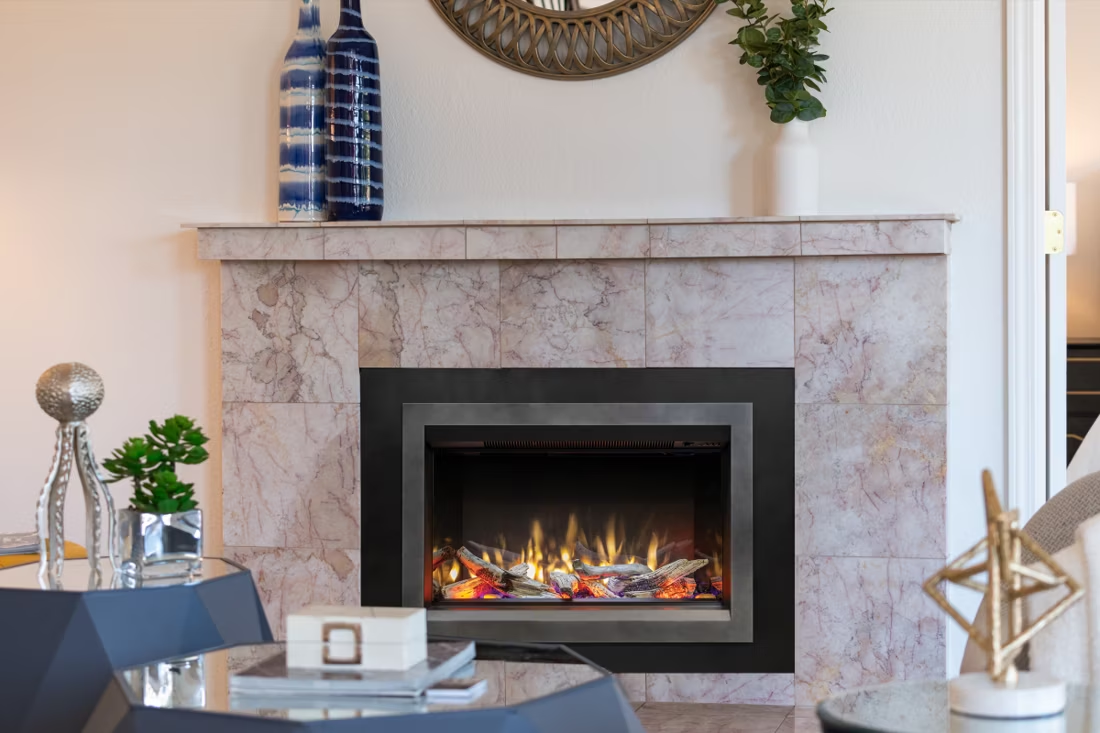
With a long, demanding heating season and winter lows averaging 12°F across the Sandhills and Loup Valley, most Custer County homes need real backup heat, not just ambiance. Electric fireplaces plug into existing wiring, need no chimney or gas line, and add honest zone heat to a room. Find the right unit and connect with a trusted local dealer.
Every Project Starts From One of These Five Situations
Simple heat, zero chimney work, zero gas line to run.
Custer County covers roughly 2,576 square miles of Sandhills and Loup River valley in central Nebraska—one of the largest counties in the state by land area, with only about 6,971 people spread across Broken Bow, Callaway, Ansley, Merna, Sargent, Arnold, Anselmo, Mason City, and the ranchland between them. Winters here are long and dry, with a Climate Zone 5A rating, an average winter low of 12°F, and a long, demanding heating season—cold enough that most homes run propane furnaces, electric heat pumps, or wood stoves burning local oak, hickory, and cottonwood as their primary source of heat.
Electric service throughout most of the county runs through Custer Public Power District, based in Broken Bow, and that reliable grid is exactly what makes electric fireplaces such an easy add-on for older farmhouses and ranch homes that were never plumbed for gas and don't have a spare flue for a wood insert. A 120-volt electric fireplace plugs into a standard outlet and adds real, adjustable zone heat to a bedroom, den, or finished basement—no permitting hassle, no venting, no combustion byproducts to worry about. It won't replace a whole-home heat source in a county with such a long, demanding heating season, but as supplemental warmth in the room you actually live in, it does the job cleanly and without any of the maintenance a wood or gas appliance requires.
Three steps. No salesperson until you're ready.
Tell us about your project
Your zip code, your situation, and the fuel you're leaning toward—or let the answers point you to one.
See what's actually available
The brands dealers within 100 miles genuinely carry—real options, never a catalog mirage.
Get your dealer & Project Guide
A trusted local dealer, plus the free Project Guide & Parts List that names every component of the job.
Frequently Asked Questions
How much does an electric fireplace installation cost in Custer County?
A plug-in electric fireplace or insert that uses a standard 120-volt outlet typically runs $300 to $900 installed, including the unit and basic setup—no electrician required if an outlet already exists near the install spot. Built-in wall units or larger inserts that need a dedicated circuit run higher, often $800 to $2,000, once you add an electrician's time to run new wiring through balloon-frame farmhouse walls or older ranch construction common around Broken Bow and Callaway. Custer Public Power District doesn't require anything special for a standard circuit addition, but a licensed electrician should still pull the county electrical permit for any new dedicated line.
Can an electric fireplace heat my whole home in Custer County?
No, and it's worth being direct about that. With such a long, demanding heating season and winter lows averaging 12°F, Custer County homes need a real primary heat source—typically a propane furnace or electric heat pump, since natural gas service is limited in this part of the county. Most electric fireplaces put out 4,000 to 5,000 BTUs, enough to noticeably warm a bedroom, den, or finished basement, but not enough to carry a farmhouse through a Sandhills cold snap on its own. Think of it as zone heat that lets you turn down the thermostat in the rooms you use most, not a furnace replacement.
Do I need a permit to install an electric fireplace in Custer County?
A plug-in unit that uses an existing outlet needs no permit at all—it's no different than plugging in a space heater. If your installer needs to add a new dedicated circuit or run wiring for a built-in wall unit, that electrical work requires a permit through Custer County's building department, and it should be pulled by a licensed electrician regardless of whether you're in Broken Bow, Callaway, or out on a rural section of the county. Most local installers handle that paperwork as part of the job.
What's the difference between an electric insert, a wall-mount unit, and a freestanding electric fireplace?
An electric insert is built to slot into an existing masonry or wood-burning fireplace opening, giving old farmhouse fireplaces a clean, code-free upgrade with no chimney maintenance. A wall-mount unit hangs flush or recessed into a wall like a flat-screen TV, popular in newer construction or remodels around Broken Bow. A freestanding electric stove or fireplace sits on the floor and can go almost anywhere there's an outlet—no fireplace opening needed, which makes it the easiest option for ranch homes and additions that never had a hearth to begin with.
What's the best electric fireplace for an older Custer County farmhouse?
For older farmhouses with knob-and-tube or updated but modest electrical service, a 120-volt plug-in insert or freestanding unit is usually the practical choice—it avoids the cost of adding new circuits in walls that weren't built for heavy loads. Look for a model with a thermostat and adjustable heat settings rather than a single on/off switch, since that gives you more control for shoulder-season use in spring and fall. If you're finishing a basement or building an addition where new wiring is already planned, a built-in wall unit on its own circuit is worth the upgrade—talk to a local dealer about your home's existing panel capacity before choosing.
Will my electric fireplace work during a power outage?
No—electric fireplaces require power to run, so they go dark the moment the grid does. That matters in Custer County, where ice storms and heavy snow can knock out Custer Public Power District service for hours or, in bad years, longer stretches in the more rural parts of the county. If backup heat during outages is a real concern for your household, pair an electric fireplace for everyday convenience with a wood stove or propane heater that can run without electricity. Plenty of local homes run both—electric for daily zone heat, wood or propane as the outage backup.
How much does it cost to run an electric fireplace in Custer County?
Most electric fireplaces draw around 1,500 watts on the heat setting, which works out to roughly 10 to 20 cents an hour to run at typical Custer Public Power District residential rates—a few dollars for an evening of use. Compare that to running a whole-house furnace, and it's easy to see why electric fireplaces are popular as supplemental heat in a specific room rather than a full heating solution: you're only paying to warm the space you're actually sitting in.
Electric vs. wood vs. pellet—which fits my Custer County home?
Wood remains common in the county given the abundance of oak, hickory, and cottonwood along the Loup River bottoms, and it works without power during outages—a real advantage given how far some homes are from the nearest lineman. Pellet stoves, using regional brands like Lignetics or Indeck Energy Services, burn cleaner and are easier to load than cordwood, but need electricity to run the auger and blower, same limitation as an electric fireplace. Electric fireplaces win on simplicity and zero maintenance—no ash, no chimney sweep, no fuel to haul—but they're purely supplemental in this climate. Many Custer County households end up with a primary propane or wood heat source and an electric fireplace for the room they spend the most time in.
Where can I find installers for electric fireplaces in Custer County?
Local hearth dealers and electricians serving Broken Bow typically cover the surrounding towns—Callaway, Ansley, Merna, Sargent, Arnold, Anselmo, and Mason City—often with a small travel charge for the more remote parts of the county. For a simple plug-in unit, many homeowners handle placement themselves and just have an electrician confirm the circuit. For a built-in wall unit or an insert going into an existing fireplace opening, working with a dealer who also coordinates the electrical work simplifies things—one call instead of managing two trades separately.
Can I put a TV above my fireplace?
Yes—with an asterisk. Fireplaces are hot and TVs don't like heat. Either put a mantel between them to deflect rising warmth, or choose a fireplace with heat-management technology that creates a cool zone on the wall above—the wall stays around 125 degrees, barely warm, while the room still gets full heat. If you like clean lines and don't want a mantel, heat management is the answer.
Does an electric fireplace need a vent or chimney?
No—that's its superpower. An electric fireplace needs a wall and an outlet, period. No vent pipe, no gas line, no clearances to design around, which is why it works in bedrooms, offices, apartments, and walls where venting a gas or wood unit would be impractical or impossible. Installation is typically the simplest and least expensive of any fireplace type.
What is an in-home preview and do I need one?
It's a visit where a hearth professional measures your space, confirms the model you picked actually works in your home, and walks the specs—framing, gas line, venting, finish work—before anything is ordered. Some details you just can't know until you see the house. Never make a down payment without one; it's the single most-skipped step that burns buyers.
Can a fireplace actually lower my heating bill?
Yes—by creating a comfort zone. A furnace heats every square foot of the house just to warm the one room you're in; a gas fireplace on low burns roughly a sixth of the gas a typical furnace does. Set the furnace around 55–60 degrees as a baseline, then heat the rooms your family actually uses. Families who heat this way commonly save $20–$60 a month.
Find your electric fireplace in Custer County.
Tell us a bit about your home and we'll match you with the right electric fireplace or insert for your space, plus a free Project Guide & Parts List—the exact parts you need and a trusted local dealer to install them.
Find Your Fireplace →