
Steady, Efficient Heat for Cuming County Winters.
Automated, thermostat-controlled warmth for farmhouses and homes along the Elkhorn River valley—from West Point to Wisner, Beemer, Bancroft, and Snyder. Find the right pellet stove and connect with a trusted local dealer.
Every Project Starts From One of These Five Situations
Consistent heat without the wood pile.
Cuming County sits in the Elkhorn River valley of northeast Nebraska, home to about 6,100 people spread across West Point and the smaller communities of Wisner, Beemer, Bancroft, and Snyder. Winters here are long and exposed—open farmland means wind-driven cold with few natural windbreaks, average winter lows near 11°F, and a heating season putting the county's heating demand in the same range as Madison, Wisconsin. For farm families managing livestock and equipment through the coldest months, a heat source that runs reliably without constant tending matters.
Unlike parts of the country where pellet stoves get pulled in by air-quality mandates, Cuming County has no such regulatory pressure—the appeal here is pure practicality. A hopper-fed pellet stove holds a steady burn for 24 hours or more, runs on a thermostat, and doesn't require splitting or stacking cordwood during calving season or harvest. Bagged pellets from regional producers like Lignetics and Indeck Energy Services move through farm co-ops and hardware stores in West Point and nearby Norfolk, and pellet stoves vent through a simple side-wall kit rather than a full masonry chimney—a practical fit for the older farmhouses and manufactured homes common throughout the county, even where local oak, hickory, and cottonwood are cheap and plentiful for those who'd rather burn cordwood instead.
Three steps. No salesperson until you're ready.
Tell us about your project
Your zip code, your situation, and the fuel you're leaning toward—or let the answers point you to one.
See what's actually available
The brands dealers within 100 miles genuinely carry—real options, never a catalog mirage.
Get your dealer & Project Guide
A trusted local dealer, plus the free Project Guide & Parts List that names every component of the job.
Frequently Asked Questions
How much does a pellet stove installation cost in Cuming County?
Most pellet stove installations in Cuming County run in the neighborhood of $3,000 to $6,500, depending on the stove model, hopper size, and whether the venting is a straightforward through-wall run or requires longer duct work for a farmhouse with thick exterior walls. Homes without an existing appliance nearby—say, a detached workshop or outbuilding conversion—sit toward the higher end once wiring for the auger and blower is factored in. Local dealers serving West Point, Wisner, and Beemer typically quote a firm price after an in-home look at the space and electrical access.
What size pellet stove do I need for a Cuming County home?
Sizing depends on square footage, ceiling height, and how drafty the home is—a real consideration in a county full of older farmhouses with less insulation than newer builds. As a rough guide: smaller units (up to 1,000 sq ft) suit a single large room or an addition, mid-size stoves (1,000–1,800 sq ft) cover most main living areas, and larger hopper-capacity units can carry a whole modest farmhouse through a hard January stretch. Given the county's winter heating load comparable to Madison, Wisconsin, it's usually worth sizing slightly up rather than down—a local dealer can walk through your floor plan and insulation before recommending a specific model.
Where can I buy pellets locally in Cuming County?
Bagged pellets are typically available through hardware stores and farm supply co-ops in and around West Point, with regional producers like Lignetics and Indeck Energy Services supplying much of the product sold in northeast Nebraska. Pricing generally runs in the $250 to $320 per ton range, with some variation depending on delivery distance from distribution points near Norfolk. Buying a full winter's supply (typically 2 to 3 tons for a mid-size stove used as primary heat) in late summer or early fall usually locks in the best pricing before demand picks up.
Do I need a permit to install a pellet stove in Cuming County?
Yes—most jurisdictions in the county require a building permit for a new pellet stove installation, along with an electrical permit if new wiring is needed for the auger and blower motor. If you're inside city limits in West Point, Wisner, Beemer, or Bancroft, that permit goes through your city's building office; in unincorporated parts of the county, it's handled through the county's building and zoning office. Local dealers who install what they sell typically pull the permit and schedule the inspection as part of the job, so you're not coordinating it yourself.
Will my pellet stove work during a power outage?
Not without backup power. Pellet stoves rely on electricity to run the auger that feeds fuel and the blower that pushes heat into the room, so a standard unit goes cold the moment power drops—a real consideration in a rural, wind-exposed county where ice storms and line damage can knock out power for stretches. Homeowners who want winter-storm resilience typically pair a pellet stove with a small battery backup or a portable generator sized to run the stove's electrical load. If outage-proof heat is the priority, a wood stove is worth weighing as a companion appliance since it needs no electricity at all.
What's the difference between a pellet stove and a pellet insert?
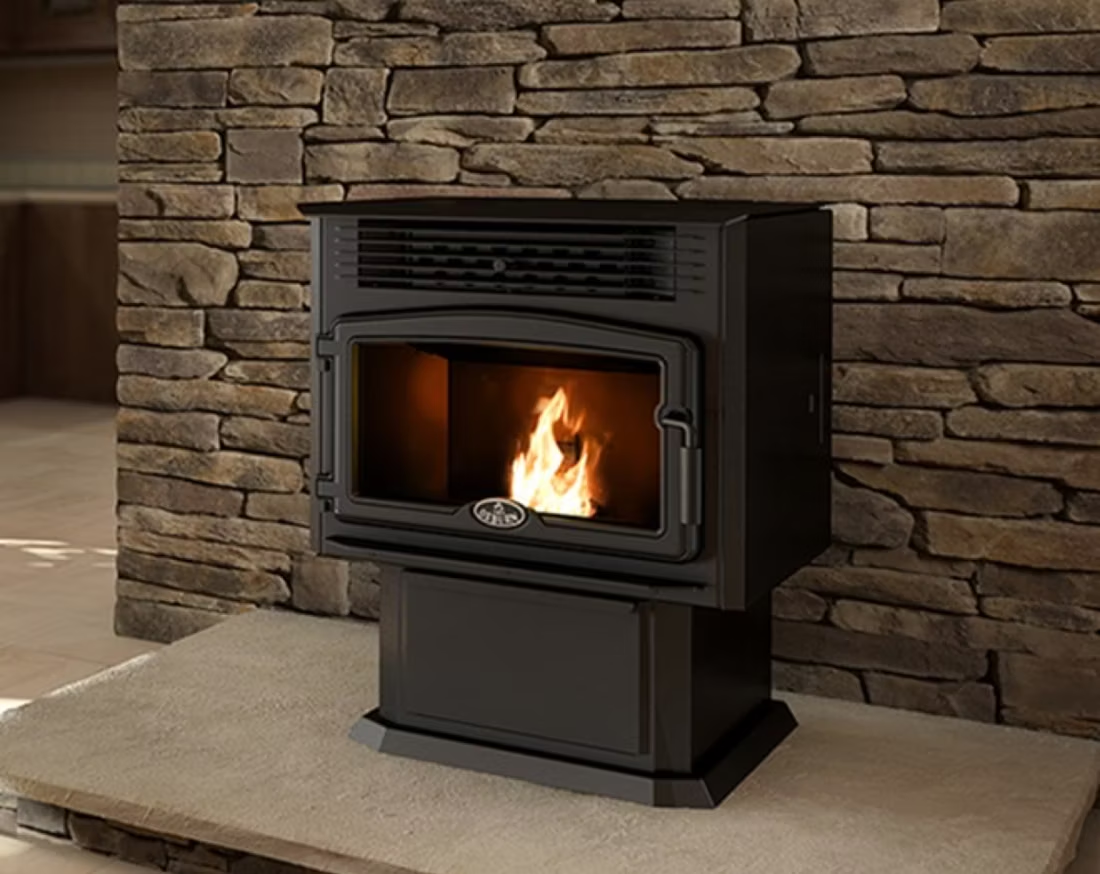
A pellet stove is a freestanding unit that sits on its own hearth pad and vents through an exterior wall or existing flue—the more common choice for Cuming County's farmhouses and homes without a masonry fireplace already in place. A pellet insert slides into an existing wood-burning fireplace opening, using the existing chimney chase (with a proper liner) to vent. Since many older homes in the county were built with an open wood fireplace decades ago, an insert can be the more cost-effective retrofit if that opening already exists; homes without one are usually better served by a freestanding stove.
How much maintenance does a pellet stove need?
Pellet stoves need more routine attention than a gas unit but less than a wood stove. Expect to empty the ash pan every few days during heavy winter use, clean the burn pot and glass weekly, and have the exhaust vent and hopper mechanism professionally serviced once a year—typically in late summer before the heating season ramps up. For a farmhouse running the stove as a primary heat source through Cuming County's full winter, staying ahead of ash buildup matters for both efficiency and safety; neglected units lose burn efficiency and can trip error codes on the auger feed.
What pellet stove brands are available through local dealers?
Regional pellet fuel comes primarily from Lignetics and Indeck Energy Services, both of which supply bagged pellets to co-ops and hardware retailers across northeast Nebraska. For the stoves themselves, dealers serving the county typically carry established names like Harman, England's Stove Works, and US Stove Company, chosen for parts availability and service support in a rural market where a technician visit means real drive time. Ask your local dealer which brands they stock parts for locally—that often matters more than the sticker specs when something needs a repair mid-winter.
Pellet stove vs. wood stove—which makes more sense in Cuming County?
Wood is genuinely cheap and abundant here—oak, hickory, and cottonwood are common on county farmland, and many families already have access to a source. Wood stoves also keep working in a power outage, a meaningful advantage in a wind-exposed rural county prone to ice-related line damage. Pellet stoves trade that self-sufficiency for convenience: no splitting, hauling, or stacking, a thermostat that holds a steady temperature, and a cleaner burn with less ash. For farm households already stretched thin during calving or harvest, that hands-off operation is often worth the electricity dependence. Some homes end up with both—pellet for daily convenience, wood as backup heat when the power's out.
Why is my open fireplace making my house colder?
Open fireplaces suck—literally. As the fire burns, it consumes air your furnace already paid to heat and pulls it out through the chimney, so the house is actually colder after the fire goes out than before you lit it. An insert fixes this: it seals the chimney, puts fixed glass across the front, and turns that hole in your house into a real heat source.
Why is a fireplace insert so efficient?
An insert does two things: it seals the chimney completely, so you stop losing air you already paid to heat, and it radiates warmth into the room through the firebox and glass. Most add a heat-exchange fan that pulls cool room air underneath, wraps it around the hot firebox, and pushes it back out warm. Your home is more efficient before you've even lit the first fire.
Can a fireplace actually lower my heating bill?
Yes—by creating a comfort zone. A furnace heats every square foot of the house just to warm the one room you're in; a gas fireplace on low burns roughly a sixth of the gas a typical furnace does. Set the furnace around 55–60 degrees as a baseline, then heat the rooms your family actually uses. Families who heat this way commonly save $20–$60 a month.
How much should I budget for a fireplace?
For an average home—covering the fireplace, the vent pipe, and basic installation—a budget between $3,900 and $5,500 gives you a lot of options across wood, gas, and pellet. By the time you add finish work, gas line, and electrical, the average complete installation lands between $5,000 and $12,000 all-in. In a remodel or new build, a good rule is to put about 2.5% of the total project cost toward the fireplace.
Pellet Brands Stocked Around Cuming County
Manufacturers will point you to the nearest stocking dealer.
Find your pellet stove in Cuming County.
Tell us a bit about your home and we'll match you with the right pellet stove or insert, plus a free Project Guide & Parts List—including the vent kit—and a trusted local dealer to install it.
Find Your Fireplace →