
Electric heat that keeps up with Cuming County's long winters.
Zone heat for farmhouses, in-town bungalows, and rental units from West Point to Bancroft—no venting, no chimney, no combustion. Find the right unit and connect with a trusted local dealer.
Every Project Starts From One of These Five Situations
Simple, safe heat for farmhouses and in-town homes alike.
Cuming County sits in northeast Nebraska's climate zone 5A, with a long, demanding winter heating season and winter lows averaging 11°F—a heat load in the same range as Madison, Wisconsin. Farmhouses around Beemer and Wisner and older homes in West Point and Bancroft often run a primary furnace but still have cold rooms—a sunporch, a finished basement, a bonus bedroom over an unheated garage—that a central system never quite reaches. That's where electric fireplaces do their best work.
With no chimney, no gas line, and no combustion byproducts to vent, an electric fireplace is one of the simplest additions to a Cuming County home. Plug-in inserts need nothing more than a standard outlet; larger built-in wall units may call for a dedicated 240V circuit, which means a licensed electrician and a quick permit through the county. Running costs are tied to what Cuming County Public Power District charges per kilowatt-hour, and most homeowners find a 1,500-watt unit costs pennies an hour to run—cheap supplemental heat compared to propping up the whole-house furnace for one cold room. The tradeoff worth knowing up front: electric heat depends entirely on grid power, so during the ice-storm outages that occasionally hit this part of Nebraska, an electric fireplace goes dark right along with everything else.
Three steps. No salesperson until you're ready.
Tell us about your project
Your zip code, your situation, and the fuel you're leaning toward—or let the answers point you to one.
See what's actually available
The brands dealers within 100 miles genuinely carry—real options, never a catalog mirage.
Get your dealer & Project Guide
A trusted local dealer, plus the free Project Guide & Parts List that names every component of the job.
Frequently Asked Questions
How much does an electric fireplace installation cost in Cuming County?
Most installations in Cuming County run $400 to $1,200. A plug-in insert that drops into an existing mantel or cabinet opening sits at the low end—it's essentially a heater with a fireplace face, and there's no wiring involved. A built-in wall unit or a larger insert that needs a dedicated 240V circuit runs higher once you add a licensed electrician's time and, in some cases, opening a wall for the new line. Local dealers serving West Point, Beemer, and Wisner will typically quote a firm number after seeing the room and the existing electrical panel capacity.
Will an electric fireplace actually heat a room, or is it just for looks?
A standard 1,500-watt electric fireplace puts out roughly 5,000 BTUs, enough to comfortably heat a well-insulated room in the 300 to 400 square foot range—a bedroom, a den, a finished basement rec room. It won't replace a furnace in a Cuming County winter with lows averaging 11°F, and it isn't designed to. Think of it as targeted heat for the room you're actually sitting in, letting you turn the thermostat down elsewhere in an older farmhouse with uneven heat distribution.
Will my electric fireplace still work if the power goes out?
No—electric fireplaces run entirely on grid power, so an outage takes them offline along with everything else in the house. That matters in Cuming County, where winter ice storms occasionally knock out service through Cuming County Public Power District for hours or longer. If you want heat that survives an outage, a wood stove burning local oak or hickory, or a propane unit with a battery-backed ignition, is the better backup. Many rural households here pair an electric fireplace for everyday convenience with a wood stove for the nights the power actually fails.
Do I need a permit to install an electric fireplace in Cuming County?
A simple plug-in insert generally doesn't require a permit since it's no different than plugging in a space heater. A built-in electric fireplace that needs new wiring or a dedicated circuit typically requires an electrical permit, handled through the county building process centered at the Cuming County Courthouse in West Point. Most licensed electricians who do this work pull the permit themselves as part of the job, so it's rarely something the homeowner has to manage directly.
How much does it cost to run an electric fireplace every month in Cuming County?
Running costs depend on your rate through Cuming County Public Power District and how many hours a day the unit is on, but a typical 1,500-watt fireplace run four hours an evening costs somewhere in the range of $10 to $20 a month at typical rural Nebraska electric rates. That's considerably cheaper than heating an entire drafty room with a central furnace, which is the main reason electric fireplaces get used as everyday supplemental heat rather than as the home's primary system.
Electric vs. wood—which makes more sense for a Cuming County home?
Wood heat has deep roots in this part of Nebraska, and with oak, hickory, and cottonwood available locally, a wood stove offers real BTU output and heat that keeps running when the power doesn't. Electric fireplaces trade that self-sufficiency for convenience—no wood to split and stack, no ash, no chimney to maintain, and instant on-off operation with a remote. For a farmhouse relying on wood as primary heat, electric makes sense as a clean, no-fuss add-on for a specific room. For a newer in-town home in West Point where the furnace already handles the bulk of the load, electric alone may be all that's needed for supplemental warmth.
What's the difference between an electric fireplace insert and a built-in wall unit?
An insert is sized to slide into an existing fireplace opening or a cabinet cutout and typically just plugs into a nearby outlet—the fastest, least invasive option for a home that already has a mantel or firebox opening. A built-in wall unit is designed to be framed into new construction or a renovated wall, often recessed flush, and usually needs a dedicated circuit run by an electrician. For most existing Cuming County homes with an old wood-burning fireplace no one uses anymore, an insert is the simpler upgrade; new construction or a remodel is a better fit for a built-in.
What's the best electric fireplace for a cold-climate Nebraska home?
Look for a unit with a true 1,500-watt heating element rated for the square footage of the room you're heating—not just an LED flame effect with a weak heater attached. Brands like Dimplex and Napoleon build electric inserts and built-ins with realistic flame technology and heaters sized for actual supplemental use, which matters more here than in milder climates given Cuming County's long, demanding winter heating season. A local dealer can match wattage and room size correctly rather than you guessing off a big-box shelf tag.
Electric vs. propane—which is better for a Cuming County home without natural gas?
Much of rural Cuming County is outside any natural gas main, so the real comparison for many homes is electric versus propane rather than electric versus natural gas. Propane fireplaces put out more heat and, with the right ignition system, can keep running during a power outage—a real advantage given occasional ice-storm outages through Cuming County Public Power District. Electric fireplaces are simpler to install, have no fuel deliveries or tank rental, and cost less upfront. If you already have a propane tank for a furnace or water heater, adding a propane fireplace is often a small incremental step; if you don't, electric avoids the cost and hassle of setting up propane service just for a fireplace.
Do electric fireplaces actually produce heat?
Yes—most put out around 4,800–5,000 BTUs from a standard outlet, which comfortably warms a bedroom, office, or den as a comfort-zone heater. What they won't do is carry a whole house the way wood, gas, or pellet can. Think of electric as ambiance-first with honest supplemental heat: flames on with no heat in July, flames plus warmth in January.
Can I put a TV above my fireplace?
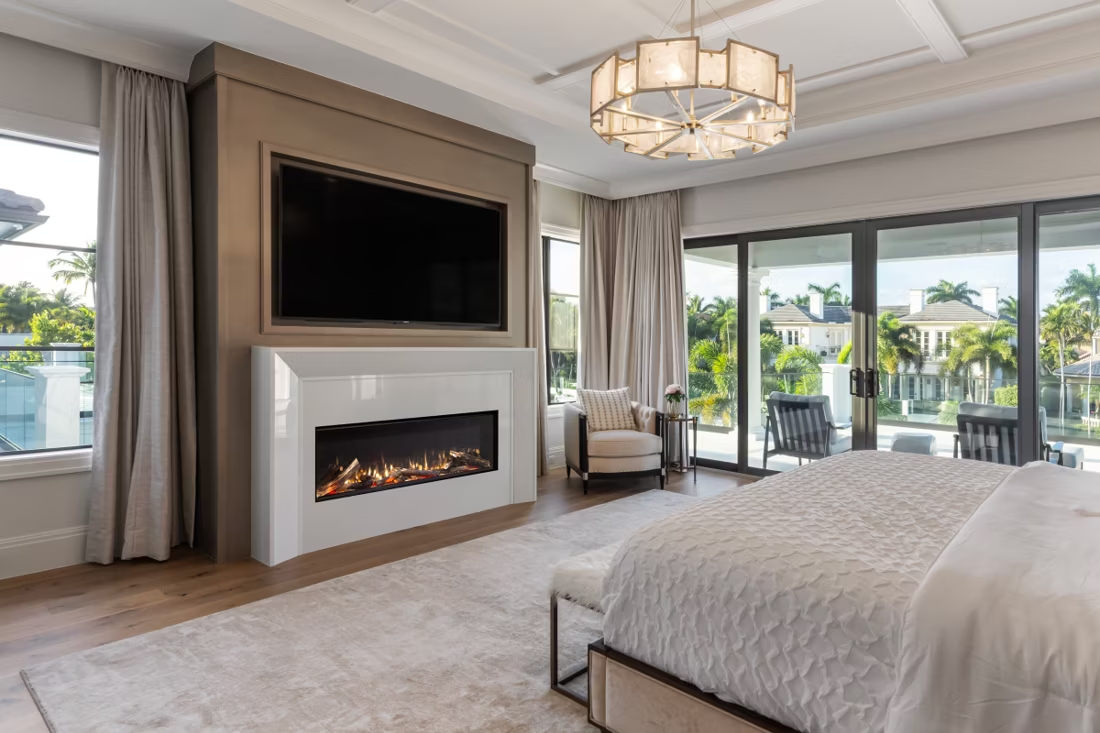
Yes—with an asterisk. Fireplaces are hot and TVs don't like heat. Either put a mantel between them to deflect rising warmth, or choose a fireplace with heat-management technology that creates a cool zone on the wall above—the wall stays around 125 degrees, barely warm, while the room still gets full heat. If you like clean lines and don't want a mantel, heat management is the answer.
Does a fireplace add value to my home?
On average, a fireplace adds back to the home about the same amount you spent installing it. Add the monthly savings from heating the rooms you actually use instead of the whole house—often hundreds of dollars a year—and the value case is strong before you even count what a fire does for how your family uses the room.
Can a fireplace actually lower my heating bill?
Yes—by creating a comfort zone. A furnace heats every square foot of the house just to warm the one room you're in; a gas fireplace on low burns roughly a sixth of the gas a typical furnace does. Set the furnace around 55–60 degrees as a baseline, then heat the rooms your family actually uses. Families who heat this way commonly save $20–$60 a month.
Find your electric fireplace in Cuming County.
Tell us about your home and the room you're trying to heat, and we'll put together a free Project Guide & Parts List—the right unit, the electrical requirements, and a trusted local dealer serving Cuming County who can install it correctly.
Find Your Fireplace →