
Keep your Clay County home warm—automatically.
Steady, thermostat-controlled heat for the farmhouses and small towns of Clay County—from Clay Center to Harvard, Fairfield, Sutton, and Edgar. Find the right pellet stove or insert, and get matched with a trusted local dealer.
Every Project Starts From One of These Five Situations
Consistent heat without the daily wood chores.
Clay County sits in the farm country of south-central Nebraska, with a population under 5,000 spread across Clay Center and small towns like Harvard, Fairfield, Sutton, Edgar, and Deweese. At climate zone 5A with an average winter low around 17°F and winters comparable to Madison, Wisconsin, cold weather here runs long and harsh, made harsher by open-plains wind with little to break it. For farm families and rural households already managing chores, calving season, or long commutes into town, a pellet stove offers something a wood-fed appliance can't: set the thermostat and walk away.
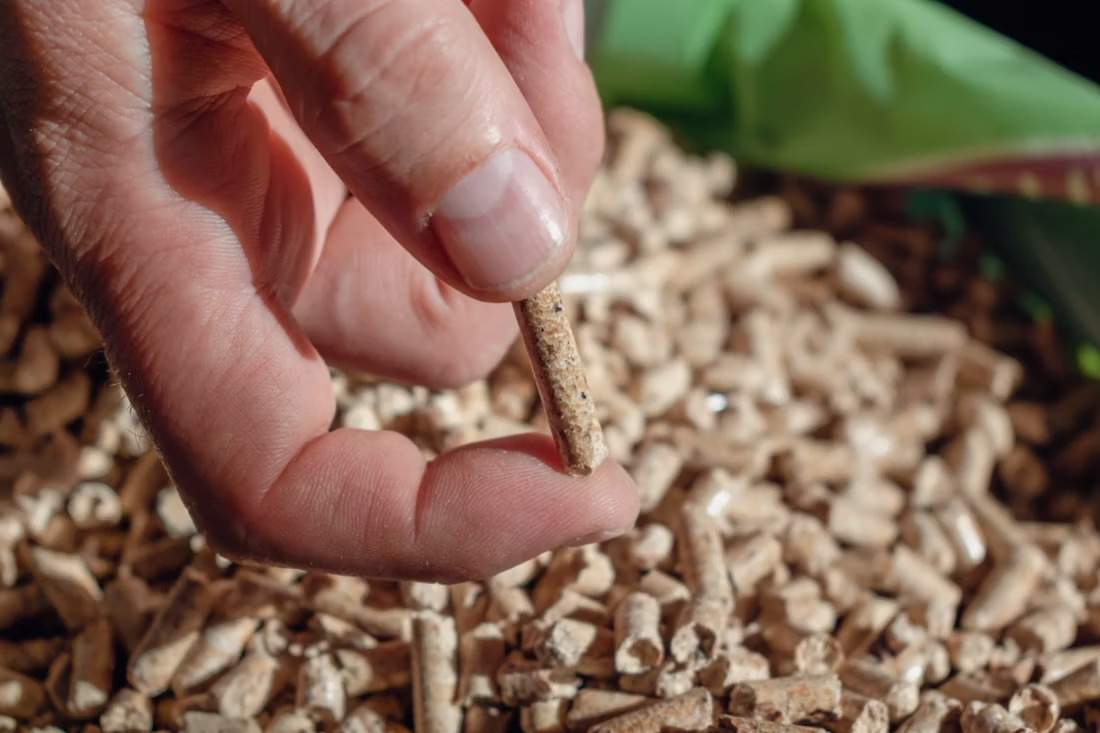
Local timber along the Republican River and Little Blue River bottomlands runs to oak, hickory, and cottonwood—good burning wood, but it still means splitting, stacking, and hauling. Pellet stoves skip that labor entirely, feeding fuel from a hopper on an auger so the fire holds steady overnight without tending. Bagged pellets from regional producers like Lignetics and Indeck Energy Services are widely available through farm co-ops and hearth dealers serving the area, so fuel supply isn't the concern it can be in more remote parts of the state. The one real trade-off worth knowing: pellet stoves need electricity to run the auger and blower, so on a county grid that sees its share of high-wind outages, a battery backup or small generator is worth planning for alongside the stove itself.
Three steps. No salesperson until you're ready.
Tell us about your project
Your zip code, your situation, and the fuel you're leaning toward—or let the answers point you to one.
See what's actually available
The brands dealers within 100 miles genuinely carry—real options, never a catalog mirage.
Get your dealer & Project Guide
A trusted local dealer, plus the free Project Guide & Parts List that names every component of the job.
Frequently Asked Questions
How much does a pellet stove installation cost in Clay County?
Pellet stove and insert installations typically run in the $3,000 to $6,000 range, depending on the unit, whether a hearth pad is needed for code clearance, and whether you're venting through an existing masonry chimney or running new through-wall pellet vent. Because pellet stoves need a dedicated electrical outlet for the auger and blower motor, budget for that as part of the install if your chosen location doesn't already have one nearby. A local dealer serving Clay County can give you a firm number after seeing the space in person.
What size pellet stove do I need for my Clay County home?
Sizing depends on square footage, insulation, and whether the stove is your primary heat source or a supplement to a furnace. Many homes in Clay County are older farmhouses with less insulation than newer construction, so it's common to size up rather than down—a stove rated for the low end of your square footage on paper may still struggle on the coldest, windiest nights when the plains wind cuts through an older structure. Hopper capacity matters too: a larger hopper means fewer refills during a stretch of sub-20°F weather. A local dealer can walk through your specific home and recommend a model that matches both square footage and how hard the wind hits your particular site.
Where can I find a pellet stove dealer near Clay County?
With a population under 5,000 spread across small towns, Clay County itself has limited hearth retail directly in-county—most residents work with dealers based in nearby Hastings, York, or Grand Island who regularly service Clay Center, Harvard, Fairfield, Sutton, and Edgar. Look for a dealer who installs pellet appliances specifically (not just wood or gas), since venting requirements and electrical needs differ. Expect a modest travel charge built into quotes for installs out in the more rural parts of the county—it's standard practice for install work this far from town.
What's the difference between a pellet stove and a pellet insert?
A pellet stove is a freestanding unit that sits on a hearth pad and vents through a wall or existing chimney—it can go almost anywhere with the right clearances, including a mudroom, shop, or detached garage. A pellet insert is built to slide into an existing masonry fireplace opening, converting an old open hearth into an automated heat source while reusing the chimney you already have. For Clay County farmhouses with an existing fireplace that's rarely used because it's inefficient, an insert is often the more practical upgrade. For outbuildings, additions, or homes without an existing fireplace, a freestanding stove is the simpler install.
Do I need a permit to install a pellet stove in Clay County?
Most pellet stove installations require a building permit, and any new electrical circuit for the unit may need an electrical permit as well. Check with the Clay County zoning and building office before work begins—rules can vary depending on whether the install is inside city limits (Clay Center, Sutton, Edgar) or out in unincorporated parts of the county. Most established local dealers handle permitting as part of the installation, so it's worth asking upfront whether that's included in your quote.
What's the best pellet stove for Clay County's climate and wind?
For a climate with average winter lows around 17°F and frequent plains wind, look for a stove with a larger hopper capacity so you're not refilling multiple times a day during a cold snap, and confirm the unit has a reliable auto-ignition and thermostat control—features that matter most when you're relying on the stove to run unattended overnight. Brands commonly available through regional dealers, such as Harman and Lopi, are built for exactly this kind of steady, cold-climate use. Fuel-wise, pellets from Lignetics or Indeck Energy Services are both readily stocked through farm co-ops and hearth retailers serving the area, so supply shouldn't be a concern once you've picked a model.
How often does a pellet stove need cleaning and maintenance?
Pellet stoves need far less maintenance than a wood stove, but they're not maintenance-free. Plan on emptying the ash pan every few days during regular use, cleaning the burn pot weekly to keep the fire burning cleanly, and having the unit professionally serviced once a year—typically in late summer before heating season starts—to clean the exhaust venting, check the auger motor, and inspect the gaskets. Skipping the annual service is the most common reason pellet stoves start running inefficiently or shutting off unexpectedly mid-winter.
Where can I buy pellets near Clay County?
Bagged pellets from regional producers like Lignetics and Indeck Energy Services are commonly stocked at farm co-ops, hardware stores, and hearth dealers serving Hastings, York, and Grand Island, all within reasonable driving distance of Clay Center. Buying a season's supply in the fall—rather than a bag or two at a time mid-winter—is the standard approach for rural households here, since a single cold snap can burn through fuel faster than expected and availability can tighten during the coldest stretches.
Pellet stove vs. wood stove—which is right for my Clay County home?
Wood stoves burn local oak, hickory, or cottonwood, work without electricity, and are the better choice if you want a true backup heat source during a winter power outage—something worth weighing seriously given how exposed Clay County is to high-wind storms. Pellet stoves trade that off for real convenience: no splitting or stacking, thermostat-controlled heat, and cleaner burning with far less ash. For a primary residence with reliable power and a household that values low daily effort, pellet usually wins. For a shop, cabin, or anyone prioritizing storm-proof heat, wood remains the safer bet. Some Clay County households run both—pellet for daily comfort, a wood stove or fireplace as the backup plan.
What's the difference between an insert and a zero-clearance fireplace?
An insert is a fireplace that slides into a pre-existing wood-burning fireplace—if you don't have one, there's nothing to insert it into. A zero-clearance fireplace is built into a framed wall, which makes it the answer for remodels and new construction. Simple test: existing masonry fireplace means insert; blank or framed wall means zero-clearance.
Can a pellet stove heat a whole house?
It genuinely can. I burned a pellet stove as my only heat source for years after a furnace died, and it kept the entire house warm. Pellets feed automatically from a hopper, so you get wood-heat economics with thermostat-style control. Two honest caveats: it needs weekly cleaning during the season, and most models need electricity to run—ask about battery backup if outages are a concern.
Does a fireplace add value to my home?
On average, a fireplace adds back to the home about the same amount you spent installing it. Add the monthly savings from heating the rooms you actually use instead of the whole house—often hundreds of dollars a year—and the value case is strong before you even count what a fire does for how your family uses the room.
Can a fireplace actually lower my heating bill?
Yes—by creating a comfort zone. A furnace heats every square foot of the house just to warm the one room you're in; a gas fireplace on low burns roughly a sixth of the gas a typical furnace does. Set the furnace around 55–60 degrees as a baseline, then heat the rooms your family actually uses. Families who heat this way commonly save $20–$60 a month.
Pellet Brands Stocked Around Clay County
Manufacturers will point you to the nearest stocking dealer.
Find your pellet stove in Clay County.
Tell us about your home and we'll match you with the right pellet stove or insert, plus a free Project Guide & Parts List—the exact parts, including the vent kit, and our recommended local dealer for your Clay County installation.
Find Your Fireplace →