
Plug-in comfort for Clay County's long winters.
Electric inserts, freestanding units, and built-in linear fireplaces for Clay County homes, from Clay Center to Sutton to Harvard. No chimney, no gas line—just plug-in warmth and ambiance you can add to almost any room, matched with a trusted local dealer.
Every Project Starts From One of These Five Situations
Heat where you need it, without new duct work.
Clay County is farm country—roughly 4,800 people spread across Clay Center, Sutton, Harvard, Fairfield, Edgar, and the surrounding townships in south-central Nebraska. It sits in climate zone 5A with a long, demanding heating season and winter lows that average 17°F, so the heating season here runs long and the cold is real. Perennial Public Power District keeps the lights and outlets running across the county, including out on the farmsteads between towns, which is part of why electric fireplaces work as well here as they do—the infrastructure to support one is already in every home.
Most Clay County households aren't looking to replace their furnace or propane system with an electric fireplace—they're adding heat and ambiance to a specific room where running a flue or gas line doesn't make sense: a finished basement, a sunroom addition, a primary bedroom in an older Clay Center or Fairfield farmhouse. Plenty of properties in the county also have a woodlot of oak, hickory, or cottonwood already feeding a wood stove elsewhere in the house, so electric fills a different role—quick, clean, no-mess heat in the one room that needs it, installed in an afternoon rather than a multi-day chimney project.
Three steps. No salesperson until you're ready.
Tell us about your project
Your zip code, your situation, and the fuel you're leaning toward—or let the answers point you to one.
See what's actually available
The brands dealers within 100 miles genuinely carry—real options, never a catalog mirage.
Get your dealer & Project Guide
A trusted local dealer, plus the free Project Guide & Parts List that names every component of the job.
Frequently Asked Questions
How much does an electric fireplace installation cost in Clay County?
Because electric units skip the chimney, gas line, and venting work that wood and gas installs require, they're consistently the least expensive hearth project in Clay County. A basic plug-in electric insert or freestanding unit that uses a standard 120-volt outlet typically runs $300 to $1,500 installed, with little more than mounting and trim work involved. A built-in linear electric fireplace set into a wall or new construction, which usually needs a dedicated 20-amp circuit run by a licensed electrician, runs closer to $1,500 to $4,000 depending on wall framing, trim, and whether it's a remodel or new build. Farmhouse remodels around Sutton and Fairfield that involve opening up plaster or lath walls tend to land at the higher end simply because of the extra carpentry.
Do I need a permit to install an electric fireplace in Clay County?
Clay County requires an electrical permit any time a fireplace is wired into a dedicated circuit or tied into your home's panel—that applies whether you live in Clay Center or out on a farmstead near Deweese or Ong. A simple plug-in unit that uses an existing outlet typically doesn't trigger a permit at all. If your project involves running new wire, adding a circuit, or altering your panel, your electrician will pull the permit through the Clay County building office as part of the job.
Will an electric fireplace heat my whole house through a Clay County winter?
No—and this is worth saying plainly. Clay County sits in climate zone 5A with a long, demanding heating season and winter lows averaging 17°F, which is a real heating load. Most electric fireplaces are rated around 1,500 watts, or roughly 5,000 BTU, which is enough to comfortably heat a single room of 400 to 1,000 square feet but nowhere near enough for a whole farmhouse or even a full main floor. Electric fireplaces in this county are almost always installed as supplemental zone heat—a bonus room, a finished basement, a primary bedroom—while a furnace or propane system carries the rest of the load through the winter.
What's the difference between an electric insert, freestanding unit, and built-in linear fireplace?
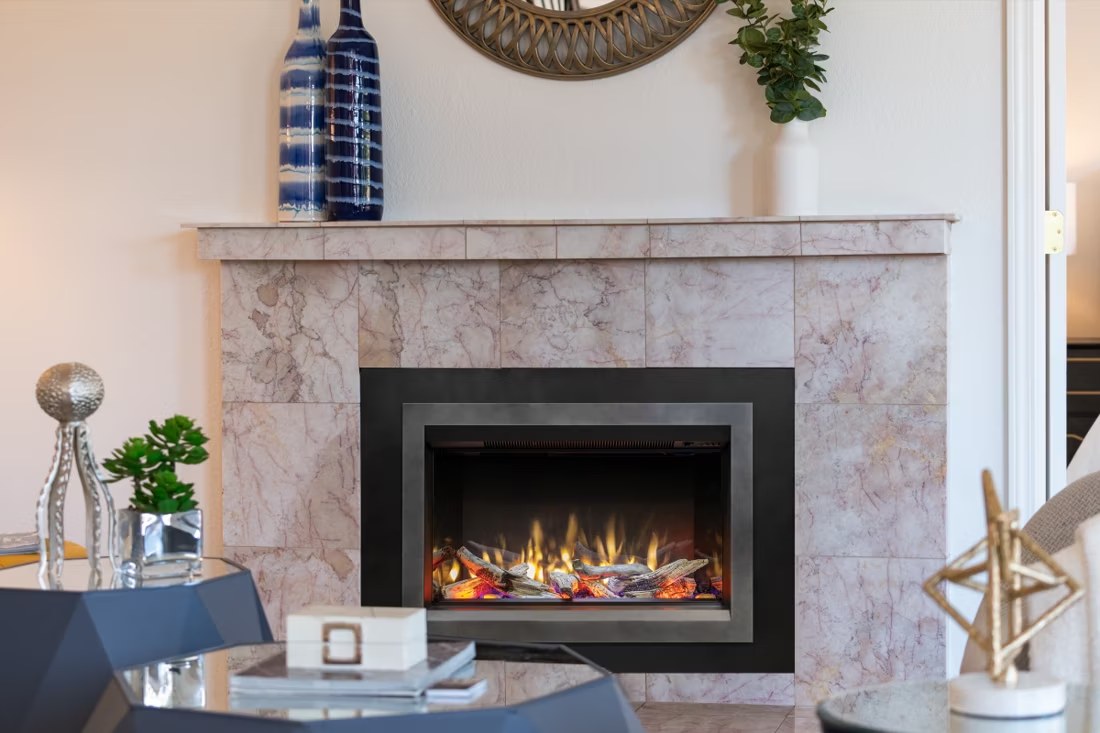
An electric insert is sized to slide into an existing masonry or wood-burning fireplace opening, giving old farmhouse hearths in Clay County a second life without any chimney work. A freestanding electric stove or mantel unit sits on the floor and can go anywhere there's an outlet, which makes it popular in additions and finished basements. A built-in linear electric fireplace is framed into a wall like a piece of custom cabinetry—it's the choice for new construction or full remodels where you want a wide, modern look rather than a traditional firebox. All three run on standard household power and none require venting.
Will my electric fireplace still work if the power goes out?
No. This is the trade-off that comes with electric heat: if the power goes out, the fireplace goes out with it. That matters in a farming county like Clay, where ice storms and high-wind events can knock out rural lines for hours or longer. Electric fireplaces are a great source of zone heat and ambiance on a normal winter night, but they aren't a backup plan for an outage the way a wood stove burning oak or hickory is. Homes that want outage-proof heat alongside electric convenience often pair an electric fireplace in one room with a wood or propane appliance elsewhere in the house.
What's the best electric fireplace for a Clay County home?
For Clay County living rooms and bonus rooms, realistic flame technology has come a long way—brands like Dimplex and Napoleon make electric inserts and linear units with LED flame effects that read convincingly even in daylight, plus a heater you can run independently of the flame during the shoulder seasons. For older farmhouses with an existing fireplace opening, an insert-style unit from either brand is usually the simplest fit. A local dealer can walk you through flame quality, heater output, and trim options in person rather than off a spec sheet.
How much does it cost to run an electric fireplace in Clay County?
Electric fireplaces are inexpensive to run compared to the ambiance they provide. Perennial Public Power District, which serves Clay County, bills residential customers in the neighborhood of $0.10 to $0.14 per kilowatt-hour. A typical 1,500-watt electric fireplace running on its heater setting costs roughly 15 to 21 cents an hour—a few dollars for an evening of use. Running the flame effect alone, without the heater engaged, costs a fraction of that.
Electric vs. wood—which is right for my Clay County home?
Plenty of Clay County properties already have a woodlot or windbreak full of oak, hickory, or cottonwood, and burning it in a wood stove is a real primary or supplemental heat source that keeps working through a power outage. Electric doesn't compete with that on raw heat output or resilience. What electric offers instead is convenience: no cutting, splitting, or hauling wood, no chimney to sweep, no smoke, and a fireplace you can add to a bedroom or basement in an afternoon. Many households in the county end up with both—wood heat for the shop or main living area, electric for a room where running a flue isn't practical.
Where can I find an electric fireplace dealer near Clay County?
Clay County itself is small enough that most hearth retailers with showroom inventory are based in Hastings or Grand Island, a short drive from Clay Center, Sutton, or Harvard. That's normal for a rural county this size, and it doesn't mean you're on your own—a trusted local dealer will still handle delivery, any electrical work, and trim-out for your specific home, whether that's a Clay Center bungalow or a farmstead outside Edgar. Find My Fireplace matches you with the right one for your project.
Can I put a TV above my fireplace?
Yes—with an asterisk. Fireplaces are hot and TVs don't like heat. Either put a mantel between them to deflect rising warmth, or choose a fireplace with heat-management technology that creates a cool zone on the wall above—the wall stays around 125 degrees, barely warm, while the room still gets full heat. If you like clean lines and don't want a mantel, heat management is the answer.
Do electric fireplaces actually produce heat?
Yes—most put out around 4,800–5,000 BTUs from a standard outlet, which comfortably warms a bedroom, office, or den as a comfort-zone heater. What they won't do is carry a whole house the way wood, gas, or pellet can. Think of electric as ambiance-first with honest supplemental heat: flames on with no heat in July, flames plus warmth in January.
What is an in-home preview and do I need one?
It's a visit where a hearth professional measures your space, confirms the model you picked actually works in your home, and walks the specs—framing, gas line, venting, finish work—before anything is ordered. Some details you just can't know until you see the house. Never make a down payment without one; it's the single most-skipped step that burns buyers.
Can a fireplace actually lower my heating bill?
Yes—by creating a comfort zone. A furnace heats every square foot of the house just to warm the one room you're in; a gas fireplace on low burns roughly a sixth of the gas a typical furnace does. Set the furnace around 55–60 degrees as a baseline, then heat the rooms your family actually uses. Families who heat this way commonly save $20–$60 a month.
Find your electric fireplace in Clay County.
Tell us about your room and we'll match you with a trusted local dealer serving Clay County—plus a free Project Guide & Parts List for your electric fireplace project, with the exact parts and a dealer recommendation, no showroom guesswork required.
Find Your Fireplace →