
Consistent Heat for Panhandle Winters, Without the Wood Pile.
Thermostat-controlled heat for the wind-scoured high plains around Sidney, Lodgepole, Dalton, Gurley, and Potter. Find the right pellet stove or insert, and connect with a trusted local dealer.
Every Project Starts From One of These Five Situations
Efficient, thermostat-controlled heat built for the high plains.
Cheyenne County sits in the far western Nebraska Panhandle, high plains country at roughly 4,200 feet around Sidney, the county seat, with Lodgepole, Dalton, Gurley, and Potter spread across the farmland and rangeland beyond. This is Climate Zone 5A, with a long, demanding heating season, winter lows averaging around 14°F, and the kind of relentless prairie wind that makes a house feel colder than the thermometer suggests—not unlike winters in Fargo, ND. Unlike areas dealing with winter inversions or wood-smoke advisories, Cheyenne County has no air quality restrictions on solid-fuel heating, so a pellet stove here is purely a heating decision, not a permitting or curtailment one.
Pellet stoves have found a steady following across the county for a simple reason: they deliver strong, steady heat output without the splitting, stacking, and daily tending that cordwood demands—a real consideration on farms and ranches where winter daylight and time are both short. Bulk and bagged pellets from producers like Lignetics and Indeck Energy Services move through the same farm-and-ranch supply network that already serves this part of the Panhandle—Bomgaars, headquartered right in Sidney, is a familiar name for exactly this kind of fuel and hardware. For homeowners here, a pellet stove or insert means set-it-and-forget-it heat, a smaller footprint than a full wood setup, and a fuel that's easy to store and rotate through a heating season that often runs from October into April.
Three steps. No salesperson until you're ready.
Tell us about your project
Your zip code, your situation, and the fuel you're leaning toward—or let the answers point you to one.
See what's actually available
The brands dealers within 100 miles genuinely carry—real options, never a catalog mirage.
Get your dealer & Project Guide
A trusted local dealer, plus the free Project Guide & Parts List that names every component of the job.
Frequently Asked Questions
How much does a pellet stove installation cost in Cheyenne County?
Installed pellet stoves in this part of the Panhandle typically run $3,500 to $7,500 depending on the unit and venting path. Because pellet stoves vent through a small-diameter pipe out a side wall rather than requiring a full masonry chimney, installation is usually simpler and less costly than a comparable wood stove—the biggest cost driver is usually whether you're fitting a pellet insert into an existing fireplace opening or placing a freestanding stove where no venting currently exists. Homes outside Sidney, in Lodgepole, Dalton, Gurley, or Potter, may see a modest travel charge added by installers based out of Sidney or nearby Scottsbluff.
What size pellet stove do I need for my home?
Sizing depends on square footage, insulation, and how exposed your home is to wind—a real factor on the open Cheyenne County plains, where a farmhouse can lose heat far faster than an in-town home of the same size. As a rough guide, small units (up to 1,000 sq ft) suit a single room or ranch outbuilding, medium units (1,000–2,000 sq ft) cover most main living areas, and large units (2,000+ sq ft) can carry a whole well-insulated home. Older, drafty farmhouses outside Sidney and Lodgepole often need to size up compared to newer, tighter construction in town, similar to how homes in wind-exposed cold-climate towns like Fargo, ND typically run larger stoves than their square footage alone would suggest. A local dealer will size your space during an in-home visit rather than guessing off a chart.
Where can I buy pellets locally in Cheyenne County?
Regional brands like Lignetics and Indeck Energy Services supply pellets through the farm-and-ranch retail network that already covers this part of the Panhandle, including Bomgaars, which is headquartered right in Sidney. Bagged pellets (40-lb bags) are the most common purchase for smaller stoves, while some households buy by the ton on pallets ahead of winter to lock in pricing and avoid mid-season shortages. Expect to pay in the range of $250 to $320 per ton depending on brand, quantity, and whether you're buying bagged or bulk. Because Cheyenne County is rural, plan ahead—a single trip to stock up before the first hard freeze is easier than repeated runs once roads get icy.
What's the difference between a pellet stove and a pellet insert?
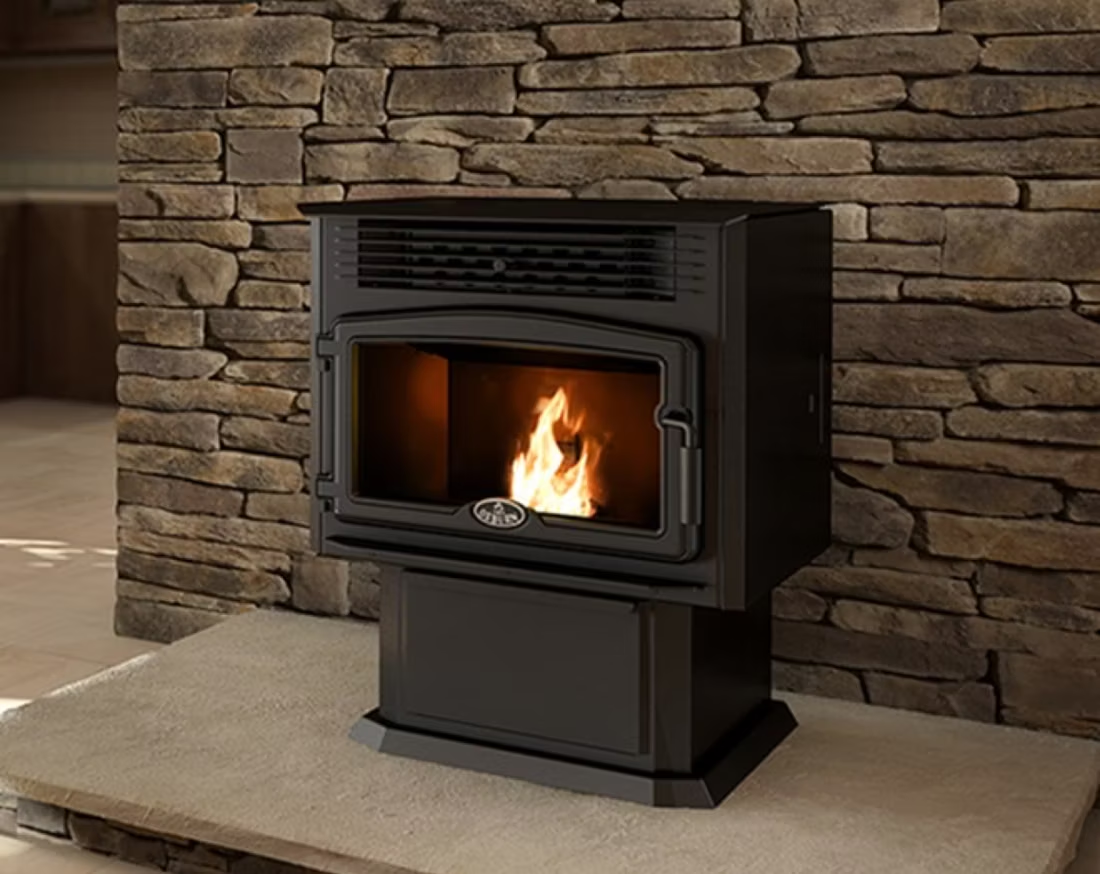
A pellet stove is a freestanding unit that sits on its own hearth pad and vents through a wall or existing chase—it can go almost anywhere with the right clearances, which makes it a good fit for outbuildings, shops, and homes without an existing fireplace. A pellet insert is built to slide into an existing masonry or prefab fireplace opening, turning an old wood-burning fireplace into an efficient, thermostat-controlled heat source using the existing chimney chase for the vent liner. For Cheyenne County homes with an existing fireplace they rarely use because it's inefficient, an insert is usually the more cost-effective upgrade. New construction or rooms without a fireplace already in place are better suited to a freestanding stove.
Do I need a permit to install a pellet stove in Cheyenne County?
In most cases, yes—new solid-fuel appliance installations typically require a permit through Cheyenne County's building department, or through the City of Sidney's building office if your home falls within city limits. Pellet stoves are generally simpler to permit than wood stoves since the venting is a small-diameter pipe rather than a full masonry chimney, and there's no local air quality curtailment program to navigate. Most local installers handle the permitting paperwork as part of the job, so confirm with your dealer up front rather than assuming it's on you to file.
What's the best pellet stove for Cheyenne County's climate?
With a long, demanding heating season and winter lows averaging around 14°F—plus wind that drives the effective chill lower—Cheyenne County homes benefit from a higher-BTU pellet stove with a large hopper capacity, so you're not refilling every few hours during an overnight cold snap. Brands commonly carried by regional hearth dealers, including Harman, Quadra-Fire, and Enviro, offer models built for exactly this kind of extended, high-output burn. Look for a unit with a reliable auto-ignition auger and a thermostat mode, which suits the set-and-forget heating style that works well on farms and ranches where nobody wants to babysit a fire through a blizzard. A local dealer familiar with wind-exposed Panhandle homes can match hopper size and BTU output to your square footage.
How much maintenance does a pellet stove need?
Pellet stoves need more frequent light maintenance than wood stoves but far less heavy lifting. Plan to empty the ash pan and clean the burn pot every few days during regular winter use, wipe the glass as needed, and vacuum the hopper and auger area every few weeks. An annual professional service—checking the exhaust blower, venting, and auger motor—is recommended before each heating season, ideally in late summer or early fall before the first cold front rolls through the Panhandle. Skipping annual service is the most common reason a pellet stove underperforms or shuts down mid-winter.
What happens to my pellet stove during a power outage?
This is worth planning for in Cheyenne County, where high plains wind and ice can knock out rural power for hours or longer. Pellet stoves rely on electricity to run the auger that feeds fuel and the blower that distributes heat, so a standard pellet stove will not operate during an outage. Homeowners who want backup-capable heat often pair a pellet stove with a small battery backup unit or a portable generator sized to run the stove's low electrical draw, or they keep a wood stove or insert as secondary heat—a natural fit given how common oak, hickory, and cottonwood are in this region. If reliable off-grid backup heat is a priority for your household, say so when you talk to a local dealer; it changes which unit and backup setup they'll recommend.
Pellet stove vs. wood stove—which is right for my Cheyenne County home?
Wood stoves burn cordwood—often oak, hickory, or cottonwood cut and split locally—and keep working with no electricity at all, which matters during Panhandle power outages. They require more hands-on tending: splitting, stacking, loading, and cleaning a full chimney system. Pellet stoves trade that labor for convenience: load the hopper, set the thermostat, and let the auger do the rest, with easier venting and generally lower installation costs. The tradeoff is the electrical dependency covered above. Many Cheyenne County households land on pellet for the main living space because of the low-maintenance, thermostat-like heat, while keeping a wood-burning option on hand as backup for extended outages.
Why is a fireplace insert so efficient?
An insert does two things: it seals the chimney completely, so you stop losing air you already paid to heat, and it radiates warmth into the room through the firebox and glass. Most add a heat-exchange fan that pulls cool room air underneath, wraps it around the hot firebox, and pushes it back out warm. Your home is more efficient before you've even lit the first fire.
How often does a pellet stove need cleaning?
A clean pellet stove is a happy pellet stove. Plan on cleaning the burn pot about once a week when you're burning regularly—ash and clinkers gum up the air holes just like a pellet barbecue. Most pellet stove problems trace back to skipped cleaning that nobody explained up front. Some designs make it easy with a trapdoor burn pot: pull a lever and the gunk drops into the ash pan.
What is an in-home preview and do I need one?
It's a visit where a hearth professional measures your space, confirms the model you picked actually works in your home, and walks the specs—framing, gas line, venting, finish work—before anything is ordered. Some details you just can't know until you see the house. Never make a down payment without one; it's the single most-skipped step that burns buyers.
How much should I budget for a fireplace?
For an average home—covering the fireplace, the vent pipe, and basic installation—a budget between $3,900 and $5,500 gives you a lot of options across wood, gas, and pellet. By the time you add finish work, gas line, and electrical, the average complete installation lands between $5,000 and $12,000 all-in. In a remodel or new build, a good rule is to put about 2.5% of the total project cost toward the fireplace.
Pellet Brands Stocked Around Cheyenne County
Manufacturers will point you to the nearest stocking dealer.
Find your pellet fireplace in Cheyenne County.
Tell us about your home and we'll match you with a trusted local dealer and send you a free Project Guide & Parts List—the exact parts, vent kit, and dealer recommendation for your pellet stove or insert project in Cheyenne County.
Find Your Fireplace →