
Find the right electric fireplace for your Cheyenne County home.
No venting, no gas line, no chimney—just plug-in warmth for Sidney and the surrounding Panhandle communities. Get matched with a trusted local dealer who installs it right.
Every Project Starts From One of These Five Situations
Simple, flexible heat for a place where every room counts.
Cheyenne County sits high on the Nebraska Panhandle at around 4,300 feet, and with roughly 6,680 heating degree days and average winter lows near 14°F, it's colder here for longer than most people expect from Nebraska—closer to what you'd feel in Fargo or Bismarck than a typical Midwest winter. Sidney and the smaller communities scattered across the county's ranchland see plenty of wind-driven cold, and older farmhouses and downtown Sidney homes alike often have rooms that central heat struggles to keep comfortable.
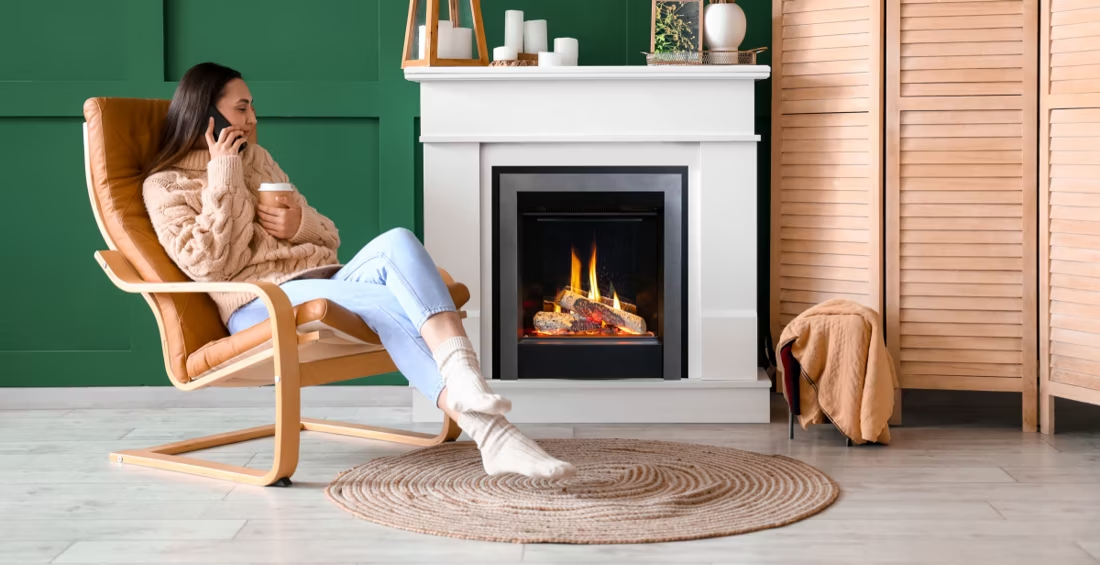
That's where electric fireplaces earn their place. They don't replace a furnace here—nobody's heating a whole Panhandle house through a January cold snap on electric resistance alone—but for a chilly bonus room, a finished basement, a home office, or a rental property where you want ambiance without touching gas lines or masonry, an electric insert or wall unit does the job with zero venting and a same-day install. It's also one of the only fireplace options that works in homes with no chimney and no gas service at all, which describes a fair number of properties outside Sidney's core.
Three steps. No salesperson until you're ready.
Tell us about your project
Your zip code, your situation, and the fuel you're leaning toward—or let the answers point you to one.
See what's actually available
The brands dealers within 100 miles genuinely carry—real options, never a catalog mirage.
Get your dealer & Project Guide
A trusted local dealer, plus the free Project Guide & Parts List that names every component of the job.
Frequently Asked Questions
How much does an electric fireplace installation cost in Cheyenne County?
Most electric fireplace installations in Cheyenne County run $400 to $1,200. A plug-in insert that drops into an existing fireplace opening or a wall-mounted unit on a standard 120V outlet is on the low end—often just the cost of the unit and a quick mounting job. Built-in units that require a dedicated 240V circuit or recessed wall framing run higher, since that means an electrician alongside the installer. Compared to venting a gas line or building a chimney for wood, electric is by far the least expensive fireplace category to install in the county.
Do I need a permit to install an electric fireplace in Cheyenne County?
Usually not for a plug-in insert or freestanding unit—those don't involve gas lines, venting, or structural changes, so they typically fall outside permit requirements. If your project involves adding a new dedicated circuit or breaker for a hardwired built-in unit, that electrical work generally does require a permit and should be pulled by a licensed electrician. Your local dealer can tell you which category your specific unit and installation fall into before work starts.
Will an electric fireplace actually heat my Cheyenne County home?
It will heat a room, not a house. Electric fireplaces are zone heaters—most put out around 4,000 to 5,000 BTUs, enough to noticeably warm a bedroom, den, or basement family room, but not enough to carry a whole home through a Panhandle winter with average lows around 14°F. For Cheyenne County, the realistic use case is supplemental heat: taking the edge off a cold room so you can turn the thermostat down elsewhere, or adding comfort to a space your furnace ductwork doesn't reach well, which is a common issue in older Sidney homes with add-on rooms.
What's the difference between an electric insert and a built-in electric fireplace?
An electric insert is sized to slide into an existing fireplace opening—including old wood-burning fireboxes that are no longer used—and plugs into a standard outlet in most cases. A built-in electric fireplace is designed to be framed into a wall during a remodel or new construction, often wired to a dedicated circuit for full heat output, and finished flush with drywall or a surround. For Cheyenne County homes with an existing but unused masonry fireplace, an insert is usually the simpler and cheaper path. For a new room addition or a remodel with no existing firebox, a built-in gives more design flexibility.
Can I install an electric fireplace myself?
A basic plug-in insert or freestanding electric fireplace can often be a DIY job—it's not much more involved than mounting a TV and plugging it in. Where it makes sense to bring in a local dealer is sizing the unit correctly for the room, making sure the surround and clearances meet the manufacturer's fire-safety specs, and handling any built-in unit that needs a new circuit. Given how affordable most electric installs are in Cheyenne County to begin with, the cost of professional installation is usually modest relative to the peace of mind.
What's the best electric fireplace for a Nebraska Panhandle winter?
Look for a unit with a real heater fan rated at 4,000-5,000 BTUs rather than a decorative-only model, since Cheyenne County rooms genuinely need the supplemental warmth during long stretches of sub-freezing weather. A thermostat control (rather than just high/low settings) helps the unit run efficiently overnight without cycling constantly. For drafty older Sidney homes, a insert model that seals into the old firebox opening also helps cut down on the cold air infiltration that a leaky, unused chimney can let in.
Does an electric fireplace work during a power outage?
No—and this is worth being upfront about, especially in a county where winter storms can knock out power for hours at a time. Electric fireplaces are entirely dependent on grid power; there's no battery backup or standby pilot like some gas units have. If backup heat during an outage matters to you, a wood stove or a gas unit with battery-backed ignition is a better fit as your primary or secondary heat source, with an electric fireplace reserved for everyday zone heating rather than emergency use.
Electric vs. gas fireplace—which is right for my Cheyenne County home?
Gas delivers real, whole-room heat output and can be sized to actually contribute to your home's heating load, plus many units keep working in a power outage with battery-backed ignition—a real consideration given Panhandle winter storms. Electric costs far less to install, requires no gas line or venting, and works in any room with an outlet, but it's supplemental heat only. For a Sidney home already on natural gas or propane with a room that needs serious heat, gas is usually the better long-term investment. For a rental, a basement, or a room where low upfront cost and simplicity matter more than heating capacity, electric is the practical choice.
Are there local wood or pellet alternatives worth considering instead?
Cheyenne County has a real wood-burning tradition—oak, hickory, and cottonwood are all common locally—and pellet stoves stocked with regional brands like Lignetics are a legitimate option for anyone wanting more heat output than electric can offer, with the ash cleanup being lighter than cordwood. If your main goal is genuine backup heat during outages or lower fuel costs over a Panhandle winter, it's worth having a local dealer walk you through wood and pellet options side by side with electric before you commit—the right choice really does depend on how you plan to use the room.
Does an electric fireplace need a vent or chimney?
No—that's its superpower. An electric fireplace needs a wall and an outlet, period. No vent pipe, no gas line, no clearances to design around, which is why it works in bedrooms, offices, apartments, and walls where venting a gas or wood unit would be impractical or impossible. Installation is typically the simplest and least expensive of any fireplace type.
Do electric fireplaces actually produce heat?
Yes—most put out around 4,800–5,000 BTUs from a standard outlet, which comfortably warms a bedroom, office, or den as a comfort-zone heater. What they won't do is carry a whole house the way wood, gas, or pellet can. Think of electric as ambiance-first with honest supplemental heat: flames on with no heat in July, flames plus warmth in January.
What is an in-home preview and do I need one?
It's a visit where a hearth professional measures your space, confirms the model you picked actually works in your home, and walks the specs—framing, gas line, venting, finish work—before anything is ordered. Some details you just can't know until you see the house. Never make a down payment without one; it's the single most-skipped step that burns buyers.
Does a fireplace add value to my home?
On average, a fireplace adds back to the home about the same amount you spent installing it. Add the monthly savings from heating the rooms you actually use instead of the whole house—often hundreds of dollars a year—and the value case is strong before you even count what a fire does for how your family uses the room.
Find your electric fireplace in Cheyenne County.
Tell us a bit about your home and we'll put together a free Project Guide & Parts List—the right unit, the exact parts, and a trusted local Cheyenne County dealer to install it.
Find Your Fireplace →