
Pellet heat built for Cedar County's long Nebraska winters.
From Hartington to Laurel, Coleridge, Randolph, and Wynot, Cedar County sees roughly 7,000 heating degree days a year and winter lows near 10°F. I'll match you with a trusted local dealer who can size a pellet stove correctly for your farmhouse or in-town home and hand you a free planning packet before you spend a dime.
Every Project Starts From One of These Five Situations
Consistent, thermostat-controlled heat for northeast Nebraska's coldest months.
Cedar County sits up along the Missouri River bluffs in northeast Nebraska, population just over 5,000 spread thin across Hartington, Laurel, Coleridge, Randolph, Wynot, and a handful of smaller unincorporated communities. Climate zone 5A here means roughly 7,025 heating degree days a year and winter lows that average around 10°F—cold enough to sit in the same range as places like Fargo or Bismarck in a hard winter, with open farm country and wind chill that makes exposed sites feel colder than the thermometer says. Wood heat has deep roots in this part of Nebraska, drawing on local oak, hickory, and cottonwood, but pellet appliances have become the practical choice for a lot of households who want that same radiant warmth without the cutting, splitting, and hauling that farm work already demands.
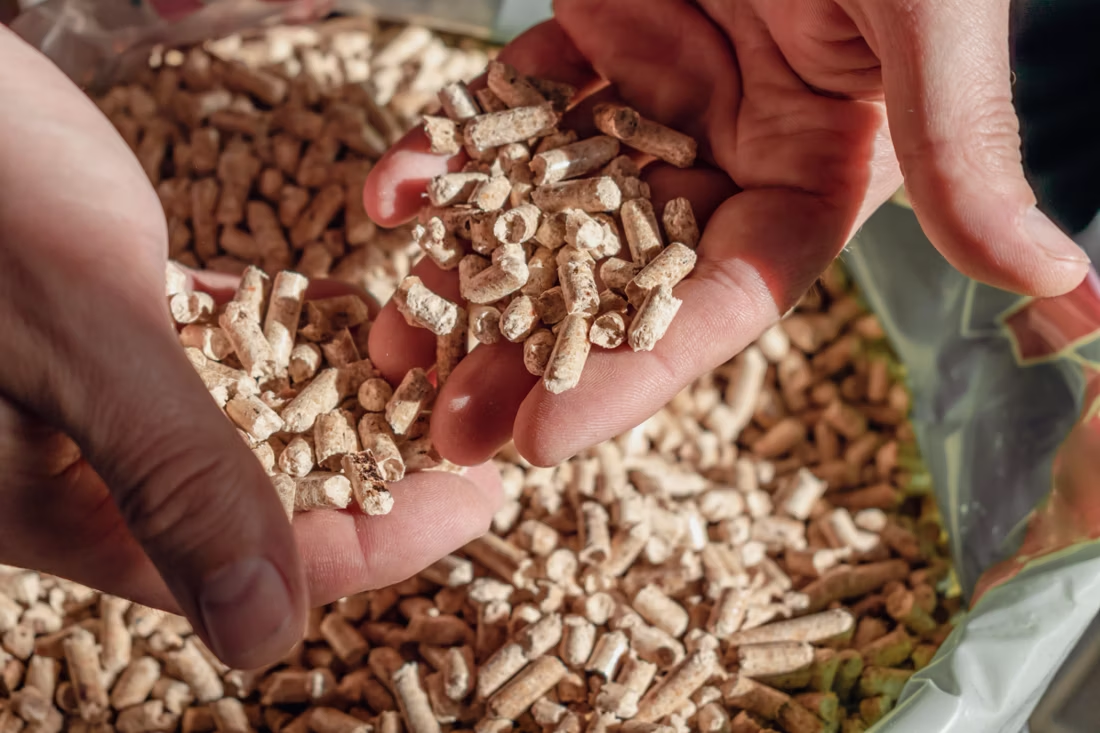
Cedar County has no air-quality curtailment periods or non-attainment restrictions to work around, so there's no burn-ban season to plan your heating around like there is in some western valleys—pellet stoves here are purely a heating and convenience choice, not a compliance one. Regional pellet supply runs through brands like Lignetics and Indeck Energy Services, both of which process a lot of hardwood byproduct from mills working the oak and hickory common to this region, so fuel is generally easy to source through farm stores and co-ops in the area. A pellet stove's automated hopper feed and thermostat control are a real advantage on a working farm property—set it and it holds a steady temperature through a long cold snap without someone tending a fire at 2 a.m.
Three steps. No salesperson until you're ready.
Tell us about your project
Your zip code, your situation, and the fuel you're leaning toward—or let the answers point you to one.
See what's actually available
The brands dealers within 100 miles genuinely carry—real options, never a catalog mirage.
Get your dealer & Project Guide
A trusted local dealer, plus the free Project Guide & Parts List that names every component of the job.
Frequently Asked Questions
How much does a pellet stove installation cost in Cedar County?
Most pellet stove installations in Cedar County run in the $3,000 to $6,500 range, depending on the unit, whether you need a new hearth pad, and the electrical work required for the auger motor and combustion blower. Pellet stoves vent through a smaller-diameter pipe than wood stoves and don't require a full masonry chimney, which keeps venting costs down compared to a wood install. Rural properties outside Hartington, Laurel, or Coleridge may see a modest travel charge added to the quote given the driving distance between towns in a county this spread out. A local dealer will give you a firm number after seeing your home.
What size pellet stove do I need for a Cedar County home?
Sizing depends on square footage, insulation, and whether the stove is your primary heat or a supplement to propane or electric furnace heat. Given Cedar County's roughly 7,025 heating degree days, most in-town homes in Hartington or Laurel do well with a medium-output stove rated for 1,200 to 2,000 square feet, while larger farmhouses or homes with less insulation often need a bigger unit or a second stove to cover a shop or outbuilding separately. Older farmhouses with drafty additions or high ceilings should size up rather than down—an undersized stove will run at max output constantly and still not keep up on the coldest nights. A local dealer will walk your home and size it properly rather than guessing off square footage alone.
Pellet stove vs. wood stove—which makes more sense in Cedar County?
Wood stoves burn cordwood, work with zero electricity, and pair naturally with the oak, hickory, and cottonwood already common on Cedar County properties—a real advantage during winter power outages, which do happen out here during ice storms. Pellet stoves trade that off-grid resilience for convenience: load the hopper, set the thermostat, and the auger and blower handle the rest, with far less ash and no splitting or stacking. For farms already cutting and seasoning their own wood, a wood stove often makes economic sense. For households that want set-and-forget heat without the labor, pellet is usually the better fit—just plan for a battery backup or small generator if you're relying on it during outages.
Do I need a permit to install a pellet stove in Cedar County?
Yes—a permanently installed pellet stove typically requires a building permit through the county, administered out of Hartington for unincorporated areas, or through the local town office if you're inside Laurel, Coleridge, Randolph, or Wynot city limits. Most local hearth dealers handle the permit paperwork as part of the installation, so this usually isn't something you have to coordinate yourself. Because pellet stoves need a dedicated electrical circuit for the auger and blower, an electrical permit is sometimes required alongside the building permit—your installer will know which applies to your specific setup.
What's the best pellet stove for Cedar County's cold, windy winters?
For a county averaging 7,025 heating degree days, look for a pellet stove with a larger hopper capacity—40 to 60 pounds—so it can run overnight without refilling during the coldest stretches. Higher-efficiency models with a good thermostat or room-sensing control hold a steadier temperature through Nebraska's wind-driven cold, which matters more here than in a sheltered site since exposed farm properties lose heat faster than in-town lots. A local dealer can match hopper size and BTU output to your home's exposure and insulation rather than a generic square-footage chart.
How much maintenance does a pellet stove need?
Pellet stoves need more frequent attention than a wood stove but far less than most people expect: daily or every-other-day ash removal from the burn pot during heavy winter use, a weekly cleaning of the glass and hopper area, and a full professional service once a year—typically before the heating season starts in the fall. The service check covers the auger, igniter, blower motors, and venting. Because pellet stoves run mechanical components continuously during a Cedar County cold snap, skipping the annual service is the most common reason for a mid-winter breakdown.
Will my pellet stove work during a power outage?
No—this is worth being direct about. Pellet stoves depend on electricity to run the auger that feeds fuel and the blower that distributes heat, so a standard pellet stove will shut down the moment power drops. For Cedar County properties where winter ice storms or line damage can knock out power for a stretch, that's an important limitation to plan around. Some households pair a pellet stove with a small backup generator or a battery power station sized for the stove's low wattage draw, which can keep it running through a multi-hour outage. If off-grid backup heat during outages is the priority, a wood stove is the more reliable choice for that specific use case.
Where can I buy pellets in or near Cedar County?
Pellet fuel is generally available through farm stores, hardware stores, and co-ops serving Hartington and the surrounding towns, with regional brands like Lignetics and Indeck Energy Services commonly stocked given their hardwood-byproduct sourcing from mills working oak and hickory in this part of the Midwest. Pricing typically runs in the $230 to $290 per ton range depending on brand and season, and buying a full winter's supply—usually 2 to 3 tons for an average Cedar County home—before the coldest months is the standard approach, since local supply can tighten up once cold weather sets in.
Pellet vs. propane—which is right for my Cedar County home?
Propane is common as a whole-home heating fuel across rural Cedar County, and it offers effortless, thermostat-driven heat with no fuel handling on your end beyond scheduling tank deliveries. A pellet stove offers similar hands-off convenience for zone heating in a main living area, but with fuel you load yourself and store on-site rather than a buried or above-ground tank—which some households prefer for cost control and independence from delivery schedules. Many Cedar County homes run propane as the primary furnace fuel and add a pellet stove in the main living space to cut furnace runtime during the coldest stretches and keep one room warm even if the furnace is cycling less efficiently on a bitter night.
Why is my open fireplace making my house colder?
Open fireplaces suck—literally. As the fire burns, it consumes air your furnace already paid to heat and pulls it out through the chimney, so the house is actually colder after the fire goes out than before you lit it. An insert fixes this: it seals the chimney, puts fixed glass across the front, and turns that hole in your house into a real heat source.
What do I measure to size a fireplace insert?
Four numbers tell you what fits: the front width, the front height, the back width, and the overall depth of your existing fireplace opening. Grab a tape measure, jot those down, and snap a photo of the wall—those two things do more to move your project forward than anything else you can do today.
Can a fireplace actually lower my heating bill?
Yes—by creating a comfort zone. A furnace heats every square foot of the house just to warm the one room you're in; a gas fireplace on low burns roughly a sixth of the gas a typical furnace does. Set the furnace around 55–60 degrees as a baseline, then heat the rooms your family actually uses. Families who heat this way commonly save $20–$60 a month.
What is an in-home preview and do I need one?
It's a visit where a hearth professional measures your space, confirms the model you picked actually works in your home, and walks the specs—framing, gas line, venting, finish work—before anything is ordered. Some details you just can't know until you see the house. Never make a down payment without one; it's the single most-skipped step that burns buyers.
Pellet Brands Stocked Around Cedar County
Manufacturers will point you to the nearest stocking dealer.
Find your pellet stove in Cedar County.
Tell me a bit about your home and I'll match you with a trusted local dealer and put together a free Project Guide & Parts List—the stove, venting, and hopper setup sized right for your Cedar County winter.
Find Your Fireplace →