
Pellet heat that holds steady through a Cass County winter.
From Plattsmouth to Louisville to Weeping Water, Cass County homeowners are turning to hopper-fed pellet stoves for clean, thermostat-controlled heat. Find the right unit and connect with a trusted local dealer.
Every Project Starts From One of These Five Situations
Consistent heat without the woodpile.
Cass County sits in the Missouri and Platte river valleys of eastern Nebraska, a patchwork of farmland and small towns—Plattsmouth, Louisville, Weeping Water, Murdock, Avoca—on the edge of the Omaha-Lincoln corridor. Winters here are genuinely cold: a Climate Zone 5A designation, roughly 6,188 heating degree days, and average lows around 12°F, putting the county in the same heating-load territory as Madison, Wisconsin, even though it feels closer to home than the upper Midwest. That's enough cold-weather demand to make supplemental heat a real budget line, not a novelty.
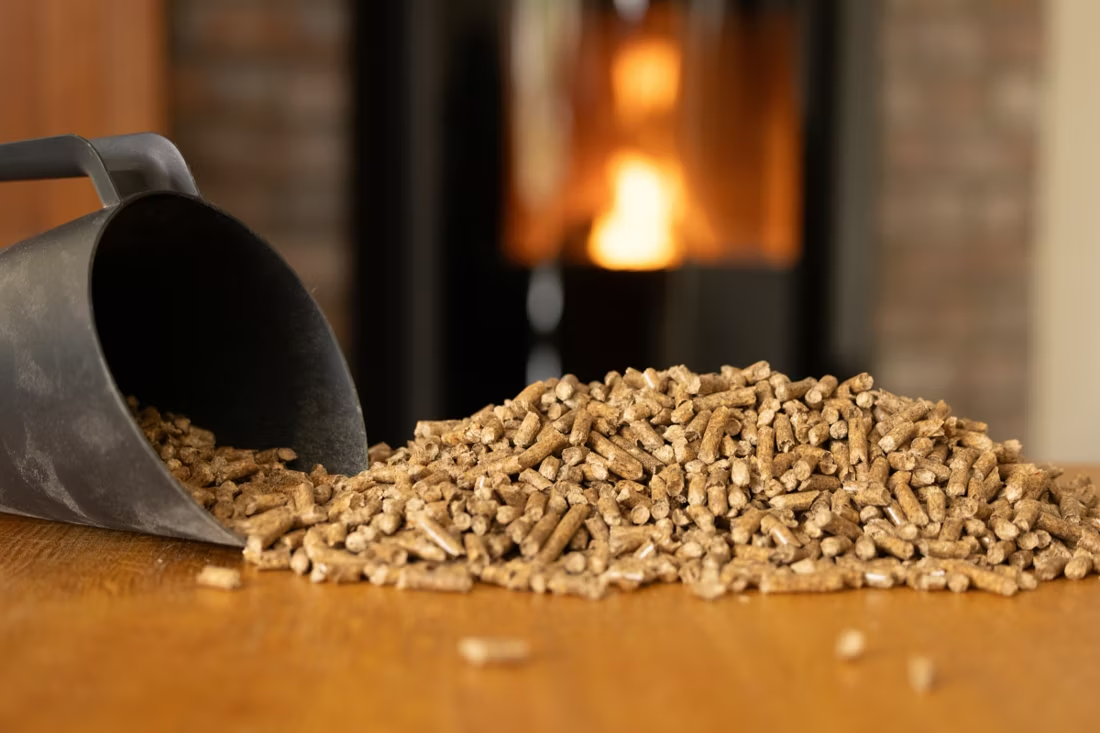
The county's river-bottom timber—oak, hickory, cottonwood—has long supplied local firewood, but not every household wants to cut, split, stack, and season cordwood every fall. Pellet stoves solve that trade-off: bagged fuel from regional suppliers like Lignetics and Indeck Energy Services, an auger-fed burn that holds a steady output for 12-24 hours per hopper load, and thermostatic control that doesn't require tending a fire at 2 a.m. Cass County has no air-quality non-attainment designation and no winter burn-curtailment periods, so a pellet stove here runs on its own merits—convenience and clean combustion—rather than as a workaround for local smoke restrictions.
Three steps. No salesperson until you're ready.
Tell us about your project
Your zip code, your situation, and the fuel you're leaning toward—or let the answers point you to one.
See what's actually available
The brands dealers within 100 miles genuinely carry—real options, never a catalog mirage.
Get your dealer & Project Guide
A trusted local dealer, plus the free Project Guide & Parts List that names every component of the job.
Frequently Asked Questions
How much does a pellet stove installation cost in Cass County?
A typical pellet stove installation runs in the neighborhood of $3,000 to $6,500 in this part of eastern Nebraska, depending on the unit, whether it's a freestanding stove or an insert going into an existing fireplace opening, and how much venting work is required. Freestanding stoves venting through an exterior wall on the low end; inserts requiring a liner or masonry modification on the higher end. Homes in Plattsmouth or Louisville with easy dealer access typically see straightforward quotes; installs in more rural parts of the county, like out toward Avoca or Union, may include a small travel charge. Ask any local dealer for a firm estimate after an in-home look at your chimney or wall layout.
What size pellet stove do I need for my Cass County home?
Sizing depends on square footage, ceiling height, and insulation—and a lot of Cass County's housing stock includes older farmhouses around Weeping Water and Murdock that leak more heat than newer construction in Plattsmouth subdivisions. As a rough guide: small hoppers and lower BTU units suit a single room or a supplemental-heat setup, while mid-size pellet stoves (40-60 lb hopper, higher BTU output) can carry a whole main living area through a 12°F night. Given the county's roughly 6,188 heating degree days, undersizing is the more common mistake—a stove that's too small will run at max output constantly and burn through pellets fast without keeping up. A local dealer will size your space for free.
Where can I find certified pellet stove installers near Cass County?
Look for NFI (National Fireplace Institute) certified technicians—that credential covers pellet appliance venting, electrical hookup, and clearance requirements specifically. Because Cass County is small and rural, several of the dealers who serve Plattsmouth, Louisville, and the surrounding towns also cover the Omaha-Lincoln metro corridor, which means solid selection despite the county's population of under 14,000. Avoid having a pellet stove installed by a general handyman—the electrical connection for the auger motor and blower, plus proper wall or roof venting, is specialized work that affects both safety and warranty coverage.
What's the difference between a pellet stove and a pellet insert?
A pellet stove is a freestanding unit that sits on its own hearth pad and vents through an exterior wall or existing chimney—it can go almost anywhere with a nearby outside wall, which makes it flexible for the ranch-style and farmhouse layouts common around Cass County. A pellet insert is built to slide into an existing masonry fireplace opening, converting an old wood-burning fireplace into an automated, thermostat-controlled heat source while reusing the existing chimney chase. If your Cass County home already has a masonry fireplace that mostly sits unused, an insert is usually the more cost-effective route than a full stove installation.
Do I need a permit to install a pellet stove in Cass County?
In most cases, yes—a building permit is required for a new pellet stove installation, whether that's through your local city building department (Plattsmouth, Louisville, and Weeping Water each handle permits within their own limits) or Cass County's building department for unincorporated areas. Most established dealers handle the permitting as part of the installation, so it's rarely something homeowners have to navigate alone. Because pellet stoves are UL-listed appliances installed to manufacturer specifications, inspections tend to be quick compared to masonry chimney work.
What's the best pellet stove for a Cass County winter?
For a climate with average lows around 12°F and roughly 6,188 heating degree days, prioritize hopper capacity and BTU output over aesthetics alone—a 40-pound-plus hopper cuts down on how often you're refilling during a stretch of sub-20-degree nights. Pellets themselves are widely available regionally through suppliers like Lignetics and Indeck Energy Services, so fuel supply isn't the limiting factor here; stove capacity is. Local dealers carrying brands with reliable auger feed systems and easy-clean burn pots tend to hold up best for daily winter use in this part of Nebraska. Bring your square footage and insulation details to a dealer consultation for a specific model recommendation.
How much maintenance does a pellet stove need?
Pellet stoves need more frequent, lighter maintenance than wood stoves—daily ash removal from the burn pot during heavy winter use, a weekly hopper and auger check, and a full professional service once a year to clean the exhaust venting, inspect the gaskets, and check the blower motors. Because pellet appliances rely on electricity and moving parts (auger motor, combustion blower, convection fan), an annual service catches wear before it becomes a mid-winter breakdown—worth scheduling in late summer or early fall before Cass County's heating season starts in earnest.
Where can I buy pellets in or near Cass County?
Regional brands like Lignetics and Indeck Energy Services supply much of the pellet fuel sold through farm stores, hardware stores, and hearth dealers across eastern Nebraska, including outlets serving Plattsmouth and the wider county. Pellets typically run in the $220 to $300 per ton range in this region, sold by the ton (usually 50 bags at 40 pounds each). Buying early in the fall, before the first cold snap drives up local demand, is a common strategy among Cass County homeowners who rely on pellet heat through the winter.
Pellet vs. wood—which makes more sense for my Cass County home?
Wood has an advantage in Cass County precisely because oak, hickory, and cottonwood grow locally along the river bottoms—self-cut or locally sourced firewood can be cheaper than bagged pellets, and wood stoves keep working without electricity, which matters if a winter storm knocks out power. Pellet stoves trade that off for real convenience: automated feed, thermostatic control, and a cleaner burn with far less ash and no chimney creosote buildup to manage. For a household that wants set-it-and-forget-it heat and doesn't have easy access to seasoned cordwood, pellet usually wins. For a rural property with woodlot access and a tolerance for hands-on fire tending, wood remains a strong option—and plenty of local dealers carry both.
How often does a pellet stove need cleaning?
A clean pellet stove is a happy pellet stove. Plan on cleaning the burn pot about once a week when you're burning regularly—ash and clinkers gum up the air holes just like a pellet barbecue. Most pellet stove problems trace back to skipped cleaning that nobody explained up front. Some designs make it easy with a trapdoor burn pot: pull a lever and the gunk drops into the ash pan.
What's the difference between an insert and a zero-clearance fireplace?
An insert is a fireplace that slides into a pre-existing wood-burning fireplace—if you don't have one, there's nothing to insert it into. A zero-clearance fireplace is built into a framed wall, which makes it the answer for remodels and new construction. Simple test: existing masonry fireplace means insert; blank or framed wall means zero-clearance.
Can a fireplace actually lower my heating bill?
Yes—by creating a comfort zone. A furnace heats every square foot of the house just to warm the one room you're in; a gas fireplace on low burns roughly a sixth of the gas a typical furnace does. Set the furnace around 55–60 degrees as a baseline, then heat the rooms your family actually uses. Families who heat this way commonly save $20–$60 a month.
How much should I budget for a fireplace?
For an average home—covering the fireplace, the vent pipe, and basic installation—a budget between $3,900 and $5,500 gives you a lot of options across wood, gas, and pellet. By the time you add finish work, gas line, and electrical, the average complete installation lands between $5,000 and $12,000 all-in. In a remodel or new build, a good rule is to put about 2.5% of the total project cost toward the fireplace.
Pellet Brands Stocked Around Cass County
Manufacturers will point you to the nearest stocking dealer.
Find your pellet stove in Cass County.
Tell us a bit about your home and we'll match you with the right pellet stove or insert, plus a free Project Guide & Parts List—the exact parts, including venting, and a recommended local dealer for your Cass County installation.
Find Your Fireplace →