
Warm, safe ambiance for Cass County homes, no chimney required.
From Plattsmouth to Louisville, Weeping Water to Elmwood, electric fireplaces bring flame-look heat to bedrooms, basements, and additions without venting, gas lines, or firewood. Find the right unit and connect with a trusted local dealer.
Every Project Starts From One of These Five Situations
Clean, flexible heat for every room in the house.
Cass County sits in the Missouri and Platte river bottomlands of eastern Nebraska, a mix of bedroom communities feeding into Omaha and Lincoln and a farm economy anchored by towns like Plattsmouth, Louisville, Weeping Water, Elmwood, and Murdock. Winters here run cold—an average low around 12°F and roughly 6,188 heating degree days puts the county solidly in climate zone 5A, on par with a hard Midwest winter like Madison, WI. Oak, hickory, and cottonwood are still cut and burned in plenty of county farmhouses, but electric fireplaces have become the go-to choice for the rooms wood and gas can't easily reach: finished basements, primary bedrooms, sunrooms, and additions where running a flue or gas line isn't practical.
Most of the county's electric service runs through OPPD in the areas closest to the Omaha metro edge (Springfield, Louisville, parts of Cass County nearest La Vista) and Norris Public Power District in the more rural stretches toward Weeping Water, Elmwood, and Nehawka. Either way, an electric fireplace plugs into standard household power or a dedicated 120V/240V circuit—no chimney, no combustion byproducts, and no annual sweep. That makes it a strong fit for the older farmhouses common throughout the county, where adding a masonry chimney or running new gas line is expensive, as well as for the growing number of rental properties and finished-basement remodels around Plattsmouth and Louisville.
Three steps. No salesperson until you're ready.
Tell us about your project
Your zip code, your situation, and the fuel you're leaning toward—or let the answers point you to one.
See what's actually available
The brands dealers within 100 miles genuinely carry—real options, never a catalog mirage.
Get your dealer & Project Guide
A trusted local dealer, plus the free Project Guide & Parts List that names every component of the job.
Frequently Asked Questions
How much does an electric fireplace installation cost in Cass County?
A plug-in electric insert or freestanding stove that runs off a standard outlet typically costs $400 to $1,200 installed, including the unit and any surround or mantel trim work. A built-in wall unit or linear electric fireplace that requires a dedicated 240V circuit run by a licensed electrician usually lands between $1,500 and $3,500, depending on the size of the unit and how far the electrician has to run wire—a bigger factor in older Plattsmouth and Weeping Water homes with dated panels. Local dealers will quote a firm number after seeing your electrical panel and the wall you're working with.
What size electric fireplace do I need for my room?
Most electric fireplaces are rated for supplemental heat in the 400-to-600-square-foot range on their built-in heater—enough for a bedroom, basement family room, or sunroom addition, but not a whole-house solution in a county with 6,188 heating degree days like Cass. If you want real heat output rather than just the flame-effect ambiance, look at units rated 4,500 to 5,000 BTU and confirm the room's insulation and window exposure with your dealer. For larger open spaces, some homeowners install two smaller units rather than one oversized one to get more even heat distribution across the room.
Do I need a licensed electrician to install an electric fireplace?
For a plug-in insert or stove, no—it just needs a standard outlet, and a homeowner or dealer can set it in place. For a built-in wall unit, linear fireplace, or any model that needs a dedicated circuit, yes: Cass County requires that wiring work be done by a licensed electrician, and it's worth having the same installer coordinate the framing, surround, and electrical so nothing gets missed. Local hearth dealers serving Plattsmouth and the surrounding towns typically either employ a licensed electrician or work with one directly as part of the install package.
What's the difference between an electric insert, a built-in wall unit, and an electric stove?
An electric insert is sized to slide into an existing wood or gas fireplace opening, making it a common retrofit for older Cass County farmhouses that have an unused masonry fireplace they want converted to easy, no-mess heat. A built-in wall unit is framed into a wall like a window, giving a modern linear look popular in newer construction and basement remodels around Louisville and Elmwood. An electric stove is a freestanding cabinet-style unit that can go almost anywhere near an outlet, with no framing or fireplace opening needed—a good fit for renters or homes without an existing hearth.
Do I need a permit to install an electric fireplace in Cass County?
A simple plug-in unit generally doesn't require a permit since no new wiring or structural work is involved. A built-in wall unit or any installation that adds a new dedicated electrical circuit does require an electrical permit, reviewed through the Cass County Building & Planning Department for rural addresses or the City of Plattsmouth's building office for in-town installs. Most local dealers pull the permit and schedule the inspection as part of the installation, so it's rarely something a homeowner has to manage directly.
Will my electric fireplace still work during a power outage?
No—and this is worth being clear about for a county that sees its share of winter ice storms and rural outages. An electric fireplace runs entirely on grid power through OPPD or Norris Public Power District, so it shuts off the moment power drops, with no battery backup or fuel reserve to fall back on. If backup heat during outages is a priority—which matters more the farther out you are from Plattsmouth—a wood stove or propane unit is the better complement to an electric fireplace rather than a replacement for one.
What should I look for in an electric fireplace for a Cass County home?
For actual heat output rather than just visual effect, prioritize a unit with a 4,500-to-5,000 BTU heater rating and a built-in thermostat so it cycles rather than running constantly. LED flame technology has improved enough that most mid-range and above units from brands carried by regional dealers look convincing even in daylight, which matters in the sunrooms and finished basements where these units are most often installed locally. If the fireplace is going into a rental or basement apartment—increasingly common around Louisville and Plattsmouth—look for a model with a simple wall-switch or remote control rather than app-only controls that outlast the next tenant's patience.
Electric vs. wood or gas—which is right for my Cass County home?
Wood, still commonly burned locally using oak, hickory, and cottonwood, and gas both deliver real heat and, in wood's case, work without power during outages—a real consideration given the county's ice storms. Electric offers none of that backup capability, but it wins on installation simplicity, upfront cost, and placement flexibility: no venting, no gas line, no chimney, and it can go into a bedroom, bathroom, or basement where wood and gas installations are impractical or restricted. Many Cass County homeowners end up with both—wood or gas as primary or backup heat, electric for the room that just needed some ambiance without the hassle.
How much does an electric fireplace cost to run?
Most electric fireplaces draw around 1,500 watts on the heater setting, which at typical OPPD or Norris Public Power District residential rates runs roughly 15 to 20 cents per hour of heater use. Running the unit for flame effect only, with the heater off, costs only a few cents an hour since it's just powering LEDs. For a Cass County home using an electric fireplace as supplemental heat in one room rather than running central heat throughout, many homeowners see a modest reduction in overall heating costs during shoulder-season months, though it won't meaningfully offset furnace use during the coldest stretches of a 6,188-HDD winter.
Can I put a TV above my fireplace?
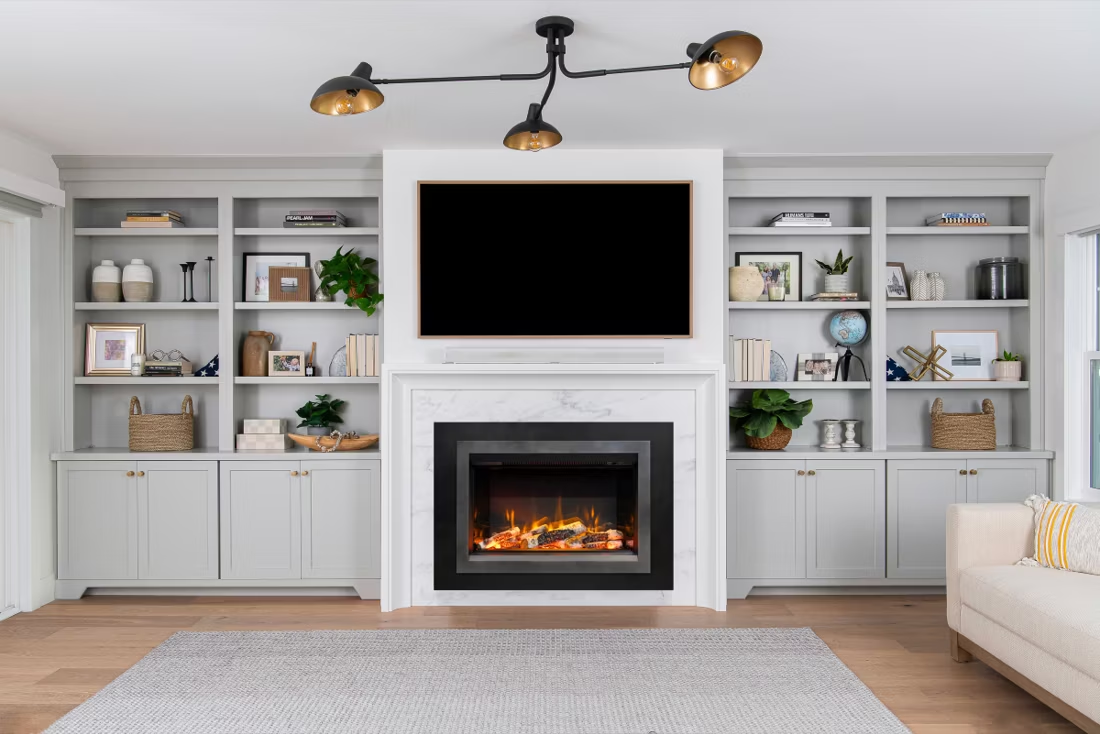
Yes—with an asterisk. Fireplaces are hot and TVs don't like heat. Either put a mantel between them to deflect rising warmth, or choose a fireplace with heat-management technology that creates a cool zone on the wall above—the wall stays around 125 degrees, barely warm, while the room still gets full heat. If you like clean lines and don't want a mantel, heat management is the answer.
Does an electric fireplace need a vent or chimney?
No—that's its superpower. An electric fireplace needs a wall and an outlet, period. No vent pipe, no gas line, no clearances to design around, which is why it works in bedrooms, offices, apartments, and walls where venting a gas or wood unit would be impractical or impossible. Installation is typically the simplest and least expensive of any fireplace type.
Can I install a fireplace myself?
If you're putting a fire in your house on purpose, it's best to work with an expert. Unless you're genuinely experienced in framing, gas line, vent pipe, and the national code on clearances to combustibles, have a professional do it—and ideally the same company that sells you the fireplace, so warranty, service, and liability all live under one roof.
What is an in-home preview and do I need one?
It's a visit where a hearth professional measures your space, confirms the model you picked actually works in your home, and walks the specs—framing, gas line, venting, finish work—before anything is ordered. Some details you just can't know until you see the house. Never make a down payment without one; it's the single most-skipped step that burns buyers.
Find your electric fireplace in Cass County.
Tell us a bit about your home and we'll put together a free Project Guide & Parts List for your Cass County electric fireplace project—the right unit, the wiring it needs, and a trusted local dealer to install it.
Find Your Fireplace →